Artwork
Howling Dervish
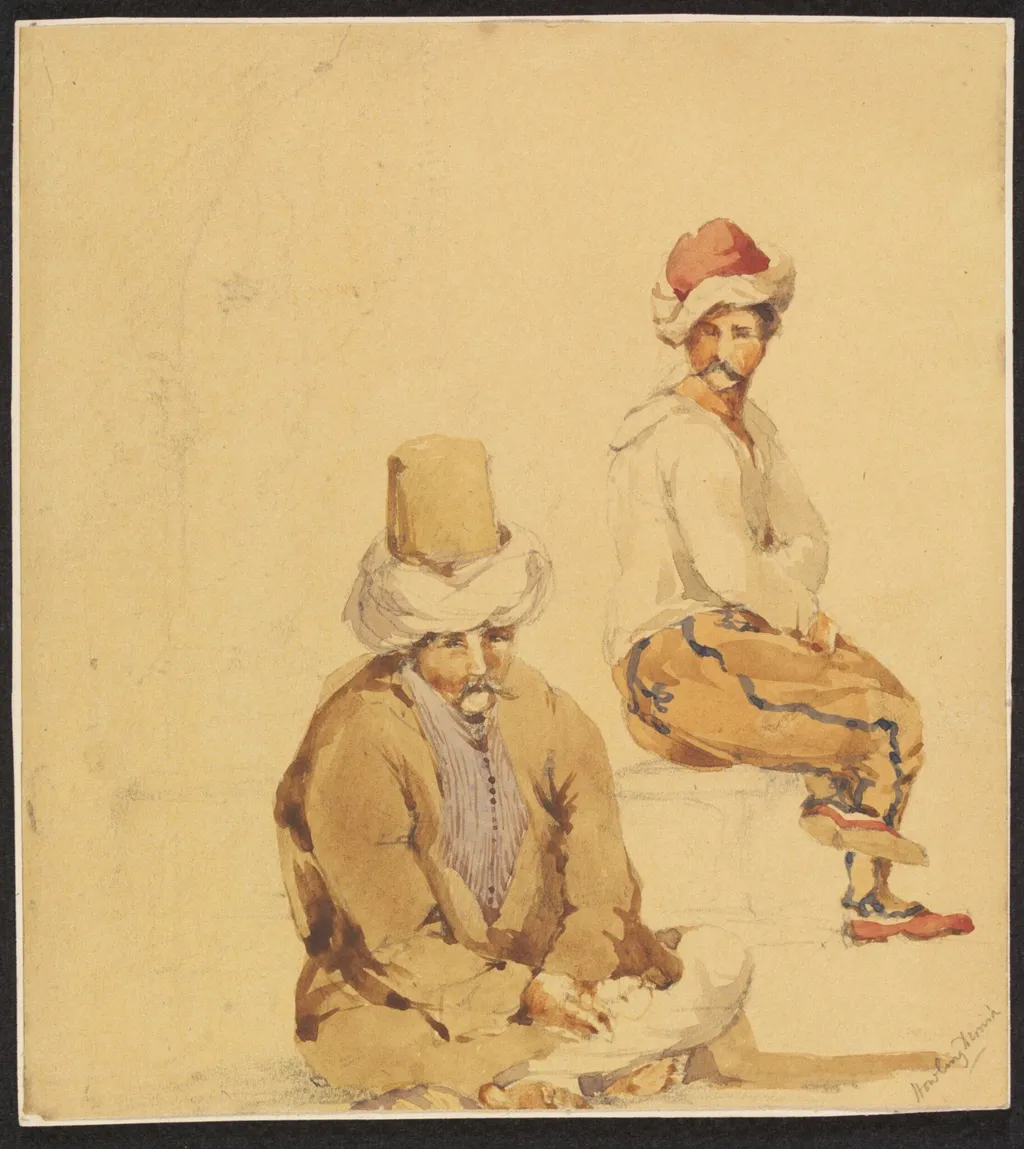
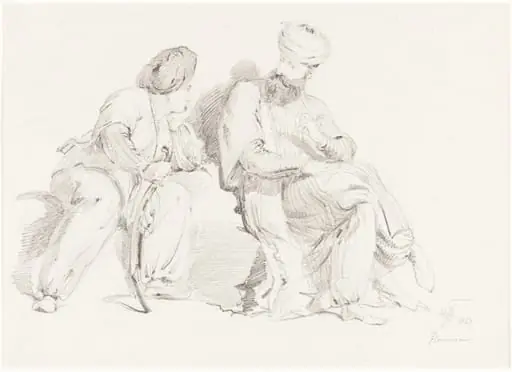
Howling Dervish is a watercolor work on paper by the Impressionist artist Unknown. It dates from 1850 and is held in the collection of the Victoria and Albert Museum. This watercolour sketch depicts two seated figures, rendered with minimal detail and rapid brushwork.
About this work
Overview
The flat, pale background isolates the figures, reinforcing the focus on their presence rather than their environment.
This watercolour sketch depicts two seated figures, rendered with minimal detail and rapid brushwork. The composition is sparse, emphasizing posture and costume over individual features. The artist prioritizes movement and atmosphere, using loose strokes to suggest form rather than define it. The flat, pale background isolates the figures, reinforcing the focus on their presence rather than their environment.
Subject & Meaning
The two men, distinguished by their headwear and clothing, appear to be engaged in quiet companionship. Their plain facial features and lack of expressive detail suggest anonymity, possibly indicating a moment of ordinary life rather than a specific narrative. The tall hats and varied attire hint at social or cultural roles, though no clear context is given, leaving interpretation open to the viewer.
Technique & Style
The work employs quick, fluid watercolour strokes that border on spontaneous scribbling. Colour is applied in broad, unblended washes, with no attempt at shading or texture. Details like facial features are reduced to minimal lines, and the background remains uniformly pale. This approach reflects an emphasis on immediacy and emotional tone over precision or realism.
History & Provenance
The sketch’s origin and creator are not documented in the provided information. Its informal style and lack of signature suggest it may have been a personal study or preparatory sketch rather than a finished work intended for public display. No known exhibition history or collector lineage is recorded.
Context
The style aligns with 19th-century sketch traditions where artists captured fleeting moments with speed and economy. Such works often served as visual notes for larger compositions or as exercises in observation. The absence of detailed setting or narrative places it within a broader practice of informal, on-the-spot drawing common among artists of the period.
Legacy
This piece exemplifies how artists used watercolour to explore form and mood without the constraints of finish. Its simplicity influenced later approaches to observational drawing, particularly in movements valuing spontaneity over polish. While not widely known, it contributes to an understated tradition of sketch-based expression in watercolour.
Artist & collection

 Domestic Scene
 Giacomo and Cardinal Marco, investing Andrea, Abbot of San Zeno, with his Benefice
 The Nymph of Fontainebleau
 Portrait of a Woman
 Madonna and Child with Saints in the Enclosed Garden
 Venus and Minerva
 Family Group of Four on Sofa
 Wall painting from Room H of the Villa of P. Fannius Synistor at Boscoreale
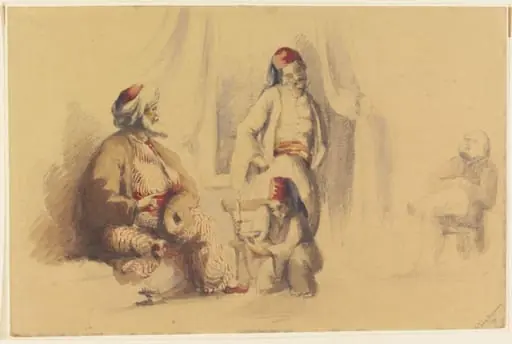 Cairo Magician
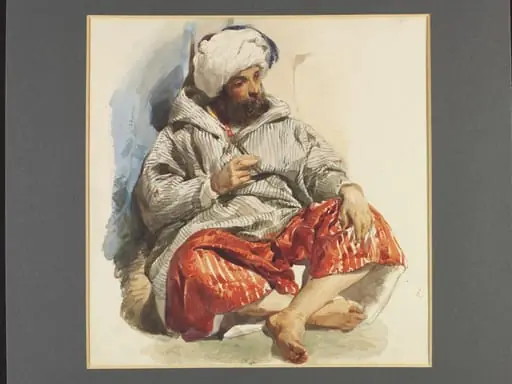 A European in Oriental dress, seated cross legged
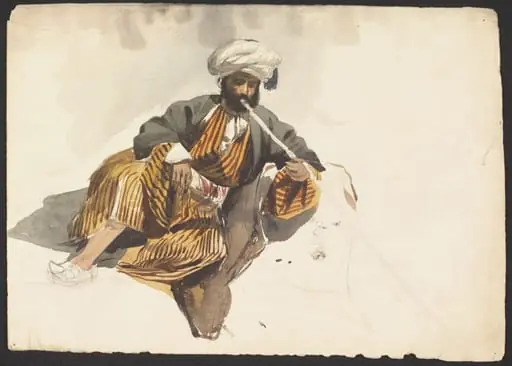 Figure of a Man in Arab dress, reclining, smoking a chibouk
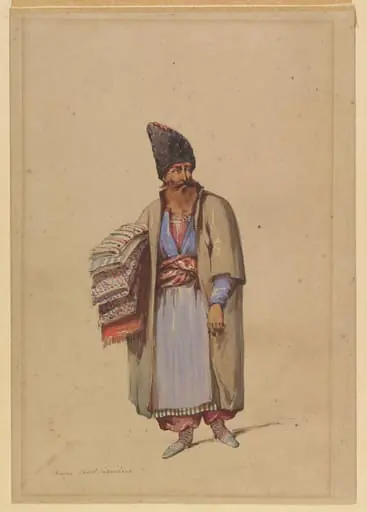 Persian Shawl-Merchant
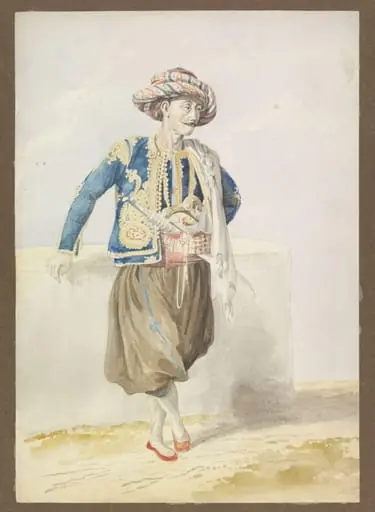 Kalyoncu, or Sea Captain
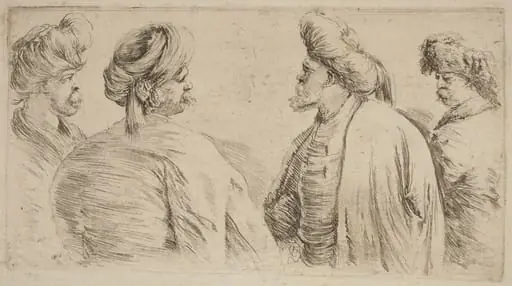 Four Turks Wearing Turbans
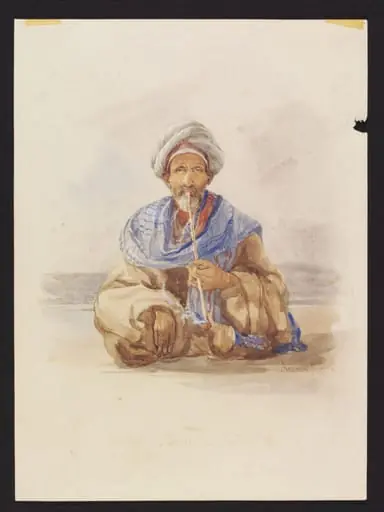 Achmet Girgeh
 An Official at the Court of the Sultan
 A seller of Fezes and Amber mouthpieces
 Two Men in Oriental Dress