Artwork
Hunting on Horses
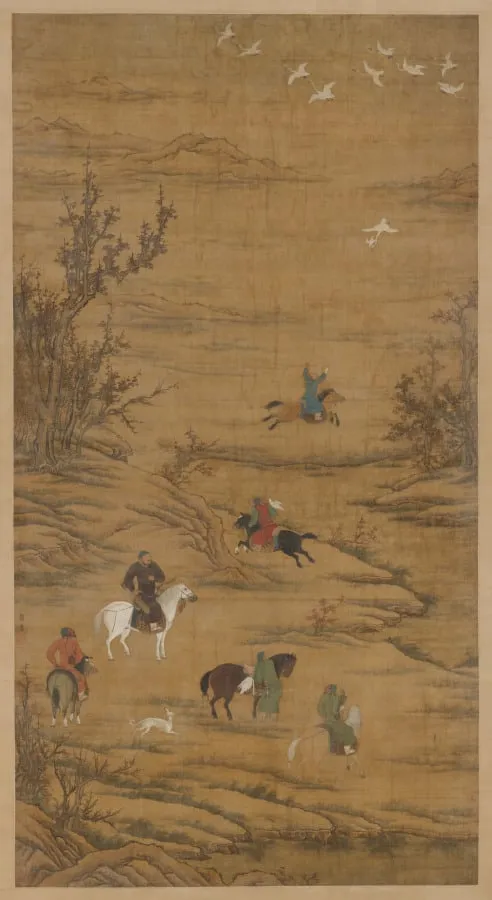
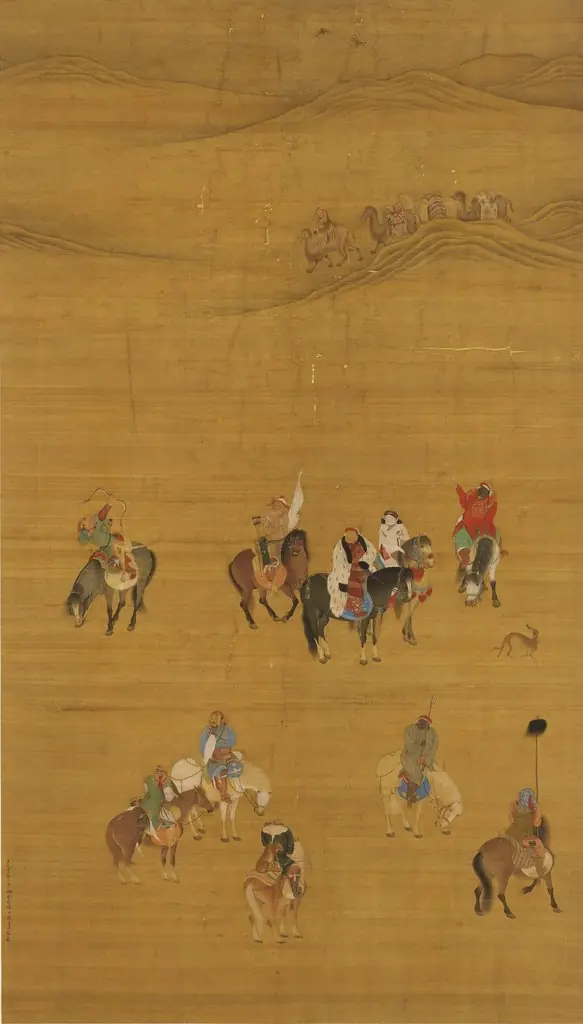
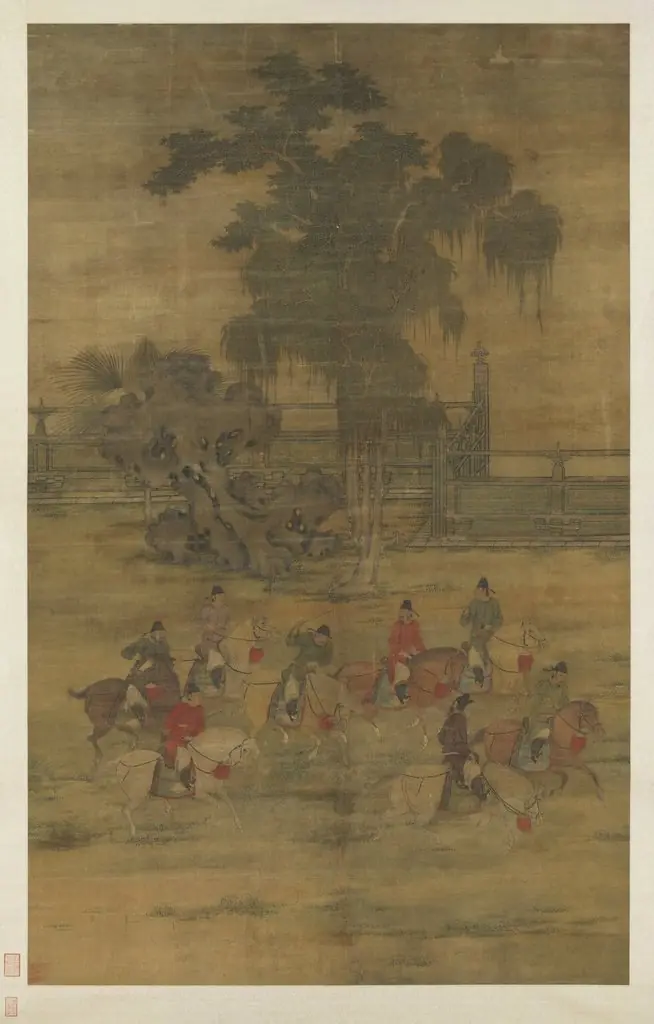
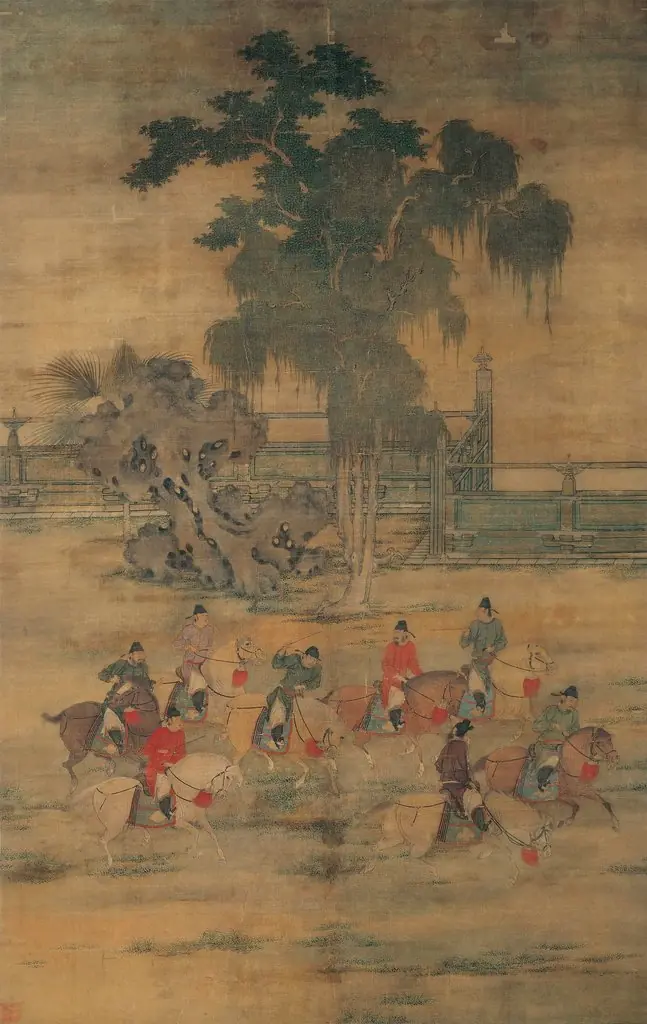
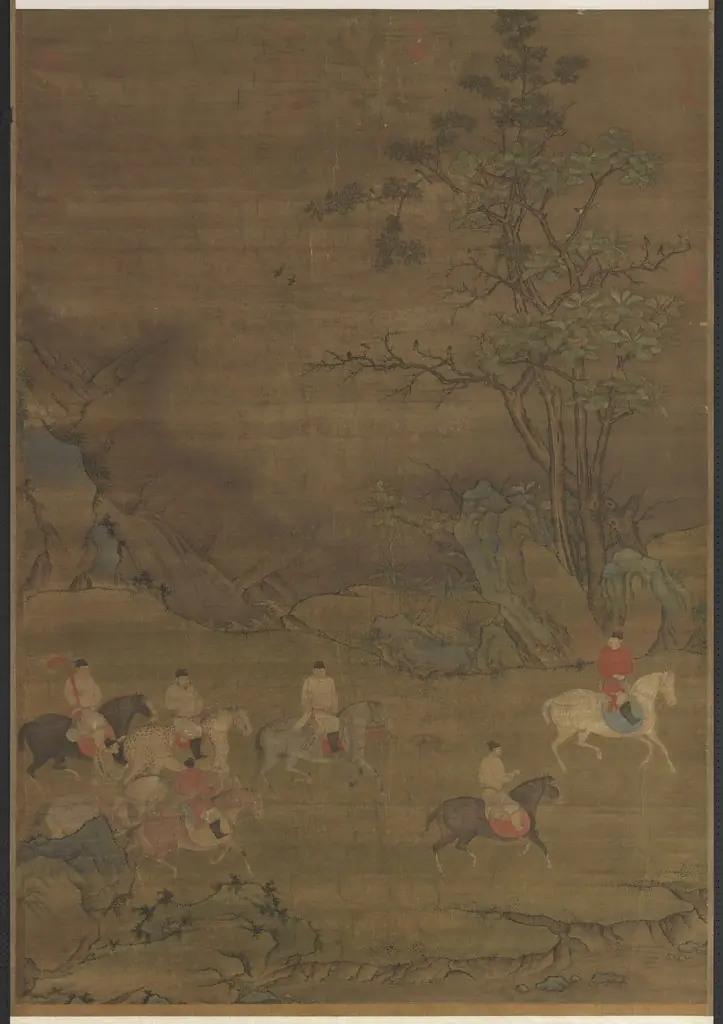
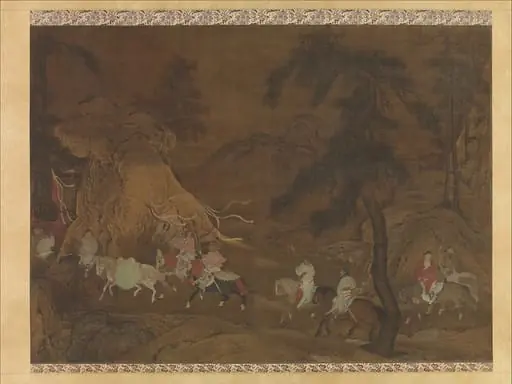
Hunting on Horses is an unspecified painting by the Baroque artist Unknown. It dates from 1700 and is held in the collection of the Cleveland Museum of Art. This large hanging scroll portrays a springtime hunt along a riverbank, featuring six mounted riders pursuing waterfowl.
About this work
Overview
The composition centers on a single figure of elevated status, distinguished by attire and posture, while the rest of the group moves dynamically around him.
This large hanging scroll portrays a springtime hunt along a riverbank, featuring six mounted riders pursuing waterfowl. The composition centers on a single figure of elevated status, distinguished by attire and posture, while the rest of the group moves dynamically around him. The scene blends naturalistic detail with symbolic hierarchy, reflecting a genre developed to depict northern nomadic elites within a Chinese artistic framework.
Subject & Meaning
The hunt is not merely a depiction of sport but a display of authority. The central figure, clad in a purple robe adorned with golden dragons and mounted on a white horse with a red tassel, embodies imperial command. His stillness contrasts with the motion of his companions and the falcon’s strike, reinforcing his control over the scene. The act of hunting served as a metaphor for leadership, asserting dominance over both nature and the social order.
Technique & Style
The painting employs fine ink lines and restrained color to render figures, animals, and landscape with precision. The riders’ robes are rendered in vivid hues against muted earth tones, drawing attention to the central figure. The falcon’s action is captured mid-flight with delicate brushwork, while the riverbank and distant hills suggest depth without perspective. The style merges observational realism with formalized symbolism typical of courtly northern Chinese painting of the period.
History & Provenance
Created during the Liao or Jin dynasty, the scroll was likely commissioned for a nomadic ruler of northeastern China, possibly Khitan or Jurchen. It reflects the cultural exchange between steppe elites and Chinese court artists, who adapted traditional Chinese techniques to portray foreign rulers in a manner that honored their customs while asserting imperial legitimacy. Its survival suggests it was preserved within elite collections, possibly in imperial archives.
Context
During the 10th to 13th centuries, northern China was ruled by non-Han dynasties whose equestrian traditions contrasted with sedentary Chinese norms. Chinese artists were employed to document these rulers’ activities, transforming hunting scenes into political statements. These works served to legitimize foreign dynasties by aligning them with Chinese artistic conventions, while affirming the rulers’ martial identity and authority.
Legacy
This painting contributed to a lasting genre in Chinese art that depicted northern nomads, influencing later dynastic portrayals of power and mobility. It preserved visual records of Khitan and Jurchen dress, horsemanship, and falconry, offering insight into cross-cultural interactions. While the specific artist remains unknown, the work stands as a testament to how art was used to negotiate identity, authority, and cultural integration in medieval China.
Artist & collection

 Domestic Scene
 Giacomo and Cardinal Marco, investing Andrea, Abbot of San Zeno, with his Benefice
 The Nymph of Fontainebleau
 Portrait of a Woman
 Madonna and Child with Saints in the Enclosed Garden
 Venus and Minerva
 Family Group of Four on Sofa
 Wall painting from Room H of the Villa of P. Fannius Synistor at Boscoreale