Artwork
Husband
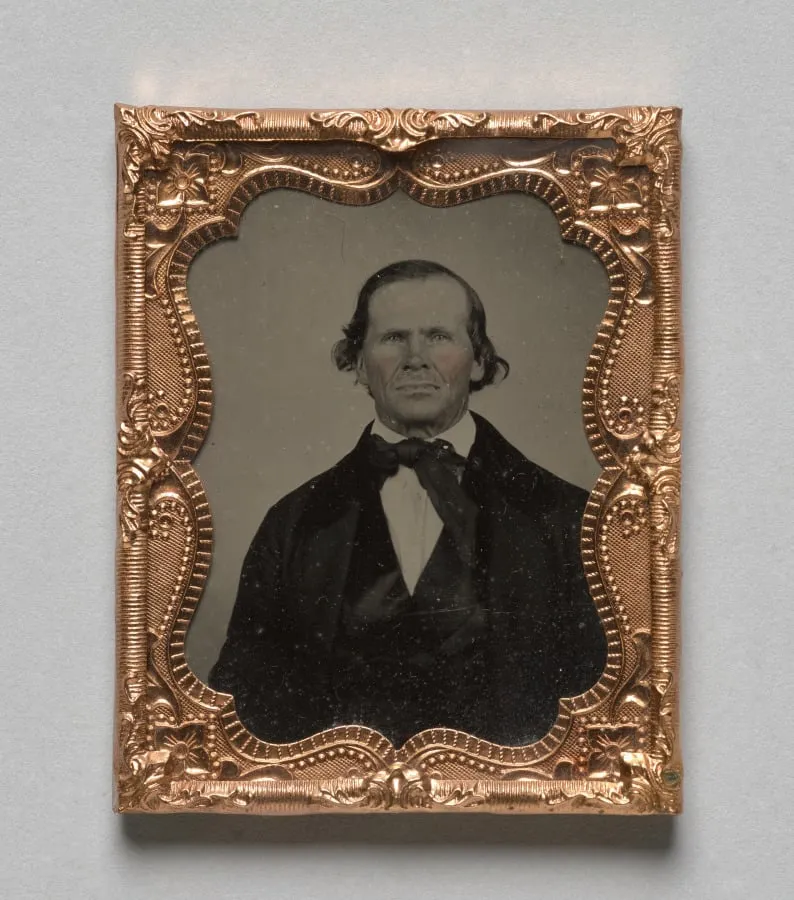
Husband is a photography by the Impressionist artist Unknown. It dates from 1862 and is held in the collection of the Cleveland Museum of Art. This mid-19th-century photograph captures a woman seated rigidly, her expression tightly controlled and hands clasped firmly around a chair.
About this work
Overview
This mid-19th-century photograph captures a woman seated rigidly, her expression tightly controlled and hands clasped firmly around a chair.
This mid-19th-century photograph captures a woman seated rigidly, her expression tightly controlled and hands clasped firmly around a chair. The image reflects the technical constraints of early photographic processes, where long exposure times made movement impossible and spontaneous expression unfeasible. The resulting stillness conveys not just restraint, but the physical effort required to remain motionless during the exposure.
Subject & Meaning
The woman’s closed lips and tense posture suggest an attempt to comply with photographic conventions of the time, which favored solemnity and composure. Smiling or relaxed expressions were rare, not due to personal demeanor, but because of the physical demands of the medium. Her posture becomes a silent record of the social and technical pressures shaping early portraiture.
Technique & Style
The photograph employs the wet-plate collodion process, requiring several seconds of exposure. To avoid blur, sitters were often instructed to fix their gaze and limit motion, sometimes using hidden supports. The woman’s clenched hands and rigid spine reflect these directives, resulting in a composition defined by stillness rather than naturalism. Lighting and focus emphasize her face and hands, drawing attention to the effort of containment.
History & Provenance
The photograph likely originated in the United States during the 1850s or 1860s, a period when portrait studios proliferated but remained inaccessible to many. Such images were often commissioned for family records or sentimental keepsakes. The absence of identifying details suggests it may have been a private commission, preserved without formal documentation, now surviving as an anonymous testament to early photographic practice.
Context
In an era before motion pictures or instant photography, portraits were rare and costly events. The cultural expectation of dignity in portraiture, inherited from painted likenesses, reinforced stillness as a virtue. This image aligns with broader trends in Western visual culture, where emotional restraint was equated with moral seriousness, especially among middle-class subjects seeking to project respectability.
Legacy
This photograph endures not for its aesthetic polish, but for its unvarnished record of human adaptation to technological limits. It reveals the physical and psychological discipline required to participate in early photography. Today, it offers a quiet counterpoint to modern immediacy, reminding viewers how deeply technical constraints shaped human expression in visual media.
Artist & collection

 Domestic Scene
 Giacomo and Cardinal Marco, investing Andrea, Abbot of San Zeno, with his Benefice
 The Nymph of Fontainebleau
 Portrait of a Woman
 Madonna and Child with Saints in the Enclosed Garden
 Venus and Minerva
 Family Group of Four on Sofa
 Wall painting from Room H of the Villa of P. Fannius Synistor at Boscoreale