Artwork
Icoambla
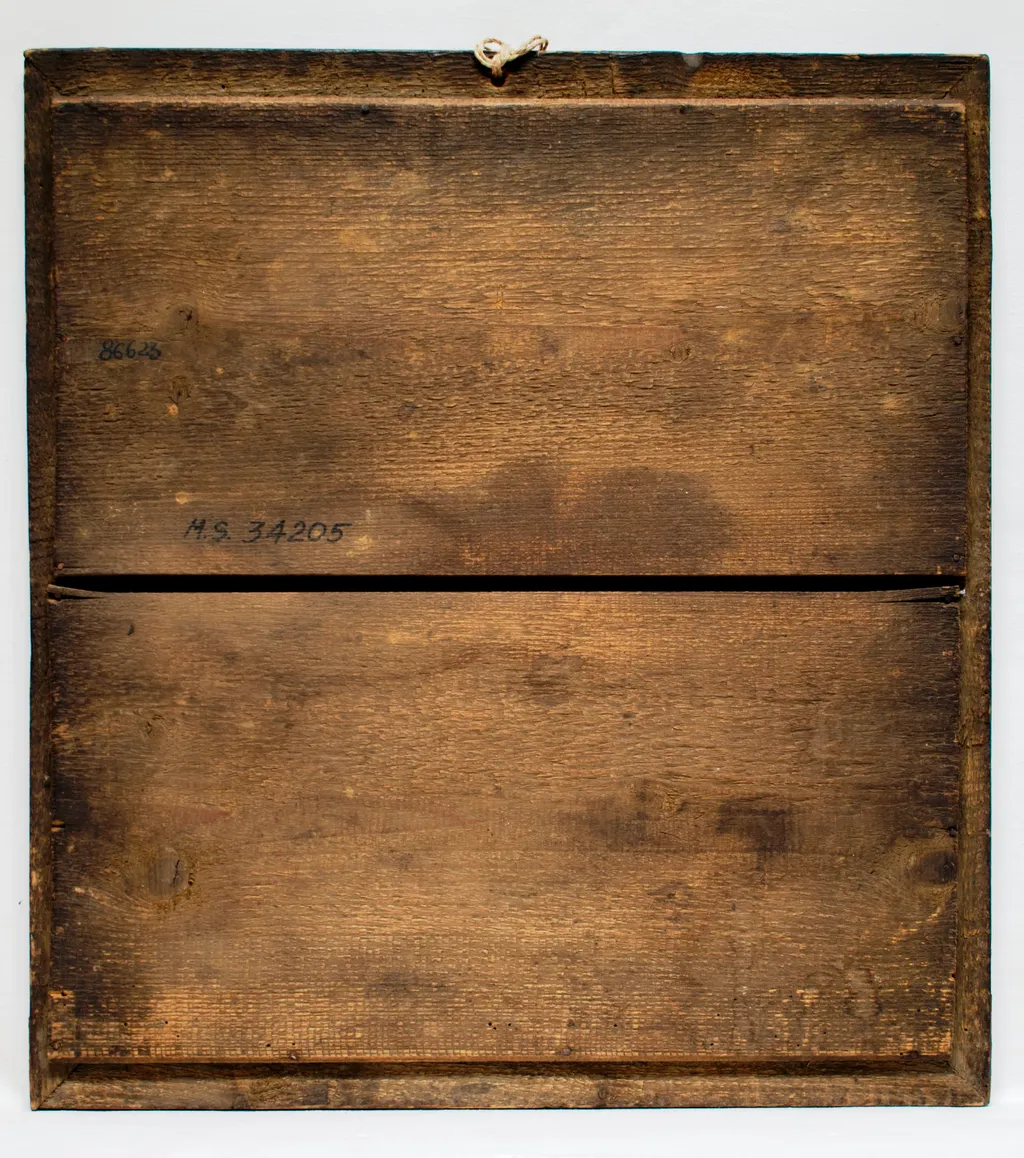
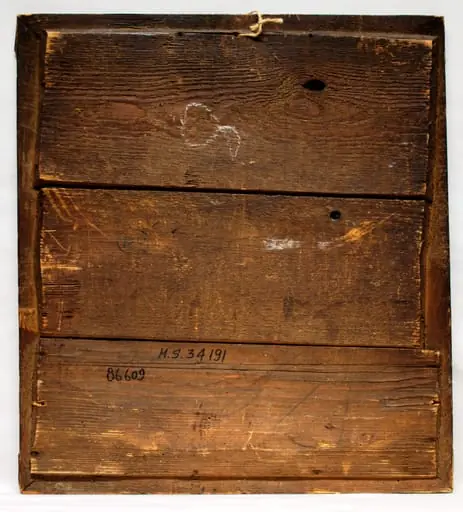
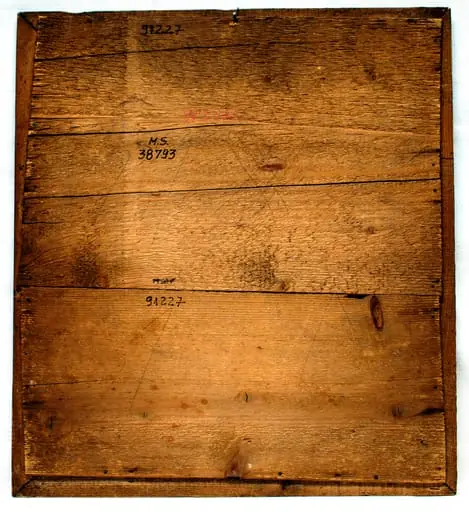
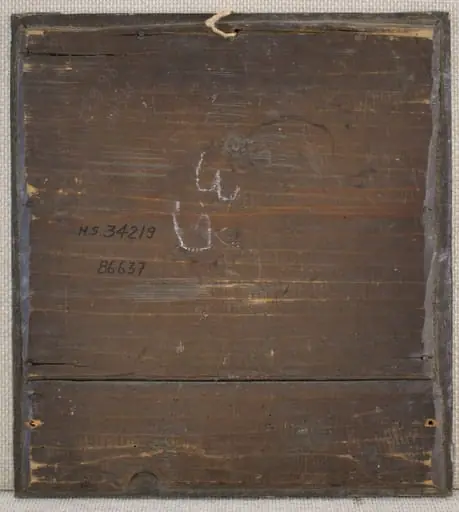
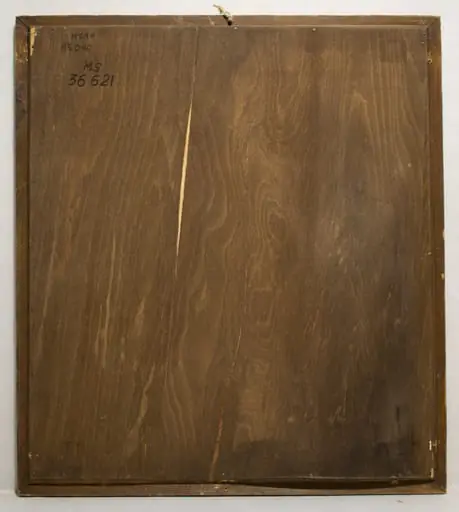
Icoambla is a drawing by Unknown. It dates from 1850 and is held in the collection of the "Dimitrie Gusti" National Village Museum. This is the reverse side of a weathered wooden panel, its surface worn by time and use.
About this work
Overview
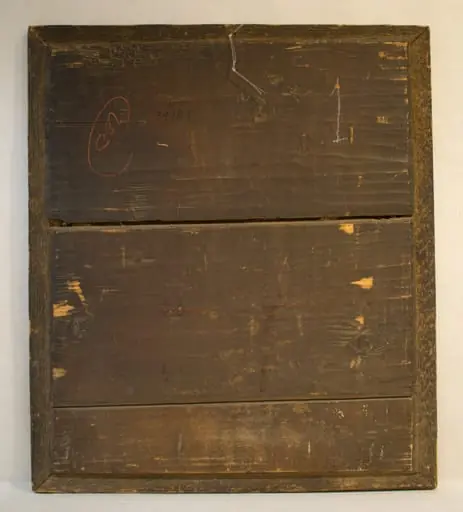
This is the reverse side of a weathered wooden panel, its surface worn by time and use. The natural grain of the wood is clearly visible, accompanied by faint scuffs and minor imperfections. Two pencil markings, lightly inscribed and faded, appear near the upper left corner. No figural or graphic elements remain on the surface, suggesting the front once bore an image now lost or removed.
Subject & Meaning
The absence of imagery on this panel implies it once served as a support for a devotional or narrative painting, now detached or destroyed. Its current state invites speculation about its original function—perhaps as part of an altarpiece, portable shrine, or domestic religious object. The empty surface becomes a silent witness to a lost visual culture.
Technique & Style
No artistic technique is visible on this side, as no image or drawing remains. The wood’s texture and the pencil marks suggest practical handling rather than aesthetic intent. The faint numerals may indicate inventory codes or placement identifiers, reflecting institutional or workshop practices rather than artistic expression.
History & Provenance
The panel’s condition indicates prolonged exposure to environmental factors and physical handling. Its survival without its original front suggests it was preserved for structural or utilitarian reasons, not artistic value. The pencil numbers hint at archival or storage systems, possibly from a church, studio, or collection that once cataloged such objects systematically.
Context
In medieval and early modern Europe, wooden panels were commonly used as supports for painted icons and altarpieces. When artworks were damaged, repurposed, or lost, the reverse sides were sometimes retained as remnants. This fragment reflects a broader practice of reusing materials and the impermanence of many religious images over centuries.
Legacy
Though devoid of imagery, this panel preserves traces of its past use—material wear, handwritten marks, and structural form. It stands as a quiet artifact of artistic labor and institutional memory, reminding viewers that many historical images survive only in fragments, their full context now obscured.
Artist & collection
Museum
"Dimitrie Gusti" National Village Museum
Continue through works from the same source collection.
 Domestic Scene
 Giacomo and Cardinal Marco, investing Andrea, Abbot of San Zeno, with his Benefice
 The Nymph of Fontainebleau
 Portrait of a Woman
 Madonna and Child with Saints in the Enclosed Garden
 Venus and Minerva
 Family Group of Four on Sofa
 Wall painting from Room H of the Villa of P. Fannius Synistor at Boscoreale