Artwork
Iisus și Ioan, copii (Ioan cu mielul)
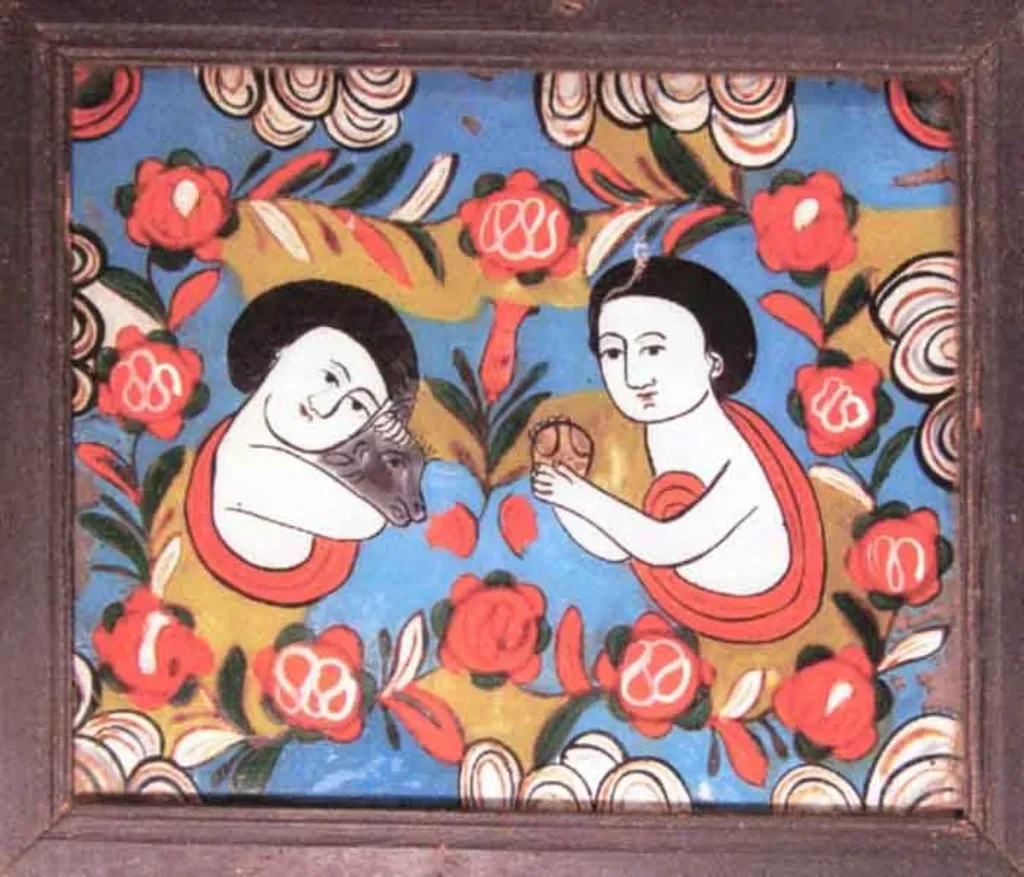
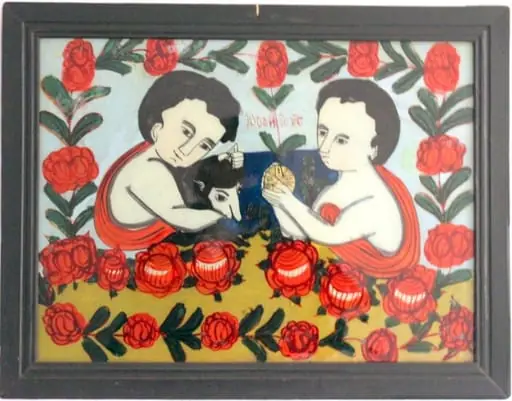
Iisus și Ioan, copii (Ioan cu mielul) is a drawing by Unknown. It dates from 1850 and is held in the collection of the Romanian Peasant Museum. This drawing depicts two young boys in a vibrant, densely patterned garden.
About this work
Overview
The composition balances energetic detail with a quiet, almost serene mood, suggesting a moment of stillness amid abundance.
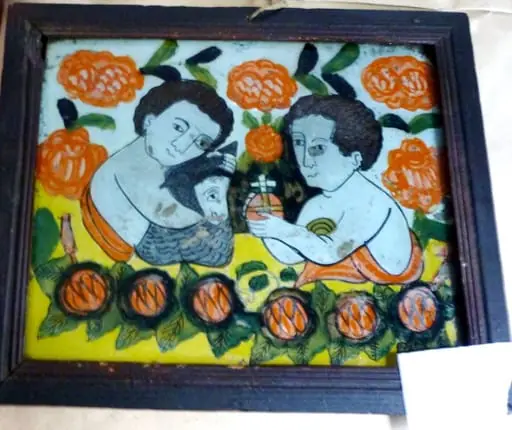
This drawing depicts two young boys in a vibrant, densely patterned garden. Both are bare-chested, their postures relaxed, one holding a small goat, the other a bundle of sticks. The background teems with large red blooms, lush green foliage, and swirling abstract bands of yellow and blue above. The composition balances energetic detail with a quiet, almost serene mood, suggesting a moment of stillness amid abundance.
Subject & Meaning
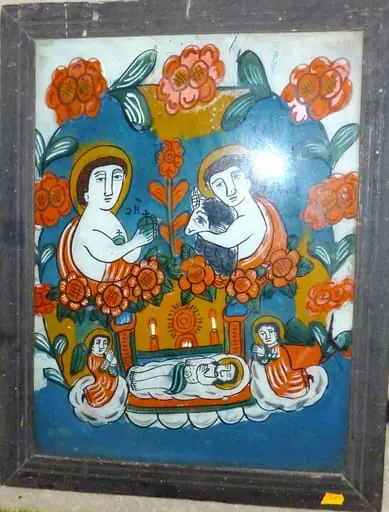
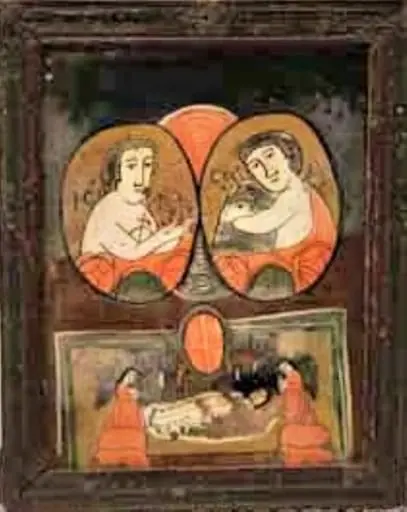
The figures are traditionally interpreted as the infant Jesus and John the Baptist, though their youthful, earthly presence downplays overt religious symbolism. The goat and sticks may allude to John’s later role as a prophet in the wilderness, while the flowers and natural setting evoke innocence and divine presence in nature. The scene avoids dramatic narrative, favoring quiet companionship and symbolic simplicity.
Technique & Style
The artist employs bold, flat areas of color and rhythmic linear patterns to define form and space. Facial features are minimal, enhancing the figures’ universal quality. The garden is rendered with dense, overlapping shapes—flowers, leaves, and swirling sky motifs—creating texture without shading. The lack of perspective and emphasis on decorative patterning suggest a stylized, non-naturalistic approach.
History & Provenance
The work is attributed to a late medieval or early Renaissance hand, likely from a region with strong manuscript illumination traditions. Its survival as a standalone sheet suggests it may have been part of a devotional album or a preparatory study. No definitive record of its early ownership exists, though its style aligns with regional workshop practices of the 14th to 15th centuries.
Context
Created during a period when religious imagery increasingly incorporated earthly, naturalistic elements, this drawing reflects a shift toward intimate, humanized sacred scenes. The ornamental garden echoes contemporary illuminated manuscripts and textile designs, where patterned nature symbolized paradise. The absence of traditional halos or icons signals a preference for symbolic suggestion over doctrinal clarity.
Legacy
The drawing’s emphasis on pattern, color, and simplified form influenced later regional artists exploring decorative expression in religious subjects. Its preservation offers insight into how devotional imagery evolved beyond rigid iconography, embracing emotional tone and visual rhythm. It remains a quiet example of how everyday natural beauty was woven into spiritual contemplation.
Artist & collection

 Domestic Scene
 Giacomo and Cardinal Marco, investing Andrea, Abbot of San Zeno, with his Benefice
 The Nymph of Fontainebleau
 Portrait of a Woman
 Madonna and Child with Saints in the Enclosed Garden
 Venus and Minerva
 Family Group of Four on Sofa
 Wall painting from Room H of the Villa of P. Fannius Synistor at Boscoreale