Artwork
Ilie Procor
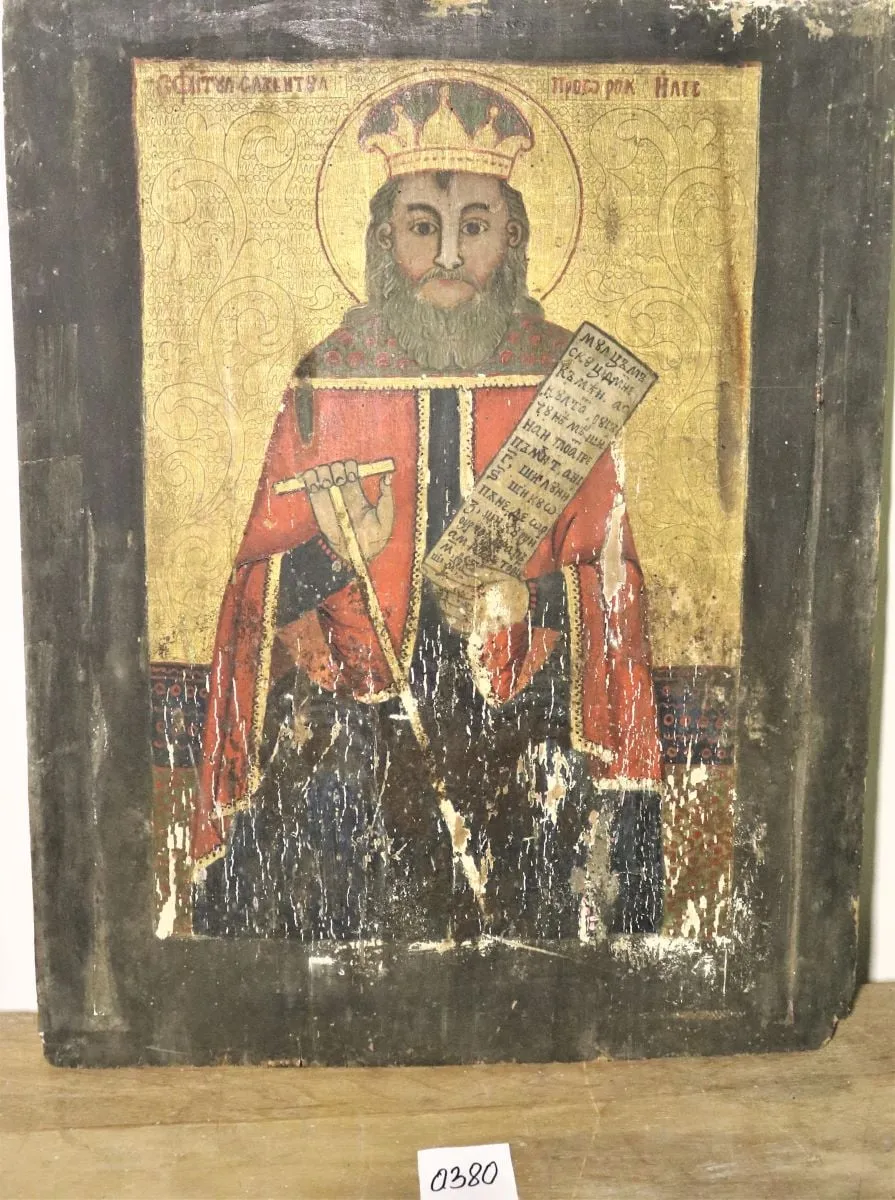
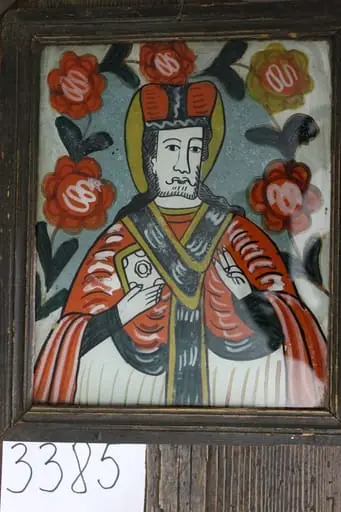
Ilie Procor is a drawing by Unknown. It dates from 1850 and is held in the collection of the Maramureș Ethnography and Folk Art County Museum.
About this work
Overview
This work depicts a male figure in a richly detailed red robe adorned with gold trim and a crown, holding a scroll inscribed with archaic script.
This work depicts a male figure in a richly detailed red robe adorned with gold trim and a crown, holding a scroll inscribed with archaic script. The background features a gold field with faint, degraded patterns and textual elements, suggesting ritual or liturgical origins. The palette is dominated by red, gold, and black, with subtle accents of blue and white. The surface shows signs of age—wear, fading, and partial loss—indicating prolonged use or exposure.
Subject & Meaning
The figure, bearded and solemn, likely represents a religious or imperial authority, possibly a saint, monarch, or divine ruler. The scroll implies a message of law, prophecy, or sacred text, reinforcing his role as a transmitter of authority. The gold background, traditionally associated with the divine in iconographic traditions, elevates the subject beyond the earthly realm. The worn condition suggests the image was venerated or used in ceremonial contexts over time.
Technique & Style
The painting employs tempera or similar pigments on a rigid support, with meticulous attention to metallic detailing in the crown and robe trim. Gold leaf was applied to the background, now partially abraded, revealing underlying layers. The script on the scroll is rendered in a stylized, non-legible hand, typical of symbolic rather than communicative writing. Brushwork is restrained, emphasizing form and symbolism over naturalism.
History & Provenance
The painting’s condition and stylistic features align with Eastern European or Byzantine-influenced devotional art from the late medieval or early modern period. Its deterioration suggests it was once displayed in a church, monastery, or private chapel. The reference to the Museum of Ethnography hints at a possible origin in a region where such objects were collected as cultural artifacts rather than fine art.
Context
This image belongs to a broader tradition of sacred portraiture common in Orthodox Christian and Slavic cultures, where figures of spiritual or political power were rendered with standardized iconography to convey authority and sanctity. The use of gold backgrounds, rigid posture, and symbolic objects like scrolls were deliberate choices to communicate transcendence, not individual likeness. Similar works were often part of iconostases or personal devotional sets.
Legacy
Though no longer used in active worship, the painting survives as a material witness to pre-modern religious practices and aesthetic values. Its preservation in institutional collections reflects a shift from devotional object to cultural artifact. It continues to inform scholarly understanding of how authority, faith, and visual language intersected in pre-Enlightenment societies.
Artist & collection
Museum
Maramureș Ethnography and Folk Art County Museum
Continue through works from the same source collection.
 Domestic Scene
 Giacomo and Cardinal Marco, investing Andrea, Abbot of San Zeno, with his Benefice
 The Nymph of Fontainebleau
 Portrait of a Woman
 Madonna and Child with Saints in the Enclosed Garden
 Venus and Minerva
 Family Group of Four on Sofa
 Wall painting from Room H of the Villa of P. Fannius Synistor at Boscoreale
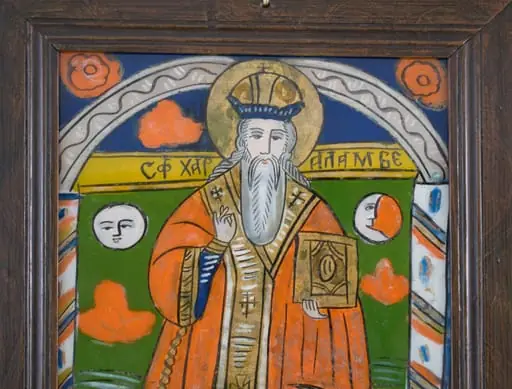 Icoa. D
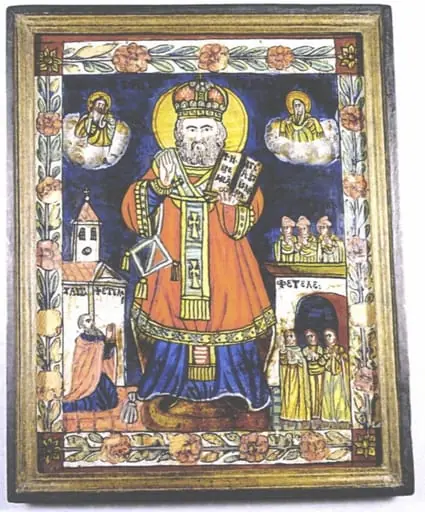 Sfântul Ncolae
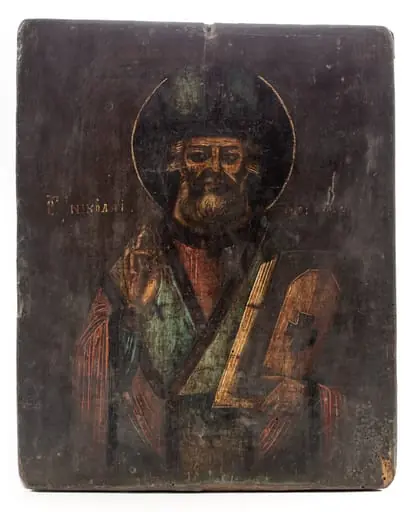 Sfântul Nicolae
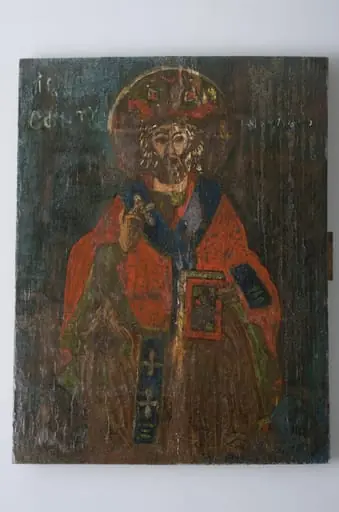 Icoana este pictată pe lemn, reprezentându-l pe Sfântul Nicolae cu veșminte arhierești (felon roșu, omofor albastru și mitră pe cap), ținând Evanghelia închisă cu mâna stângă și binecuvântând cu mâna dreaptă. Cromatică: roșu, albastru, verde, maro închis.
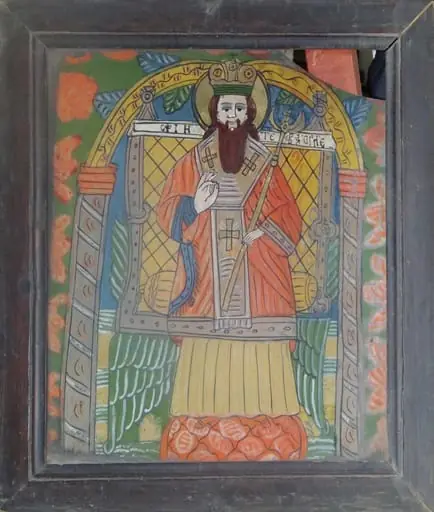 Sf. Vasile cel Mare
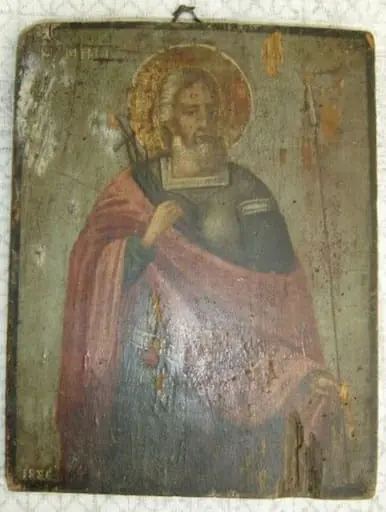 Sfântul Mina
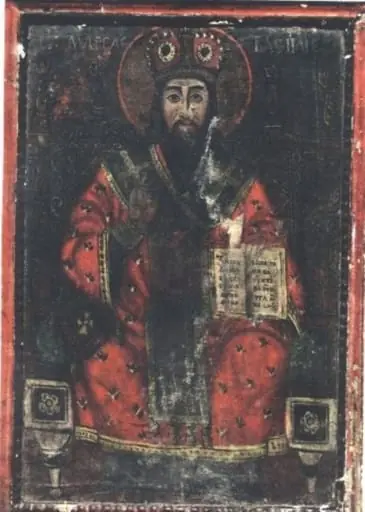 Sfântul Ierarh Vasile
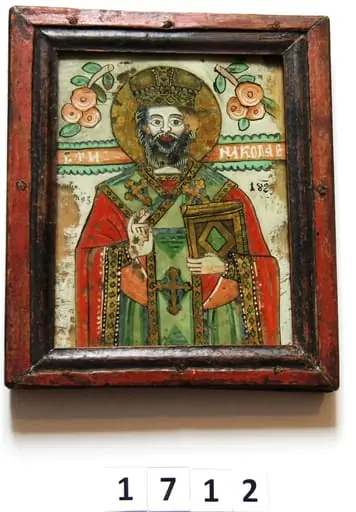 Sfântul Mare Ierarh Nicoale
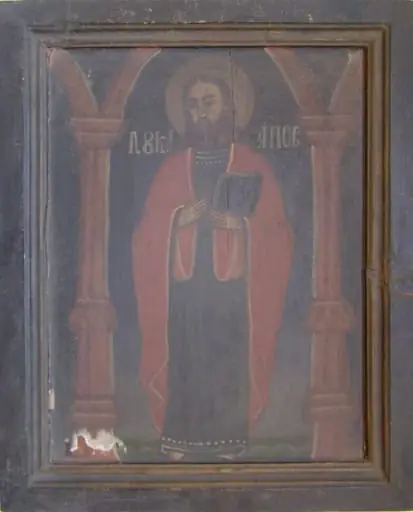 Sf. Apostol Luca
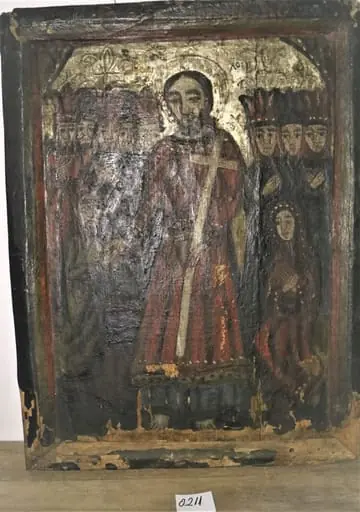 Învierea lui Iisus
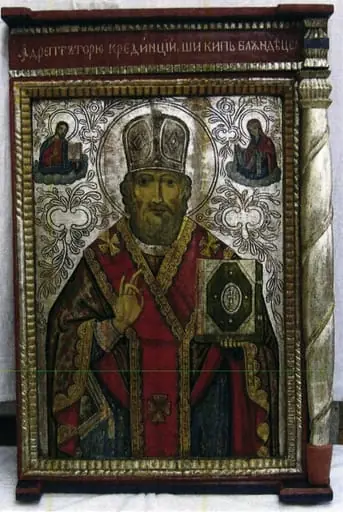 Sfântul Nicolae
 Sfantul Nicolae