Artwork
In the Plain of Thebes - Egypt
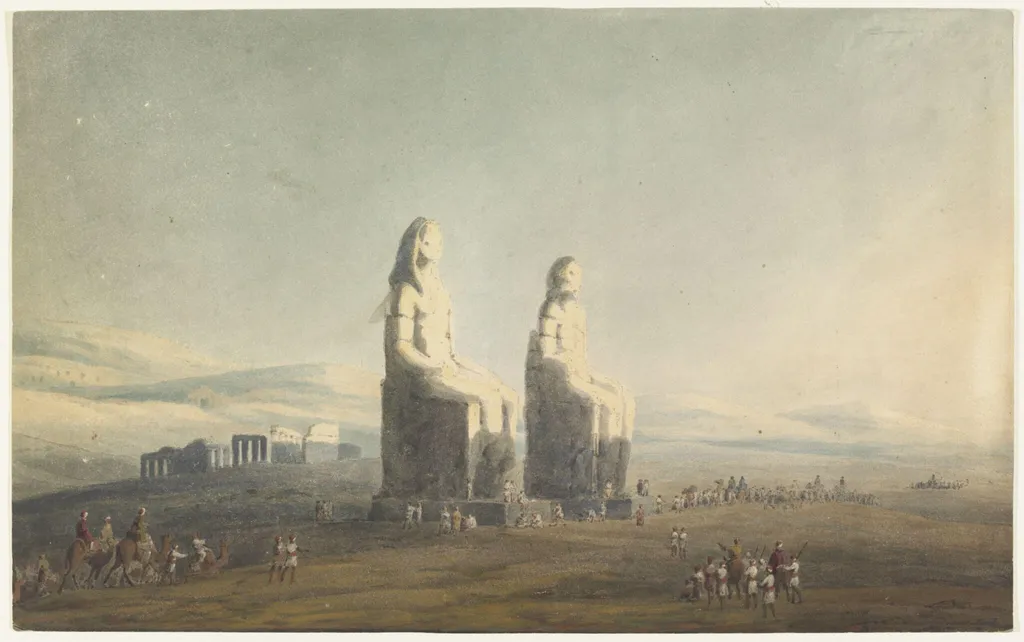
In the Plain of Thebes - Egypt is a watercolor work on paper by the Romanticist artist Unknown. It dates from 1798 and is held in the collection of the Victoria and Albert Museum. Created in 1798, this watercolour depicts a desert scene near Thebes in Egypt.
About this work
Overview
Created in 1798, this watercolour depicts a desert scene near Thebes in Egypt. The artist remains unidentified, and the work was acquired by a collector in November 1970 from the London dealer Phillip, Son and Neale for £11. Rendered in delicate washes, the piece captures a quiet moment of observation amid ancient ruins, reflecting early European interest in Egypt’s monumental past.
Subject & Meaning
Two colossal, fragmented statues dominate the foreground, their weathered forms standing alone in an expansive, arid plain. Small figures—travelers on foot and horseback—gather nearby, their presence suggesting curiosity or reverence. The composition emphasizes scale and solitude, inviting contemplation of time’s erosion and the lingering presence of a vanished civilization.
Technique & Style
Soft tones of ochre, pale blue, and grey suggest heat and distance, while minimal detail in the background reinforces the vastness of the landscape.
The artist employed light, translucent watercolour washes to convey the harsh, bleaching quality of desert light. Soft tones of ochre, pale blue, and grey suggest heat and distance, while minimal detail in the background reinforces the vastness of the landscape. The statues are rendered with subtle texture, emphasizing erosion without dramatic contrast, aligning with early topographical traditions.
History & Provenance
The work’s origin is undocumented beyond its date and medium. It surfaced in the 19th-century art market and was acquired by a private collector in 1970 through a well-known London dealer. No exhibition or publication history is recorded prior to its acquisition, leaving its early circulation and intended audience unclear.
Context
Painted during the Napoleonic campaign in Egypt, the image reflects a growing European fascination with ancient Egyptian monuments. Though not part of official scientific expeditions, such works contributed to a visual archive of ruins, shaped by Romantic-era ideals of ruins as symbols of time’s passage and human impermanence.
Legacy
As a modest watercolour by an anonymous hand, the piece offers no direct influence on major artistic movements. Yet it stands as a quiet testament to early Western encounters with Egypt’s ruins—unembellished, observational, and attuned to the quiet dignity of decay.
Artist & collection

 Domestic Scene
 Giacomo and Cardinal Marco, investing Andrea, Abbot of San Zeno, with his Benefice
 The Nymph of Fontainebleau
 Portrait of a Woman
 Madonna and Child with Saints in the Enclosed Garden
 Venus and Minerva
 Family Group of Four on Sofa
 Wall painting from Room H of the Villa of P. Fannius Synistor at Boscoreale
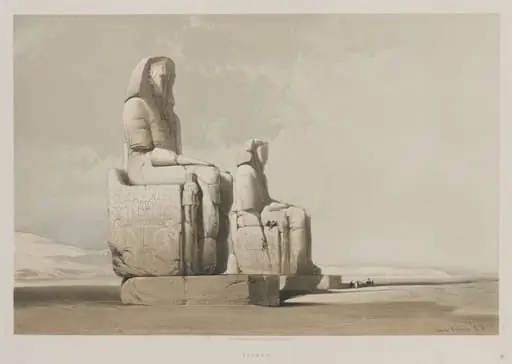 Egypt and Nubia, Volume I: Thebes
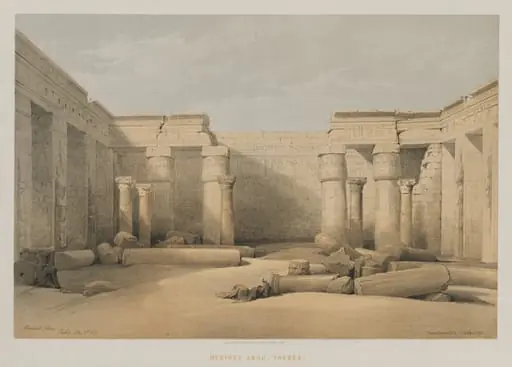 Egypt and Nubia, Volume II: Medinet Abou, Thebes
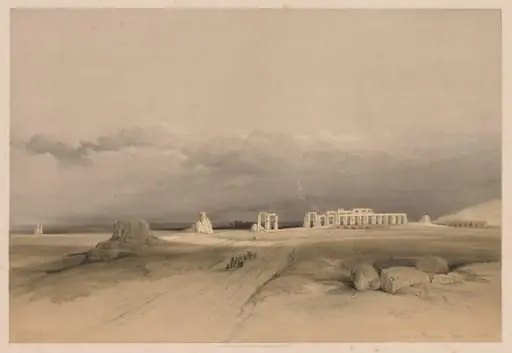 Egypt and Nubia: Volume II - No. 8, Ruins of the Memnonium, Thebes
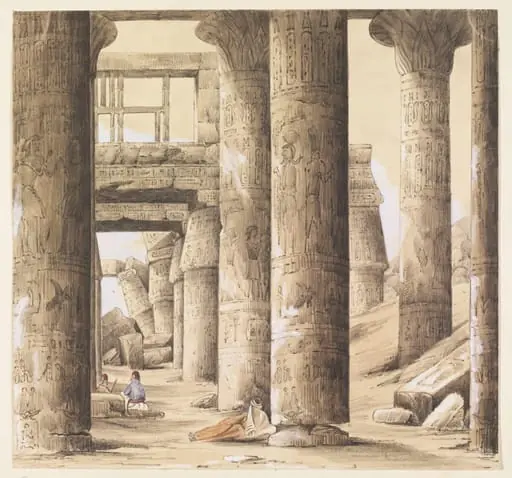 Interior of the Temple of Karnak, Thebes Upper Egypt.
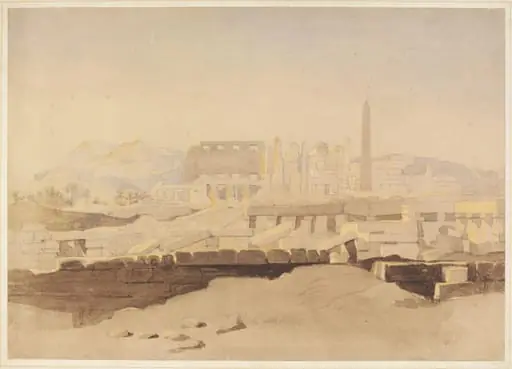 Temple at Carnak: Thebes
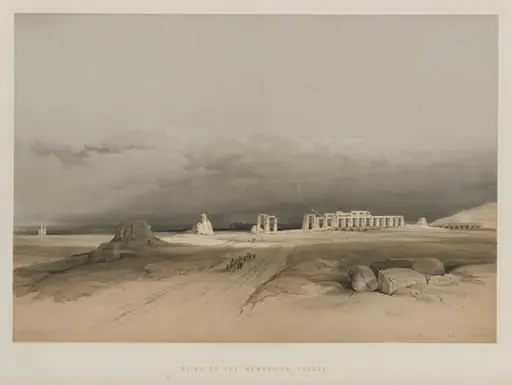 Egypt and Nubia, Volume II: Ruins of Memnonium, Thebes
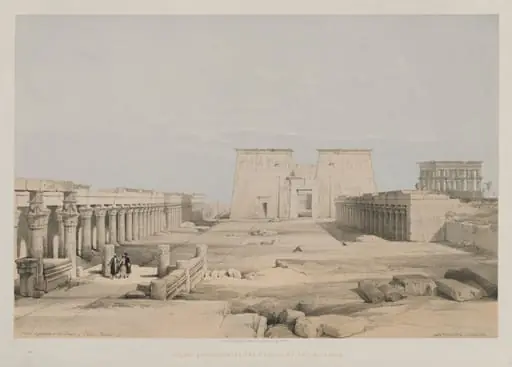 Egypt and Nubia, Volume I: Grand Approach to the Temple of Philae, Nubia
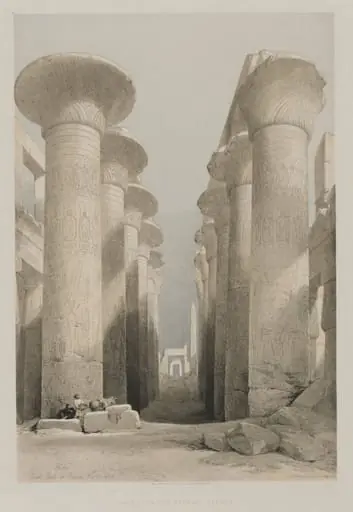 Egypt and Nubia, Volume I: Thebes, Great Hall at Karnac
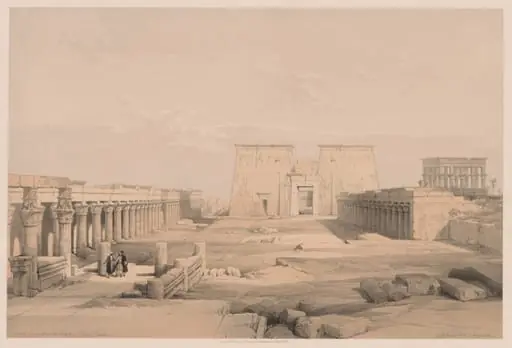 Egypt and Nubia: Volume I - No. 42, Grand Approach to the Temple of Philae, Nubia