Artwork
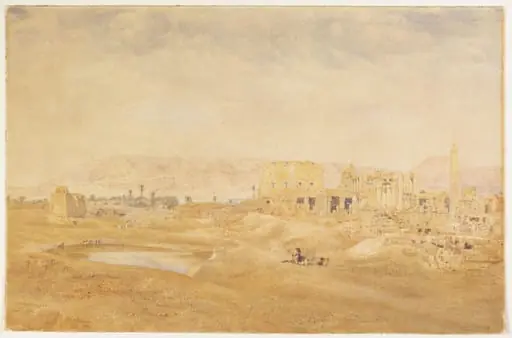
Temple at Carnak: Thebes
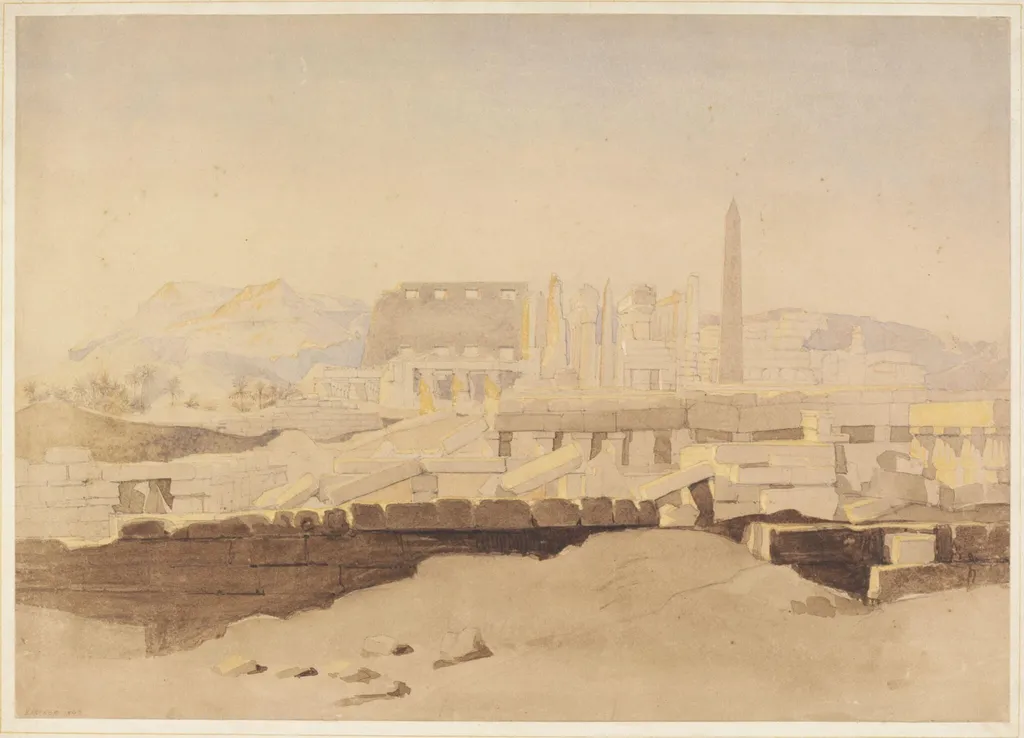
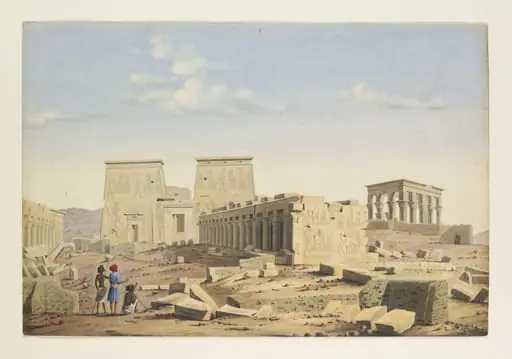
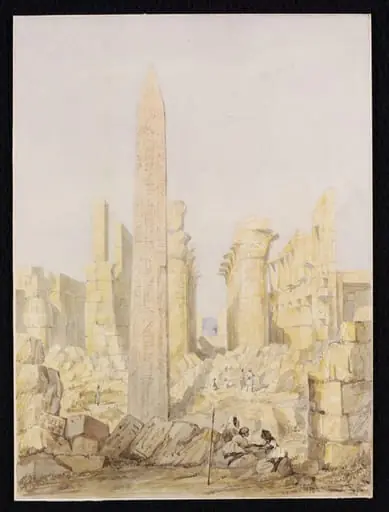
Temple at Carnak: Thebes is a watercolor work on paper by the Orientalist artist Charles Somers Somers-Cocks. It dates from 1842 and is held in the collection of the Victoria and Albert Museum.
About this work
Overview
This watercolour, executed in 1842 by Charles Somers—who later became the third Earl Somers—presents a view of the Temple of Karnak at Thebes. The work entered the museum’s holdings via a French source, acquired in June 1967 through dealer Rodney Searight for a price of £12.
Subject & Meaning
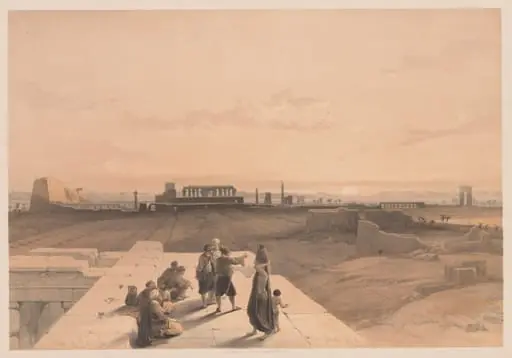
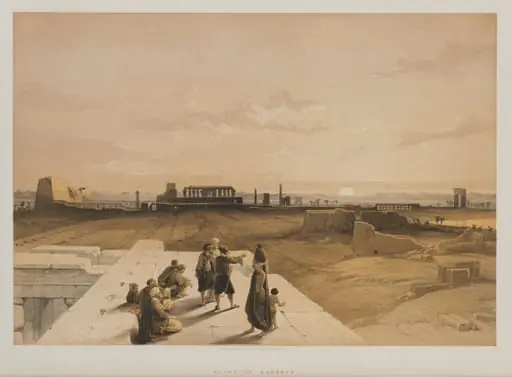
The image records the ancient stone complex in a desert setting, emphasizing the weathered masonry, broken columns and flat-roofed structures. A slender tower rises in the distance, while the foreground is strewn with rocks and sand, conveying a sense of quiet desolation.
Technique & Style
Rendered in delicate watercolour washes, the drawing highlights the texture of eroded stone and the soft, muted light of the scene. Somers’ handling of pigment captures subtle tonal variations, allowing the crumbling architecture to emerge with clarity despite the limited palette.
Context
Created during the mid‑nineteenth century, the work reflects a period when European travelers frequently documented Egyptian antiquities through sketches and watercolours, providing visual records for scholars and the interested public back home.
Artist & collection
Artist
Charles Somers Somers-Cocks painted watercolours of ancient ruins during the 1840s, a time when British artists often sketched along the Nile.