Artwork
Indrajit, Rama and Lakshmana
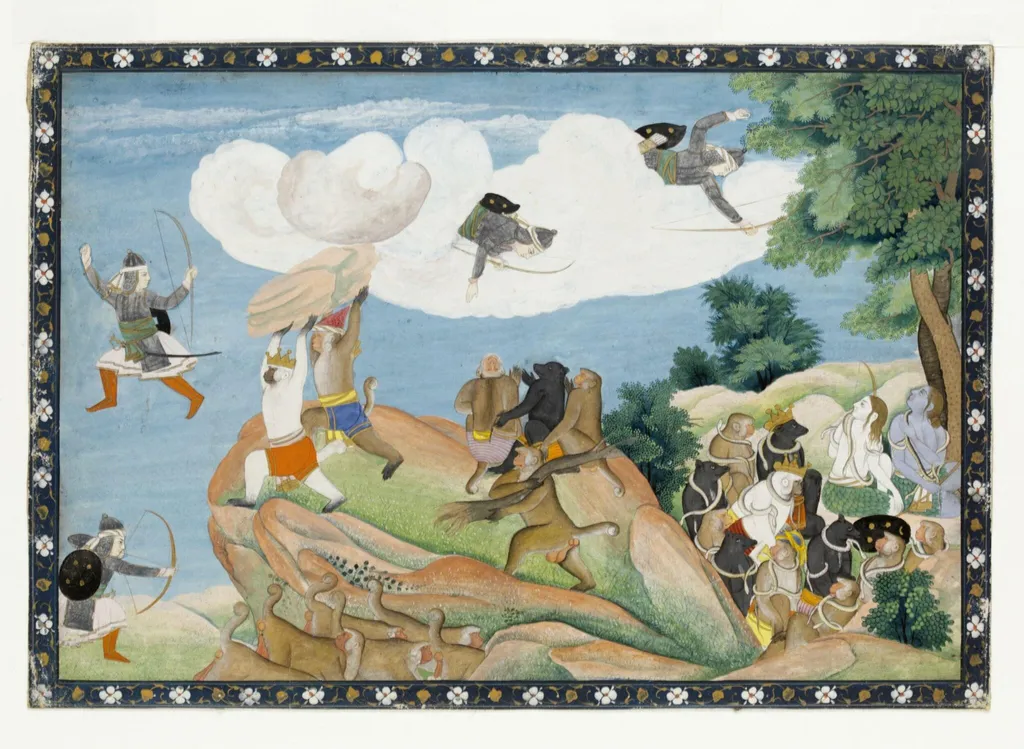
Indrajit, Rama and Lakshmana is a paint painting by the Patna School of Painting artist Unknown. It dates from 1820 and is held in the collection of the Victoria and Albert Museum. Created circa 1820 in opaque watercolor on paper, this work illustrates a dramatic episode from the sixth book of the Ramayana.
About this work
Overview
Created circa 1820 in opaque watercolor on paper, this work illustrates a dramatic episode from the sixth book of the Ramayana. The composition centers on a rocky cavern where three figures in vivid robes stand, one gesturing upward while the others observe, one armed with a bow and arrows.
Subject & Meaning
The scene captures Indrajit, the son of the demon king Ravana, unleashing a volley of arrows that transform into serpents aimed at the heroes Rama and Lakshmana. Their allies—bears and monkeys—are shown attempting to repel the attack, emphasizing the struggle between divine protagonists and demonic forces.
Technique & Style
Executed in opaque watercolor, the artist employs a palette of soft hues contrasted with sharp tonal shifts to heighten the sense of drama. Light is directed into the cavern, creating deep shadows that render the interior mysterious while highlighting the figures and their weapons.
History & Provenance
The painting originates from the early nineteenth‑century Indian tradition of narrative watercolor, a period when such works were often commissioned for devotional or educational purposes. Its current location is recorded in the collection of the Victoria and Albert Museum, which holds several comparable pieces from the same era.
Artist & collection

 Domestic Scene
 Giacomo and Cardinal Marco, investing Andrea, Abbot of San Zeno, with his Benefice
 The Nymph of Fontainebleau
 Portrait of a Woman
 Madonna and Child with Saints in the Enclosed Garden
 Venus and Minerva
 Family Group of Four on Sofa
 Wall painting from Room H of the Villa of P. Fannius Synistor at Boscoreale
 Untitled
 Untitled
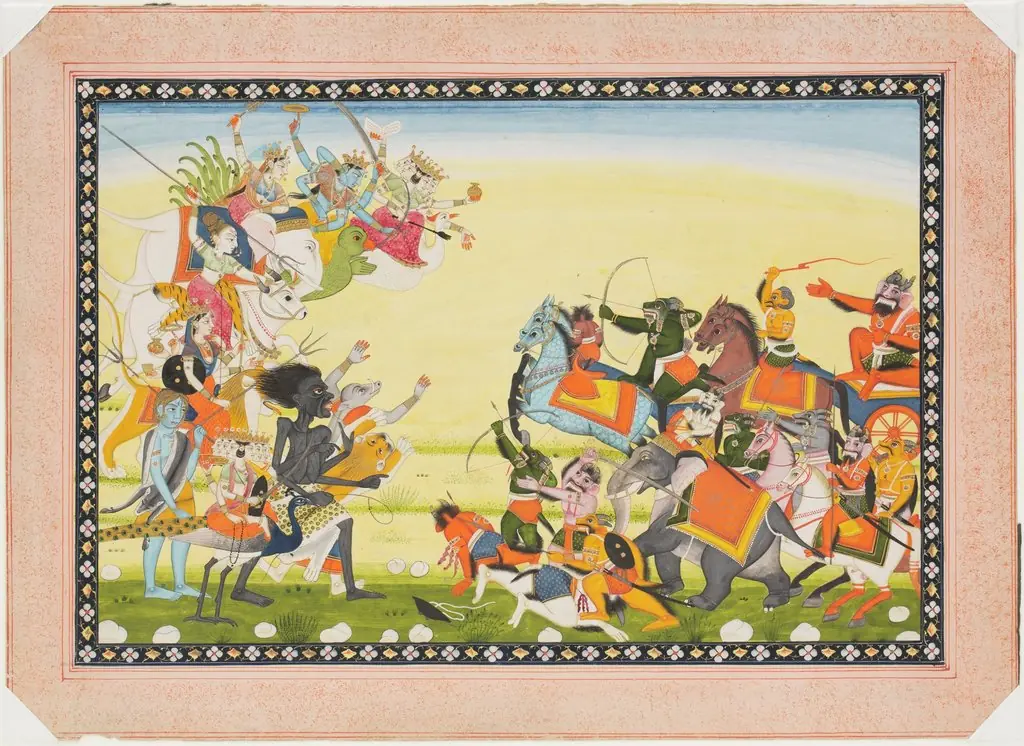 Goddesses and Demons Approaching Combat
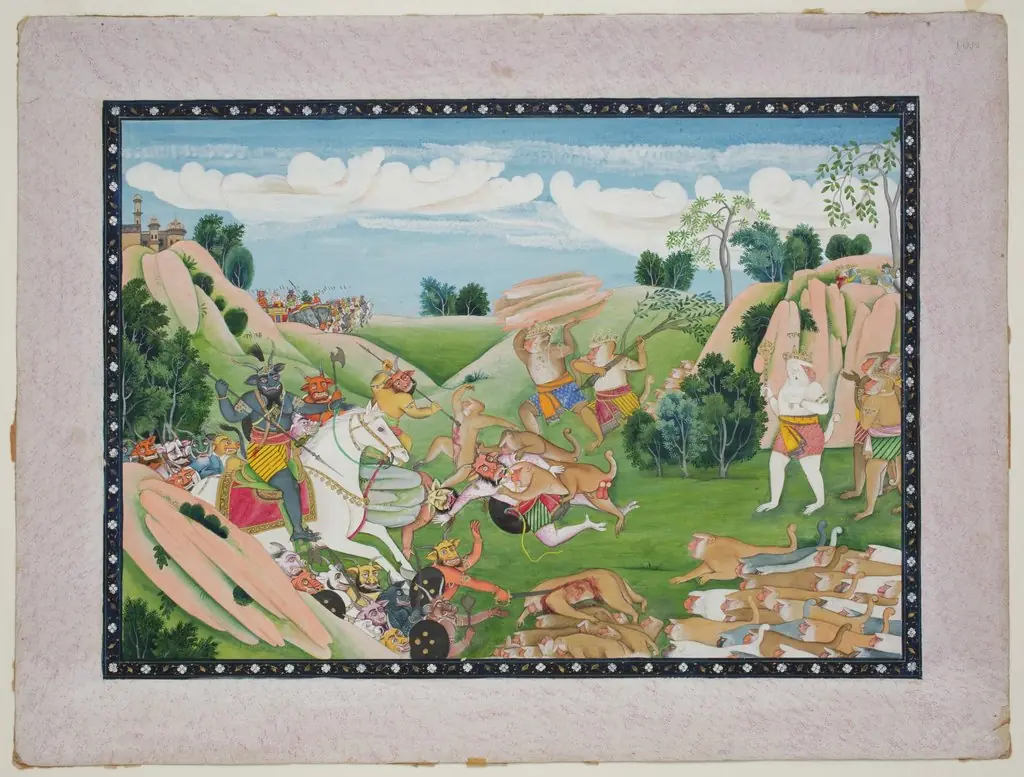 Hanuman Brought a Big Stone to Kill Narantek
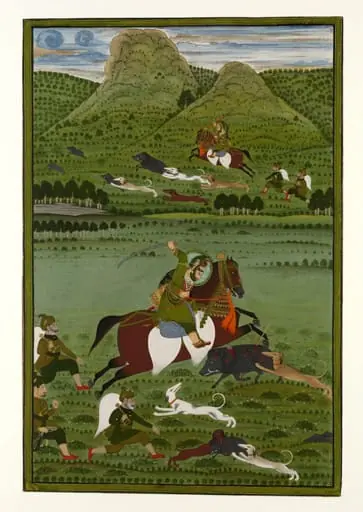 Raja Jawan Singh of Mewar
 Chand Bibi, with two court ladies
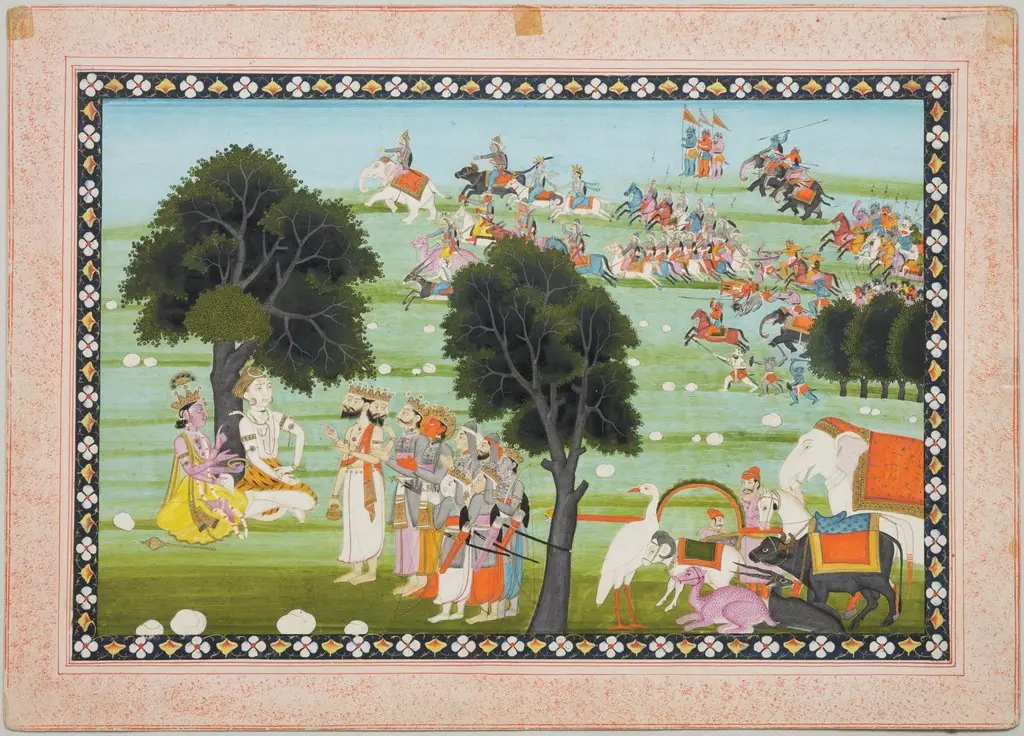 Gods Discussing Their Defeat by Demons, led by Mahishasura in Background
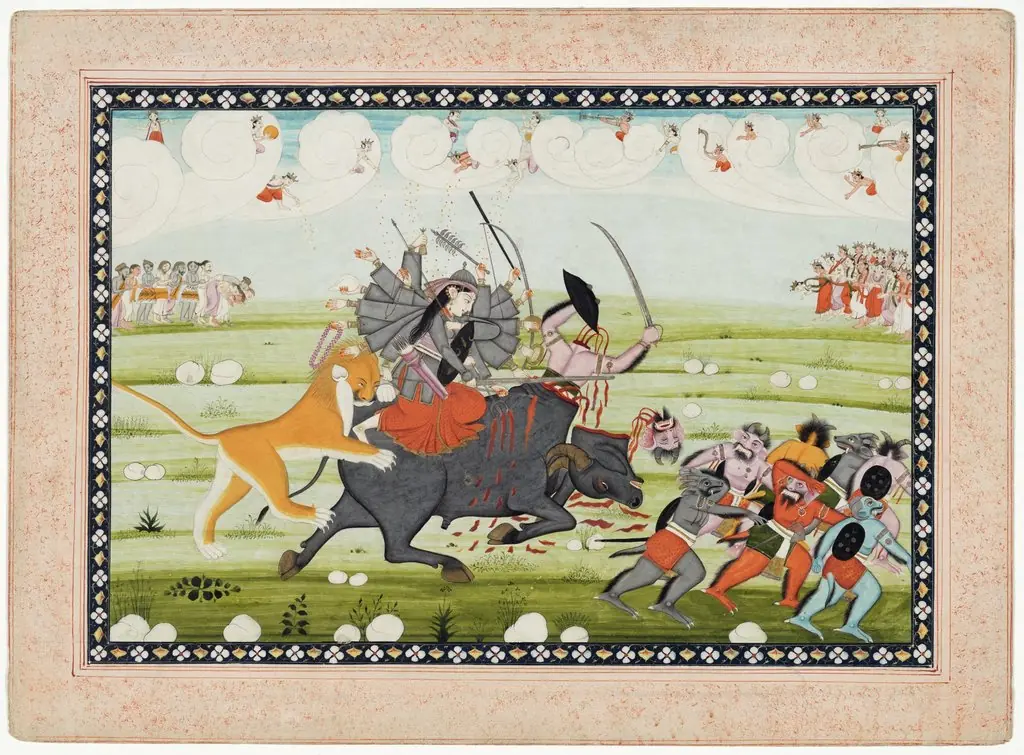 Durga, Having Decapitated Bull and Mahishasura Within, Drives off Remaining Demons while Gods in Clouds Applaud
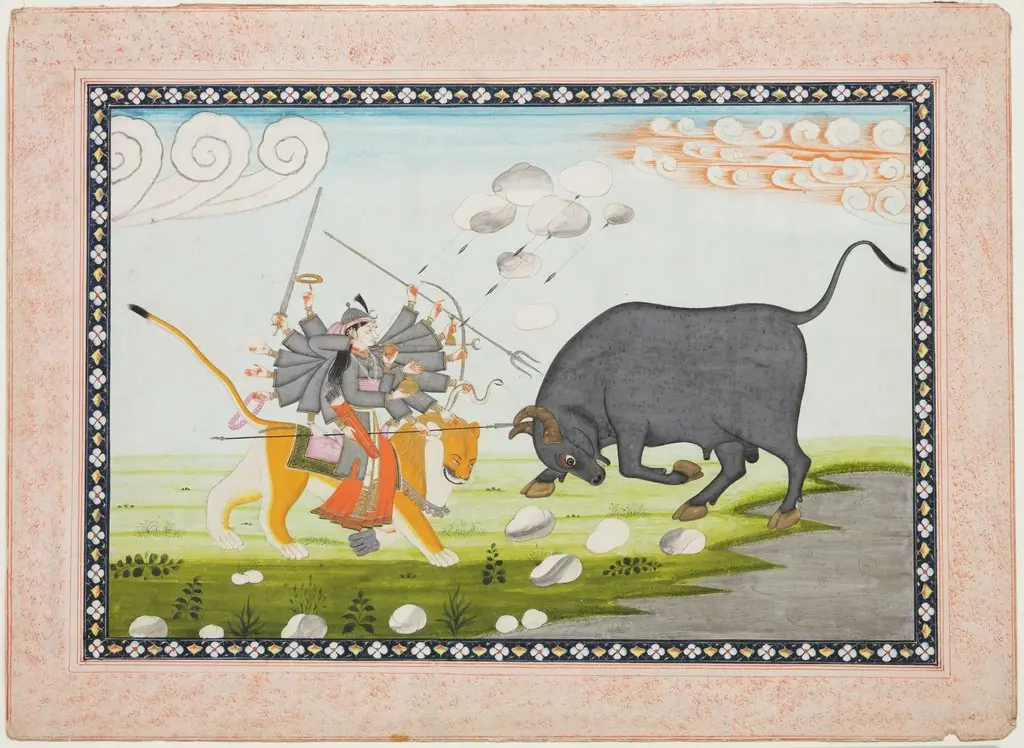 Durga in Combat with the Bull, Mahishasura
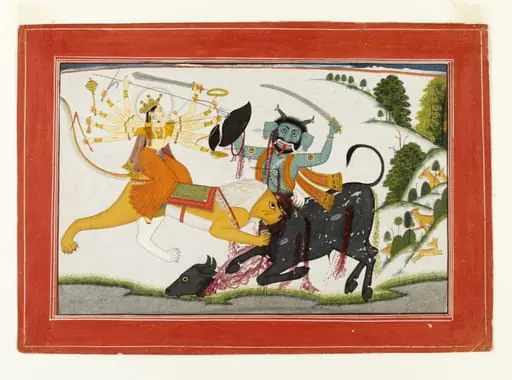 Durga and Mahishasura
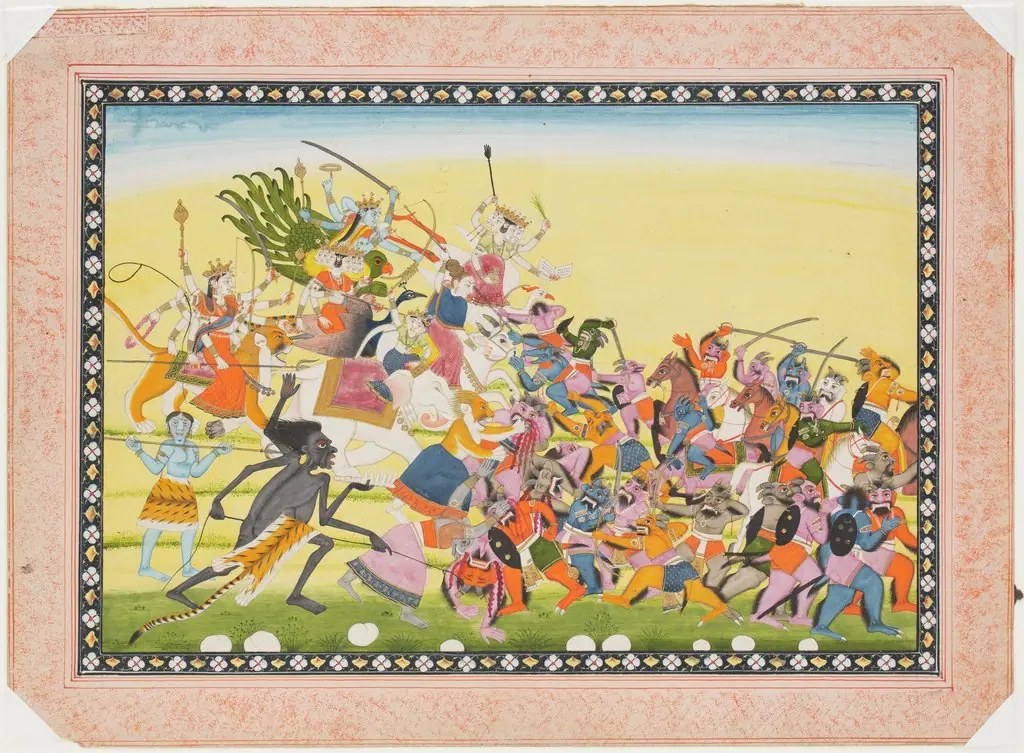 Godesses in Combat with Demons
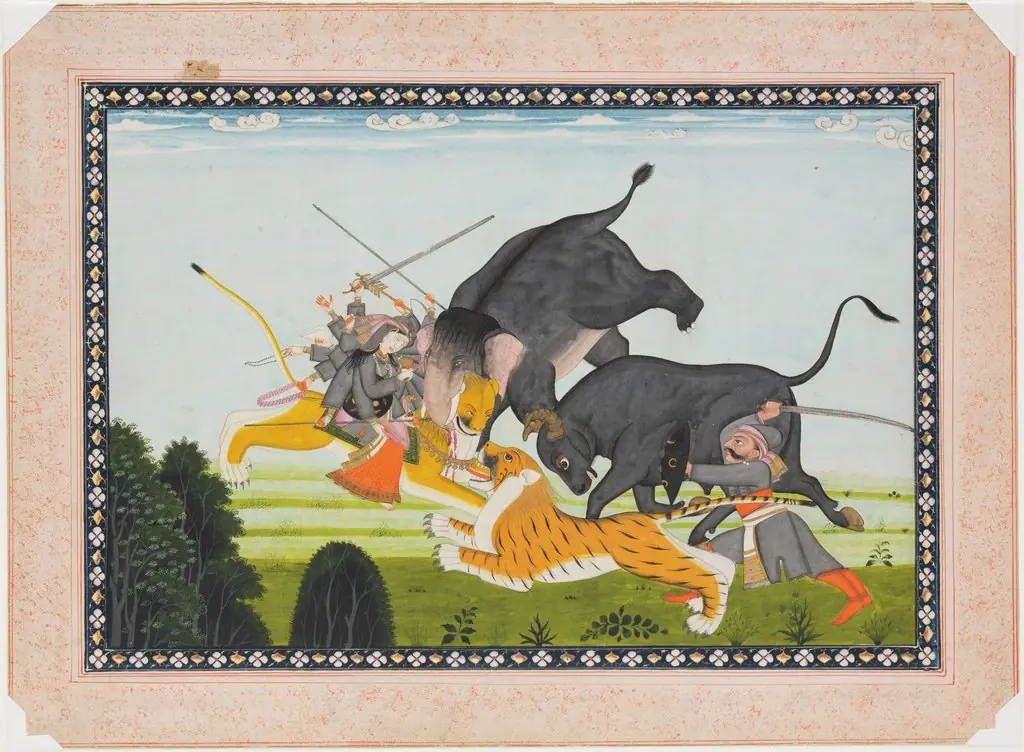 Durga Fighting an Elephant, Bull and Tiger