Artwork
Durga and Mahishasura
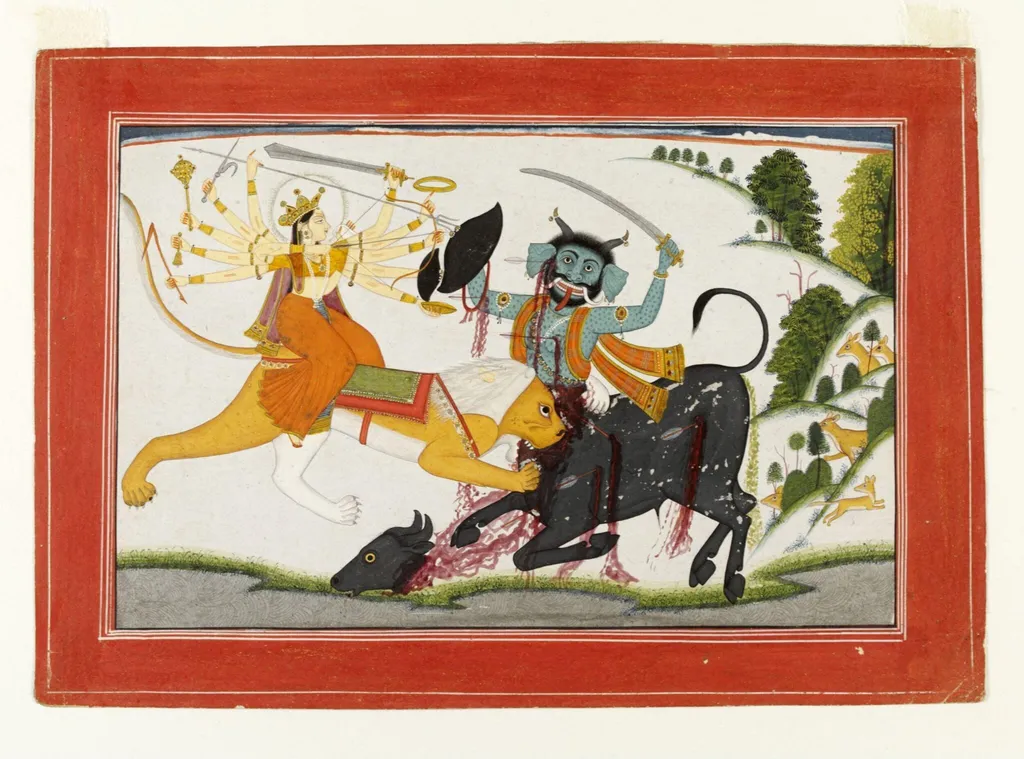
Durga and Mahishasura is a paint painting by the Rococo painting artist Unknown. It dates from 1760 and is held in the collection of the Victoria and Albert Museum. This 1760 opaque watercolour on paper originates from the Pahari school, attributed to the style of Har Jaimal.
About this work
Overview
It captures a decisive moment from Hindu mythology: the goddess Durga in combat with the buffalo demon Mahishasura.
This 1760 opaque watercolour on paper originates from the Pahari school, attributed to the style of Har Jaimal. It captures a decisive moment from Hindu mythology: the goddess Durga in combat with the buffalo demon Mahishasura. Rendered with vivid pigments and intricate detail, the work exemplifies the regional tradition of devotional painting, where narrative clarity and symbolic intensity take precedence over naturalistic space.
Subject & Meaning
The painting illustrates Durga’s triumph over Mahishasura, a symbol of chaos and ego. Durga, depicted with multiple arms wielding divine weapons, rides a lion—not a tiger—as her mount, embodying cosmic order. The demon, blue-skinned and horned, is shown beneath the beast, his form contorted in defeat. The scene conveys the eternal victory of dharma over adharma, reinforcing the goddess’s role as protector of cosmic balance.
Technique & Style
Executed in opaque watercolour, the painting employs rich mineral pigments with gold accents to highlight sacred elements. The figures are rendered with sharp outlines and stylized features, typical of Pahari miniatures. Background elements like trees and sky are simplified, directing focus to the central confrontation. The use of red and gold borders frames the scene as a sacred tableau, enhancing its ritual function.
History & Provenance
Created in 1760, likely in a royal atelier of the Himalayan foothills, the painting reflects patronage by local rulers devoted to Shaiva or Shakta traditions. Its survival suggests it was preserved in a temple or noble collection. Though its exact early ownership is undocumented, stylistic parallels link it to other works from the Garhwal or Kangra regions, known for their refined devotional imagery.
Context
This work emerged during a period when Pahari courts actively commissioned illustrated manuscripts and devotional panels. Durga’s iconography was especially popular in regions influenced by the Bhakti movement and local goddess cults. The painting’s compact scale and portable format indicate it was intended for private worship or ceremonial display, not public monumental use.
Legacy
As part of a broader tradition of Indian miniature painting, this work preserves a visual language that continues to inform contemporary representations of Hindu deities. Its preservation in institutions like the Victoria and Albert Museum allows scholarly access and public engagement with pre-colonial South Asian aesthetics, affirming its role as a cultural artifact rather than merely an artistic object.
Artist & collection

 Domestic Scene
 Giacomo and Cardinal Marco, investing Andrea, Abbot of San Zeno, with his Benefice
 The Nymph of Fontainebleau
 Portrait of a Woman
 Madonna and Child with Saints in the Enclosed Garden
 Venus and Minerva
 Family Group of Four on Sofa
 Wall painting from Room H of the Villa of P. Fannius Synistor at Boscoreale
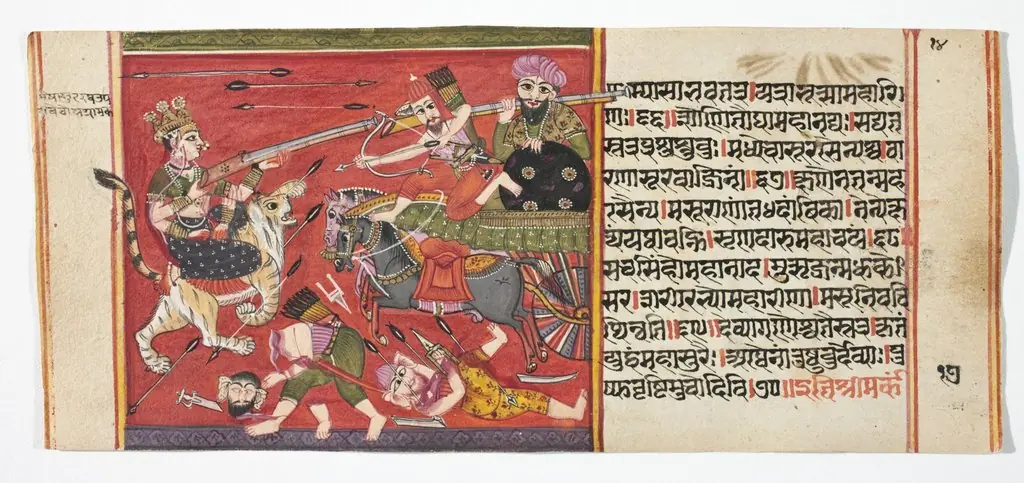 Legend of Durga
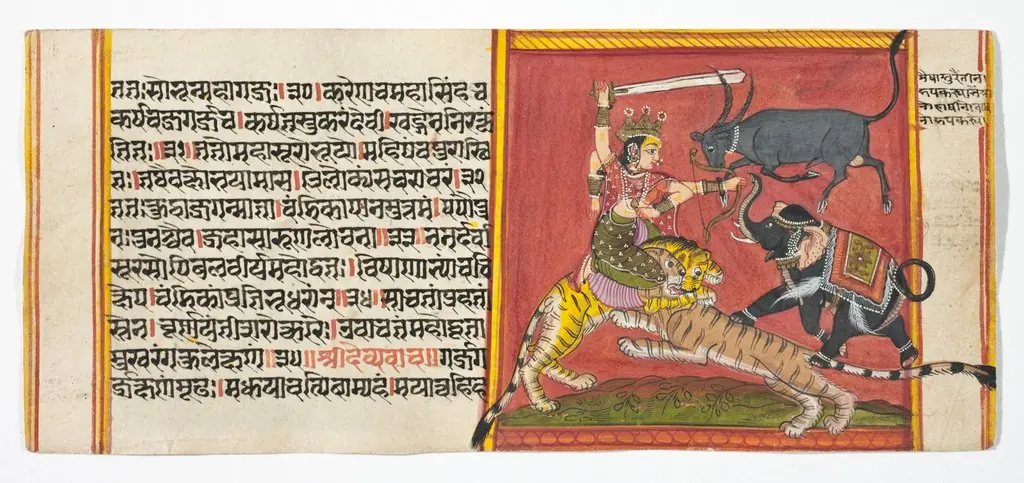 Legend of Durga
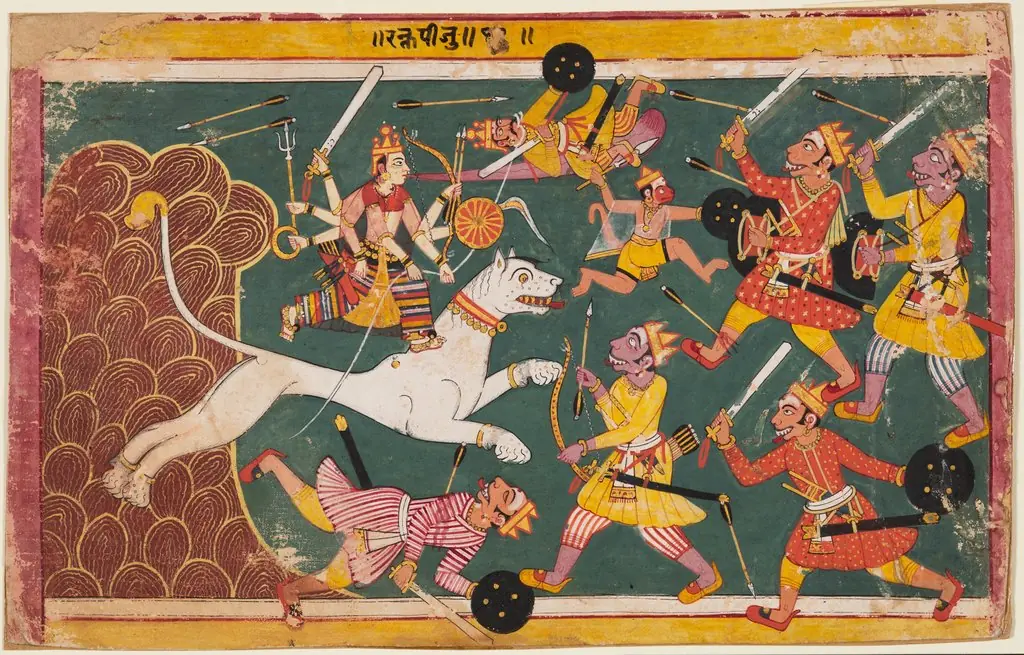 The Goddess Annihilates the Demon Raktabija, from a Devi-Mahatmya
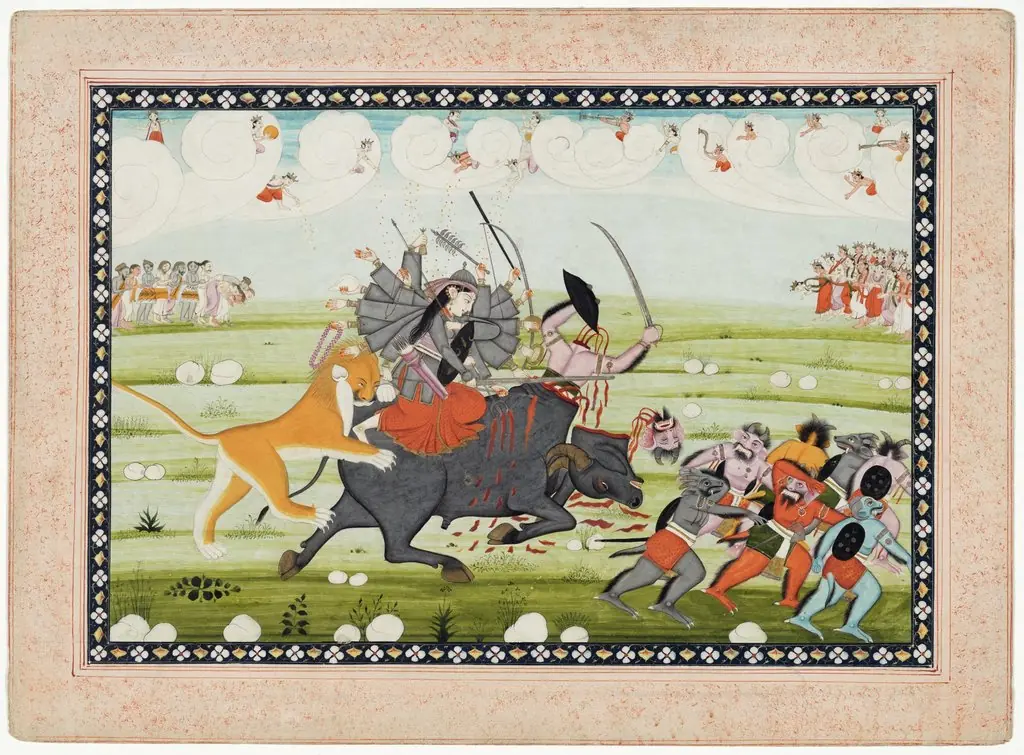 Durga, Having Decapitated Bull and Mahishasura Within, Drives off Remaining Demons while Gods in Clouds Applaud
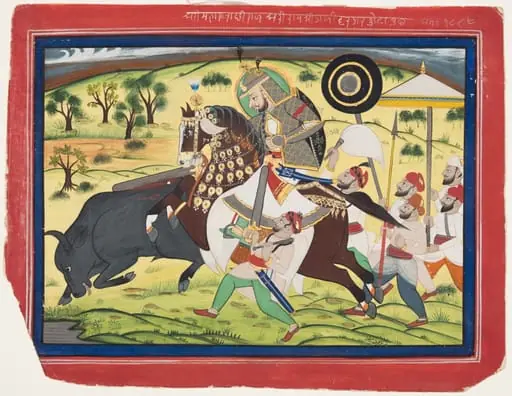 Maharao Ram Singh II of Kota (r. 1828–66) Hunting Buffalo
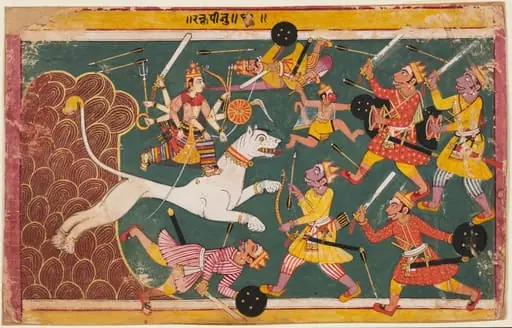 The Goddess Annihilates the Demon Raktabija, from a Devi-Mahatmya
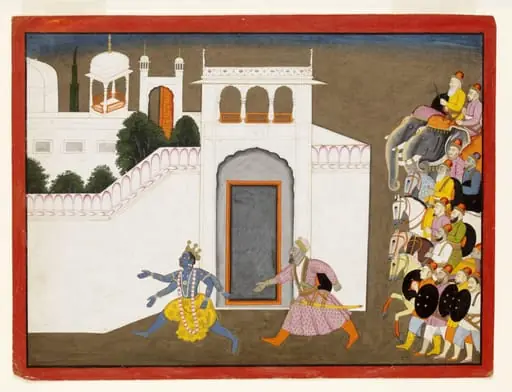 Kaljaman and Krishna