Artwork
Ungleiche Liebe
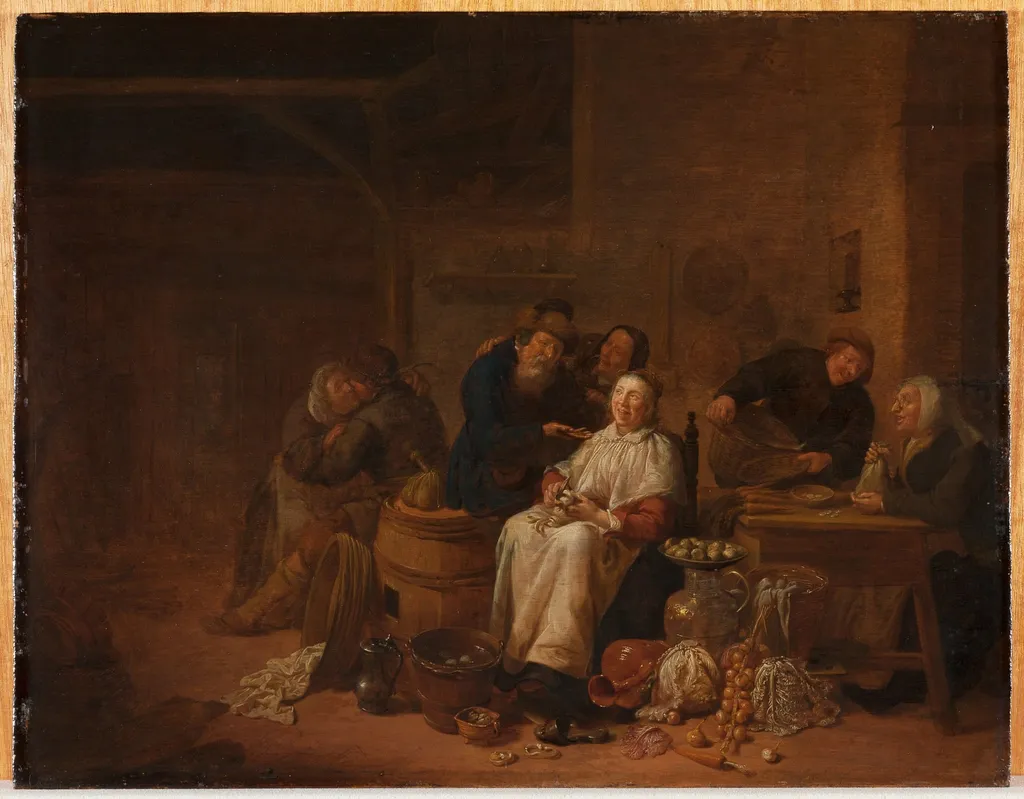
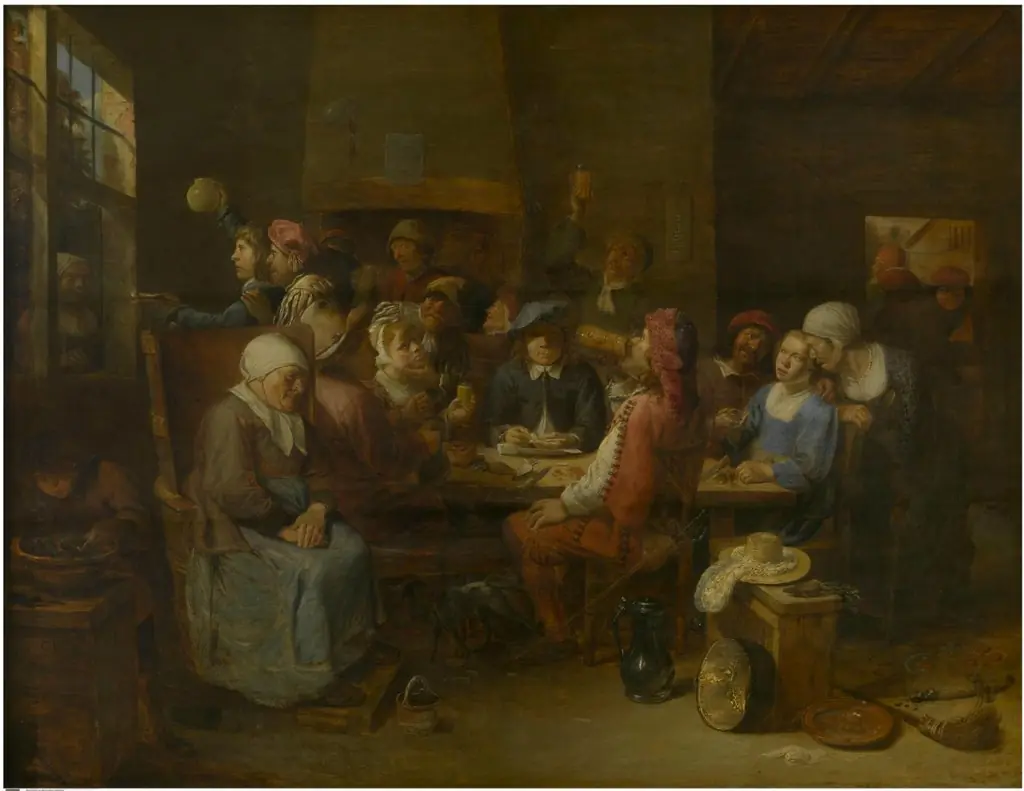
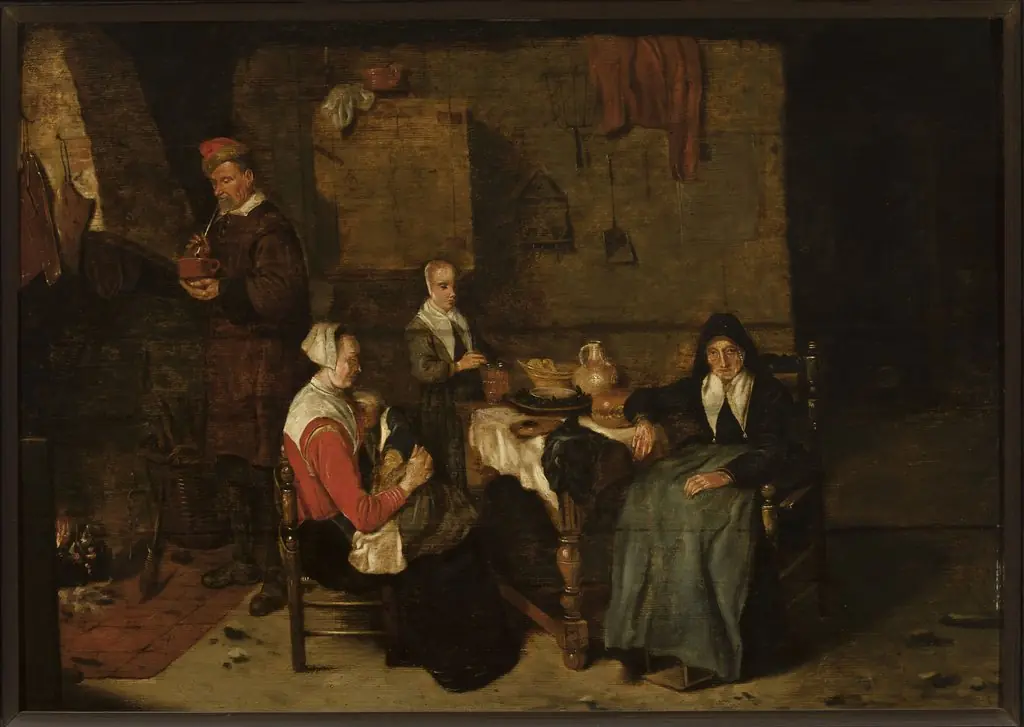
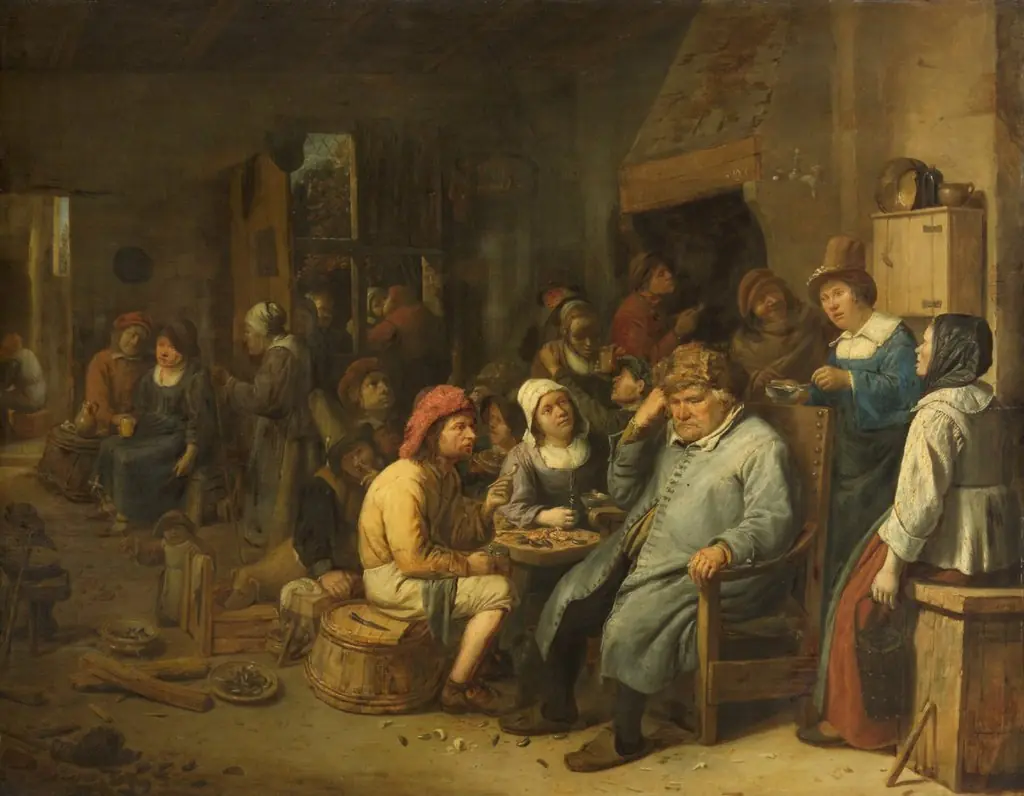
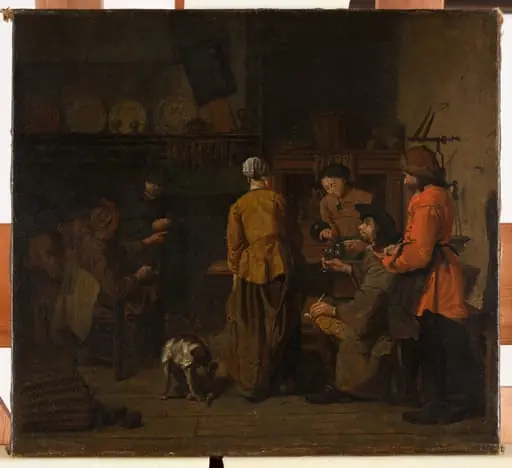
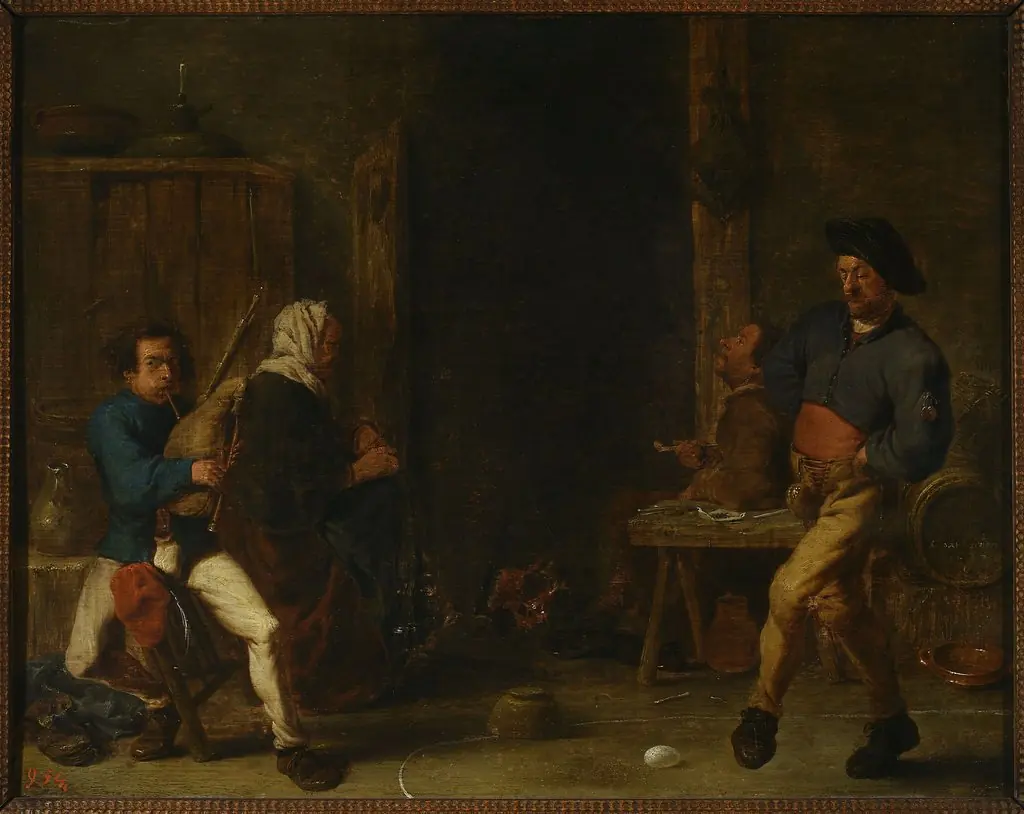
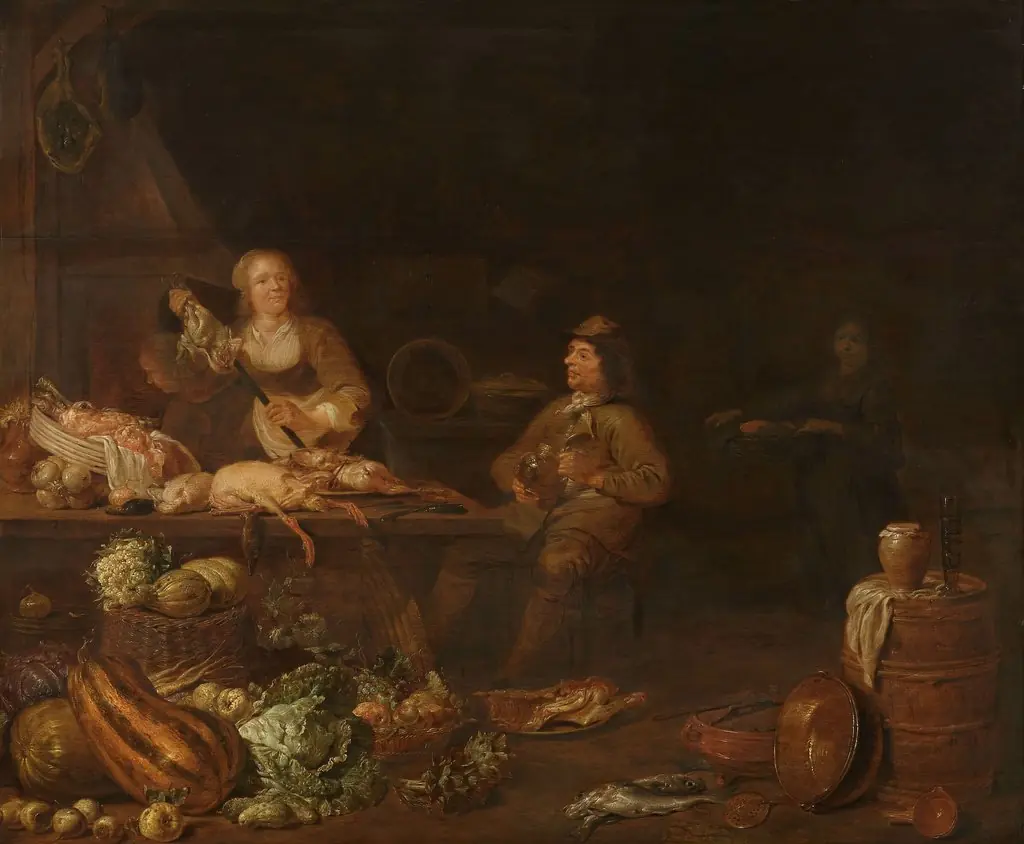
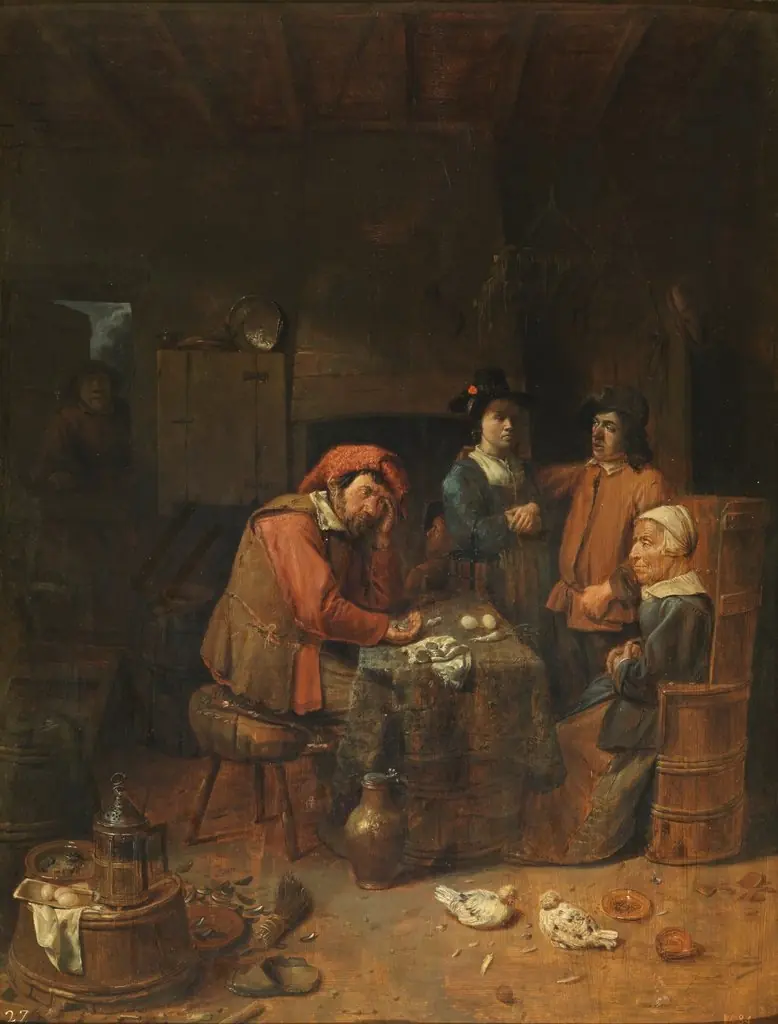
Ungleiche Liebe is a drawing by Unknown. It dates from 1649 and is held in the collection of the Art Collection of the University Göttingen. This ink drawing depicts a modest interior scene with a small group of individuals gathered around a woman seated on a barrel.
About this work
Overview
This ink drawing depicts a modest interior scene with a small group of individuals gathered around a woman seated on a barrel.
This ink drawing depicts a modest interior scene with a small group of individuals gathered around a woman seated on a barrel. The setting is sparse, defined by rough-hewn wooden walls and a cluttered floor littered with household items. The composition captures a quiet, unguarded moment, avoiding dramatic gesture in favor of subtle, everyday presence. The artist employs minimal yet deliberate line work to suggest form and atmosphere without embellishment.
Subject & Meaning
The central figure, a woman in a white dress, holds a small object, possibly a tool or personal item, while others around her engage in quiet, unspoken interaction. The scattered objects—onions, a jug, a hat—hint at domestic labor and transient activity. No clear narrative is given, but the scene suggests a pause in routine, perhaps after work or before rest. The absence of facial detail invites contemplation rather than identification.
Technique & Style
The artist uses simple, controlled lines and cross-hatching to model form and texture, particularly in the wooden walls and fabric folds. Shading is built gradually through layered strokes, creating depth without heavy ink washes. The roughness of the surfaces is rendered with deliberate irregularity, mirroring the humble environment. The lack of fine detail in faces and clothing reinforces the focus on atmosphere over individual identity.
History & Provenance
The drawing’s origin is undocumented in public records, and its creator remains unidentified. It appears to be a study or sketch from the 18th or early 19th century, likely made in a rural European setting. No known exhibition history or collector lineage accompanies the work, suggesting it was never intended for public display but preserved as a personal record of observation.
Context
This image aligns with a tradition of vernacular drawing that documented ordinary life outside formal academic circles. Similar works by anonymous artists from this period often captured laborers, domestic spaces, and unidealized moments. The absence of aristocratic or religious symbolism marks it as a record of common experience, contrasting with the grand narratives favored in official art of the time.
Legacy
Though not widely known, the drawing contributes to a quiet archive of everyday life preserved through informal draftsmanship. Its value lies in its unembellished observation, offering insight into material culture and social rhythms of a time when such scenes were rarely recorded in art. It stands as a testament to the significance of the mundane when rendered with attention and restraint.
Artist & collection
Museum
Art Collection of the University Göttingen
Continue through works from the same source collection.
 Domestic Scene
 Giacomo and Cardinal Marco, investing Andrea, Abbot of San Zeno, with his Benefice
 The Nymph of Fontainebleau
 Portrait of a Woman
 Madonna and Child with Saints in the Enclosed Garden
 Venus and Minerva
 Family Group of Four on Sofa
 Wall painting from Room H of the Villa of P. Fannius Synistor at Boscoreale