Artwork
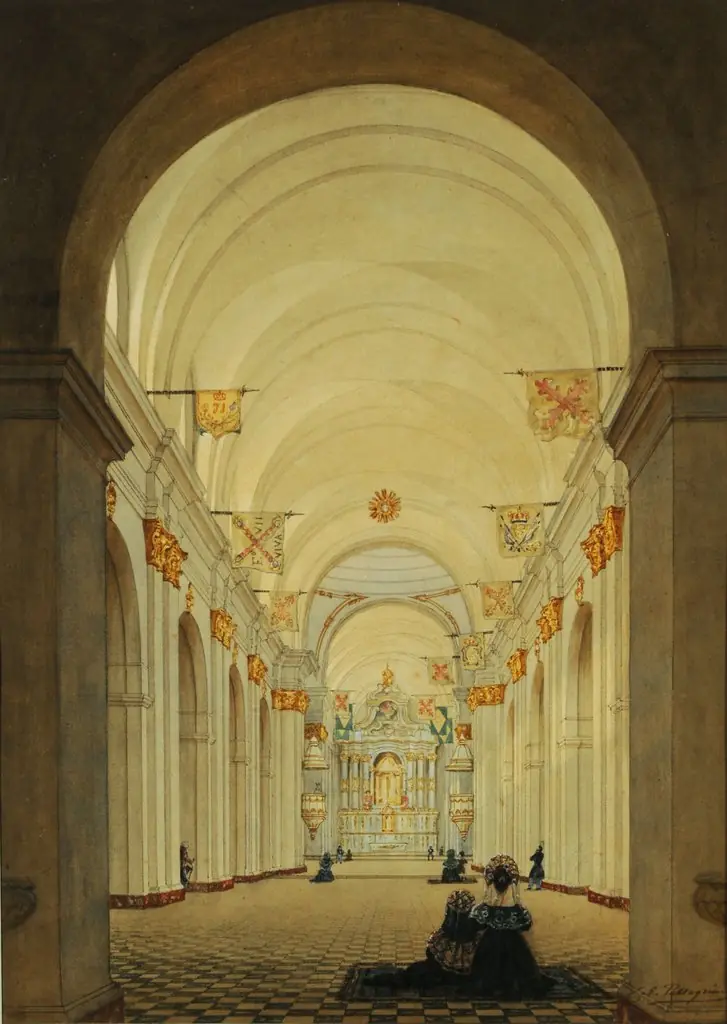
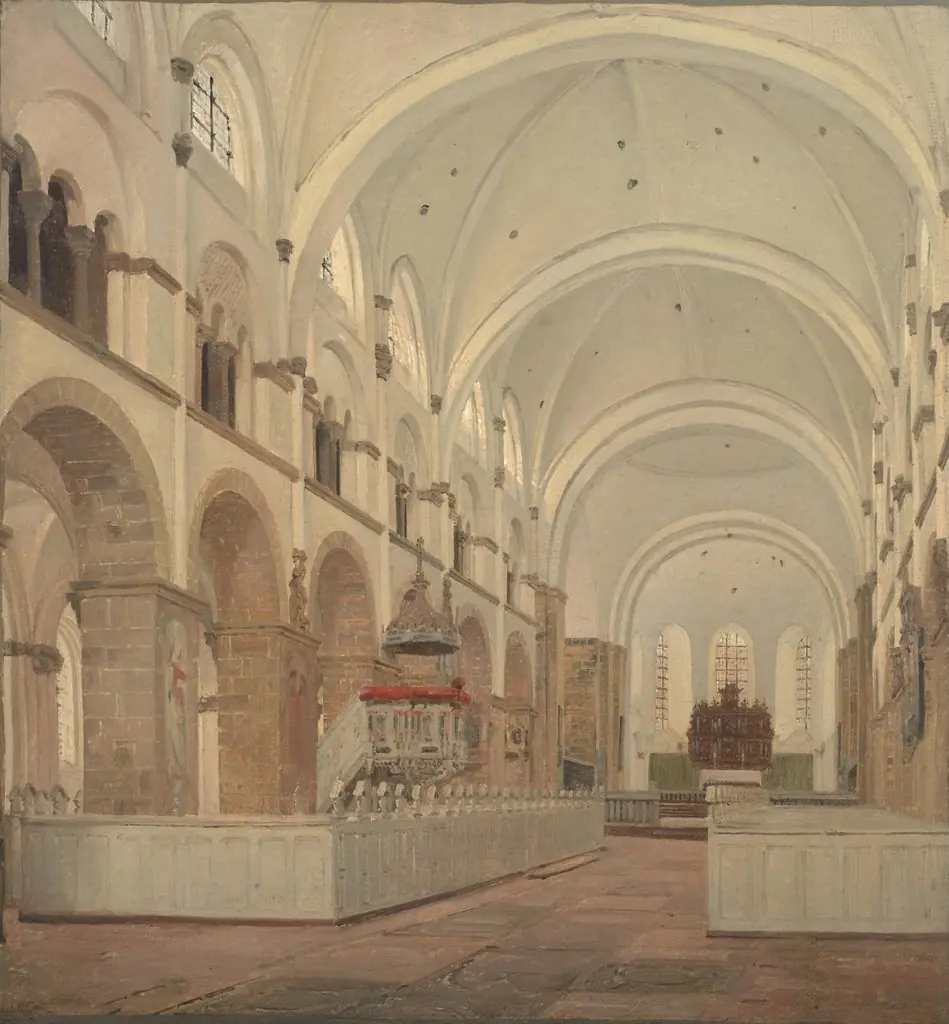
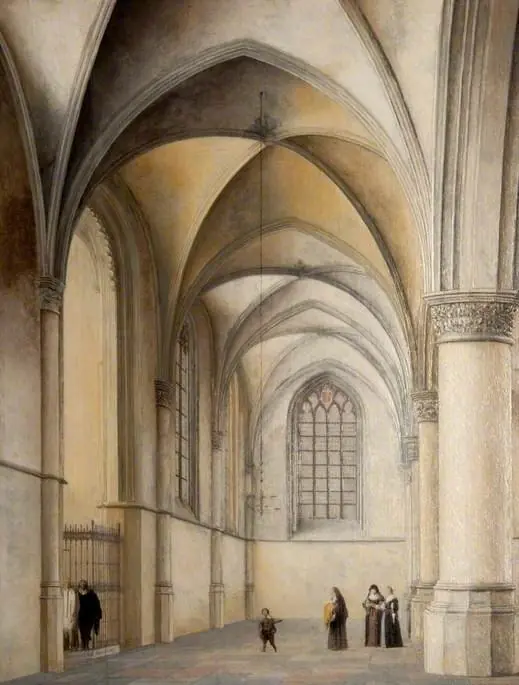
Interior of the cathedral of Cambrai, France
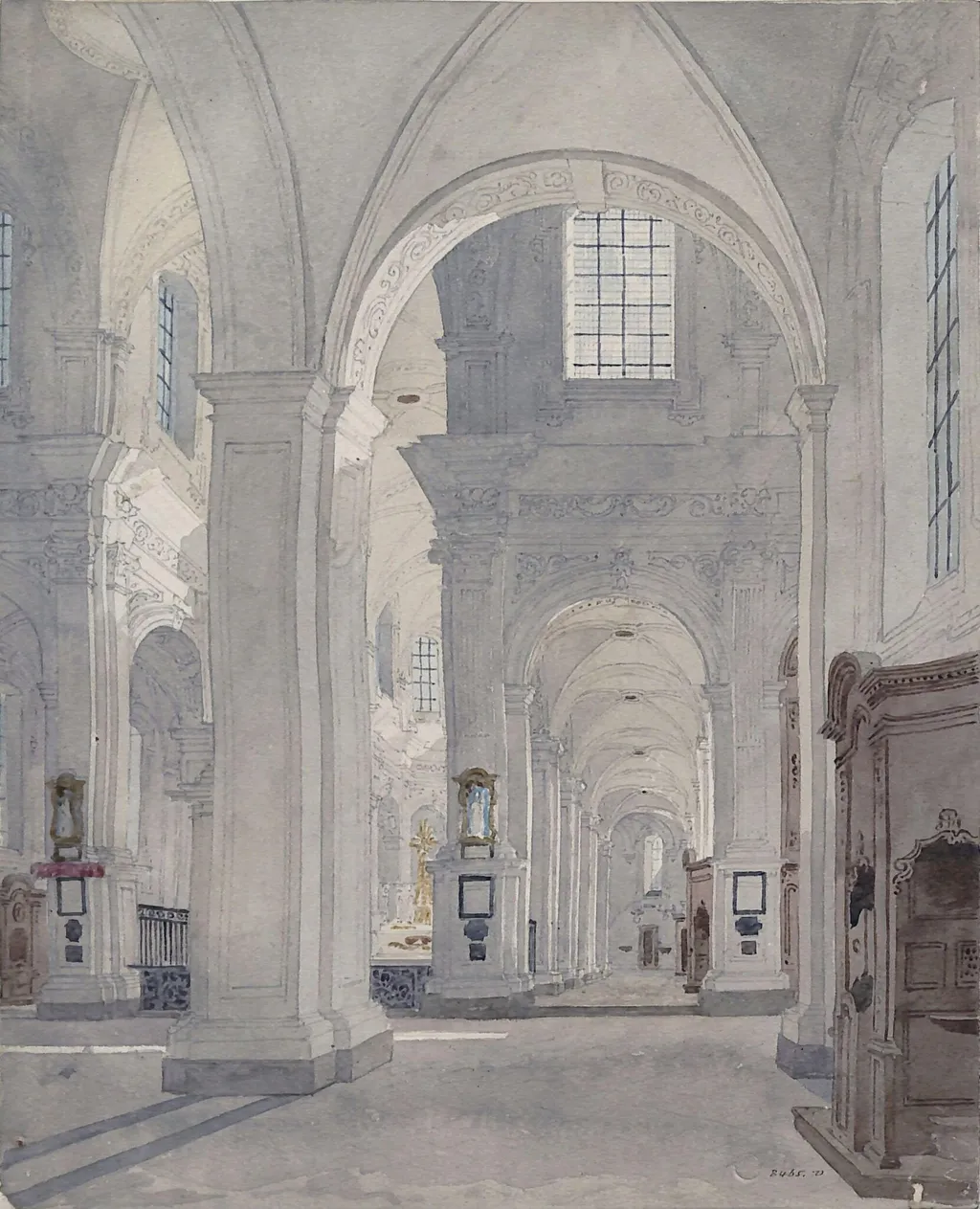
Interior of the cathedral of Cambrai, France is a watercolor work on paper by Unknown. It dates from 1750 and is held in the collection of the Victoria and Albert Museum. This watercolour, dated 1750, captures the interior of Cambrai Cathedral in northern France.
About this work
Overview
The artist rendered the nave’s rounded arches and plain walls using delicate washes, emphasizing stillness and quiet scale.
This watercolour, dated 1750, captures the interior of Cambrai Cathedral in northern France. Executed with restrained tonality, the work focuses on architectural space rather than human activity. The artist rendered the nave’s rounded arches and plain walls using delicate washes, emphasizing stillness and quiet scale. The absence of figures heightens the sense of solitude within the sacred structure.
Subject & Meaning
The subject is the cathedral’s central aisle, depicted without worshippers or liturgical objects. This deliberate emptiness suggests contemplation rather than ceremony. The emphasis on architectural form—arches, light, and worn stone—points to an interest in the building as a silent, enduring presence, perhaps reflecting Enlightenment-era fascination with structure and spatial harmony.
Technique & Style
The artist employed soft, layered watercolour washes to model light and shadow beneath the arches, creating depth without bold contrasts. Iron-barred windows and smooth flooring are suggested with minimal detail, while the swirling decorative edges of the arches are rendered in fine, precise lines. The palette remains muted, relying on tonal variation rather than colour to define form.
History & Provenance
The work is inscribed on its reverse with the date 1750 and location, confirming its origin. Its survival suggests it was kept as a personal record or study, possibly by an architect, artist, or traveler documenting regional ecclesiastical architecture. It entered the Victoria and Albert Museum’s collection as part of a broader 18th-century British interest in continental religious spaces.
Context
In mid-18th-century France, cathedral interiors were increasingly studied as examples of Romanesque and early Gothic design. This watercolour aligns with a growing trend among artists and antiquarians to record architectural details before restoration or decay altered them. Similar works by British and Flemish travellers reflect a broader European practice of visual documentation.
Legacy
The piece contributes to a body of 18th-century topographical watercolours that prioritized accuracy over ornament. Its quiet composition influenced later architectural studies, particularly in Britain, where such works became tools for both preservation and aesthetic reflection. It remains a quiet testament to the value placed on observing sacred space as form, not ritual.
Artist & collection

 Domestic Scene
 Giacomo and Cardinal Marco, investing Andrea, Abbot of San Zeno, with his Benefice
 The Nymph of Fontainebleau
 Portrait of a Woman
 Madonna and Child with Saints in the Enclosed Garden
 Venus and Minerva
 Family Group of Four on Sofa
 Wall painting from Room H of the Villa of P. Fannius Synistor at Boscoreale