Artwork
The Interior of Saint Peter's, Rome
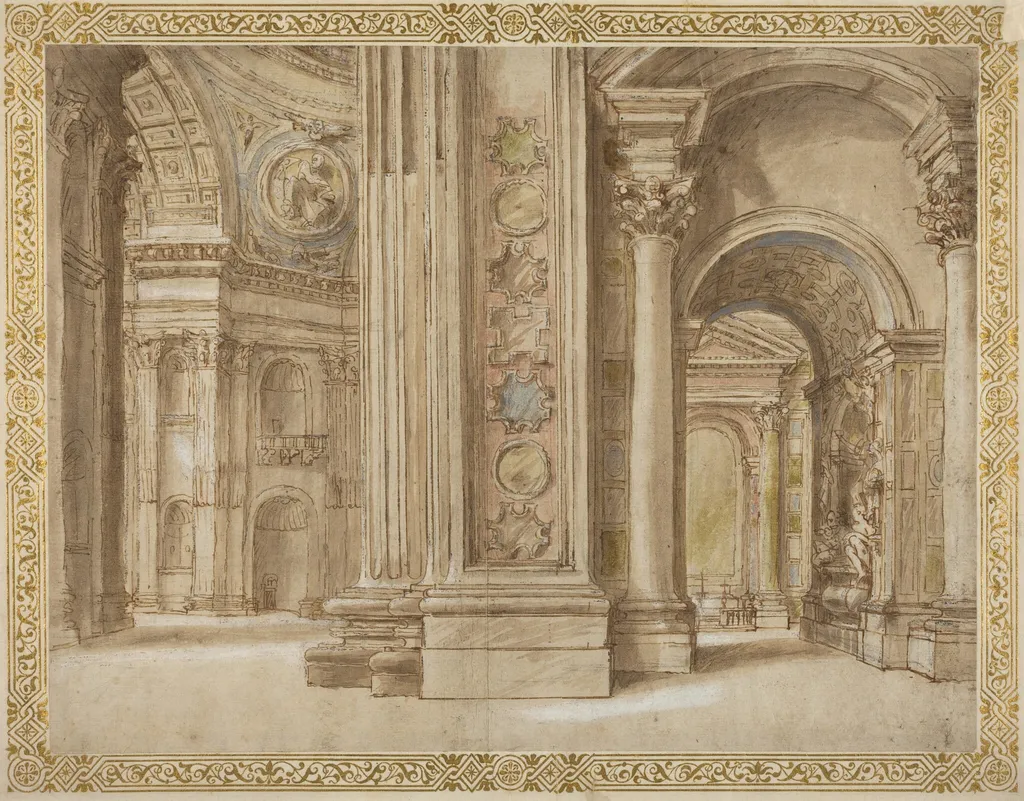
The Interior of Saint Peter's, Rome is an ink drawing by the Baroque artist Italian 17th Century. It dates from 1601 and is held in the collection of the National Gallery of Art. The work titled *The Interior of Saint Peter’s, Rome* is a drawing executed on laid paper.
About this work
Overview
The work titled *The Interior of Saint Peter’s, Rome* is a drawing executed on laid paper. It combines pen and brown ink, a brown wash, watercolor, and white highlights applied over black chalk, all framed by gold‑leaf borders. The composition presents a spacious, richly decorated interior, emphasizing the monumental scale and ornamental detail of the basilica’s nave.
Subject & Meaning
The image records the vaulted space of Saint Peter’s Basilica, focusing on its soaring ceilings, rows of columns, and elaborately carved walls punctuated by statues and decorative motifs. By rendering the architectural grandeur, the drawing underscores the religious and civic significance of the papal basilica as a symbol of ecclesiastical authority and artistic achievement.
Technique & Style
The artist employed a layered approach: fine pen lines define structural elements, while brown ink and wash create tonal depth. Watercolor adds subtle color modulation, and white highlights over black chalk enhance contrast in illuminated areas. The gold‑leaf border, applied to the paper’s edge, reinforces the sense of opulence typical of Baroque visual strategies.
Context
Produced during the Baroque period, the drawing reflects contemporary interests in dramatic spatial representation and the interplay of light and shadow. Such architectural studies were often used as preparatory sketches for larger commissions or as records of celebrated sites, illustrating the era’s fascination with monumental religious architecture.
Artist & collection

Artist
This Italian artist worked in the 17th century, making engravings, ink drawings, and oil paintings.


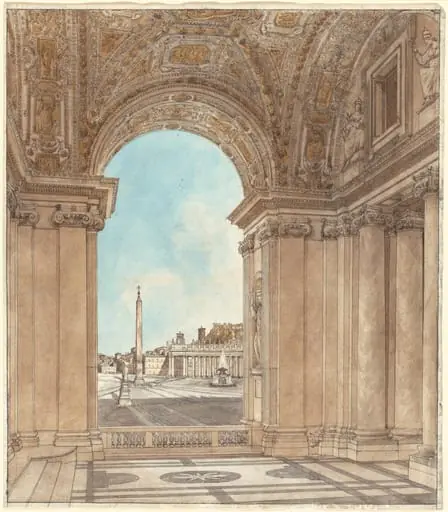 The Piazza of Saint Peter's Seen through an Arch of the Basilica
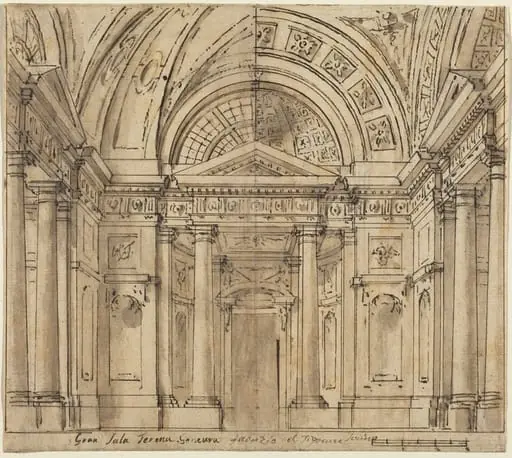 Design for Entrance to a Hall
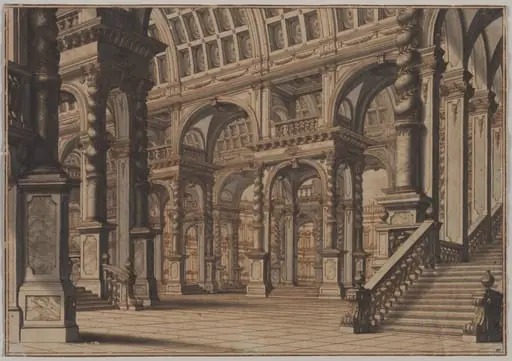 Monumental Vaulted Hall with Staircase
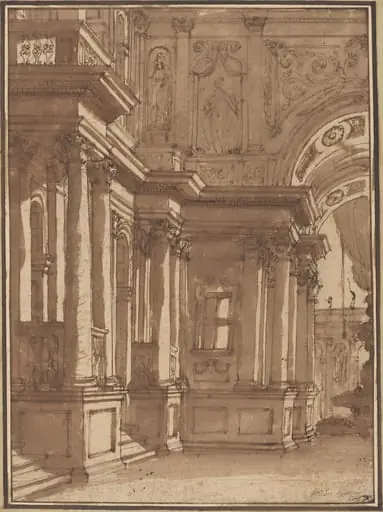 Interior of a Palace
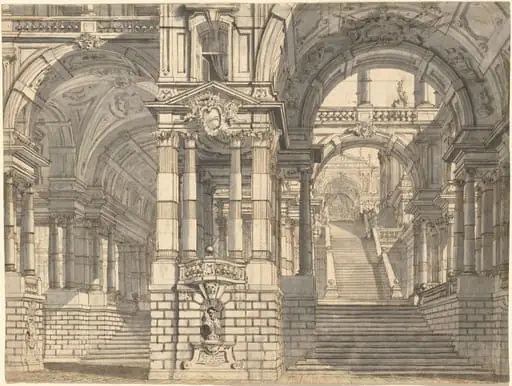 Fantasy of Magnificent Courtyards and Loggie with a Monumental Staircase
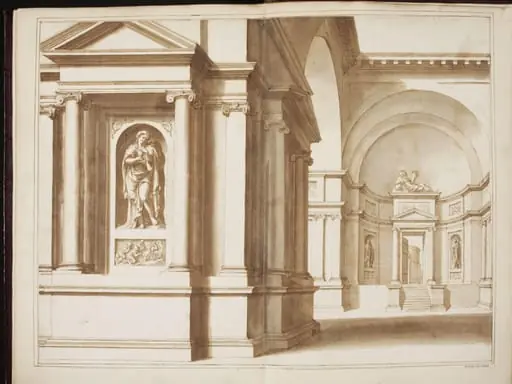 Interior of a Palazzo with Classical Sculptures in Niches and above a Door
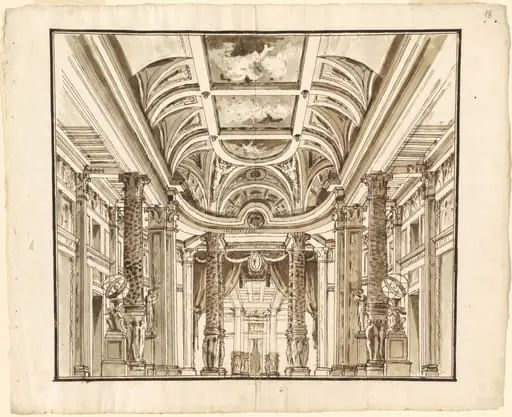 Fantasy of a Great Hall with Basketweave Columns
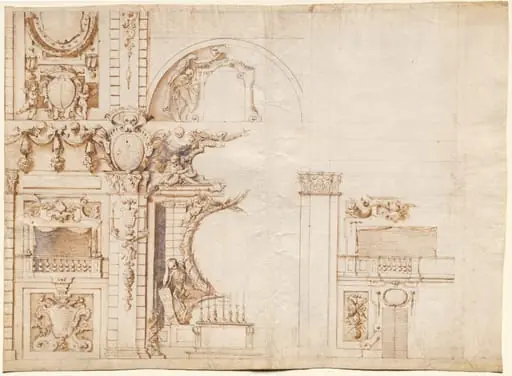 Study for the 'Essequie' Conducted in San Lorenzo, Florence, in 1637 in Honour of Holy Roman Emperor Ferdinand II
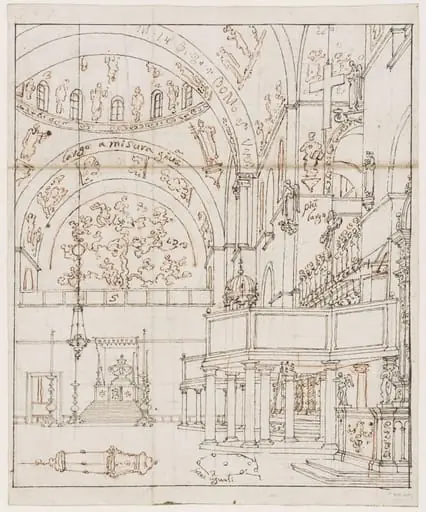 View of the interior of St. Mark's, Venice
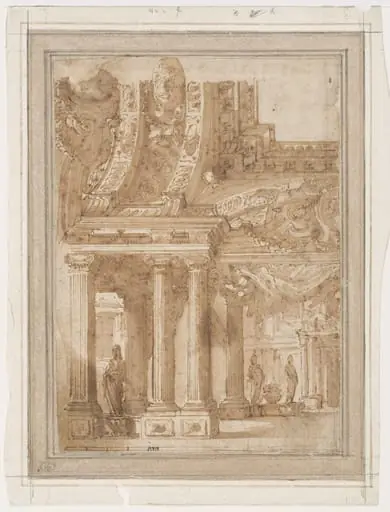 Untitled
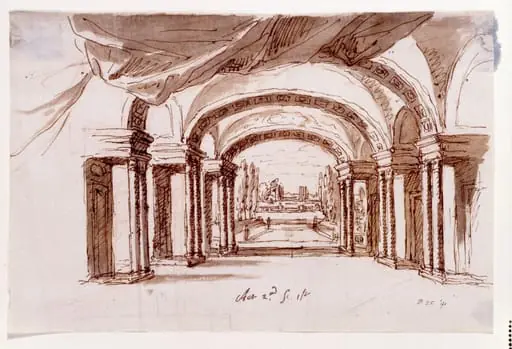 Drawing, Design for a stage set for Arsinoe, Queen of Cyprus at the Theatre Royal, London for Act II, scene 1, a great hall looking into a garden
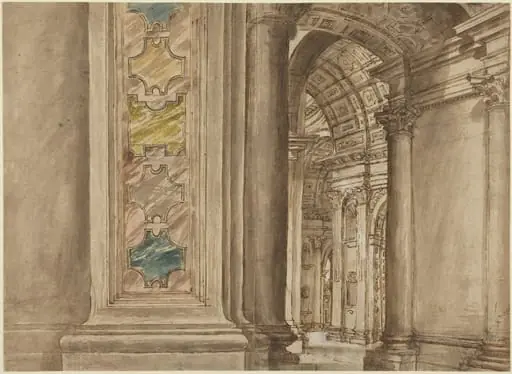 The Interior of Saint Peter's, Rome