Artwork
James Bowen
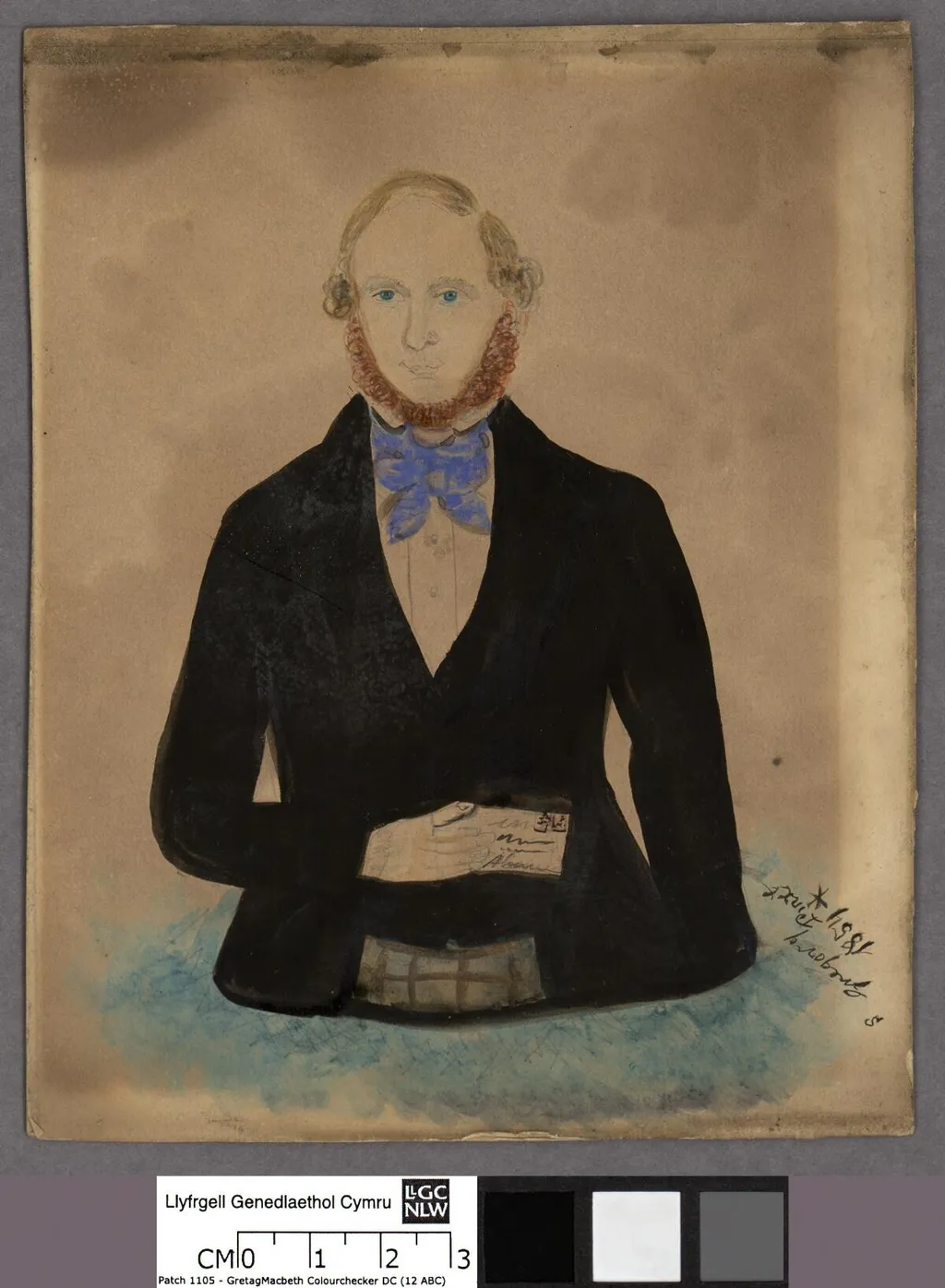
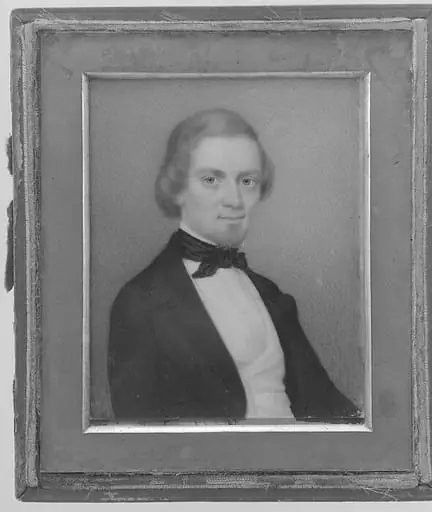
James Bowen is a paint painting by Unknown. It dates from 1854 and is held in the collection of the National Library of Wales. This portrait depicts a 19th-century man dressed in a black jacket, white shirt, and blue bow tie, holding a sheet of paper.
About this work
The National Library of Wales holds this painting, which provides a glimpse into the artistic styles and techniques of the time.
This portrait shows a man in a black jacket with a blue bow tie and a white shirt. He has a beard and is holding a piece of paper in his hands. The background of the painting is beige.
The man's attire and hairstyle suggest that the painting was created in the 19th century. The artist's use of color and composition creates a sense of depth and dimensionality in the portrait.
The National Library of Wales holds this painting, which provides a glimpse into the artistic styles and techniques of the time.
Overview
This portrait depicts a 19th-century man dressed in a black jacket, white shirt, and blue bow tie, holding a sheet of paper. Painted in oil, the work presents a restrained yet carefully modeled figure against a neutral beige background. The composition emphasizes the subject’s quiet demeanor and attention to detail, typical of middle-class portraiture of the period. The National Library of Wales holds the painting as part of its visual archive.
Subject & Meaning
The man’s attire and the paper he holds suggest a professional or intellectual identity, possibly a scholar, clerk, or writer. His beard and formal clothing reflect prevailing norms of modest dignity in mid-19th-century Britain. The paper may imply engagement with written work, reinforcing an image of thoughtful labor. No overt symbolism is present; the portrait prioritizes quiet realism over narrative.
Technique & Style
The artist employs subtle gradations of tone and soft modeling to create volume in the face and fabric. The brushwork is controlled, with attention to texture in the shirt and jacket, while the background remains unobtrusive to focus attention on the figure. Color is muted but deliberate, with the blue bow tie providing a quiet contrast against darker tones. Depth is achieved through chiaroscuro rather than perspective.
History & Provenance
The painting resides in the collection of the National Library of Wales, indicating it was likely acquired as part of a broader effort to document Welsh cultural figures or domestic portraiture. Its origin and the identity of the sitter remain unconfirmed, though its style aligns with provincial British portraiture from the 1830s to 1860s. No record of exhibition or prior ownership is publicly documented.
Context
During the early to mid-19th century, portrait painting remained a dominant genre among the middle classes, who sought to commemorate personal achievement and social standing. Artists often worked outside major urban centers, producing intimate, unadorned likenesses. This work reflects that trend—neither grand nor theatrical, but grounded in the values of restraint and individual dignity.
Legacy
As a representative example of provincial British portraiture, the painting contributes to understanding how ordinary individuals were visually recorded outside elite circles. It offers insight into the aesthetic preferences and social norms of its time, preserved not as a celebrated work but as a quiet artifact of everyday life in 19th-century Britain.
Artist & collection

 Domestic Scene
 Giacomo and Cardinal Marco, investing Andrea, Abbot of San Zeno, with his Benefice
 The Nymph of Fontainebleau
 Portrait of a Woman
 Madonna and Child with Saints in the Enclosed Garden
 Venus and Minerva
 Family Group of Four on Sofa
 Wall painting from Room H of the Villa of P. Fannius Synistor at Boscoreale
 Portrait of a Gentleman
 Robert Stephen (Moelwynfab)
 Portrait of man with red waistcoat
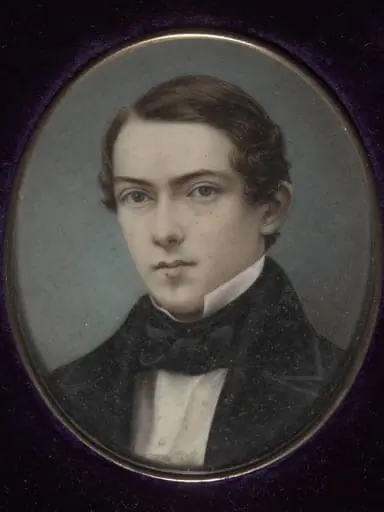 Bust portrait of Alfred Lowell Putnam
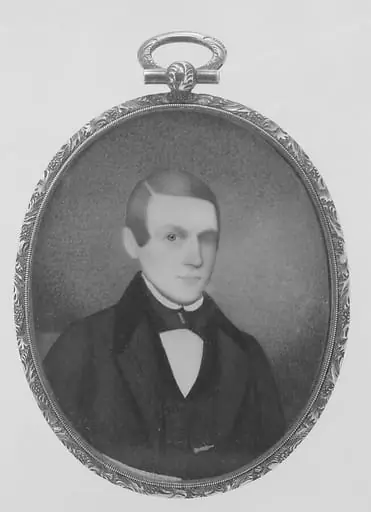 Mr. Pierce
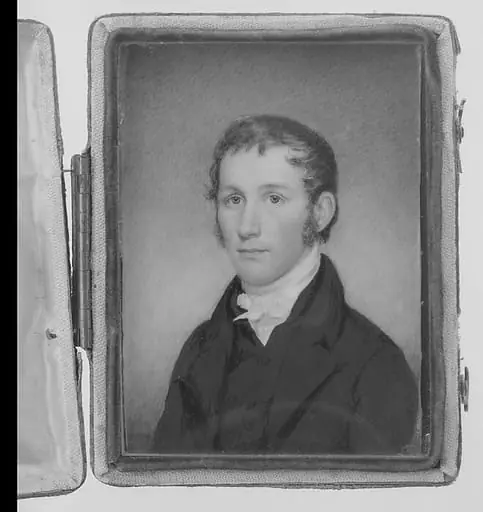 Portrait of a Gentleman
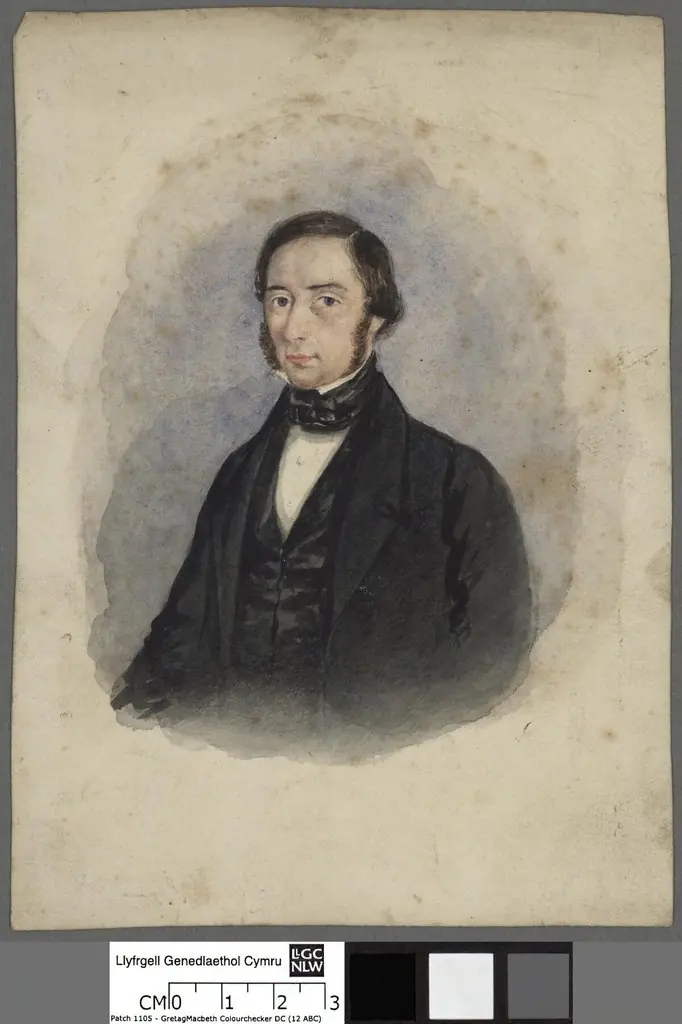 John Johnes
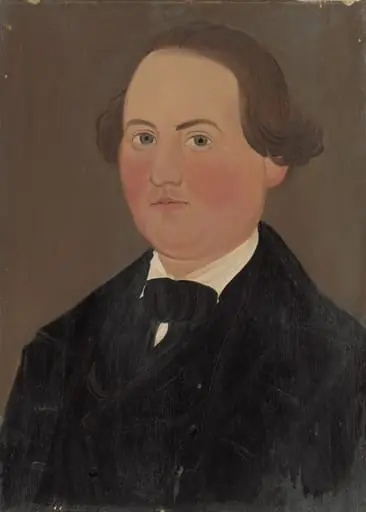 Husband
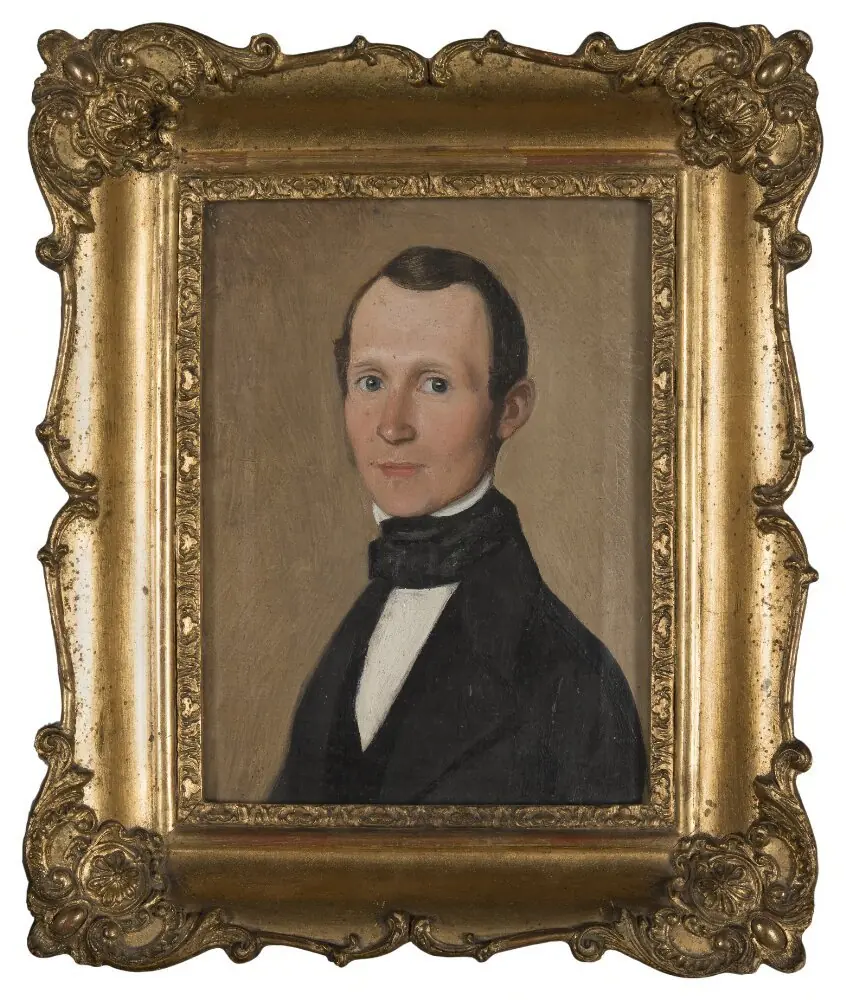 Fredrik Signeul (1810 - 1890), Paint Manufacturer, Director of an Orphanage in Uddevalla
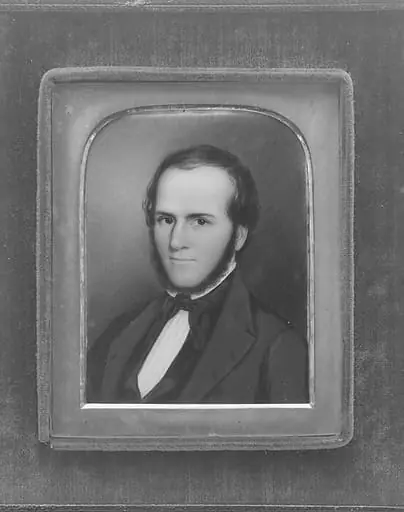 Portrait of a Gentleman
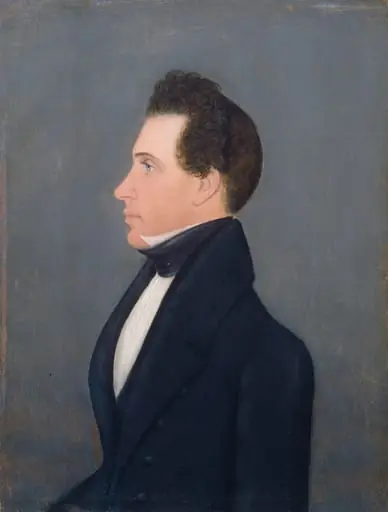 Profile Portrait of a Man
 Portrait of a Gentleman