Artwork
Kakubha ragini
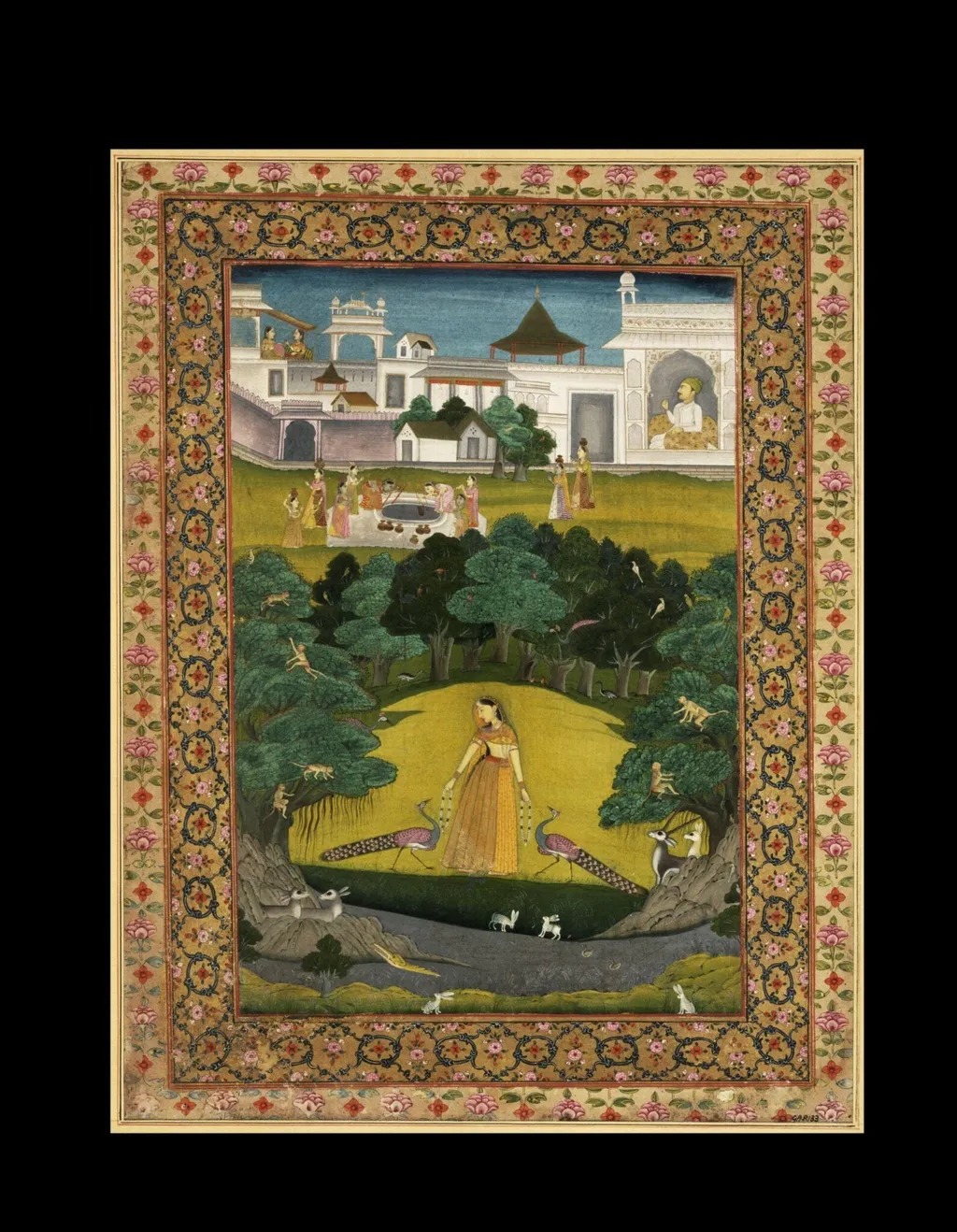
Kakubha ragini is a paint painting by the Rococo painting artist Unknown. It dates from 1770 and is held in the collection of the Victoria and Albert Museum.
About this work
Overview
The composition reflects the practice of visually interpreting musical modes through narrative imagery, common in Rajput court painting traditions.
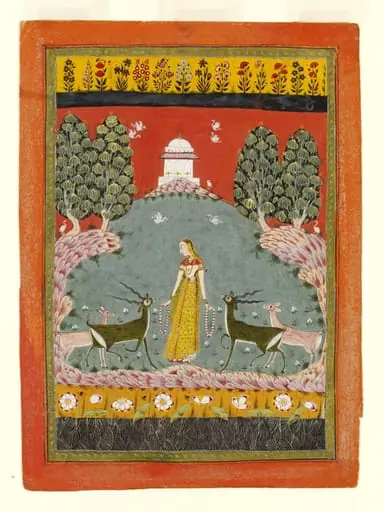
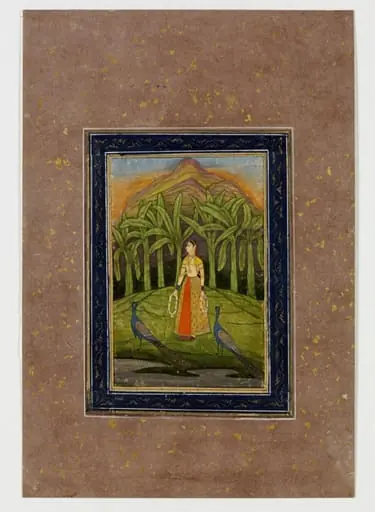
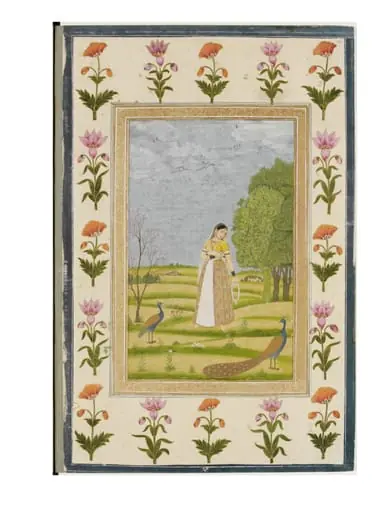
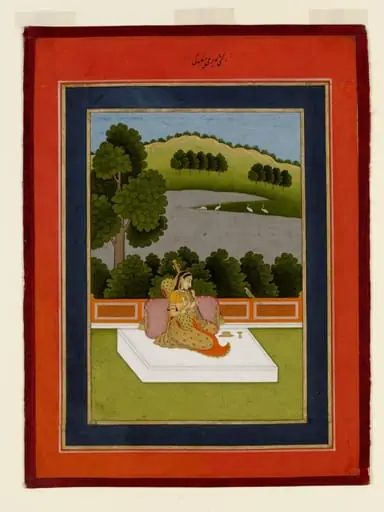
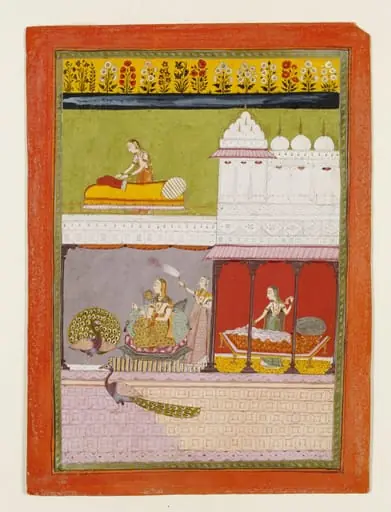
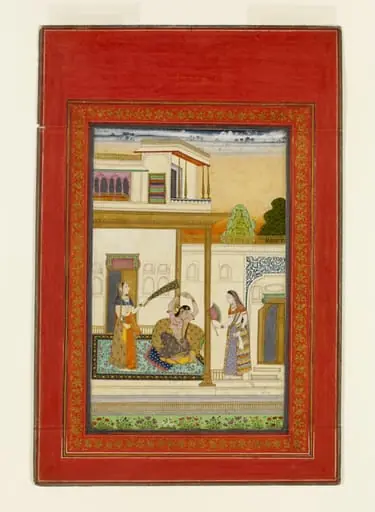
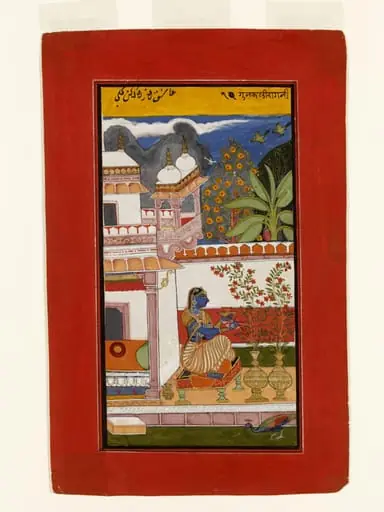
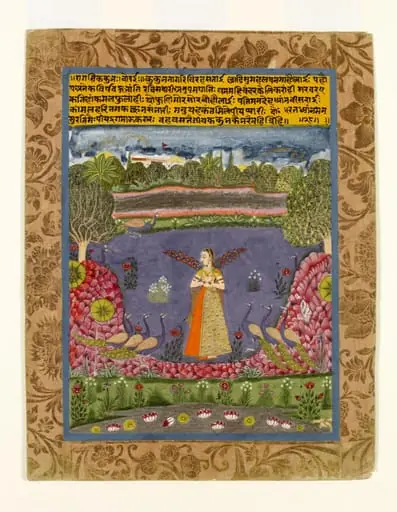
This painting illustrates the Kakubha ragini, a melodic mode from the Indian classical tradition. It combines two distinct scenes: a central figure of a woman adorned with floral garlands and an upper register depicting women drawing water from a well, watched by a prince. The composition reflects the practice of visually interpreting musical modes through narrative imagery, common in Rajput court painting traditions.
Subject & Meaning
The central figure embodies the emotional essence of the Kakubha ragini, traditionally associated with longing or devotion, as indicated by her floral adornments rather than jewelry. The upper scene, showing women at a well and a prince observing, may symbolize daily life intersecting with royal contemplation. Together, the scenes suggest a layered emotional landscape tied to the raga’s mood, blending personal introspection with communal activity.
Technique & Style
The painting employs flat, decorative planes and precise line work typical of Rajput miniature traditions. Figures are rendered with delicate detail, and spatial depth is suggested through tiered composition rather than perspective. The upper and lower scenes are clearly separated, emphasizing symbolic over naturalistic space. Color is applied in muted, earthy tones, enhancing the contemplative atmosphere without relying on chiaroscuro or sfumato effects.
History & Provenance
Created in the late 17th or early 18th century, likely in a Rajput court workshop, this work belongs to a series of ragamala paintings commissioned to visualize musical modes. Such albums were prized by royal patrons for their fusion of art, music, and poetry. Its survival suggests it was carefully preserved, possibly within a royal collection, though its specific early ownership remains undocumented.
Context
Ragamala paintings emerged as a distinct genre in North India, linking poetic and musical traditions with visual art. Each raga was personified through a scene evoking its emotional character, often set in specific times of day or seasons. Kakubha ragini, associated with twilight and melancholy, was frequently depicted with solitary women or natural motifs, aligning with broader cultural practices of synesthetic expression in Mughal and Rajput courts.
Legacy
This painting contributes to a broader corpus of Indian visual musicology, preserving how abstract musical concepts were rendered tangible through imagery. While later art movements moved toward realism, such works remain vital references for understanding pre-colonial Indian aesthetics. Today, they inform scholarly studies on the interplay between sound, emotion, and visual symbolism in South Asian artistic heritage.
Artist & collection

 Domestic Scene
 Giacomo and Cardinal Marco, investing Andrea, Abbot of San Zeno, with his Benefice
 The Nymph of Fontainebleau
 Portrait of a Woman
 Madonna and Child with Saints in the Enclosed Garden
 Venus and Minerva
 Family Group of Four on Sofa
 Wall painting from Room H of the Villa of P. Fannius Synistor at Boscoreale