Artwork
Kakubha Ragini
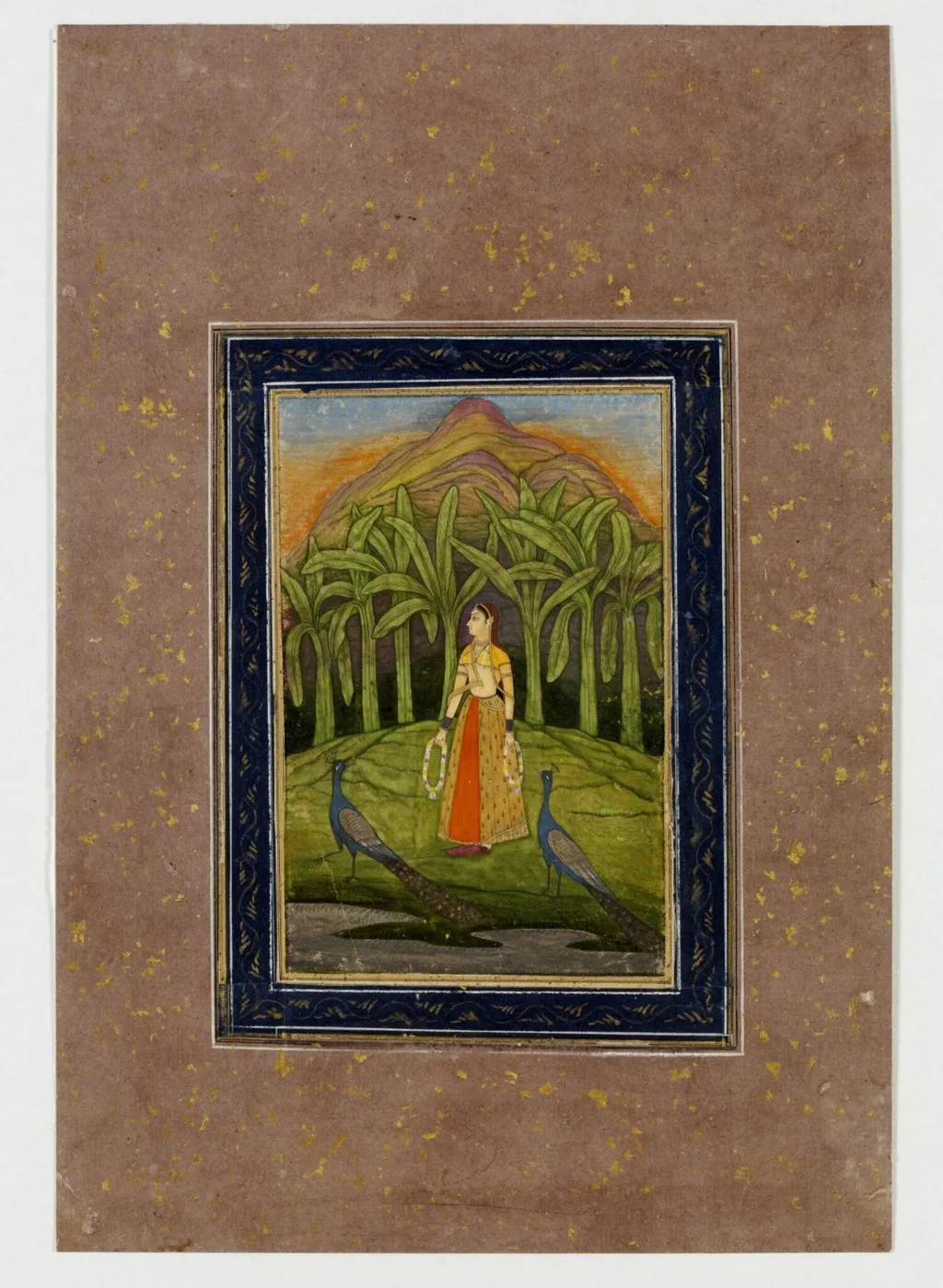
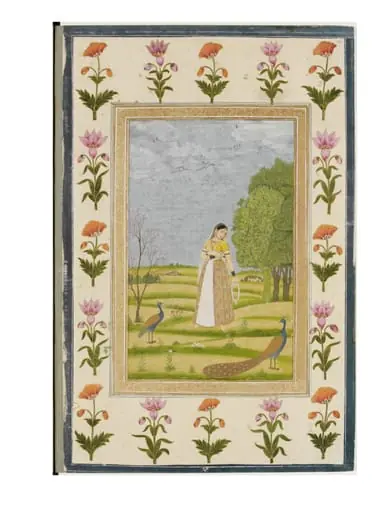
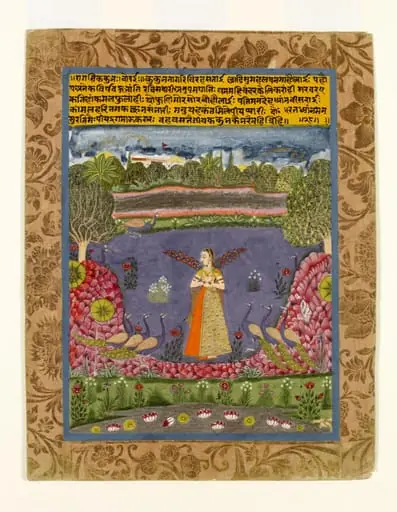
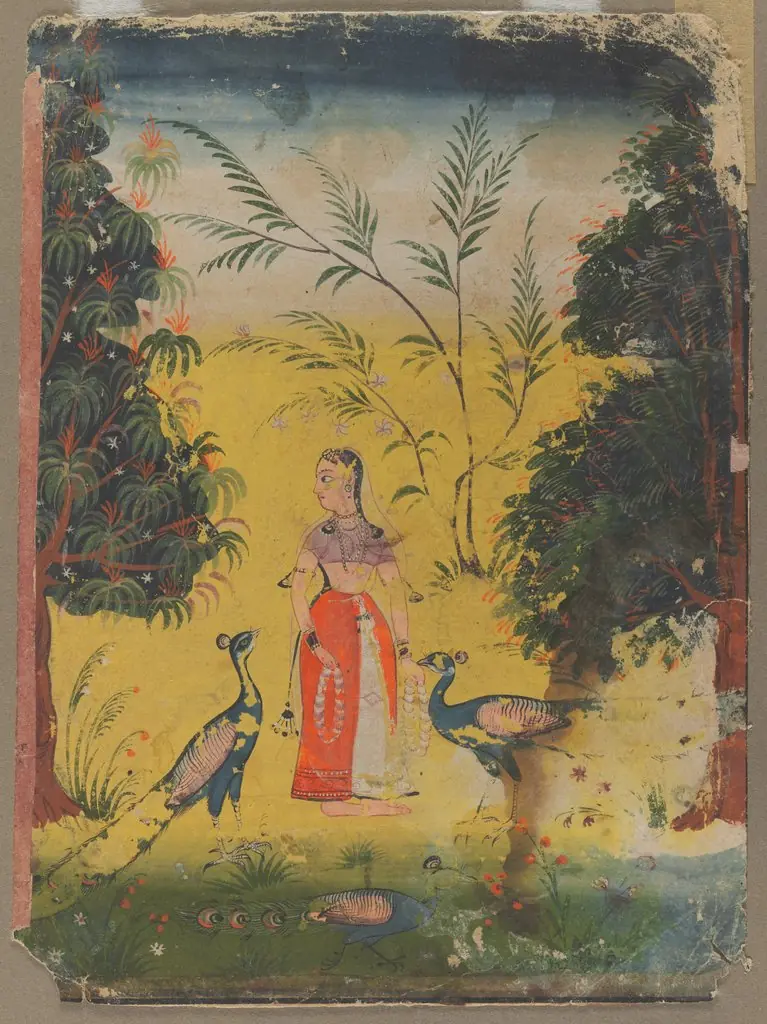
Kakubha Ragini is a paint painting by the Mughal Painting artist Unknown. It dates from 1760 and is held in the collection of the Victoria and Albert Museum. Created around 1760, this opaque water‑colour on paper belongs to the Indian ragamala tradition, a visual counterpart to musical modes.
About this work
Overview
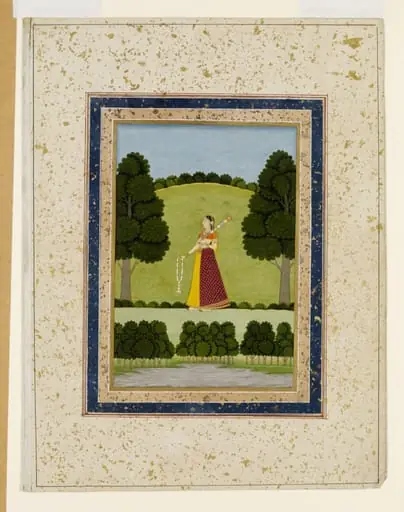
Created around 1760, this opaque water‑colour on paper belongs to the Indian ragamala tradition, a visual counterpart to musical modes. The work portrays a young woman in vivid red and gold, standing beneath a line of tall green trees as the sky fades into a pink‑orange sunset.
Subject & Meaning
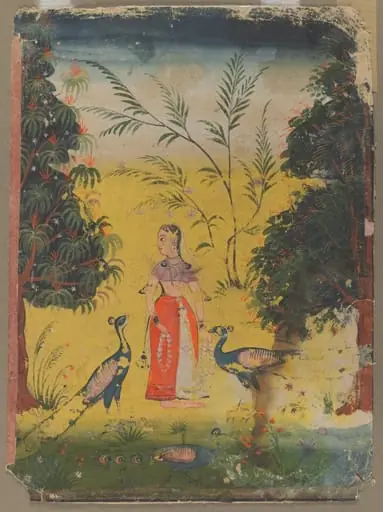
The figure holds a garland and waits for her lover near a plantain grove, a scene that conveys anticipation and devotion. Peacocks at her feet, one looking left and the other right, add a tranquil, natural element that reinforces the lyrical mood associated with the Kakubha Ragini raga.
Technique & Style
Executed in opaque water‑colour, the artist achieves a luminous surface while preserving fine detail in the foliage and the birds. The composition balances bold colour—bright reds, golds, and deep blues in the border—with softer, atmospheric tones in the background hills, reflecting the period’s emphasis on nature and emotion.
History & Provenance
The painting is an example of the ragamala genre, which flourished in the 18th‑century Indian courts as visual interpretations of musical scales. Its attribution to the Kakubha Ragini mode suggests it may have been commissioned for a patron interested in the interplay of music and visual art.
Context
During the mid‑1700s, Indian artists frequently integrated poetic and musical themes into their work, often depicting idealised lovers in idyllic natural settings. This piece aligns with that cultural practice, using the plantain grove and sunset to evoke the serene ambience of the associated raga.
Artist & collection

 Domestic Scene
 Giacomo and Cardinal Marco, investing Andrea, Abbot of San Zeno, with his Benefice
 The Nymph of Fontainebleau
 Portrait of a Woman
 Madonna and Child with Saints in the Enclosed Garden
 Venus and Minerva
 Family Group of Four on Sofa
 Wall painting from Room H of the Villa of P. Fannius Synistor at Boscoreale