Artwork
春日宮曼荼羅図|Kasuga Mandala
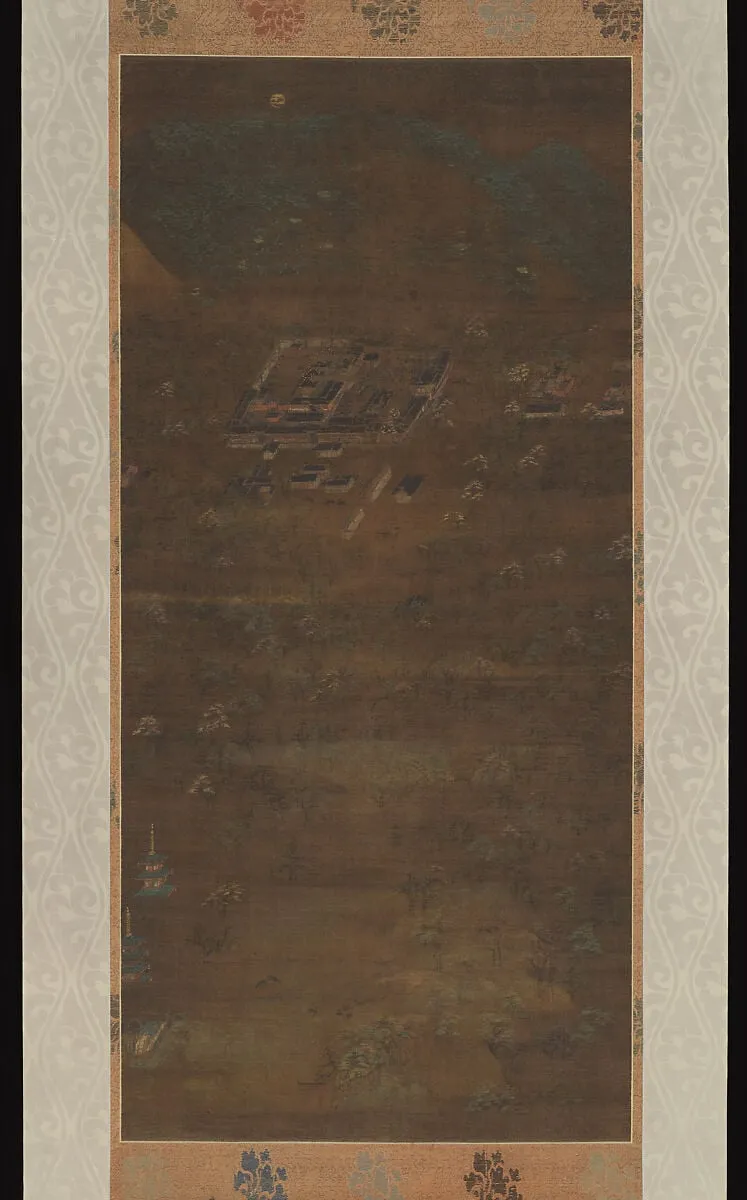
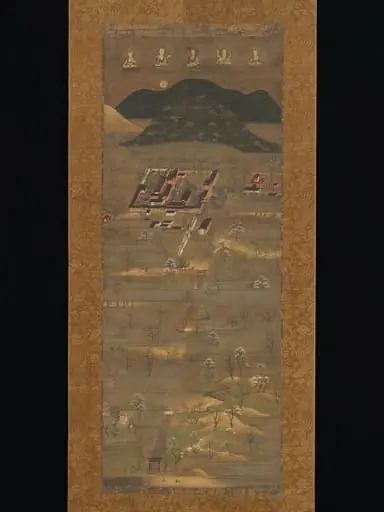
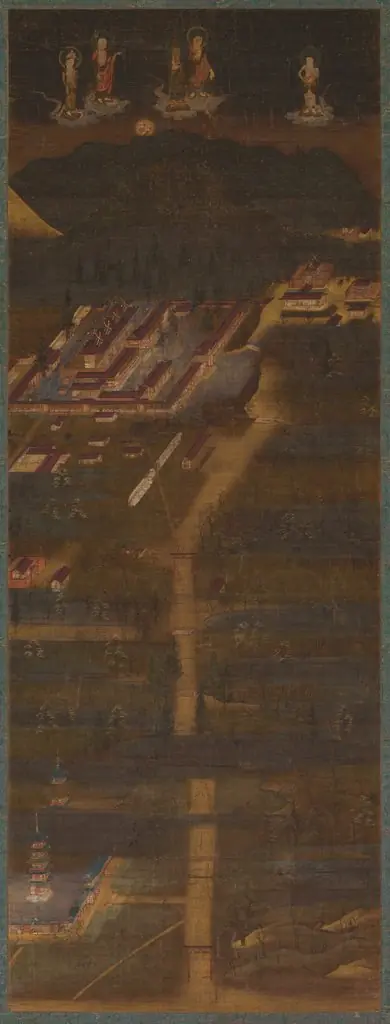
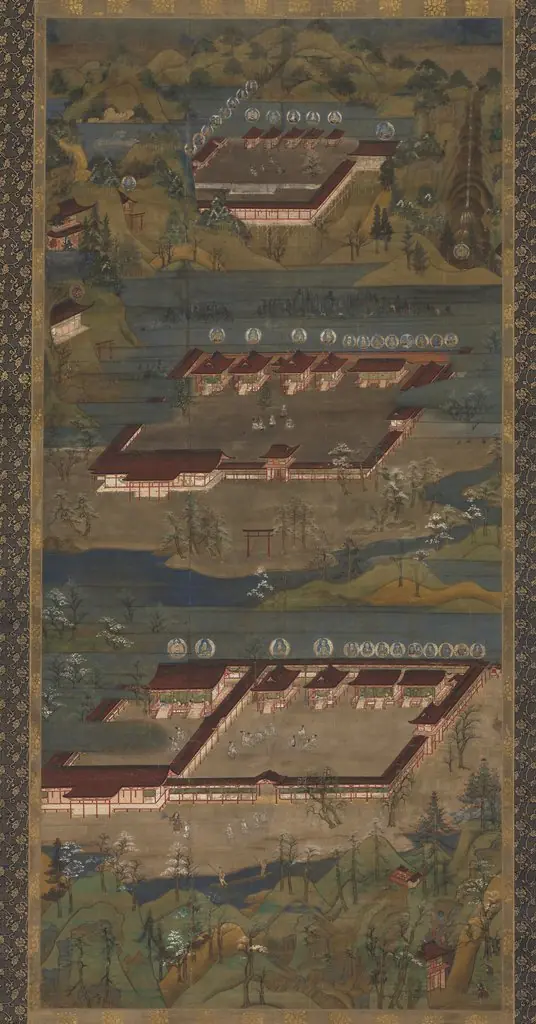
春日宮曼荼羅図|Kasuga Mandala is an ink painting. It dates from 1249 and is held in the collection of the Metropolitan Museum of Art. The Kasuga Mandala is a vertical hanging scroll executed on silk, employing ink, pigments and gold leaf.
About this work
Overview
The work functions as a visual map of the Kasuga Grand Shrine, rendered as a sacred diagram rather than a navigational guide.
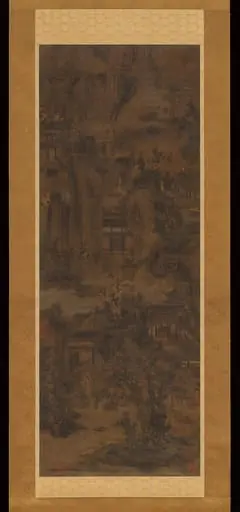
The Kasuga Mandala is a vertical hanging scroll executed on silk, employing ink, pigments and gold leaf. The composition presents a stylised landscape dominated by a vivid green hill punctuated by miniature shrines with red tiled roofs, winding pine trees, and a solitary white deer near the summit. The work functions as a visual map of the Kasuga Grand Shrine, rendered as a sacred diagram rather than a navigational guide.
Subject & Meaning
The scroll depicts an idealised topography of the Kasuga shrine complex, arranging its structures and natural elements in a symbolic order intended to draw divine presence into the picture. The inclusion of the white deer, a creature associated with the shrine’s mythology, reinforces the work’s devotional purpose, inviting the kami to inhabit the depicted space.
Technique & Style
Rendered on silk, the artist combined fine ink line work with vivid mineral pigments and applied gold leaf to accentuate architectural roofs and celestial aspects. The stylised, almost diagrammatic treatment of landscape and architecture reflects a tradition of esoteric mandala painting, where precision of form serves ritual function more than realistic representation.
History & Provenance
The creator of the Kasuga Mandala remains anonymous; the work itself was regarded as a consecrated object within the shrine’s ritual context. Over time it has been preserved as a religious artifact rather than a conventional artwork, passing through the custodial care of the Kasuga Grand Shrine and later entering museum collections for scholarly study.
Context
Mandala scrolls such as this were produced within the Japanese Buddhist and Shinto visual culture of the medieval period, serving as portable sacred spaces. The Kasuga Mandala aligns with a broader corpus of temple and shrine paintings that visualise sacred geography, facilitating meditation and ritual invocation of deities.
Legacy
While the scroll’s original function was liturgical, its preservation offers insight into the interplay of art, religion, and cartographic symbolism in Japanese tradition. Contemporary scholars reference it when examining the visual language of shrine mandalas and the role of anonymous artisans in shaping devotional imagery.
Artist & collection