Artwork
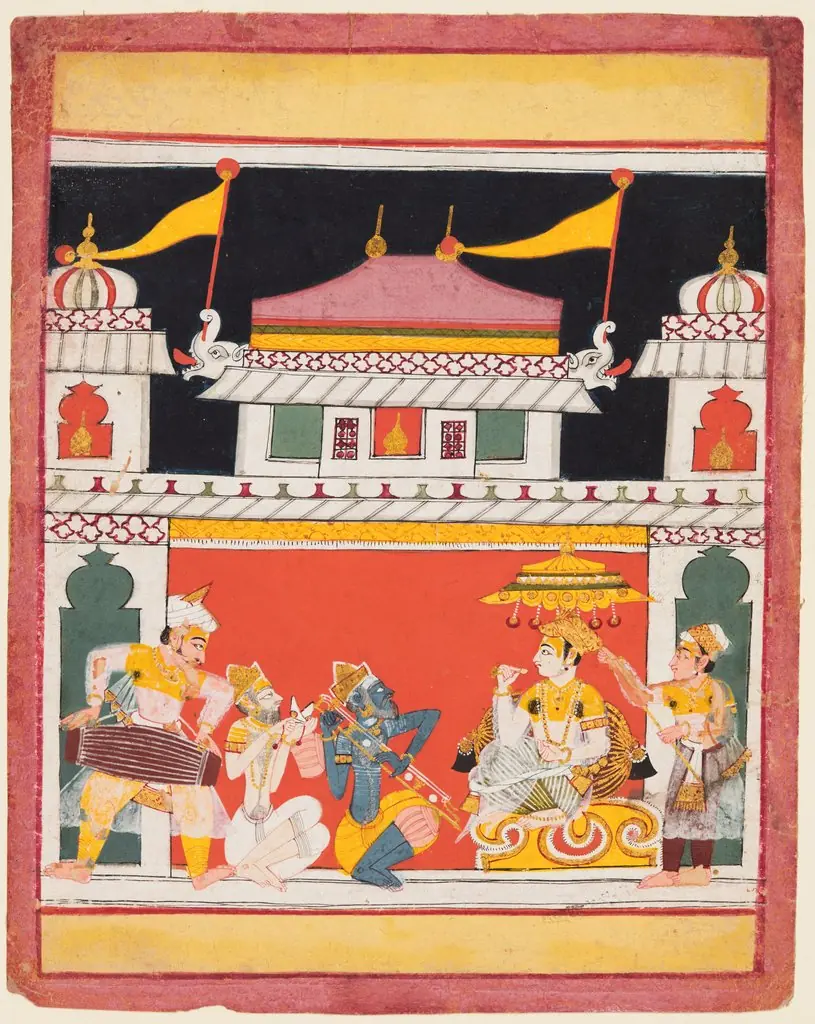
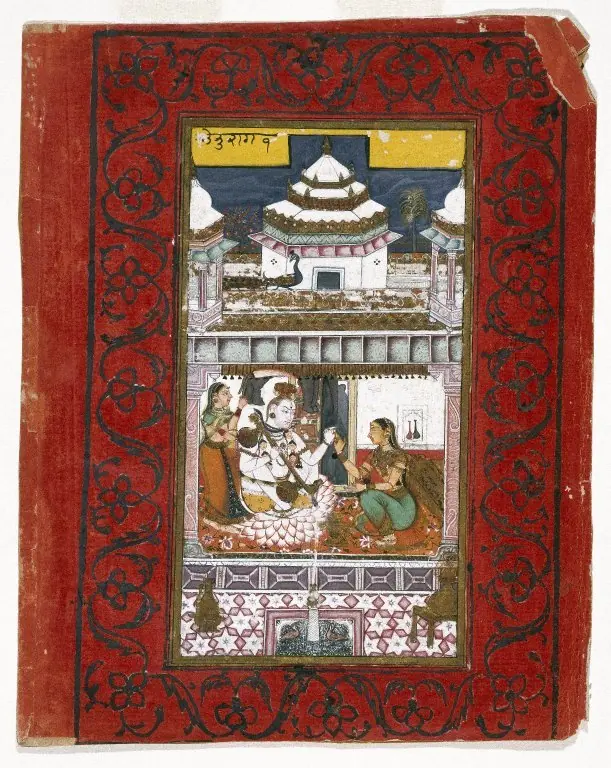
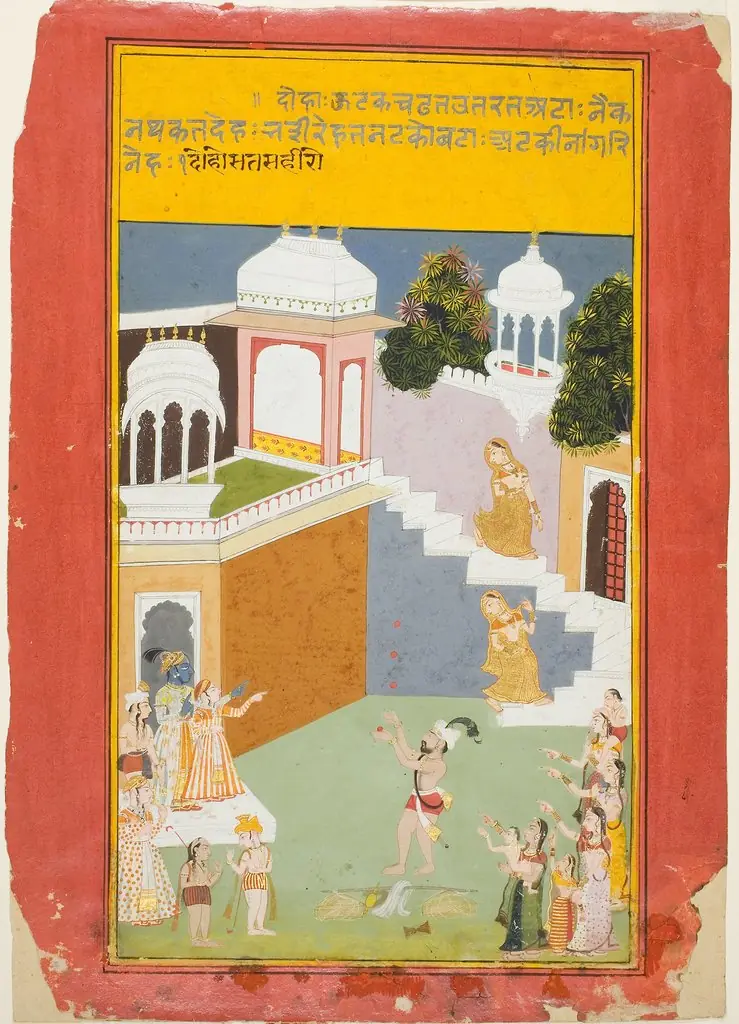
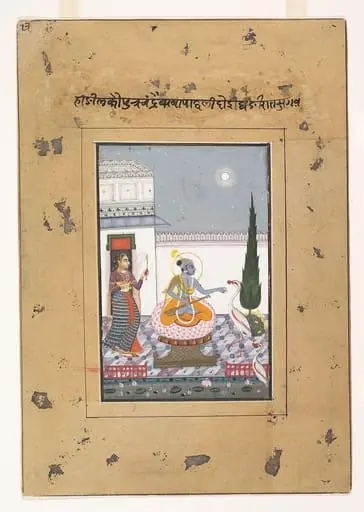
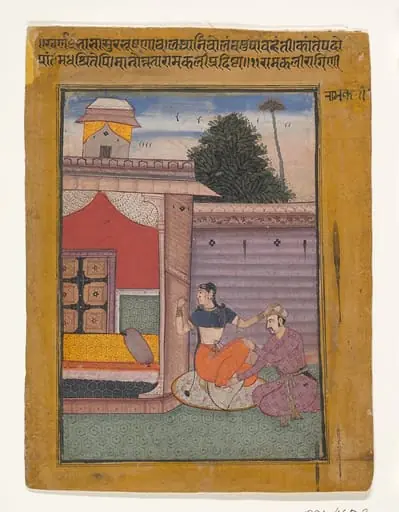
Krishna and Consort on a Palace Balcony with Musicians: Vukharo Ragaputra of Bhairav, from the “Boston Ragamala”
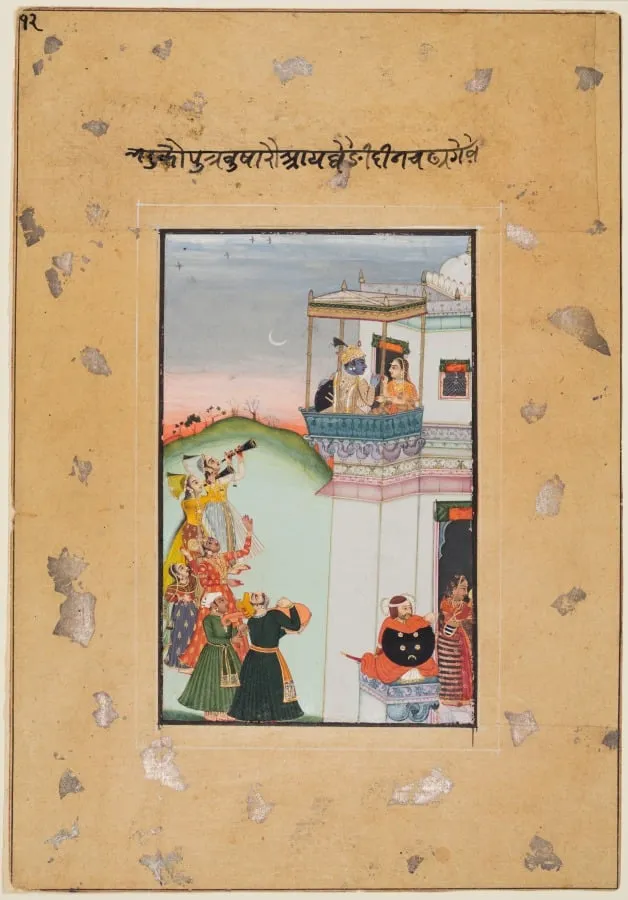
Krishna and Consort on a Palace Balcony with Musicians: Vukharo Ragaputra of Bhairav, from the “Boston Ragamala” is an unspecified painting by the Mughal Painting artist Unknown. It dates from 1772 and is held in the collection of the Cleveland Museum of Art.
About this work
Overview
This painting is one of a series known as the Boston Ragamala, created in the Rajput kingdom of Kota during the late 17th or early 18th century.
This painting is one of a series known as the Boston Ragamala, created in the Rajput kingdom of Kota during the late 17th or early 18th century. Each image in the set visually interprets a specific raga, or melodic framework, from North Indian classical music. This particular scene corresponds to Bhairav’s Vukharo Ragaputra, a mode associated with dawn and devotional joy. The composition blends spiritual symbolism with intimate domestic imagery, reflecting the fusion of musical theory and devotional practice in Rajput court culture.
Subject & Meaning
Krishna, depicted with blue skin, reclines on a palace balcony with his consort, embodying divine love and harmony. Below, musicians perform with exuberance, their instruments and gestures evoking the emotional essence of the raga. The relaxed guard counting rosary beads suggests inner peace amid earthly delight. The scene is not merely decorative but a visual meditation on how music channels spiritual ecstasy, aligning the divine presence of Krishna with the uplifting power of sound.
Technique & Style
Executed in opaque watercolor on paper, the painting employs fine brushwork and rich, saturated hues to define forms and textures. The figures are rendered with delicate outlines and flattened perspectives, typical of Rajput miniature traditions. The balcony’s architectural details and the musicians’ dynamic postures are rendered with precision, while the night sky is implied through deep tones and subtle gradations, enhancing the sense of quiet intimacy despite the musical energy below.
History & Provenance
The painting originates from the Kota court, a center of artistic innovation in Rajasthan known for its lyrical Ragamala series. Likely commissioned by a royal patron, it was part of a larger collection used for devotional contemplation and courtly entertainment. The set entered Western collections in the 19th century, with this piece now held in the Museum of Fine Arts, Boston, where it contributed to the naming of the broader group as the 'Boston Ragamala.'
Context
Ragamala paintings emerged as a distinct genre in northern India, linking musical modes to visual imagery through poetic and theological associations. In Kota, artists developed a refined style that emphasized emotional nuance over narrative detail. This work reflects the broader cultural practice of integrating music, poetry, and painting into a unified spiritual experience, where each raga was not just heard but seen and felt through color, posture, and setting.
Legacy
The Boston Ragamala series remains a key reference for understanding how Indian musical traditions were visualized in early modern court art. Its influence extends to scholarly studies of Indian aesthetics and cross-disciplinary art forms. While later generations moved toward more naturalistic styles, these works preserve a unique synthesis of devotional symbolism and sensory expression, offering insight into the intimate relationship between sound, image, and sacred experience in Rajput culture.
Artist & collection

 Domestic Scene
 Giacomo and Cardinal Marco, investing Andrea, Abbot of San Zeno, with his Benefice
 The Nymph of Fontainebleau
 Portrait of a Woman
 Madonna and Child with Saints in the Enclosed Garden
 Venus and Minerva
 Family Group of Four on Sofa
 Wall painting from Room H of the Villa of P. Fannius Synistor at Boscoreale