Artwork
Krishna Watches A Juggler, from a copy of Bihari's Sat Sai
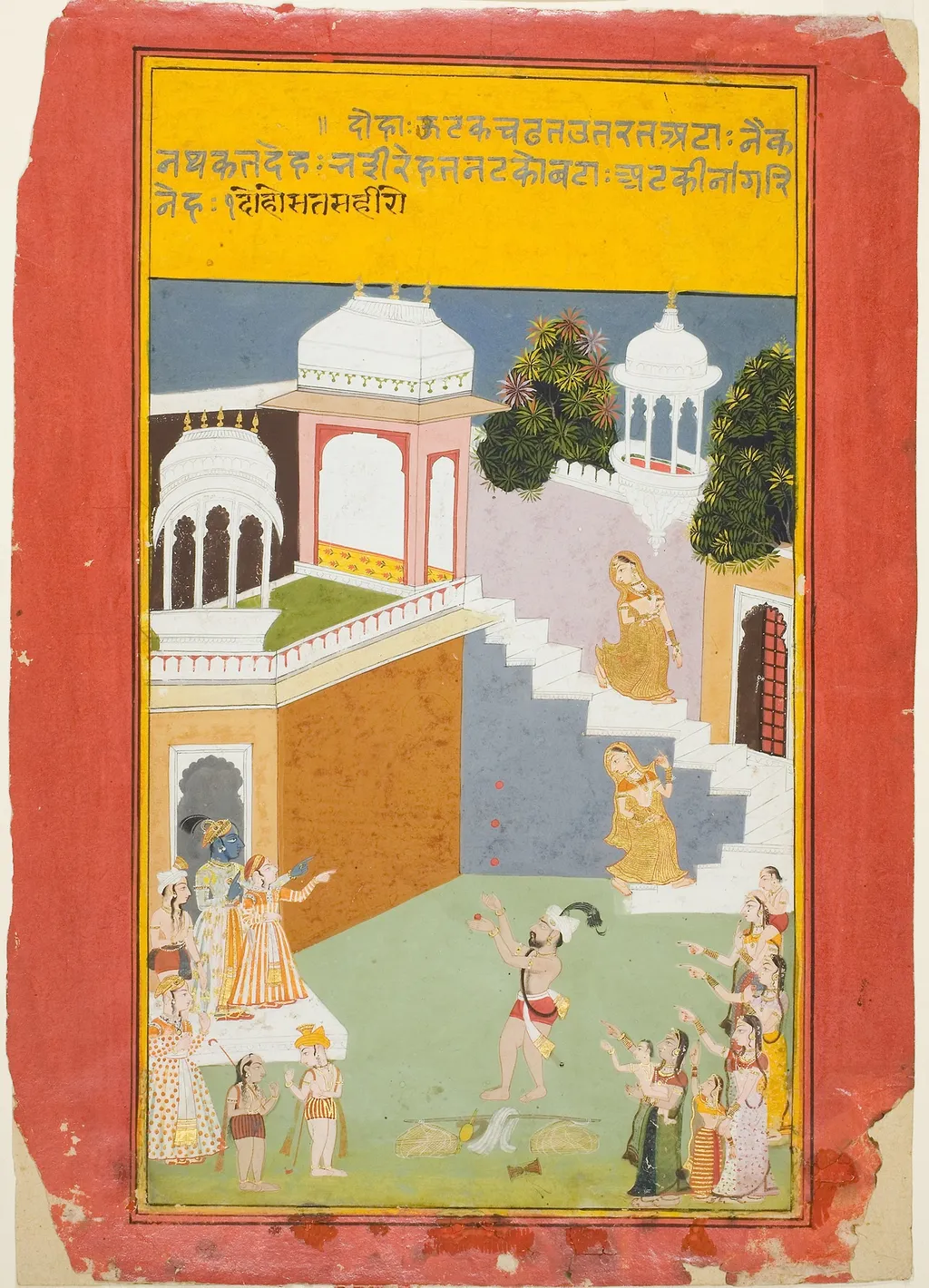
Krishna Watches A Juggler, from a copy of Bihari's Sat Sai is an unspecified painting by the Mughal Painting artist Unknown. It dates from 1770 and is held in the collection of the Art Institute of Chicago. This painting is a folio from a manuscript illustrating Bihari Lal’s Sat Sai, a collection of poetic verses in Braj Bhasha.
About this work
Overview
This painting is a folio from a manuscript illustrating Bihari Lal’s Sat Sai, a collection of poetic verses in Braj Bhasha.
This painting is a folio from a manuscript illustrating Bihari Lal’s Sat Sai, a collection of poetic verses in Braj Bhasha. It depicts a moment of public spectacle centered on a juggler, surrounded by attentive onlookers. The composition is layered vertically, with elevated figures above and the performance below, framed by decorative borders and architectural elements typical of Rajasthani courtly art.
Subject & Meaning
The scene captures Krishna, disguised among the spectators, observing a street performer. In Bihari’s poetry, such moments reflect divine presence in everyday life. Krishna’s quiet observation underscores themes of spiritual awareness amid worldly distractions. The juggler’s skill becomes a metaphor for balance and illusion, resonating with devotional ideas of Maya—cosmic appearance versus truth.
Technique & Style
Executed in opaque watercolor on paper, the painting uses vivid, flat hues and fine brushwork to define figures and patterns. Figures are stylized with elongated eyes and delicate gestures. The background features rhythmic green fields and red borders, while architectural details suggest open courtyards. Calligraphic text in Devanagari script at the top anchors the scene in its literary source.
History & Provenance
The painting originates from a mid-17th century Rajasthani manuscript, likely produced in the court of Bundi or Kishangarh. Such illustrated copies of the Sat Sai were commissioned by nobility as devotional and aesthetic objects. The work reflects a tradition of miniature painting that flourished under patronage, blending poetic imagery with regional artistic conventions.
Context
During the 17th century, Rajasthani courts fostered a flourishing of illustrated poetry, particularly works centered on Krishna’s legends. Bihari’s verses, rich in emotional nuance, lent themselves to visual interpretation. Paintings like this served both as devotional aids and as expressions of courtly refinement, connecting literary culture with visual art in a shared devotional framework.
Legacy
This painting exemplifies the enduring influence of Bihari’s poetry on Indian miniature traditions. Its composition and thematic focus influenced later regional schools, preserving the integration of text and image in devotional art. Though not widely known outside scholarly circles, such works remain vital to understanding the visual culture of early modern North India.
Artist & collection

 Domestic Scene
 Giacomo and Cardinal Marco, investing Andrea, Abbot of San Zeno, with his Benefice
 The Nymph of Fontainebleau
 Portrait of a Woman
 Madonna and Child with Saints in the Enclosed Garden
 Venus and Minerva
 Family Group of Four on Sofa
 Wall painting from Room H of the Villa of P. Fannius Synistor at Boscoreale
 Krishna with Guru in Palace Scene
 Ragini Bairari, Page from a Jaipur Ragamala Set
 Ragini Madhumadhavi, Page from a Jaipur Ragamala Set
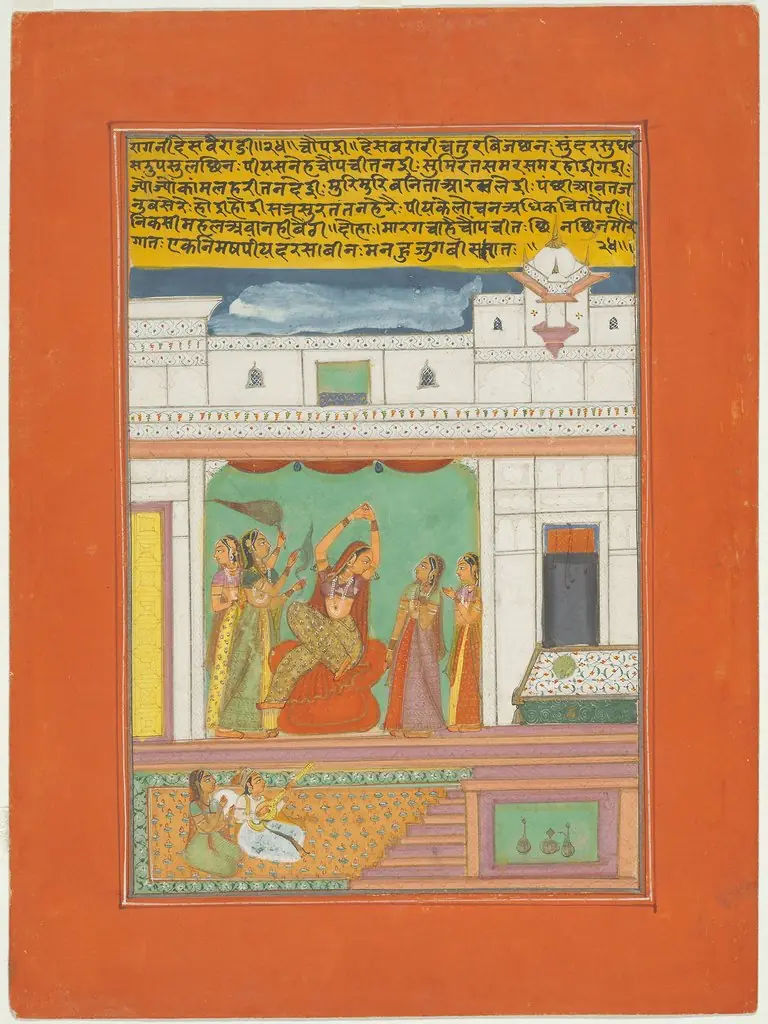 Ragini Desavaradi, Page from a Jaipur Ragamala Set
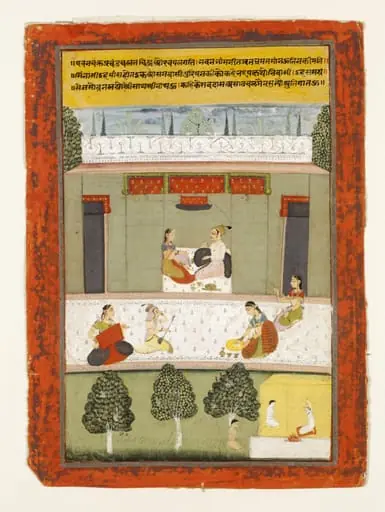 Untitled
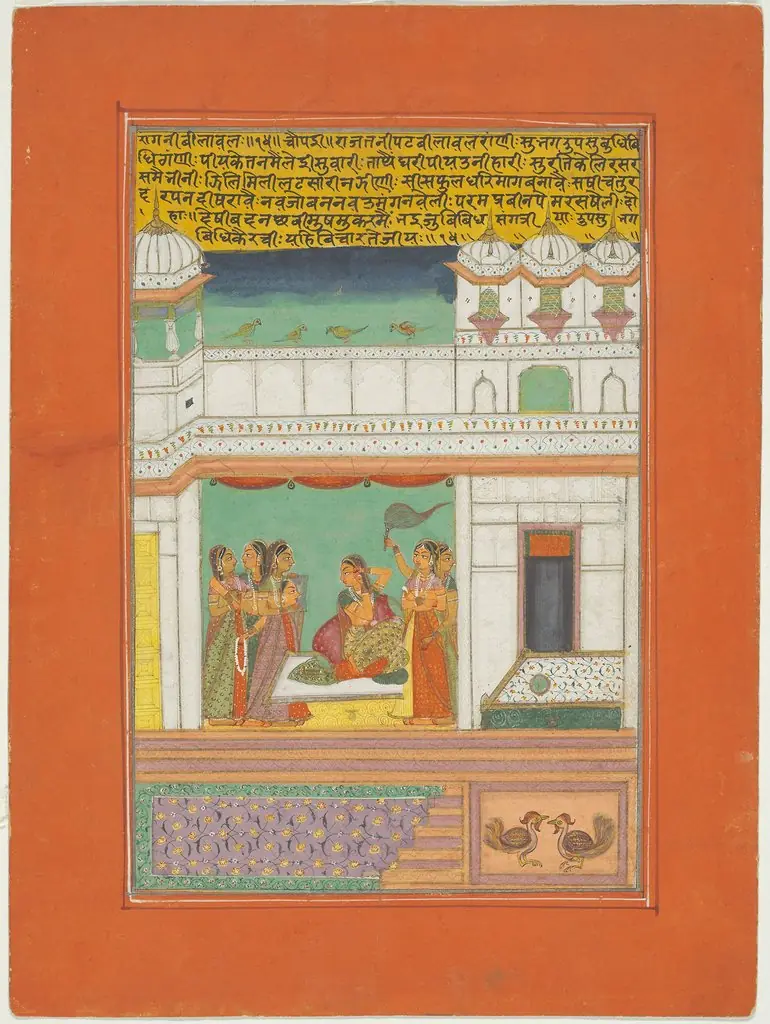 Ragini Bilaval, Page from a Jaipur Ragamala Set
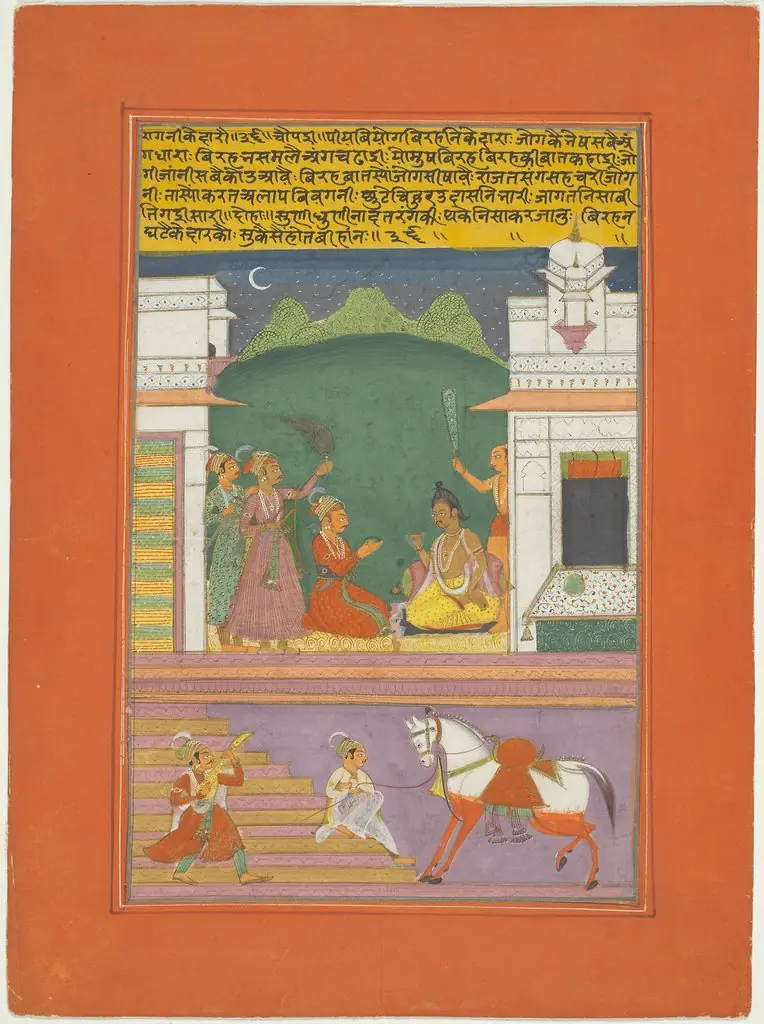 Ragini Kedara, Page from a Jaipur Ragamala Set
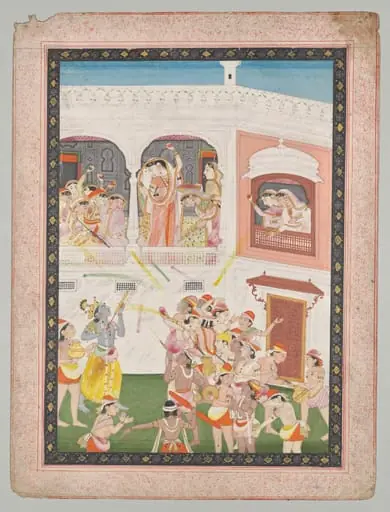 Radha and Hindu God Krishna celebrating the festival Holi
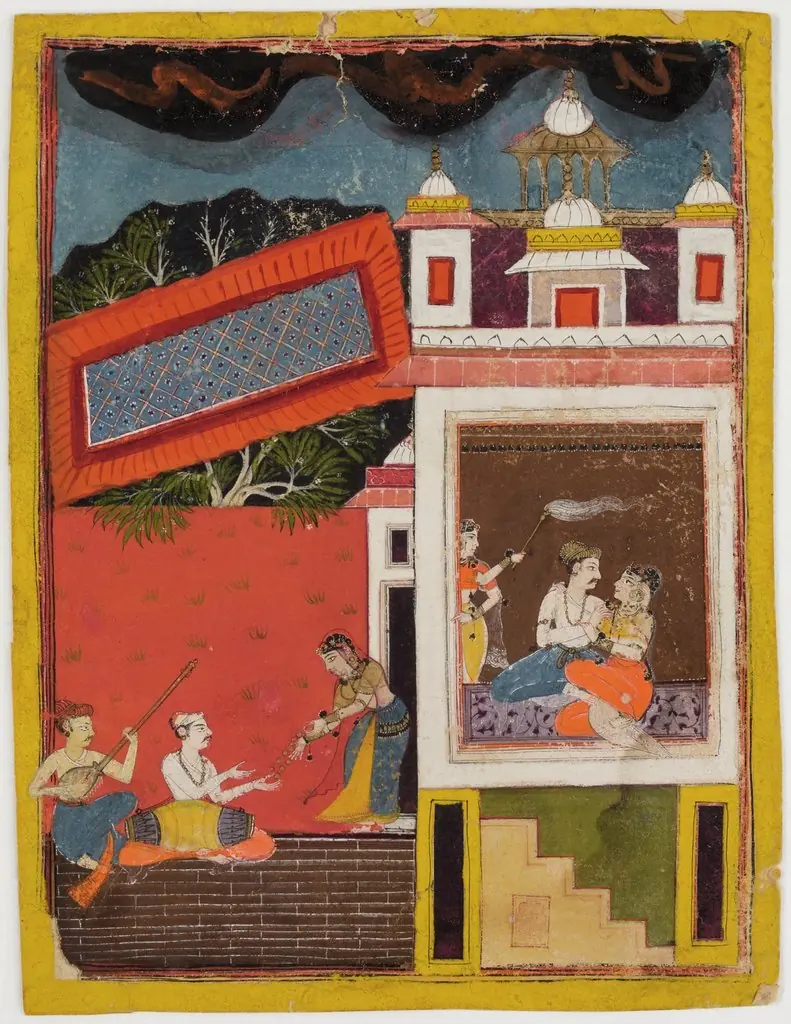 Prince and Lady in Palace Scene with Musicians
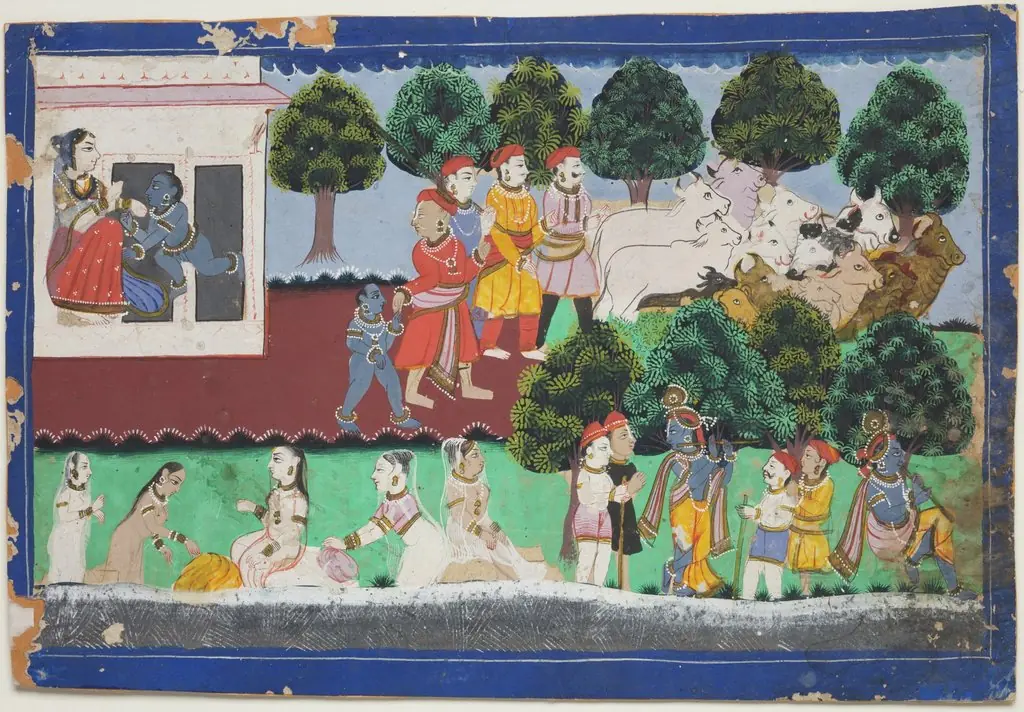 Scenes from Boyhood of Krishna