Artwork
Krishna and Kaliya
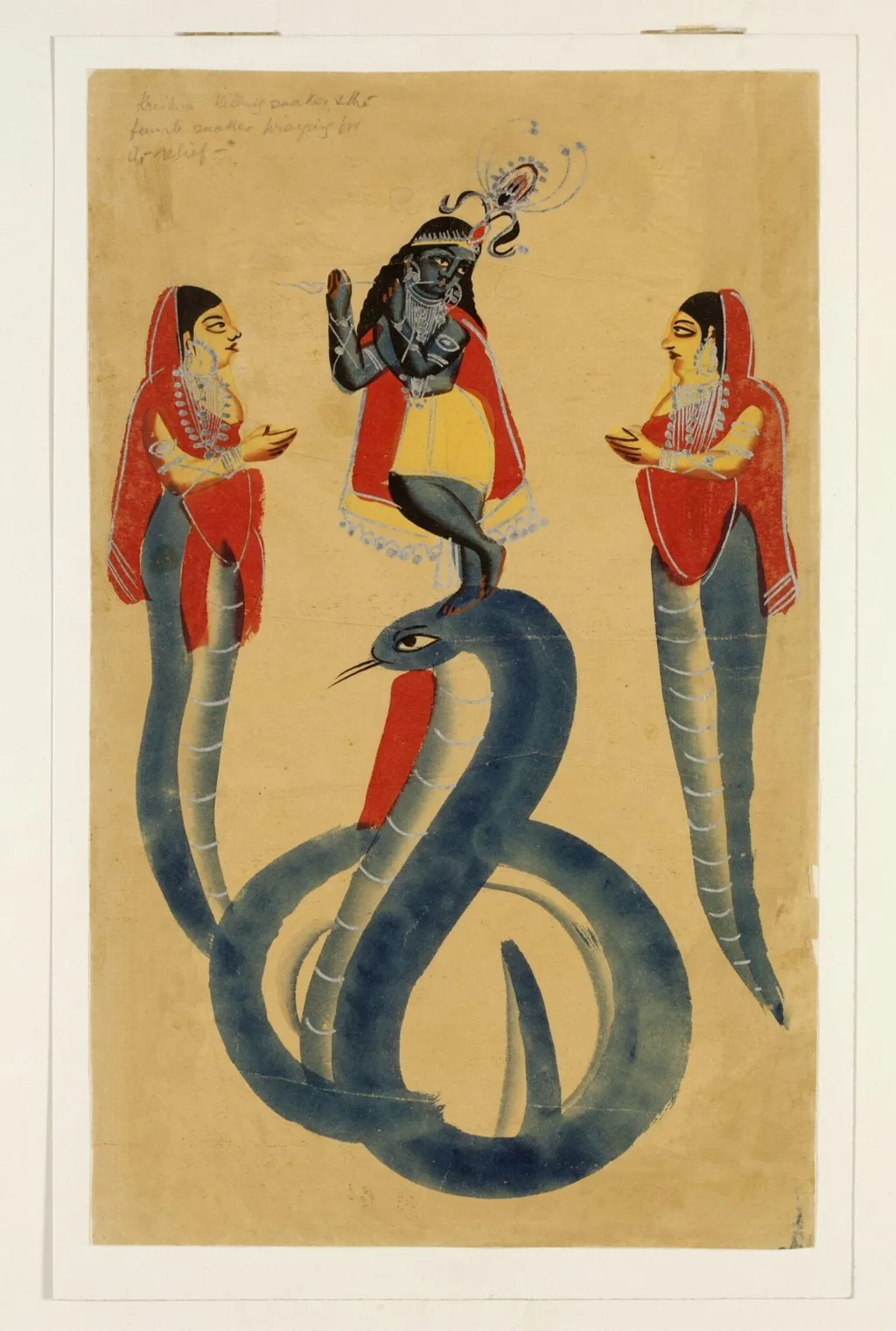
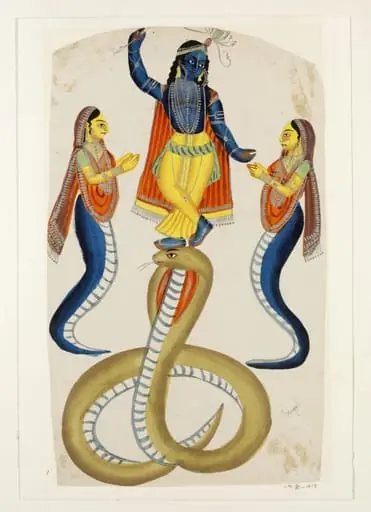
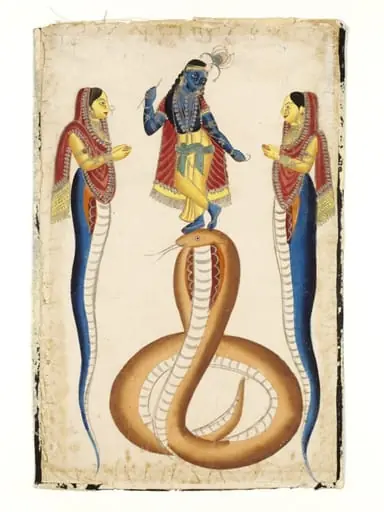
Krishna and Kaliya is a paint painting by the Impressionist artist Unknown. It dates from 1885 and is held in the collection of the Victoria and Albert Museum. This 1885 opaque watercolour on paper portrays a scene from Hindu mythology, created in the Pahari style.
About this work
Overview
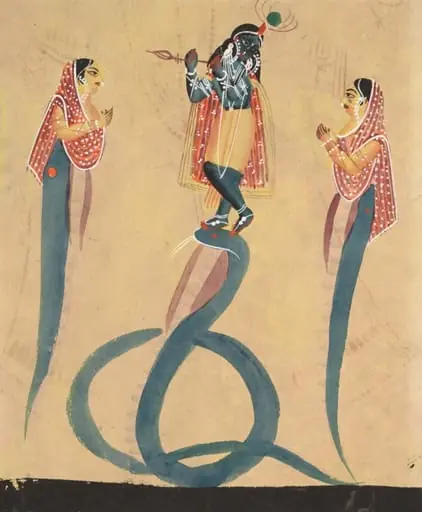
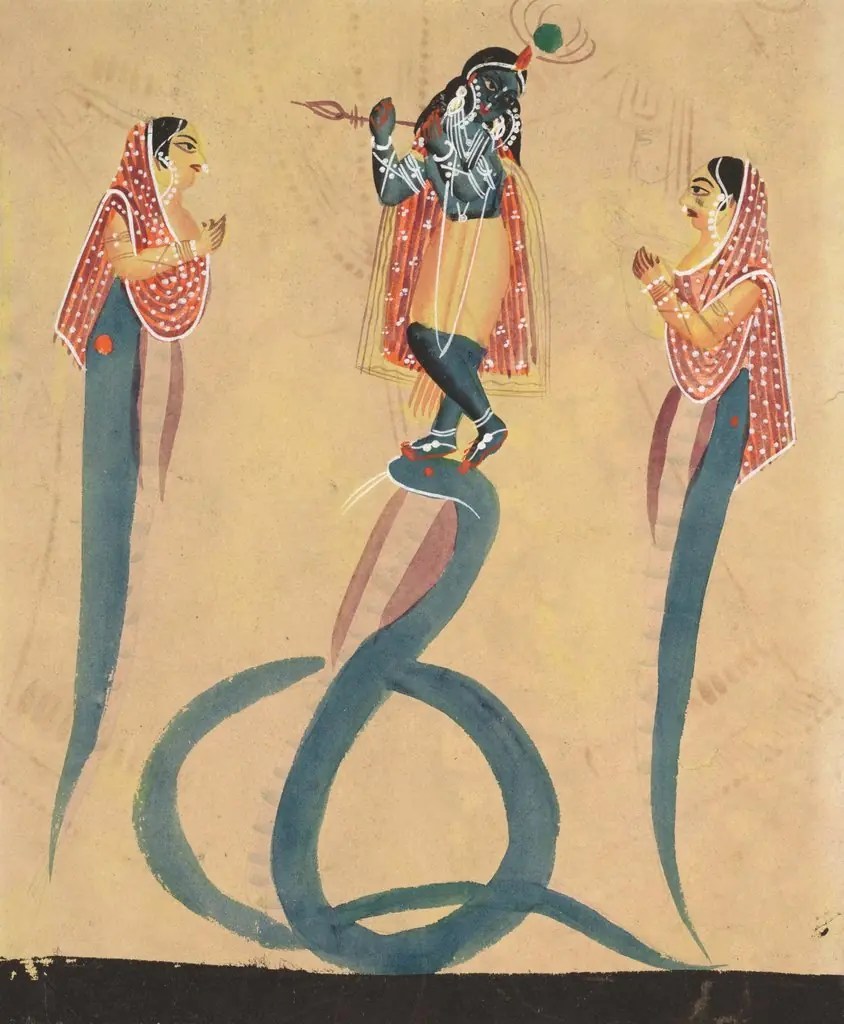
It depicts Krishna, identified by his blue crown and draped cloth, standing atop the multi-headed serpent Kaliya.
This 1885 opaque watercolour on paper portrays a scene from Hindu mythology, created in the Pahari style. It depicts Krishna, identified by his blue crown and draped cloth, standing atop the multi-headed serpent Kaliya. Two women, likely Kaliya’s consorts, observe from either side, their gestures suggesting supplication. The work is one of several in a small collection donated to the museum in 1950 by Miss M. Steele, whose family had longstanding connections to India and Sanskrit scholarship.
Subject & Meaning
The scene illustrates Krishna’s triumph over Kaliya, a venomous serpent who poisoned the Yamuna River. By subduing the creature, Krishna restores balance to the natural world, a recurring theme in his avatars. The presence of Kaliya’s wives, pleading for mercy, introduces a layer of compassion, suggesting divine power tempered by grace. Their inclusion reflects a narrative tradition that emphasizes moral nuance over simple villainy.
Technique & Style
Executed in opaque watercolour, the painting employs fine brushwork and flat, saturated hues typical of 19th-century Pahari miniatures. The serpent’s blue body and red tongue contrast sharply with Krishna’s dark skin and crimson drape, creating visual tension. The figures are stylized, with elongated limbs and minimal spatial depth, emphasizing symbolic presence over naturalism. Background elements are sparse, focusing attention on the central drama.
History & Provenance
The painting belonged to a private collection assembled by Miss Steele’s grandmother during her time in northern India, likely in the mid-19th century. The family’s scholarly engagement with Sanskrit texts suggests a deliberate interest in Hindu iconography. The works were later inherited and donated to the museum in 1950, preserving a rare assemblage of regional Indian art outside institutional acquisition channels of the period.
Context
Produced during British colonial rule, this work reflects a continuing tradition of Hindu narrative painting in the Pahari hills, even as Western styles gained prominence in urban centers. Such paintings were often commissioned by local rulers or devout patrons for devotional use. The survival of this series, outside major royal collections, highlights the persistence of regional artistic practices amid broader cultural shifts.
Legacy
The painting contributes to a broader understanding of 19th-century Indian miniature painting beyond courtly centers. Its inclusion in a Western museum collection underscores the role of private collectors in preserving regional art forms. While not widely exhibited, it remains a quiet testament to the endurance of mythological storytelling through visual tradition in northern India during a period of colonial transformation.
Artist & collection

 Domestic Scene
 Giacomo and Cardinal Marco, investing Andrea, Abbot of San Zeno, with his Benefice
 The Nymph of Fontainebleau
 Portrait of a Woman
 Madonna and Child with Saints in the Enclosed Garden
 Venus and Minerva
 Family Group of Four on Sofa
 Wall painting from Room H of the Villa of P. Fannius Synistor at Boscoreale