Artwork
Krishna
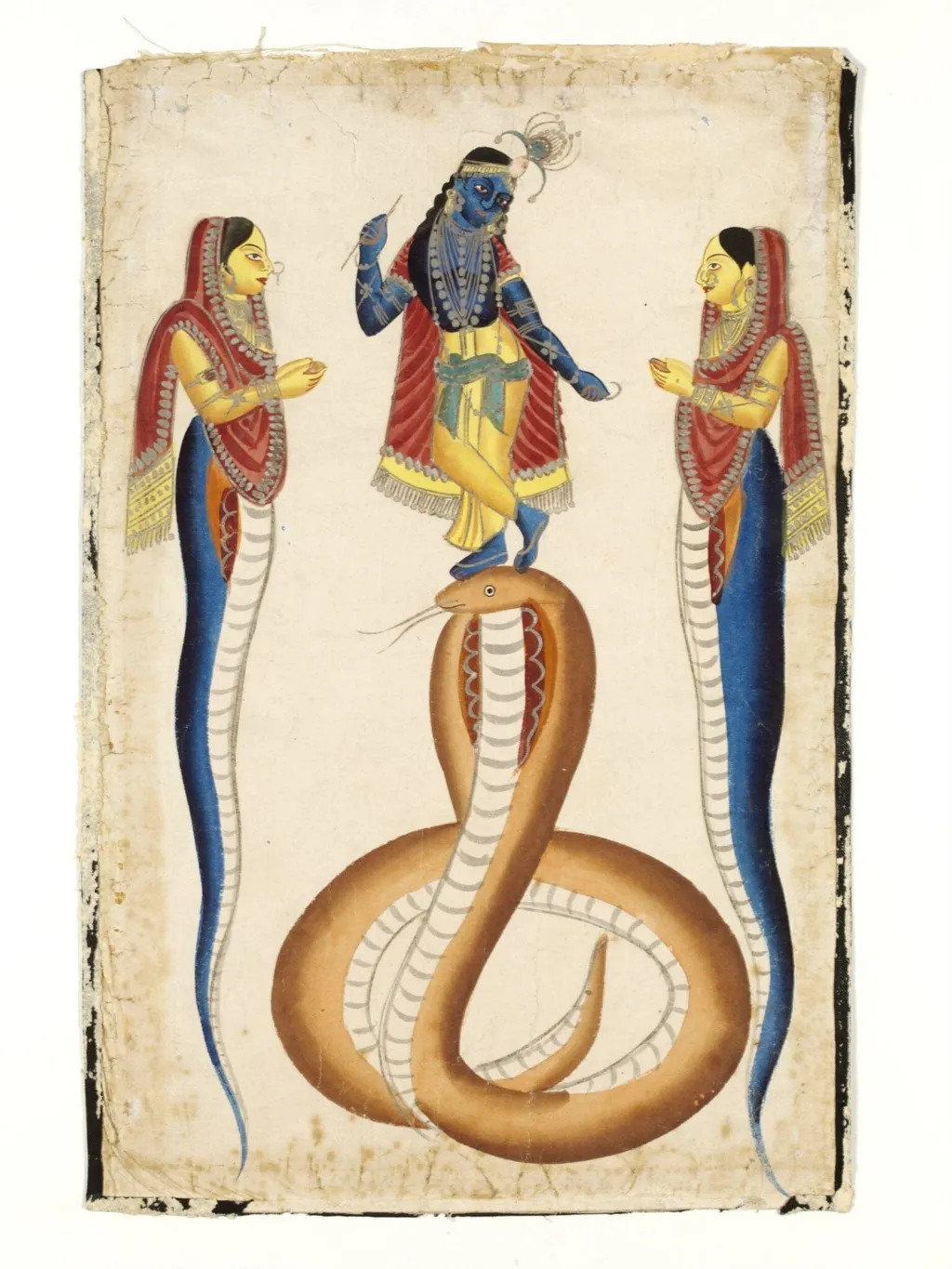
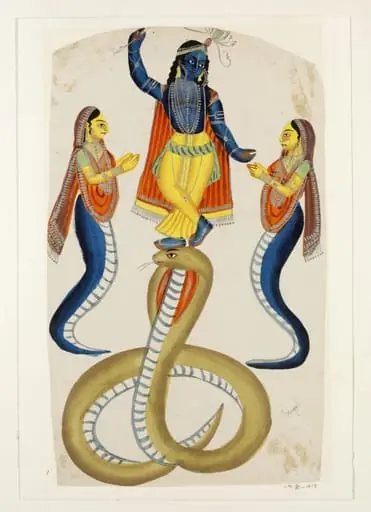
Krishna is a paint painting by the Patna School of Painting artist Unknown. It dates from 1835 and is held in the collection of the Victoria and Albert Museum.
About this work
Overview
The work’s brisk brushwork and vivid palette distinguish it from more refined courtly styles, aligning it with urban folk aesthetics of the time.
This 1835 watercolor painting, created in Calcutta under British colonial administration, portrays a scene from Hindu mythology involving Krishna and the serpent Kaliya. Executed in the Kalighat style, it combines mineral pigments with tin alloy on paper, reflecting a commercial art tradition that emerged near the Kalighat temple. The work’s brisk brushwork and vivid palette distinguish it from more refined courtly styles, aligning it with urban folk aesthetics of the time.
Subject & Meaning
The painting illustrates Krishna standing atop the multi-headed serpent Kaliya, whose body coils below. Two women, identified as Kaliya’s wives, kneel beside him, their bodies entwined with smaller serpents, imploring mercy. The scene captures a moment of divine intervention where Krishna subdues the poison-spewing serpent to protect the people of Vrindavan. The wives’ presence underscores themes of compassion and redemption, transforming a violent myth into an act of grace.
Technique & Style
Rendered in bold, unmodulated colors and strong outlines, the painting exemplifies Kalighat’s rapid, expressive technique. The figures are simplified into clear silhouettes, with minimal shading and flattened space. The use of tin alloy as a pigment base enhances luminosity, while the light beige background isolates the figures, heightening their dramatic presence. Brushwork is swift and confident, prioritizing narrative clarity over detail, characteristic of artists producing works for pilgrims and urban buyers.
History & Provenance
Created in Calcutta during the early 19th century, this piece emerged from a thriving artistic community near the Kalighat temple, where painters catered to pilgrims and colonial-era patrons. Though specific ownership records are absent, similar works were sold as devotional souvenirs or satirical commentary. Its survival suggests it was valued as both religious imagery and cultural artifact, preserved through private collections rather than institutional archives.
Context
Produced amid British colonial rule, Kalighat paintings like this one adapted traditional Hindu narratives to a changing urban landscape. Artists responded to new audiences and materials, blending indigenous iconography with commercial demands. While colonial institutions favored European styles, Kalighat art maintained local spiritual themes, offering a subtle form of cultural continuity. This work reflects a dynamic intersection of faith, commerce, and identity in 19th-century Bengal.
Legacy
The Kalighat style influenced later Indian modernists and folk art revivalists, serving as a bridge between traditional iconography and modern visual language. Though once dismissed as mere souvenirs, works like this are now recognized for their expressive economy and cultural resilience. This painting contributes to a broader understanding of how regional art forms preserved religious narratives under colonial pressures, sustaining community memory through visual storytelling.
Artist & collection

 Domestic Scene
 Giacomo and Cardinal Marco, investing Andrea, Abbot of San Zeno, with his Benefice
 The Nymph of Fontainebleau
 Portrait of a Woman
 Madonna and Child with Saints in the Enclosed Garden
 Venus and Minerva
 Family Group of Four on Sofa
 Wall painting from Room H of the Villa of P. Fannius Synistor at Boscoreale
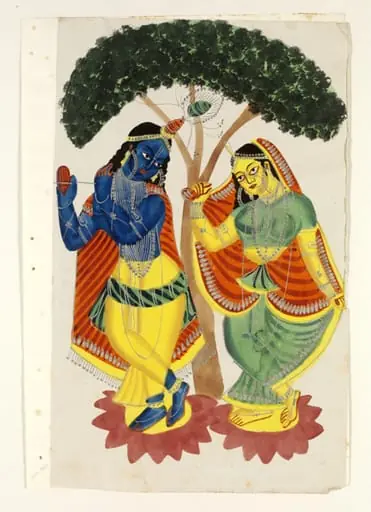 Krishna and Radha
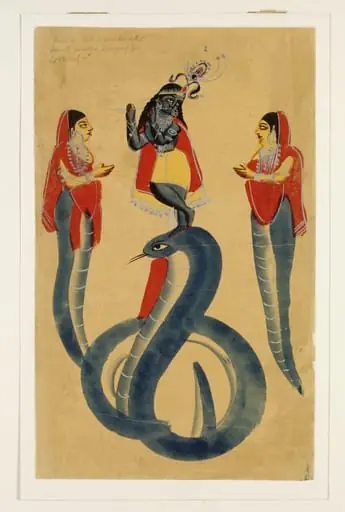 Krishna and Kaliya
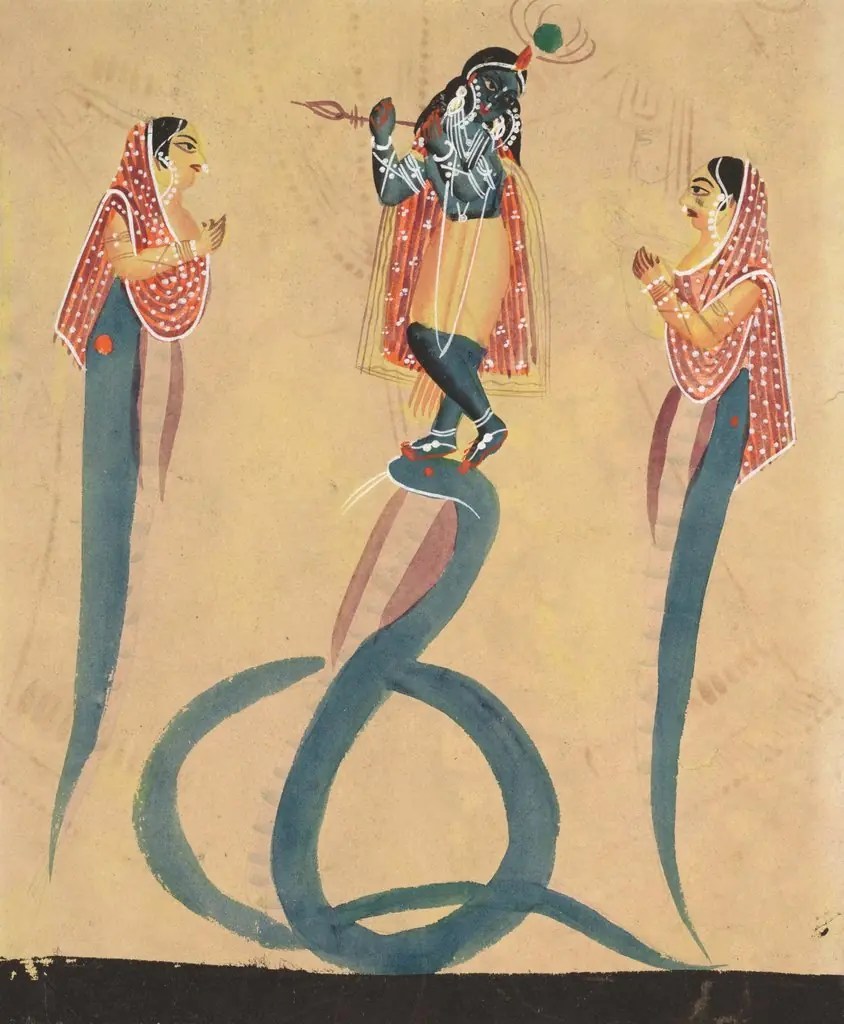 Krishna quells the serpent Kaliya (verso), from a Kalighat album
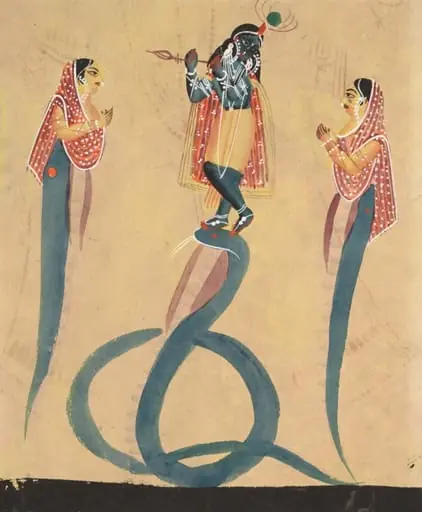 Krishna quells the serpent Kaliya (verso), from a Kalighat album
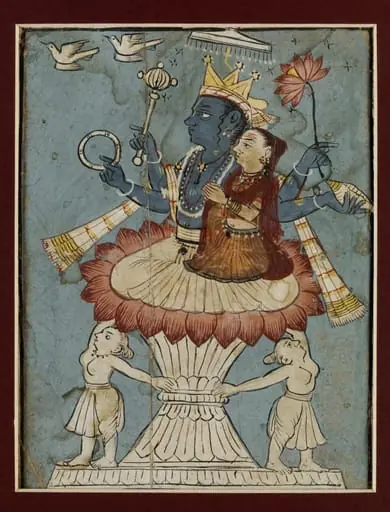 Vishnu and Lakshmi
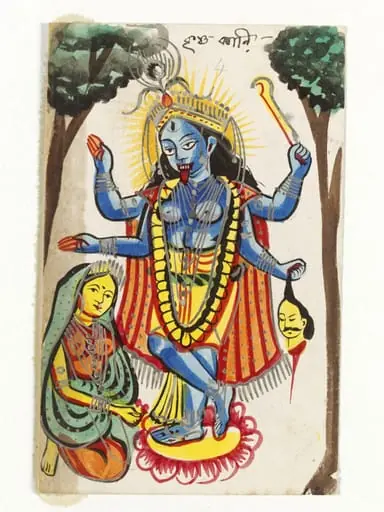 Radha and Krishna-Kali
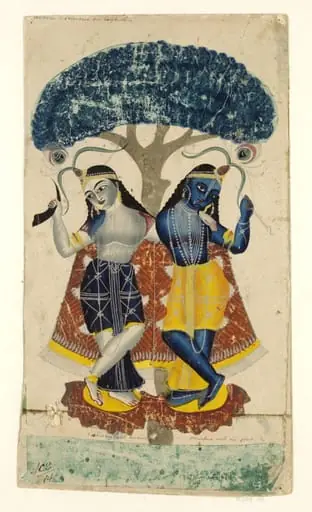 Krishna and Balarama
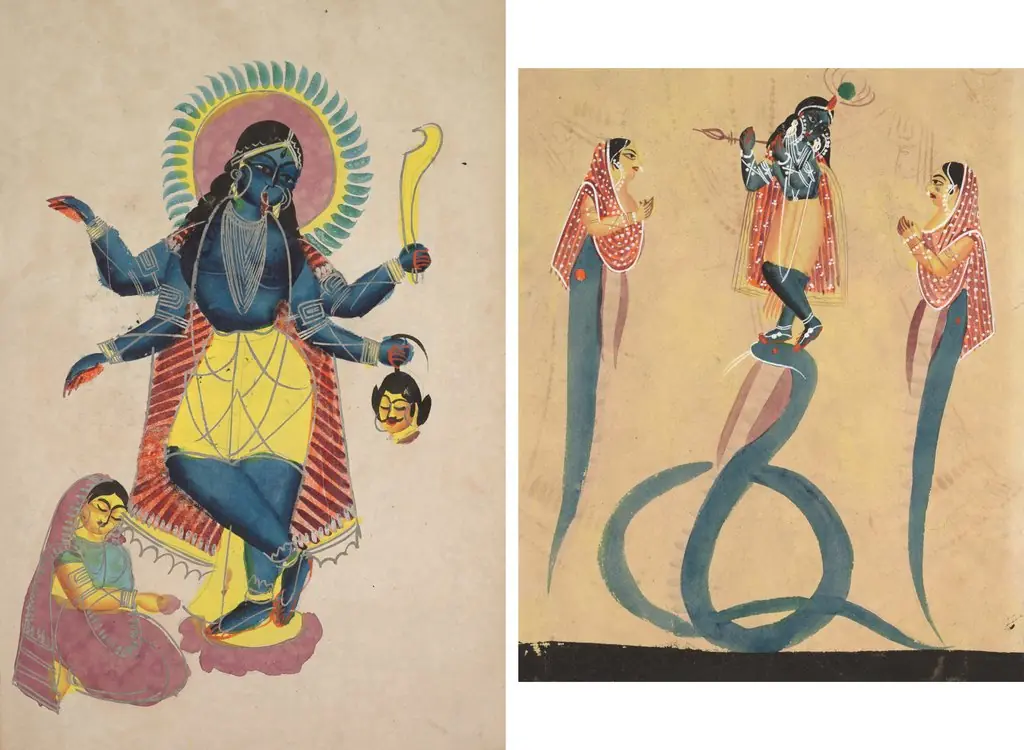 Leaf from a Kalighat album: Krishna as Kali worshipped by Radha (recto); Krishna quells the serpent Kaliya (verso)
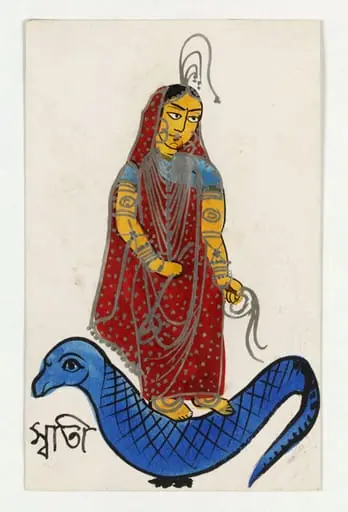 Svati
Svati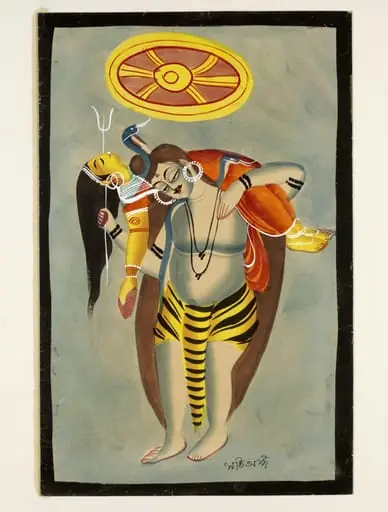 Shiva and Sati
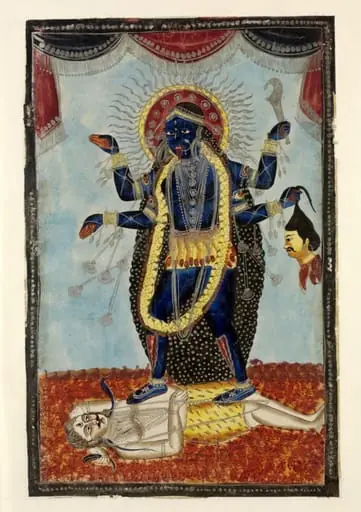 Kali and Shiva
 Krishna