Artwork
Krishna and Nanda
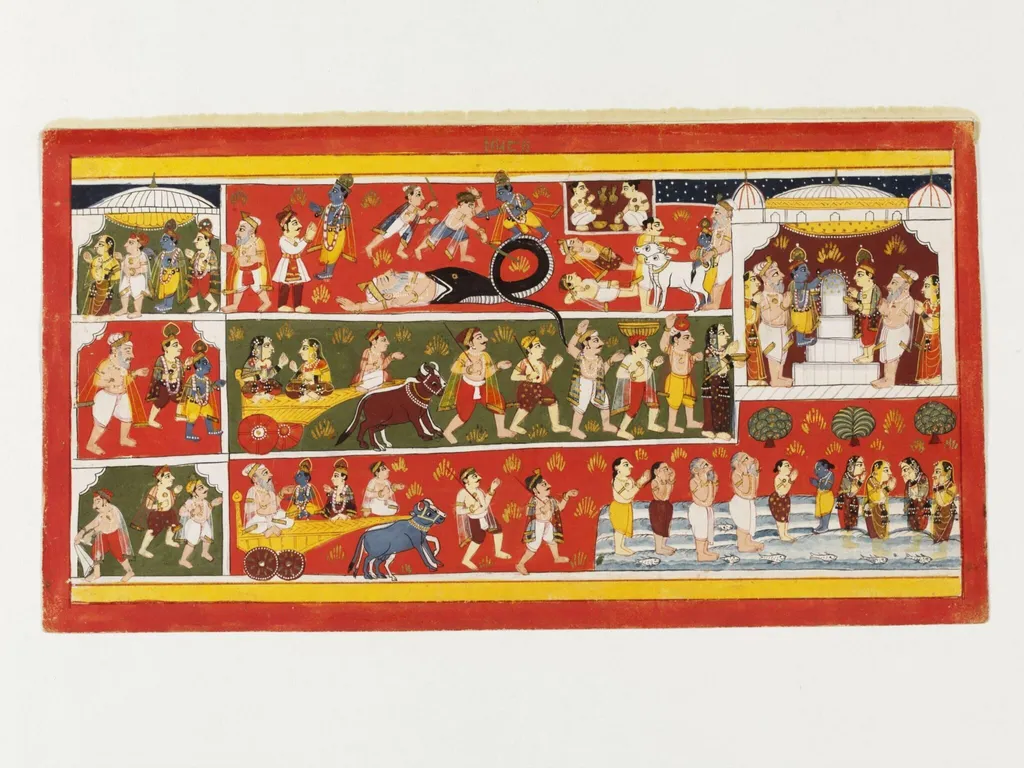
Krishna and Nanda is a paint painting by the Baroque artist Unknown. It dates from 1730 and is held in the collection of the Victoria and Albert Museum. The work is an opaque watercolor that presents a narrative tableau drawn from the tenth book of the Bhagavata Purana.
About this work
Overview
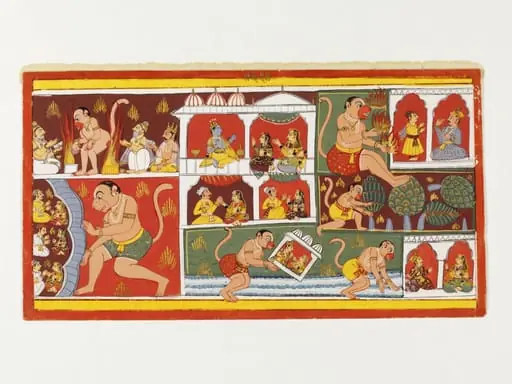
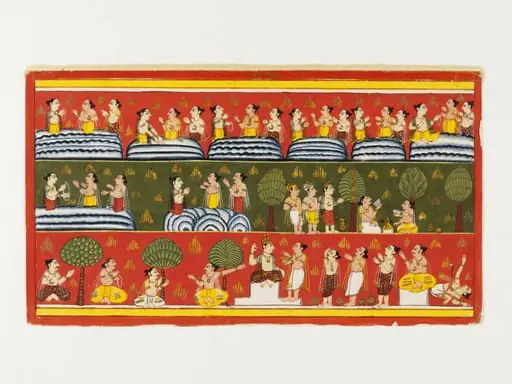
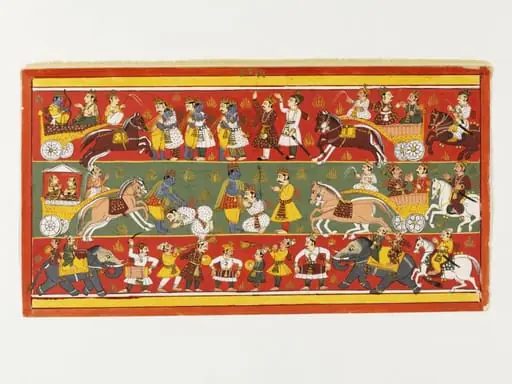
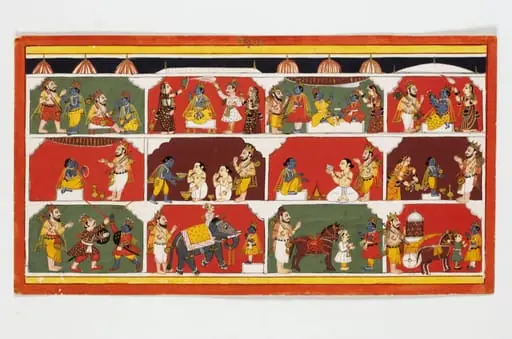
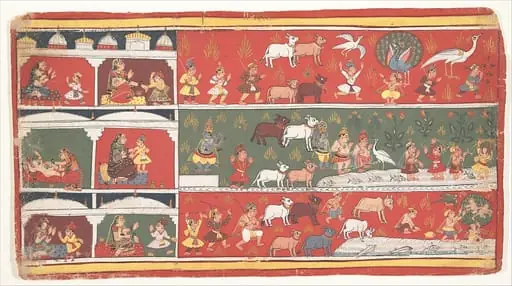
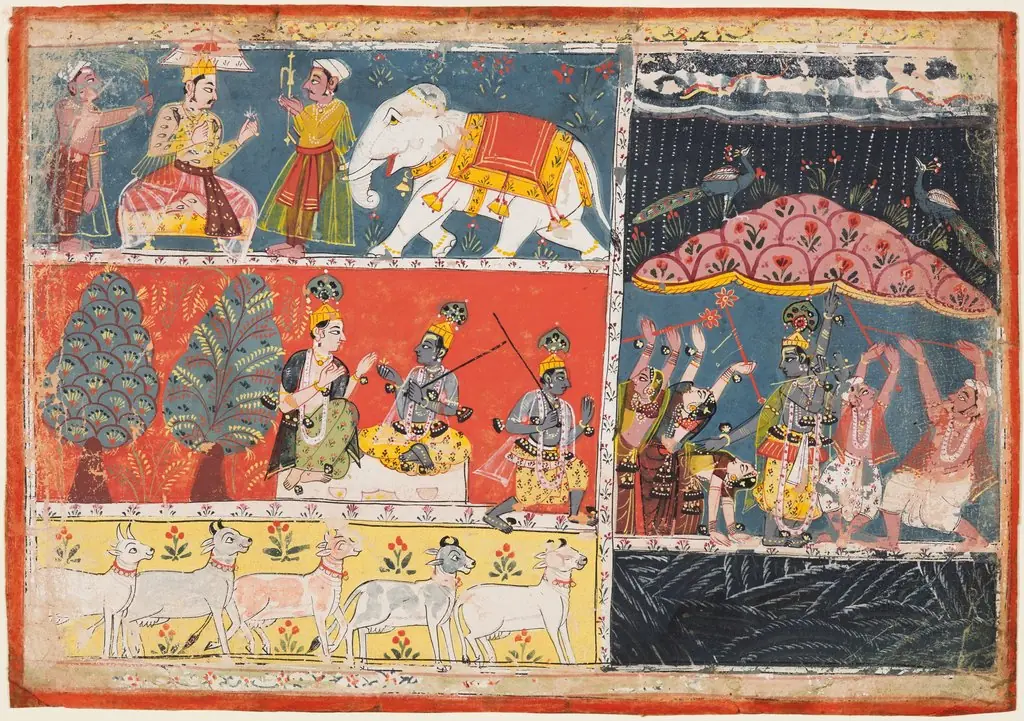
The work is an opaque watercolor that presents a narrative tableau drawn from the tenth book of the Bhagavata Purana. Central to the composition is the deity Krishna intervening to stop a black serpent from engulfing the sleeping foster‑father Nanda. Beneath this dramatic moment a group of cowherds gathers before a modest shrine, creating a layered visual story.
Subject & Meaning
The scene illustrates a protective episode in Krishna’s mythology, emphasizing his role as guardian of devotees. By averting the serpent’s threat, the image conveys themes of divine intervention and the safety afforded to the faithful. The attendant cowherds’ reverent posture at the shrine reinforces the devotional atmosphere surrounding the central miracle.
Technique & Style
Figures are rendered in varied poses—standing, seated, reclined—around a coiled black snake, while livestock such as cows and a dog populate the foreground.
Executed in opaque watercolor, the painting employs a vivid palette dominated by a red ground enriched with green and yellow highlights. Figures are rendered in varied poses—standing, seated, reclined—around a coiled black snake, while livestock such as cows and a dog populate the foreground. The composition is divided into distinct zones, each containing its own action, contributing to a dynamic, energetic rhythm.
Context
The narrative derives from the Bhagavata Purana, a key text in Hindu tradition that recounts Krishna’s exploits. By selecting this particular episode, the artist aligns the work with a broader visual tradition of illustrating mythic episodes for devotional and didactic purposes, situating the piece within the religious art of South Asian cultures.
Legacy
While the painting’s specific provenance is not recorded, its use of opaque watercolor and narrative segmentation reflects techniques common in manuscript illumination and temple murals. The work continues to serve as a visual reference for the Krishna legend, informing contemporary understandings of how mythic stories are rendered in portable, painted formats.
Artist & collection

 Domestic Scene
 Giacomo and Cardinal Marco, investing Andrea, Abbot of San Zeno, with his Benefice
 The Nymph of Fontainebleau
 Portrait of a Woman
 Madonna and Child with Saints in the Enclosed Garden
 Venus and Minerva
 Family Group of Four on Sofa
 Wall painting from Room H of the Villa of P. Fannius Synistor at Boscoreale