Artwork
Scenes from the Mahabharata
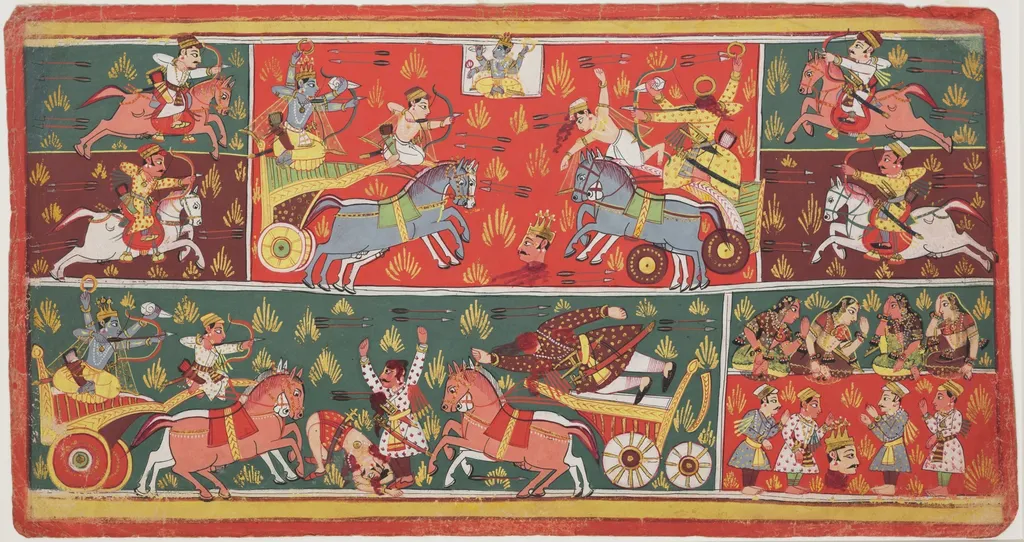
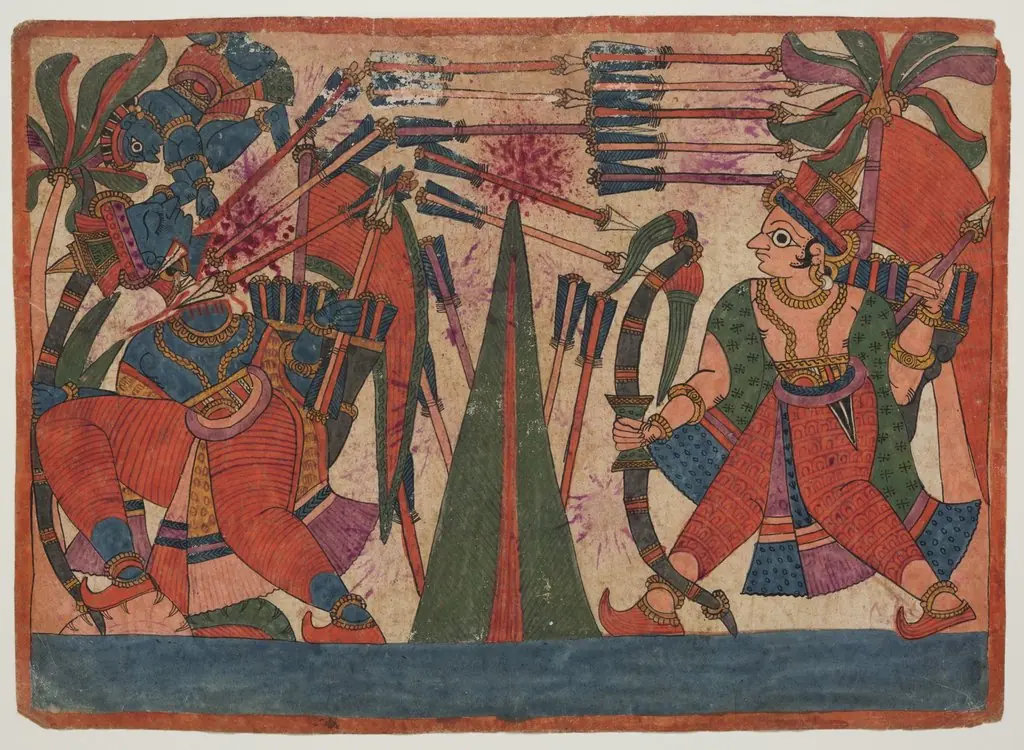
Scenes from the Mahabharata is an unspecified painting by Unknown. It dates from 1650 and is held in the collection of the Detroit Institute of Arts. This painting depicts multiple episodes from the Mahabharata, an ancient Indian epic, rendered in a single continuous composition.
About this work
Overview
The work is notable for its dense arrangement of figures and its emphasis on motion, capturing several key moments from the epic simultaneously.
This painting depicts multiple episodes from the Mahabharata, an ancient Indian epic, rendered in a single continuous composition. Figures on horseback and in chariots populate the scene, engaged in dynamic, overlapping moments of conflict and mourning. Rich pigments of red, green, and yellow dominate the palette, enhancing the narrative intensity. The work is notable for its dense arrangement of figures and its emphasis on motion, capturing several key moments from the epic simultaneously.
Subject & Meaning
The scenes illustrate pivotal moments from the Kurukshetra war, including fallen warriors and grieving companions. One figure lies wounded while another looms above with a weapon, suggesting a decisive combat moment. A group gathered around a chariot conveys collective distress, possibly reflecting the death of a key leader. These episodes underscore themes of duty, loss, and the moral ambiguities of war central to the Mahabharata’s philosophical core.
Technique & Style
The painting employs fine brushwork to render intricate details in armor, clothing, and facial expressions. Figures are arranged in overlapping planes to suggest depth within a flattened space, typical of regional Indian manuscript traditions. Bold, flat areas of color define forms, while rhythmic lines guide the viewer’s eye across the narrative sequence. The composition avoids perspective in favor of symbolic spatial organization, prioritizing storytelling clarity over naturalism.
History & Provenance
The painting originates from the Pahari school of northern India, likely produced in the early 19th century. It was created as part of a manuscript illustrating the Mahabharata, possibly for a royal patron. It entered the collection of the Detroit Institute of Arts in the 20th century, where it remains today as a representative example of Indian narrative painting from the post-Mughal period.
Context
This work emerged during a time when regional courts in the Himalayan foothills sustained artistic traditions after the decline of Mughal patronage. Artists adapted epic texts into visual form for devotional and courtly audiences, blending local aesthetics with established iconography. The emphasis on action and emotion reflects a broader trend in Pahari painting to dramatize religious narratives with heightened expressiveness.
Legacy
As a preserved example of Pahari manuscript illustration, the painting contributes to the understanding of how Indian epics were visually transmitted across generations. Its survival in a Western museum collection highlights the global interest in South Asian visual culture, while its detailed storytelling continues to inform scholarly study of narrative composition in pre-modern Indian art.
Artist & collection

 Domestic Scene
 Giacomo and Cardinal Marco, investing Andrea, Abbot of San Zeno, with his Benefice
 The Nymph of Fontainebleau
 Portrait of a Woman
 Madonna and Child with Saints in the Enclosed Garden
 Venus and Minerva
 Family Group of Four on Sofa
 Wall painting from Room H of the Villa of P. Fannius Synistor at Boscoreale
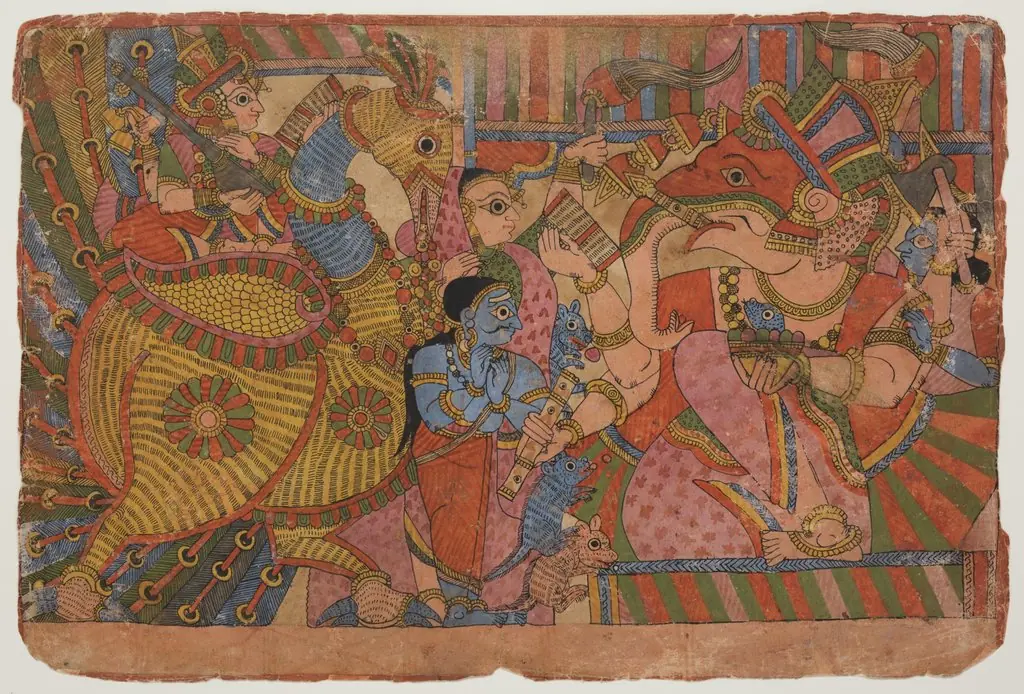 Scene from the Ramayana
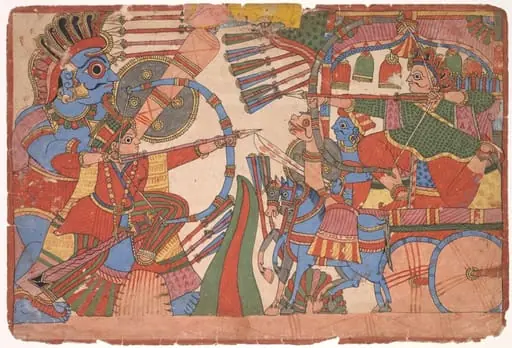 Illustration to the Mahabharata
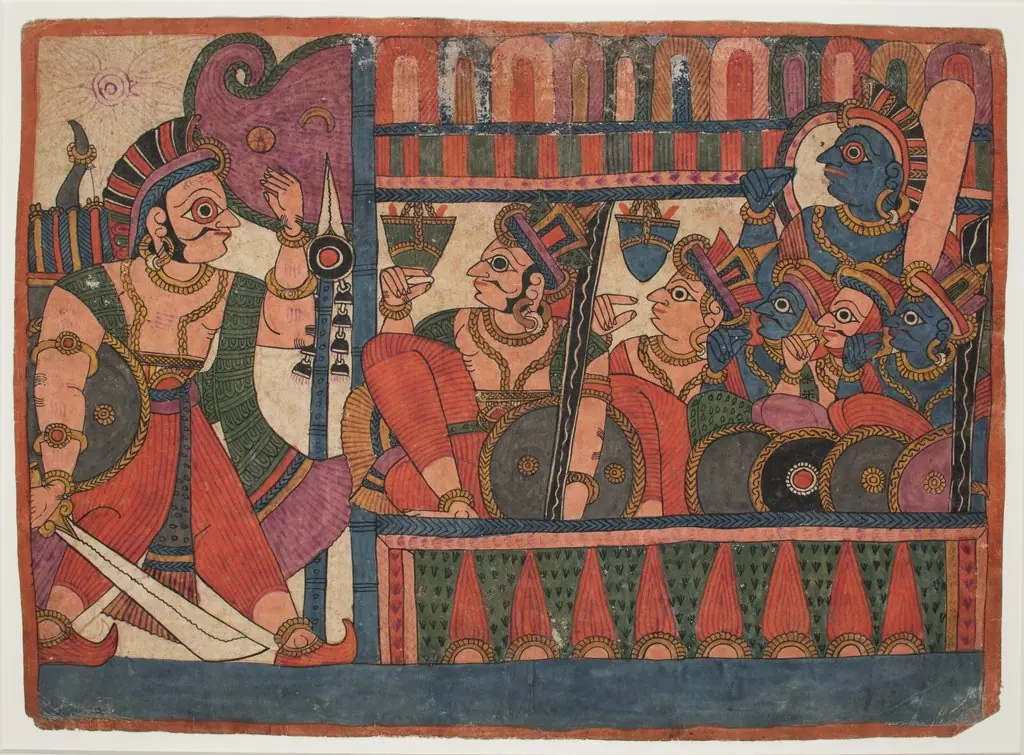 Scene from the Ramayana
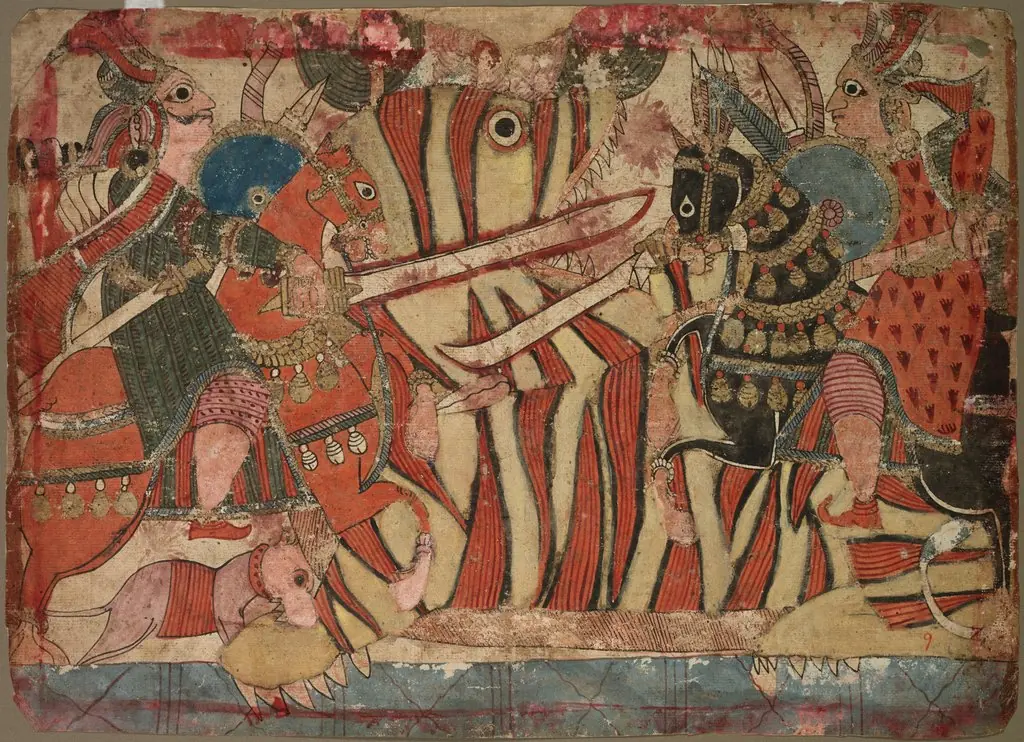 Illustration of the Mahabharata
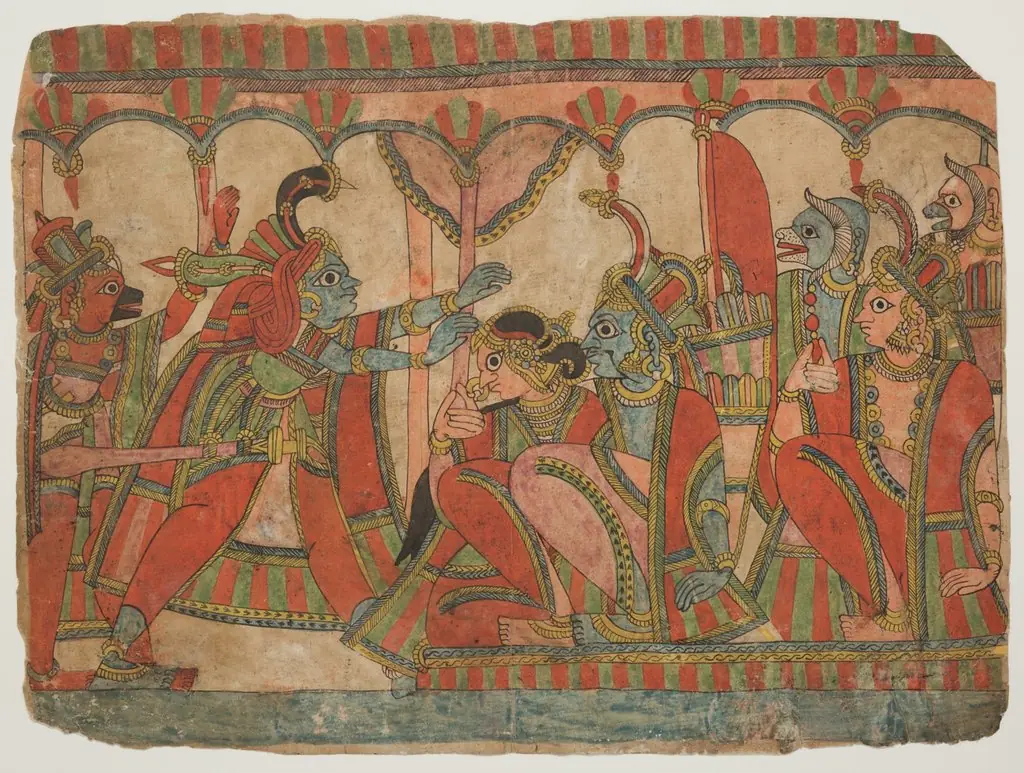 Scene from the Ramayana
 Illustration of the Mahabharata
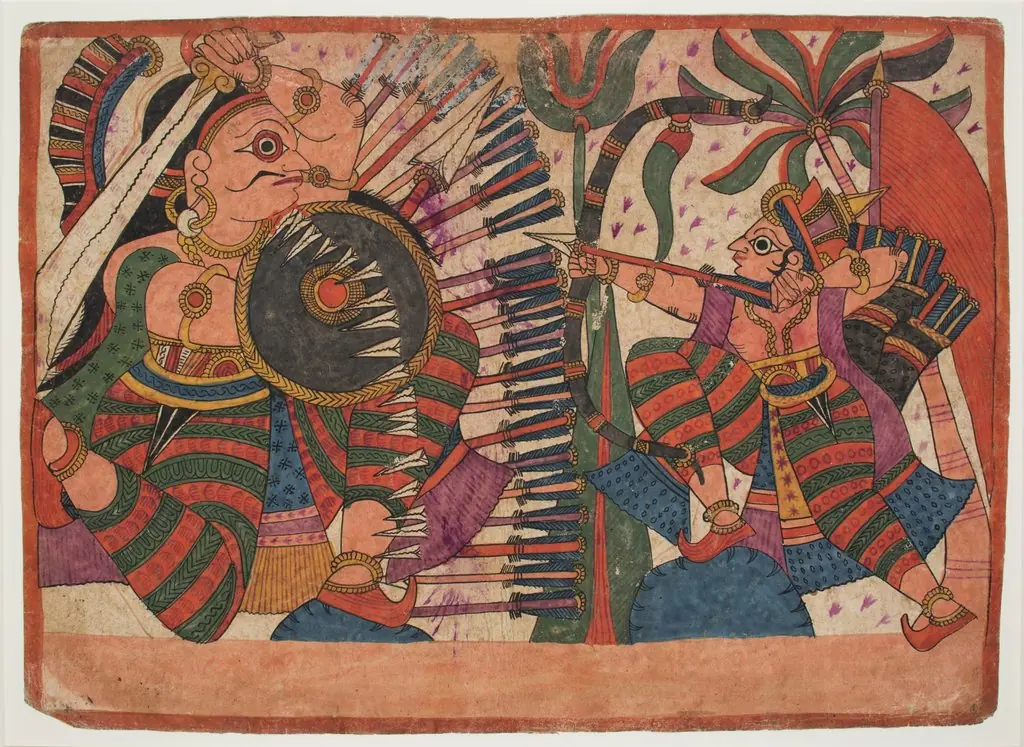 Scene from the Ramayana
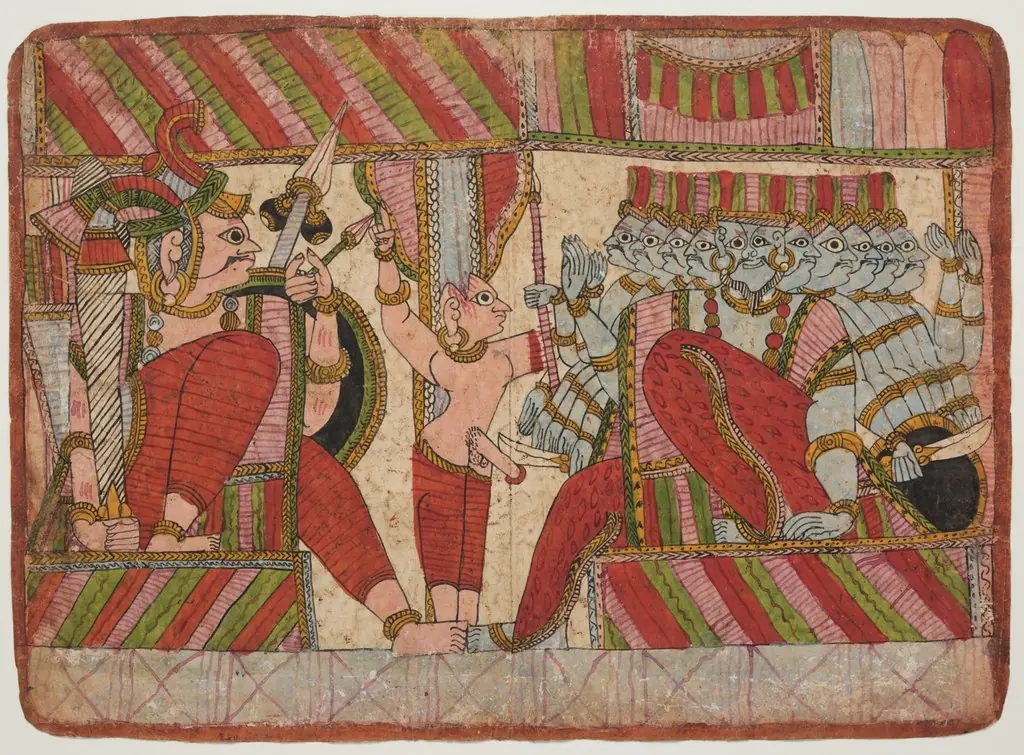 Scene from the Ramayana
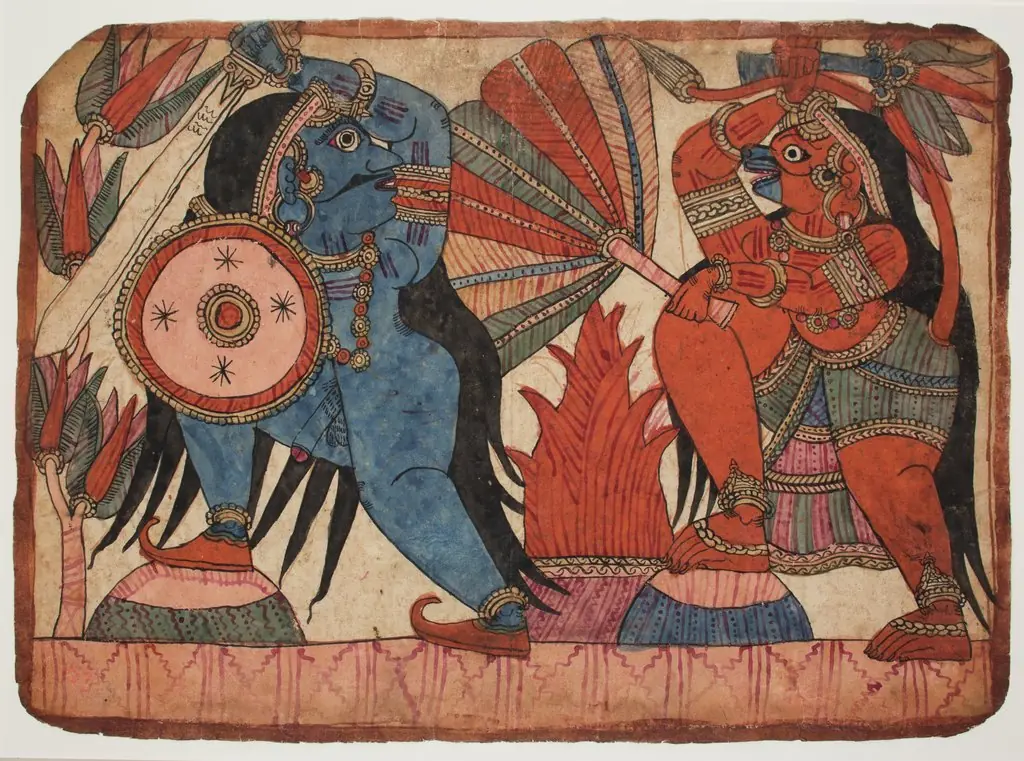 Scene from the Ramayana
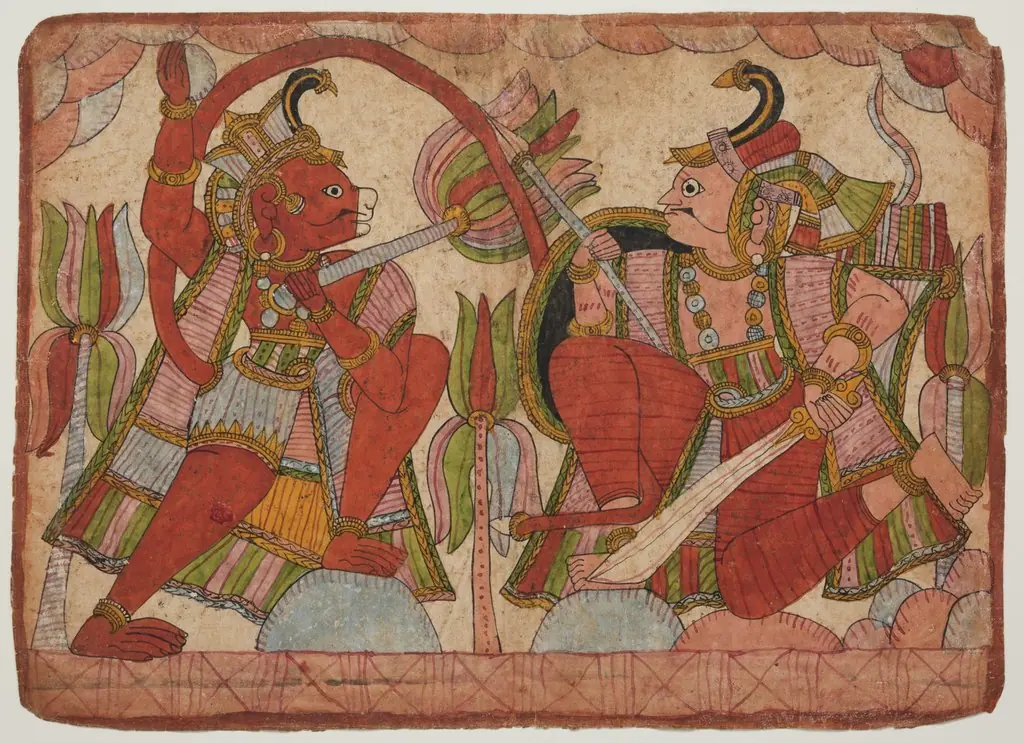 Scene from the Ramayana
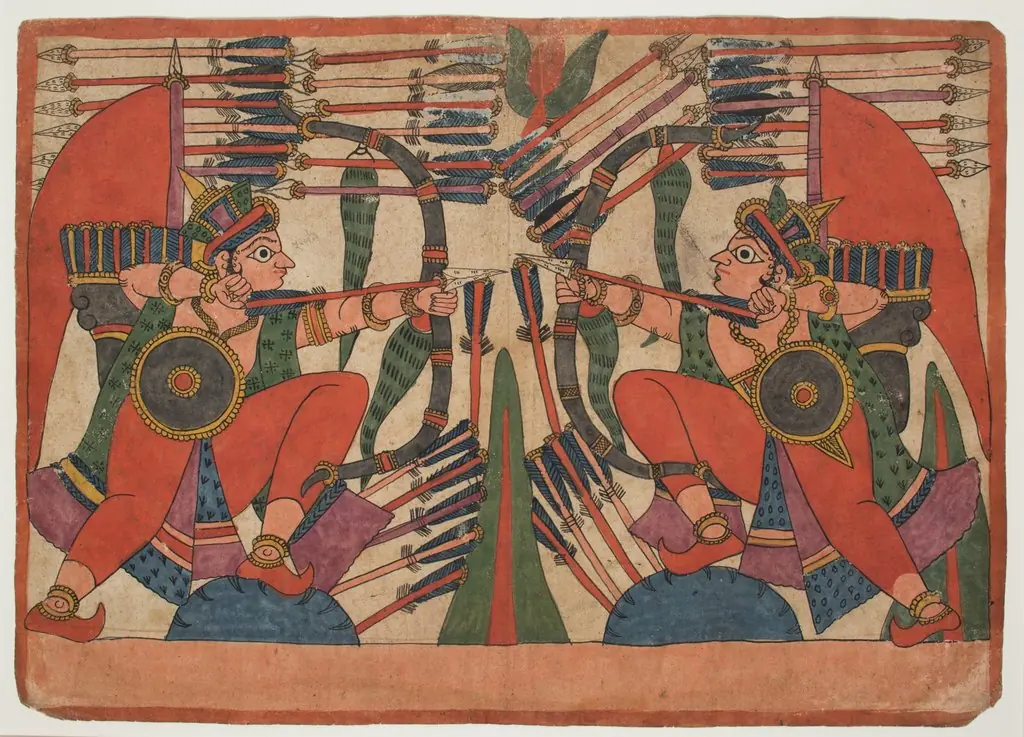 Scene from the Ramayana
 Scene from the Ramayana