Artwork
Krishna and Radha
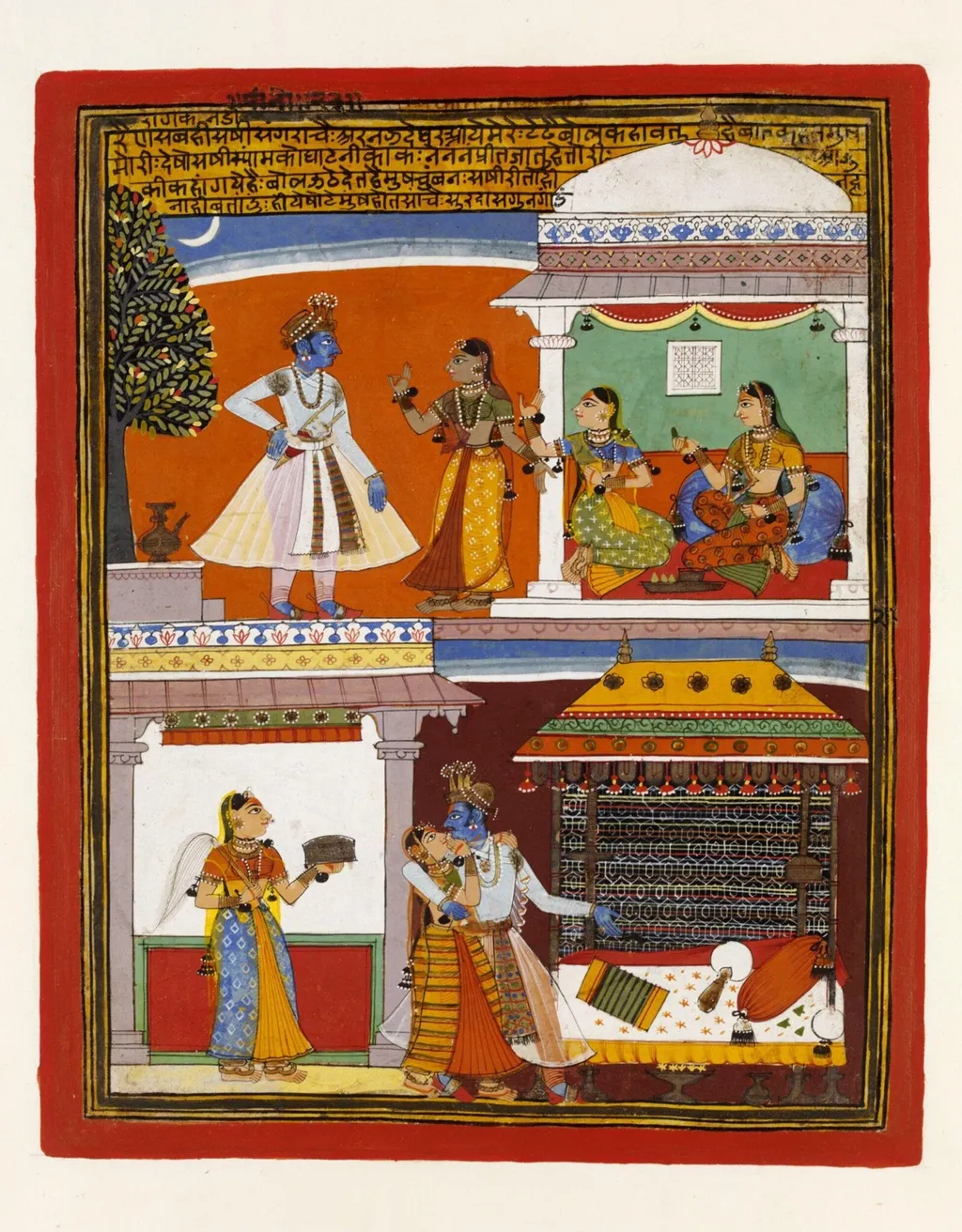
Krishna and Radha is a paint painting by the Baroque artist Unknown. It dates from 1658 and is held in the collection of the Victoria and Albert Museum.
About this work
Overview
This 1658 painting, executed in opaque watercolor on paper, illustrates a moment from Sur Das’s *Sursagar*, a devotional text centered on Krishna and Radha.
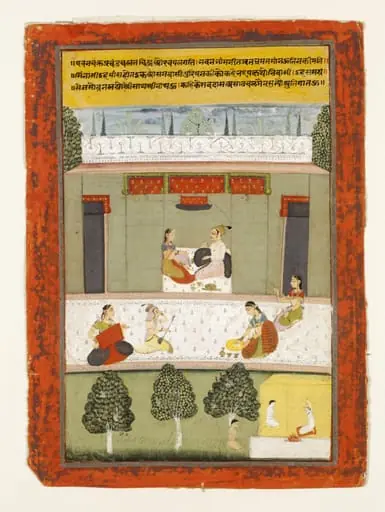
This 1658 painting, executed in opaque watercolor on paper, illustrates a moment from Sur Das’s *Sursagar*, a devotional text centered on Krishna and Radha. The scene captures Krishna’s arrival at Radha’s residence, rendered with vivid pigments and sharp outlines. The composition is framed in bold red with gold calligraphy at the top, typical of Rajasthani manuscript illumination. The figures are set against a stylized backdrop of foliage and a crescent moon, emphasizing ritual intimacy over naturalism.
Subject & Meaning
The painting portrays Krishna and Radha in a moment of divine union, a central theme in Vaishnavite devotion. Krishna, depicted with blue skin, is shown approaching Radha, who kneels in reverence. Their interaction symbolizes the soul’s longing for the divine. Surrounding women, holding fans and seated on a raised platform, serve as witnesses, reinforcing the sacredness of the encounter. The scene is not merely romantic but theological, reflecting the devotional poetry of Sur Das.
Technique & Style
The work employs opaque watercolor with flat, unmodulated hues and no shading, creating a luminous, decorative effect. Figures are outlined clearly, and details like jewelry and textiles are rendered with fine brushwork and gold leaf. The background features symbolic elements—a tree and moon—without perspective or depth. This style, rooted in the Rajasthani miniature tradition, prioritizes symbolic clarity and ornamental richness over spatial realism, aligning with devotional aesthetic norms of the period.
History & Provenance
Created in 1658, the painting likely originated in a Rajasthani court workshop, possibly under the patronage of a ruler devoted to Krishna bhakti. It was produced as an illustration for a manuscript of Sur Das’s *Sursagar*, a collection of devotional verses popular in 17th-century North India. Such manuscripts were often commissioned for private worship or courtly display, and this piece reflects the fusion of literary, religious, and artistic traditions of the time.
Context
This painting emerged during a flourishing of devotional art in North India, where poets like Sur Das inspired visual representations of Krishna’s life. Rajasthani miniatures of this era often paired lyrical texts with intimate, colorful scenes of divine love. Unlike European Baroque drama, which emphasized movement and emotion through chiaroscuro, this style used flat color and pattern to convey spiritual intensity, reflecting distinct regional approaches to sacred imagery.
Legacy
The painting exemplifies the enduring influence of Bhakti poetry on Indian visual culture. Its iconography—blue-skinned deities, ritualized gestures, ornate framing—became standard in later Krishna-themed artworks across Rajasthan and the Punjab hills. Though not widely known outside specialized collections, it remains a key reference for understanding how devotional literature shaped artistic expression in early modern India.
Artist & collection

 Domestic Scene
 Giacomo and Cardinal Marco, investing Andrea, Abbot of San Zeno, with his Benefice
 The Nymph of Fontainebleau
 Portrait of a Woman
 Madonna and Child with Saints in the Enclosed Garden
 Venus and Minerva
 Family Group of Four on Sofa
 Wall painting from Room H of the Villa of P. Fannius Synistor at Boscoreale
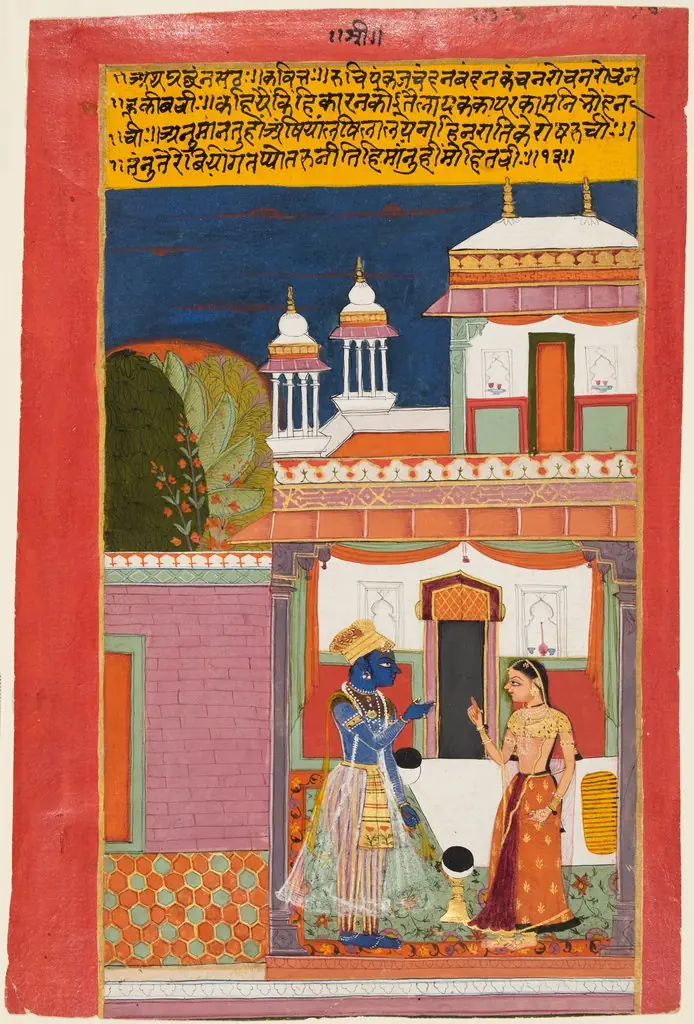 Krishna and Radha Quarreling: Shatha Nayaka, from a Rasikapriya
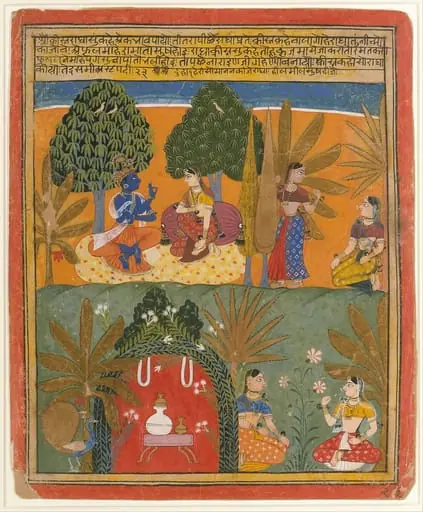 Untitled
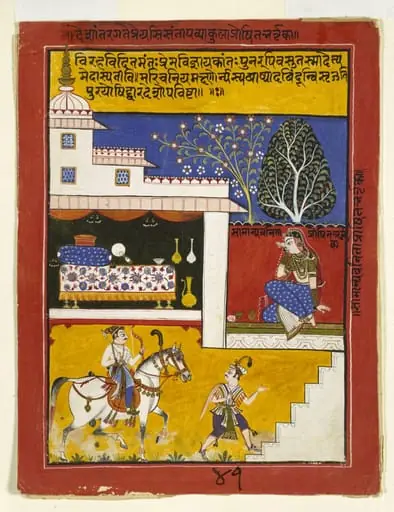 A deceitful lady
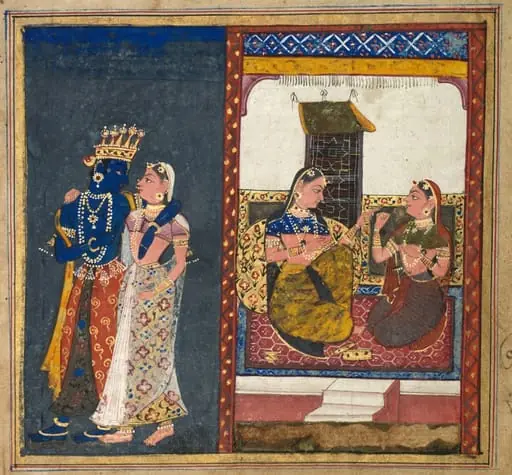 Radha and Krishna Embracing, Leaf from a Gita Govinda
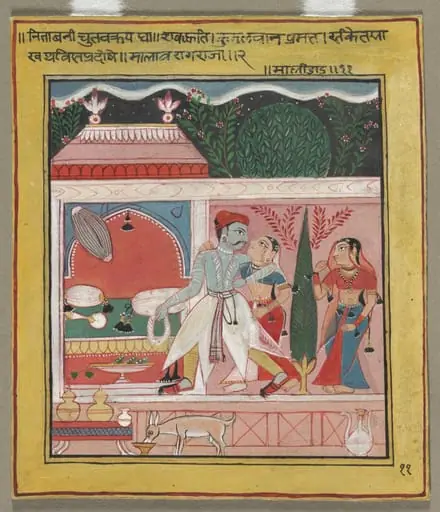 Ragini
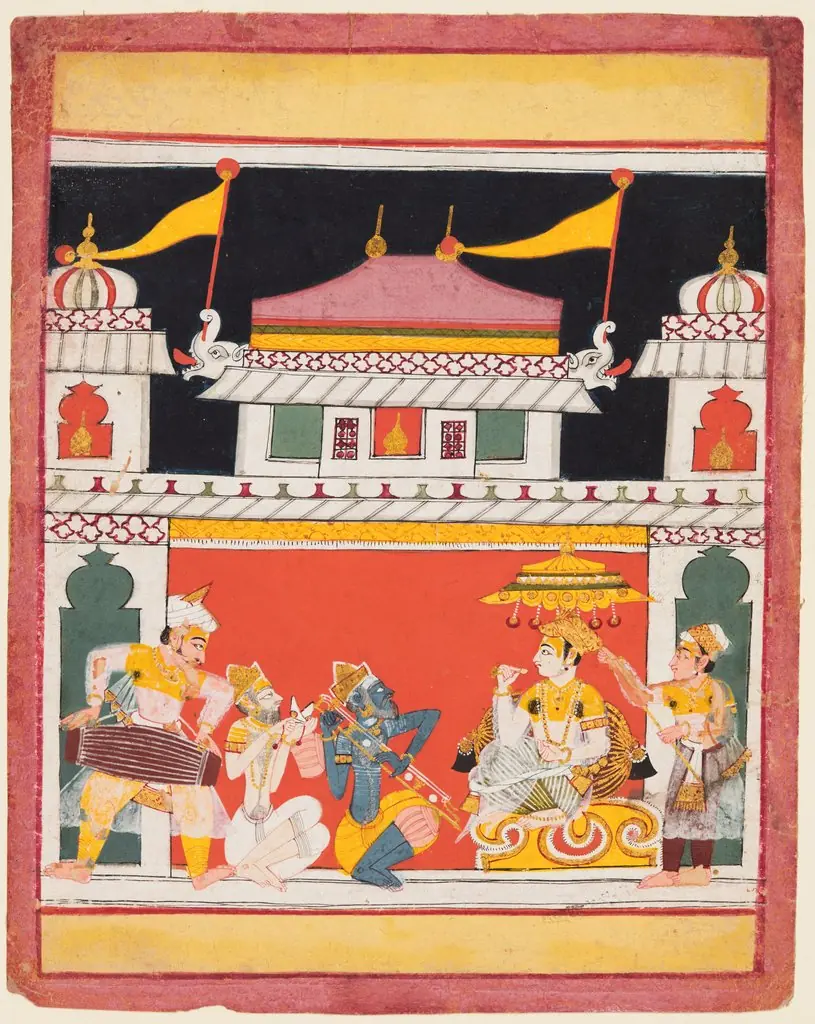 Three Musicians Perform Before a King: Shri Raga, from a Ragamala
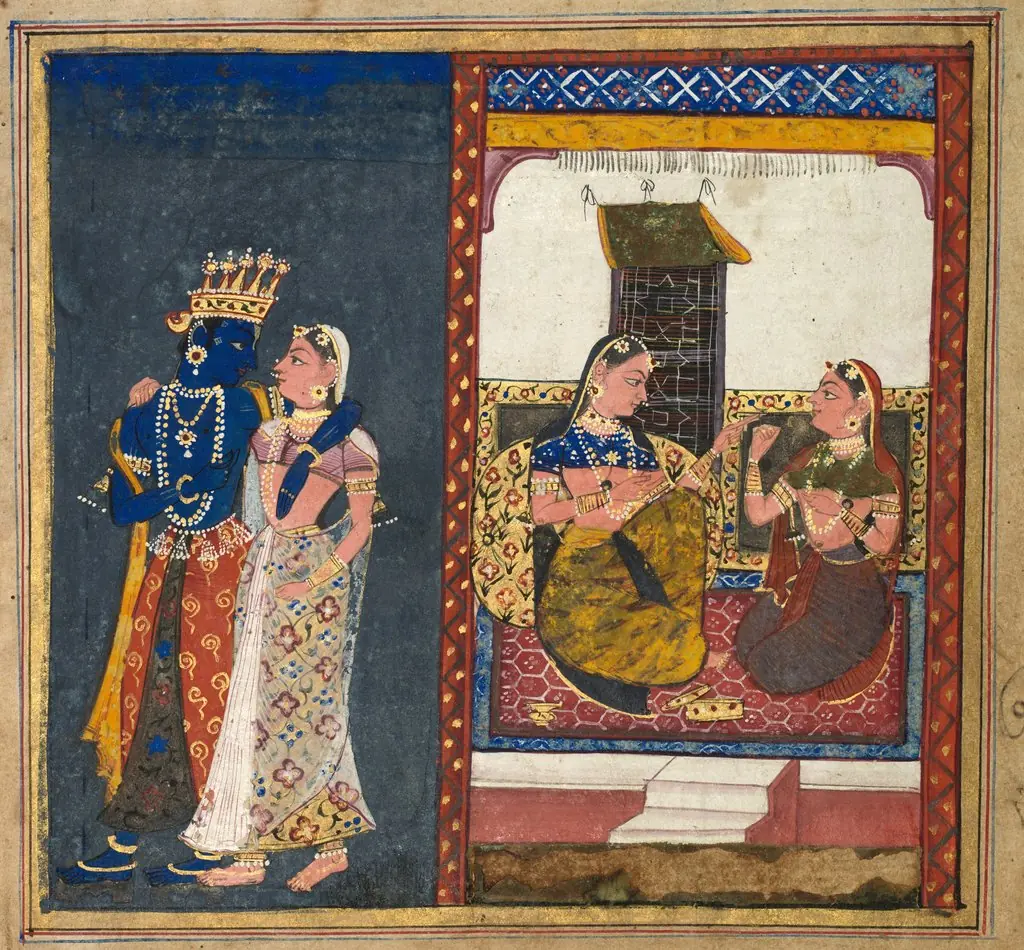 Radha and Krishna Embracing, Leaf from a Gita Govinda
 Untitled
 Ragini Bairari, Page from a Jaipur Ragamala Set