Artwork
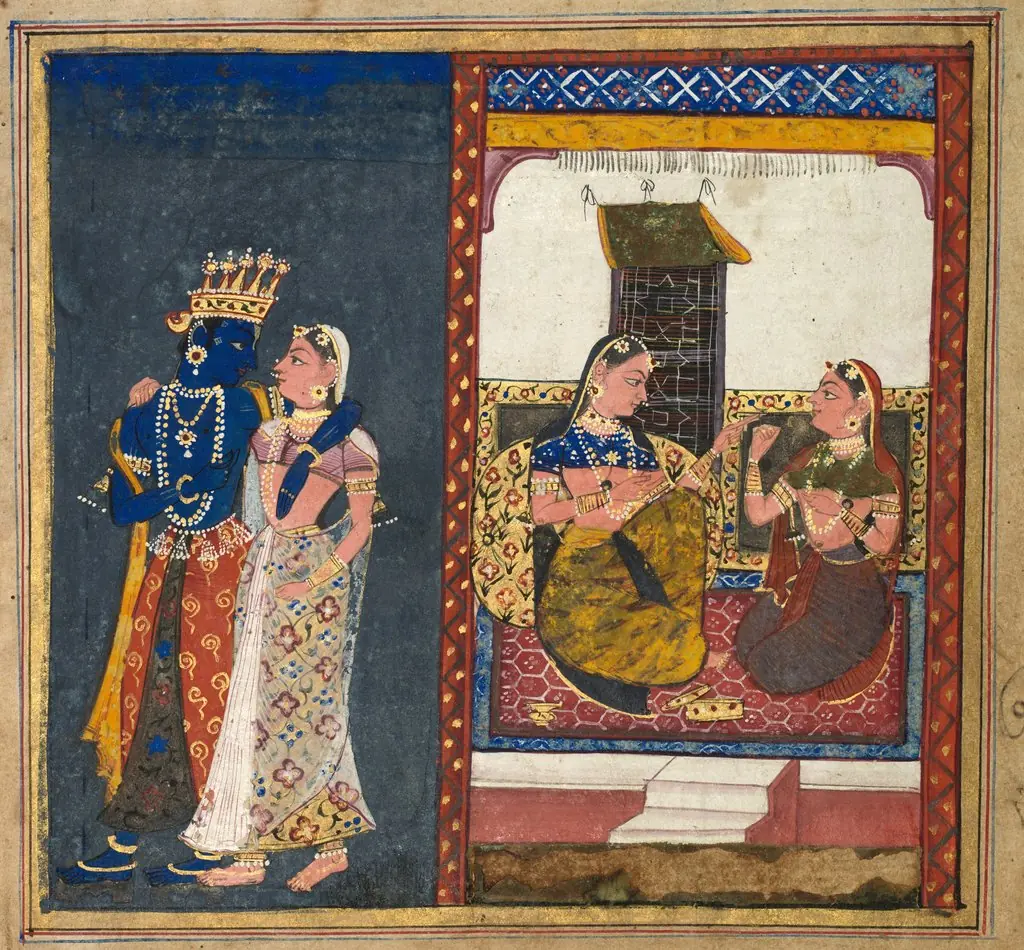
Radha and Krishna Embracing, Leaf from a Gita Govinda
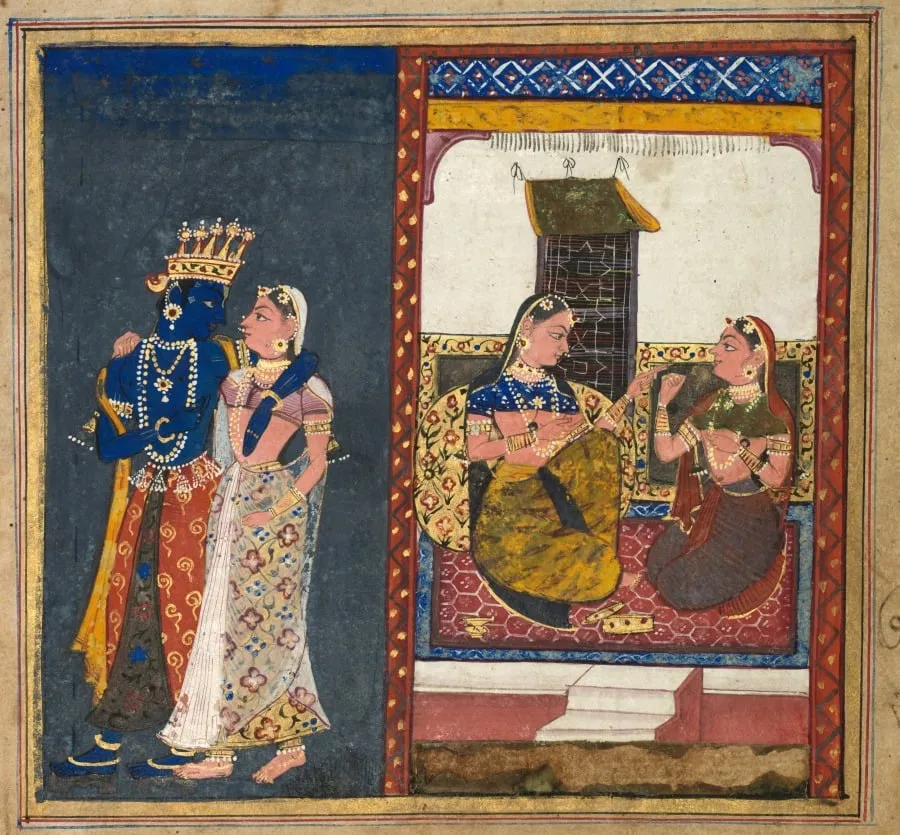
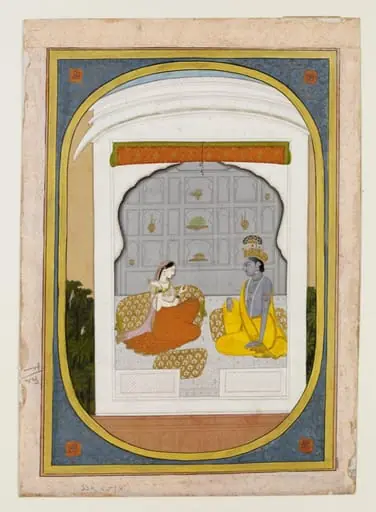
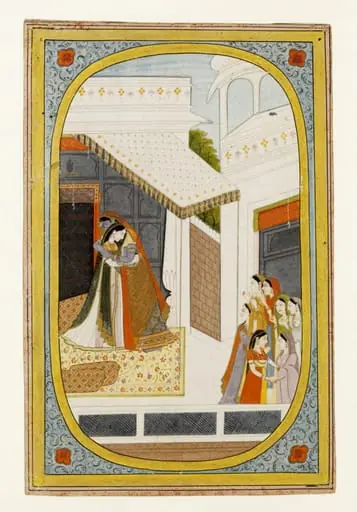
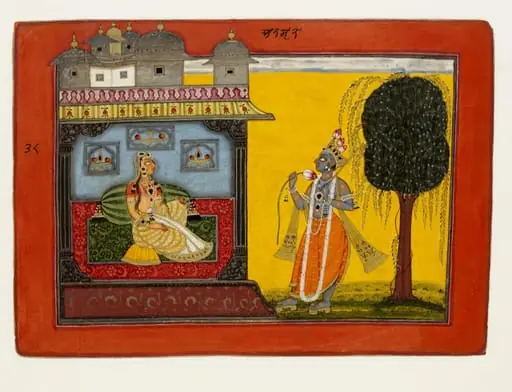
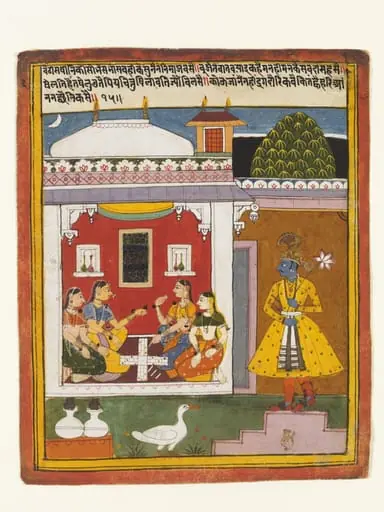
Radha and Krishna Embracing, Leaf from a Gita Govinda is an unspecified painting by the Baroque artist Unknown. It dates from 1650 and is held in the collection of the Cleveland Museum of Art. This painted leaf originates from a manuscript illustrating the Gita Govinda, a 12th-century Sanskrit poem by Jayadeva.
About this work
Overview
The scene is divided horizontally, with each side capturing a distinct episode from the narrative, arranged to invite contemplative reading.
This painted leaf originates from a manuscript illustrating the Gita Govinda, a 12th-century Sanskrit poem by Jayadeva. It depicts two moments from the divine love story of Radha and Krishna in a single composition, framed by an ornate gold border typical of Rajasthani and Pahari court paintings. The scene is divided horizontally, with each side capturing a distinct episode from the narrative, arranged to invite contemplative reading.
Subject & Meaning
The left panel portrays Krishna, identifiable by his blue skin and crown, embracing Radha, symbolizing divine union and spiritual longing. The right panel shows attendants in a quiet moment of musical devotion, reinforcing the poem’s theme of love as worship. Together, the scenes convey the dual nature of their relationship—intimate and sacred—where earthly emotion mirrors cosmic harmony.
Technique & Style
The painting employs fine brushwork and mineral pigments to render intricate patterns on clothing and jewelry, with delicate lines defining facial features and drapery. The use of flat, saturated colors and stylized architecture reflects the Pahari school’s aesthetic, emphasizing symbolic expression over naturalism. The gold border acts as both frame and sacred boundary, elevating the scene beyond the mundane.
History & Provenance
Created in the late 17th or early 18th century, likely in a Rajasthani or Pahari court atelier, this leaf was part of a larger illustrated manuscript commissioned by a royal patron. Such manuscripts were treasured objects, circulated among nobility and used in devotional settings. Its survival suggests careful preservation, possibly within a temple or royal collection over centuries.
Context
The Gita Govinda was widely illustrated in northern Indian courts during the Mughal period, where Hindu devotional themes coexisted with Islamic artistic traditions. This painting reflects a regional adaptation of Mughal refinement—evident in the detailed ornamentation—while retaining indigenous iconography and spiritual intent, distinct from contemporary European Baroque drama.
Legacy
Works like this leaf helped preserve and disseminate the Gita Govinda’s poetic imagery across generations, influencing later Indian miniature painting and devotional art. Though not widely known outside scholarly circles, such manuscripts remain vital to understanding how religious texts were visually interpreted in pre-colonial India, bridging literature, ritual, and aesthetics.
Artist & collection

 Domestic Scene
 Giacomo and Cardinal Marco, investing Andrea, Abbot of San Zeno, with his Benefice
 The Nymph of Fontainebleau
 Portrait of a Woman
 Madonna and Child with Saints in the Enclosed Garden
 Venus and Minerva
 Family Group of Four on Sofa
 Wall painting from Room H of the Villa of P. Fannius Synistor at Boscoreale