Artwork
Krishna as Vishnu
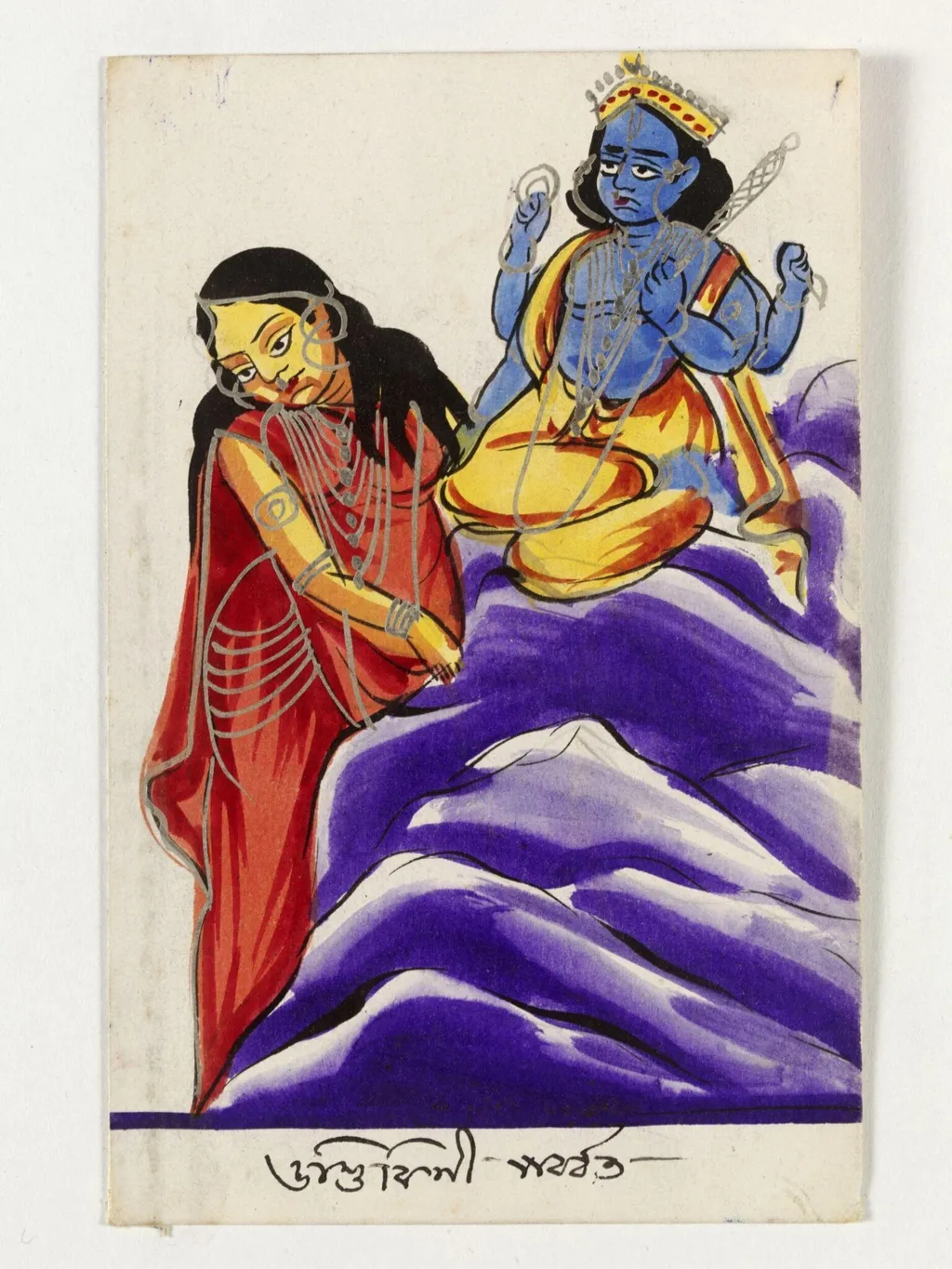
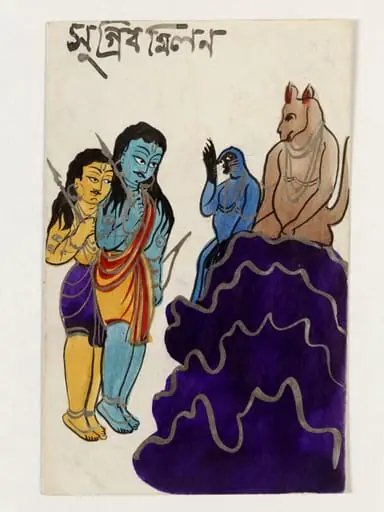
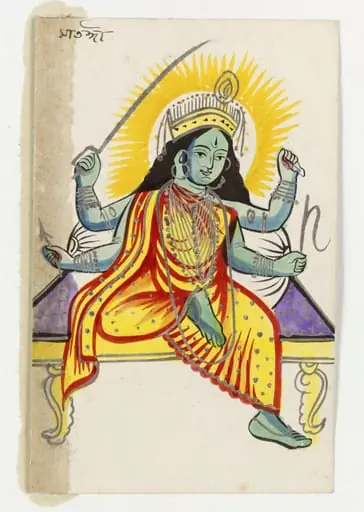
Krishna as Vishnu is a paint painting by the Impressionist artist Unknown. It dates from 1890 and is held in the collection of the Victoria and Albert Museum. Created in 1890 by an unidentified hand, this work presents a depiction of Krishna identified with the deity Vishnu.
About this work
Overview
Created in 1890 by an unidentified hand, this work presents a depiction of Krishna identified with the deity Vishnu. Rendered on cardboard using watercolour combined with tin alloy, the composition places the divine figure upon a hill against a softly blended, purple‑toned sky that resembles drifting clouds.
Subject & Meaning
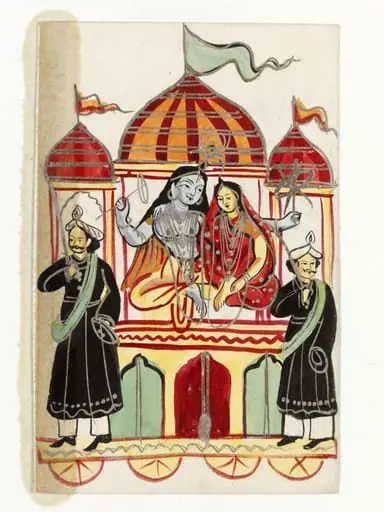
The scene features two central figures. On the left, a woman dressed in a red sari with yellow stripes and a black head covering stands beside the deity. To the right, Krishna appears with characteristic blue skin, a golden crown, and a stringed instrument, emphasizing his role as a divine musician and protector.
Technique & Style
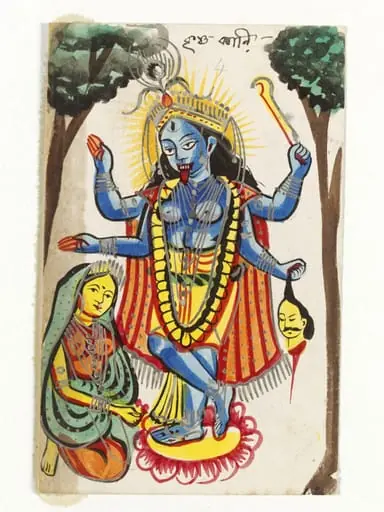
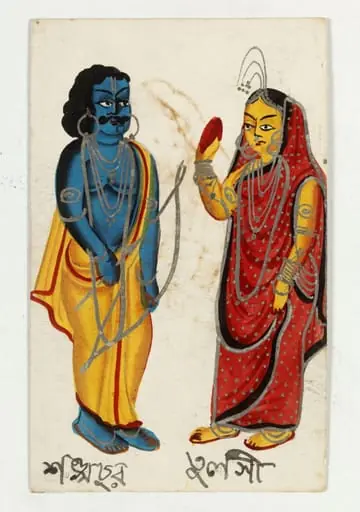
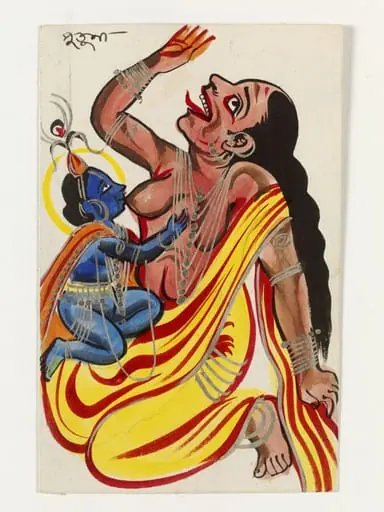
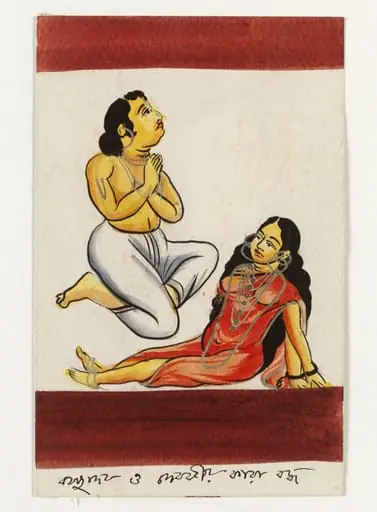
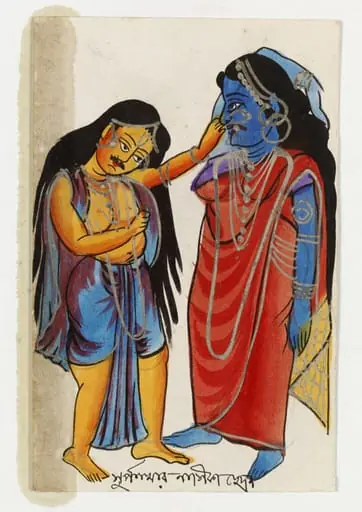
The painting’s vivid palette and fluid brushwork align it with the Kalighat tradition, a 19th‑century Indian folk style known for bold colors and simplified forms. The use of watercolour mixed with tin alloy on a cardboard support contributes to the work’s luminous surface and expressive texture.
History & Provenance
Although the artist remains unknown, the piece reflects the commercial art practices of Kolkata’s Kalighat market in the late nineteenth century, where itinerant painters produced devotional images for a broad audience. Its survival on cardboard suggests it was intended for popular consumption rather than elite patronage.
Context
Kalighat paintings emerged as a visual language bridging everyday life and religious devotion in colonial India. By portraying Krishna as Vishnu, the work encapsulates syncretic theological ideas prevalent among Hindu communities, while its accessible format mirrors the democratization of sacred imagery during that era.
Artist & collection

 Domestic Scene
 Giacomo and Cardinal Marco, investing Andrea, Abbot of San Zeno, with his Benefice
 The Nymph of Fontainebleau
 Portrait of a Woman
 Madonna and Child with Saints in the Enclosed Garden
 Venus and Minerva
 Family Group of Four on Sofa
 Wall painting from Room H of the Villa of P. Fannius Synistor at Boscoreale