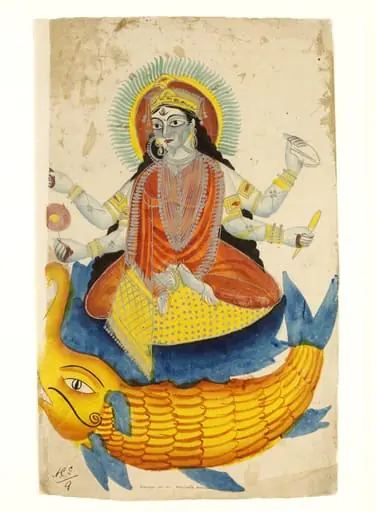
Artwork
Devi as Matangi
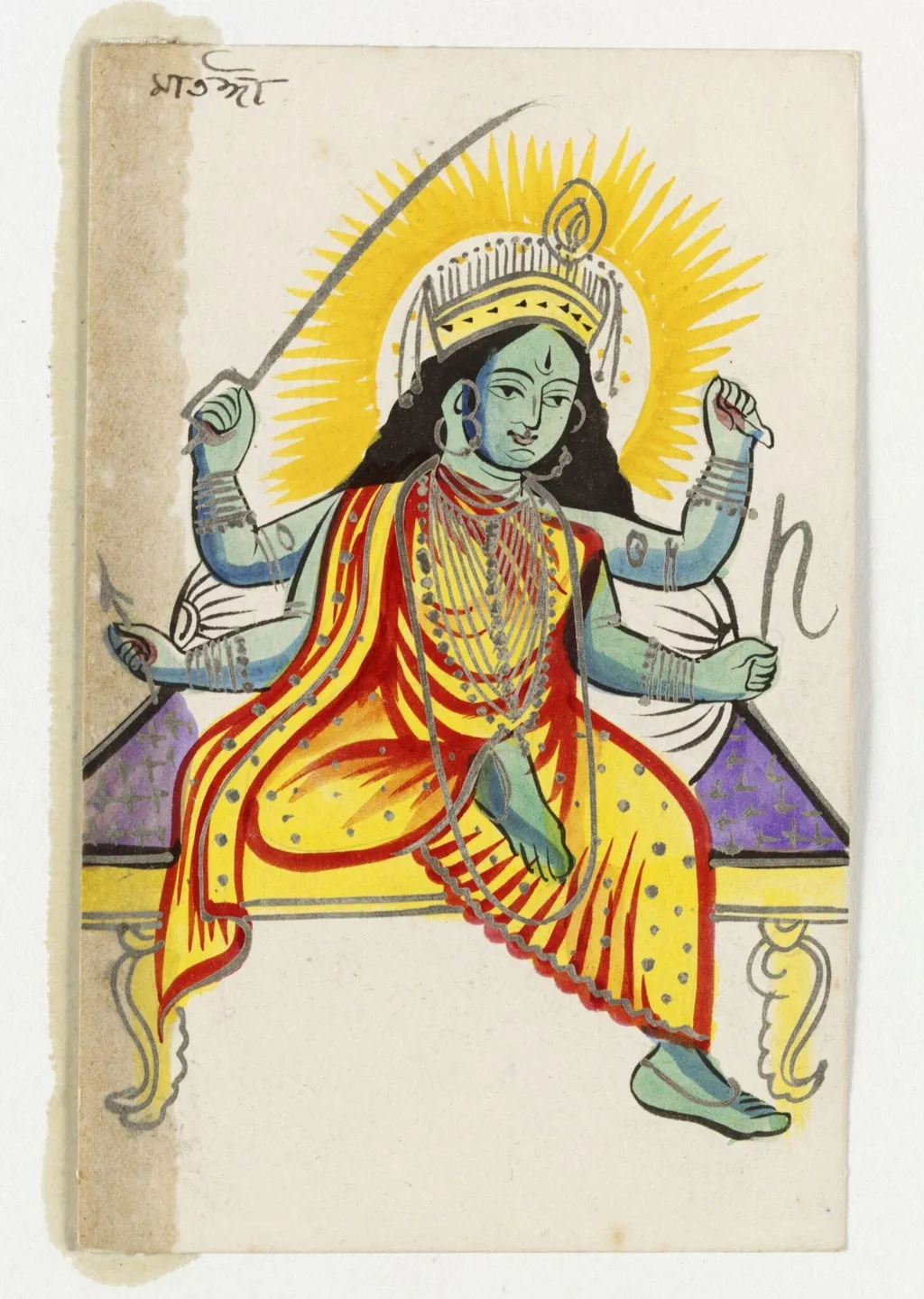
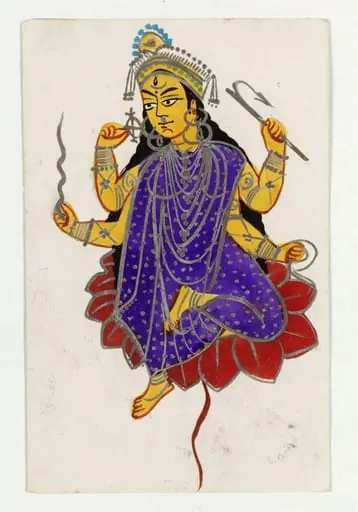
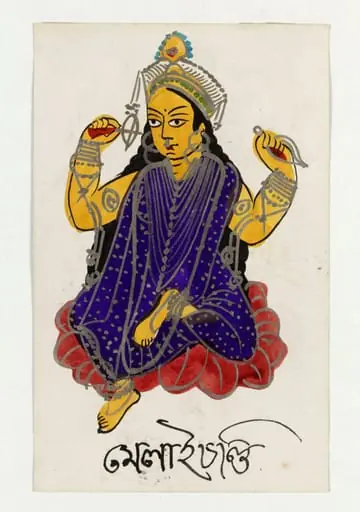
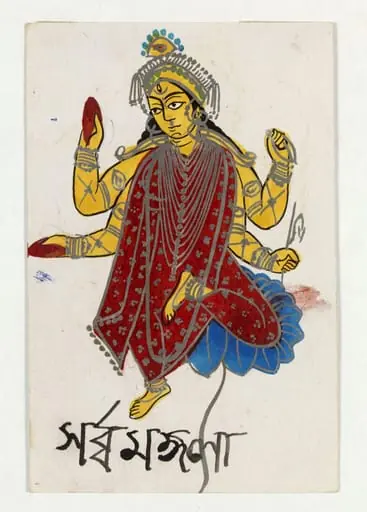
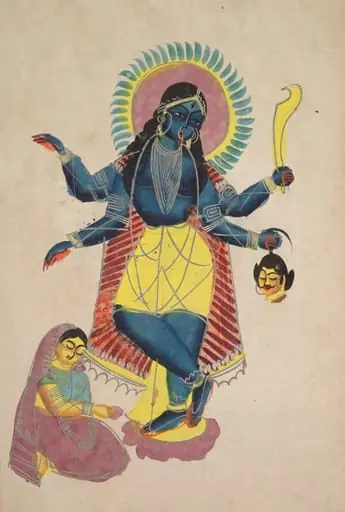
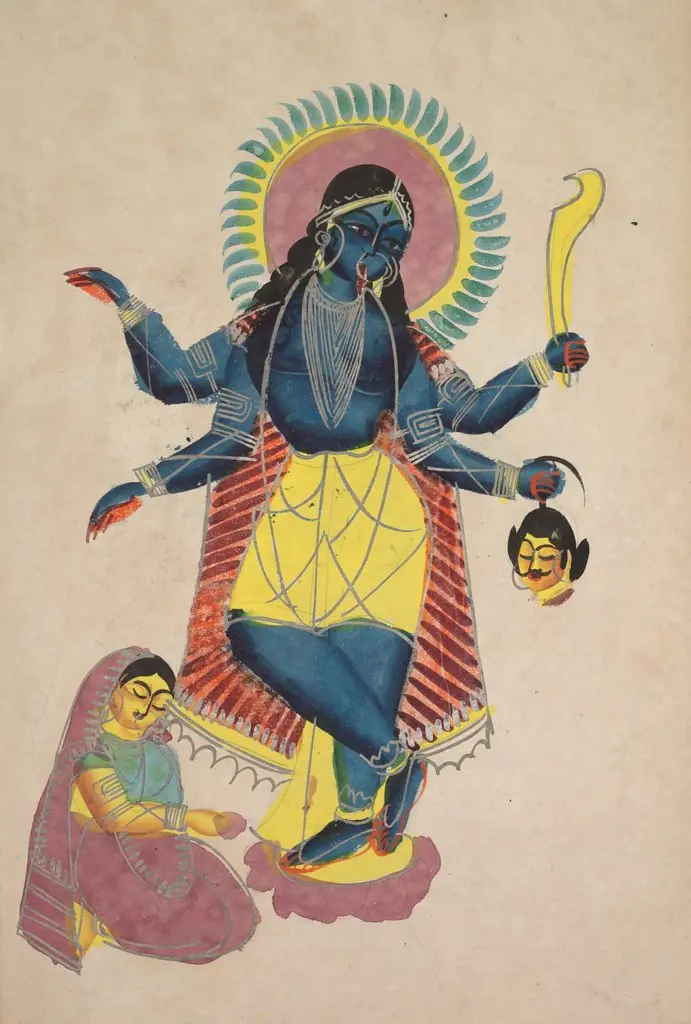
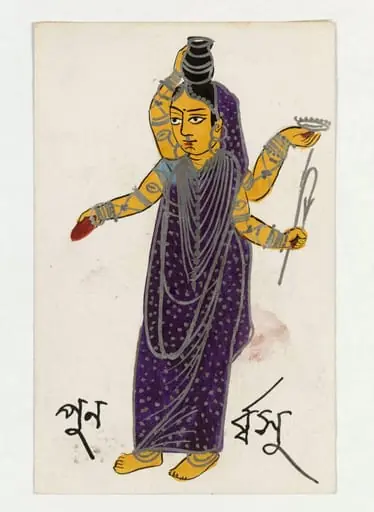
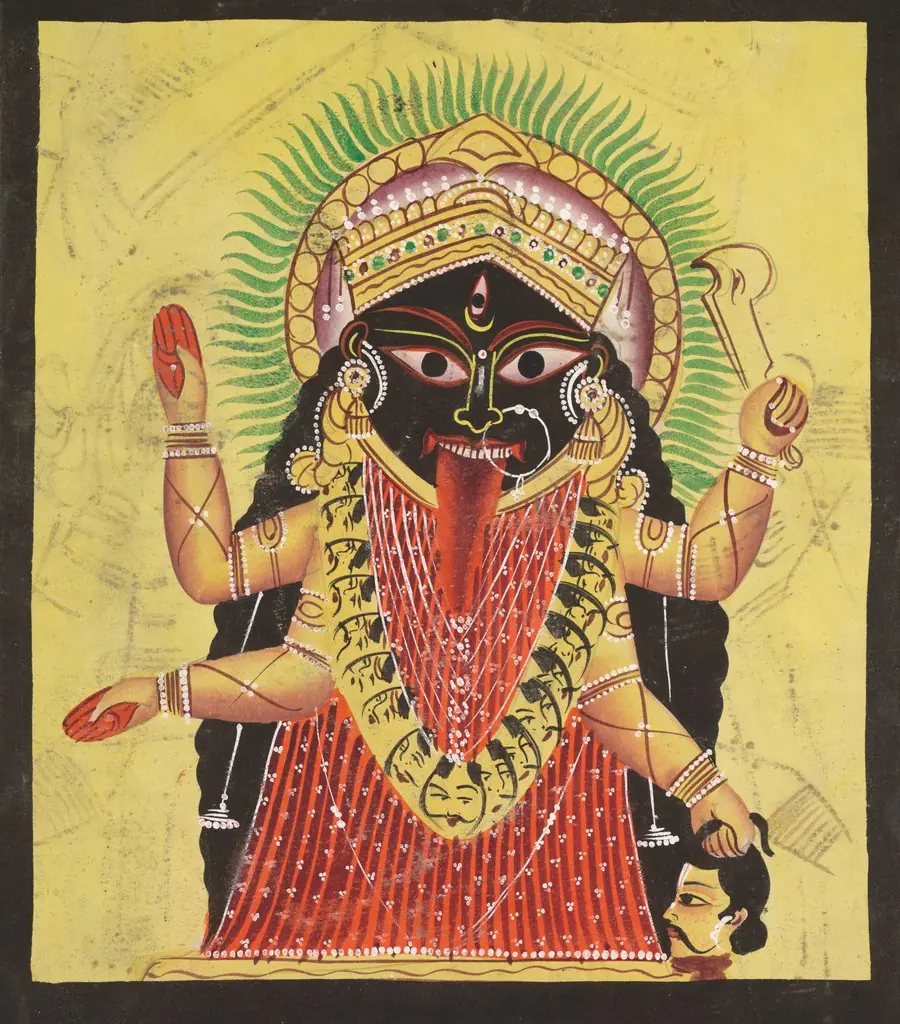
Devi as Matangi is a paint painting by the Patna School of Painting artist Unknown. It dates from 1890 and is held in the collection of the Victoria and Albert Museum. This watercolor and tin-alloy painting on cardboard portrays the goddess Matangi, a form of Devi associated with wisdom and the arts.
About this work
Overview
This watercolor and tin-alloy painting on cardboard portrays the goddess Matangi, a form of Devi associated with wisdom and the arts.
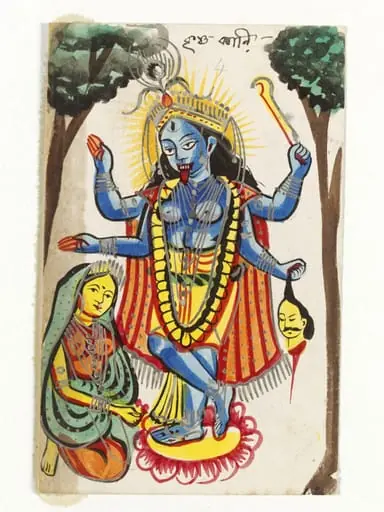
This watercolor and tin-alloy painting on cardboard portrays the goddess Matangi, a form of Devi associated with wisdom and the arts. Rendered in delicate tones, the image captures her seated upon a blue lotus, surrounded by small red birds. The medium and support reflect regional Indian artistic traditions, emphasizing subtlety over grandeur. Her calm demeanor and restrained palette suggest contemplation rather than aggression.
Subject & Meaning
Matangi, one of the Mahavidyas, embodies knowledge, speech, and music. In this depiction, she is shown not as a fierce warrior but as a serene figure, aligning with her role as a patron of learning. The staff and flower-filled bowl in her hands symbolize authority and offerings, while the birds may represent the flow of sound or spiritual insight. Her presence evokes quiet power, rooted in inner clarity rather than external force.
Technique & Style
The artist employed watercolor with tin-alloy accents to achieve a luminous, translucent effect. Soft, muted hues mimic the glow of filtered sunlight, enhancing the meditative mood. Fine linework defines her jewelry and crown, while the lotus and birds are rendered with precision yet delicacy. The use of cardboard as a support points to a portable, possibly devotional object, suited for personal worship or small-scale ritual use.
History & Provenance
The painting originates from northern India, likely produced in the 19th century within a tradition of devotional miniatures. Its materials and composition align with regional styles practiced in courts and temple communities. While its exact provenance is undocumented, similar works were often created for private altars or as gifts to spiritual teachers, reflecting local interpretations of Tantric deities.
Context
Matangi’s depiction here reflects a broader trend in 19th-century Indian art where esoteric deities were rendered with increasing intimacy. As colonial influence grew, artists adapted traditional iconography for domestic and collector markets, preserving spiritual meaning while softening visual intensity. This version of Matangi, calm and ornate, speaks to a period of cultural negotiation between sacred tradition and changing patronage.
Legacy
This painting contributes to the visual record of regional Hindu devotional practices, illustrating how goddesses like Matangi were personalized in everyday worship. Its preservation in museum collections underscores its value as an artifact of both religious expression and artistic craftsmanship. It continues to inform contemporary understandings of how spiritual ideals were rendered in accessible, intimate forms.
Artist & collection

 Domestic Scene
 Giacomo and Cardinal Marco, investing Andrea, Abbot of San Zeno, with his Benefice
 The Nymph of Fontainebleau
 Portrait of a Woman
 Madonna and Child with Saints in the Enclosed Garden
 Venus and Minerva
 Family Group of Four on Sofa
 Wall painting from Room H of the Villa of P. Fannius Synistor at Boscoreale