Artwork
Krishna steals the gopis' clothes
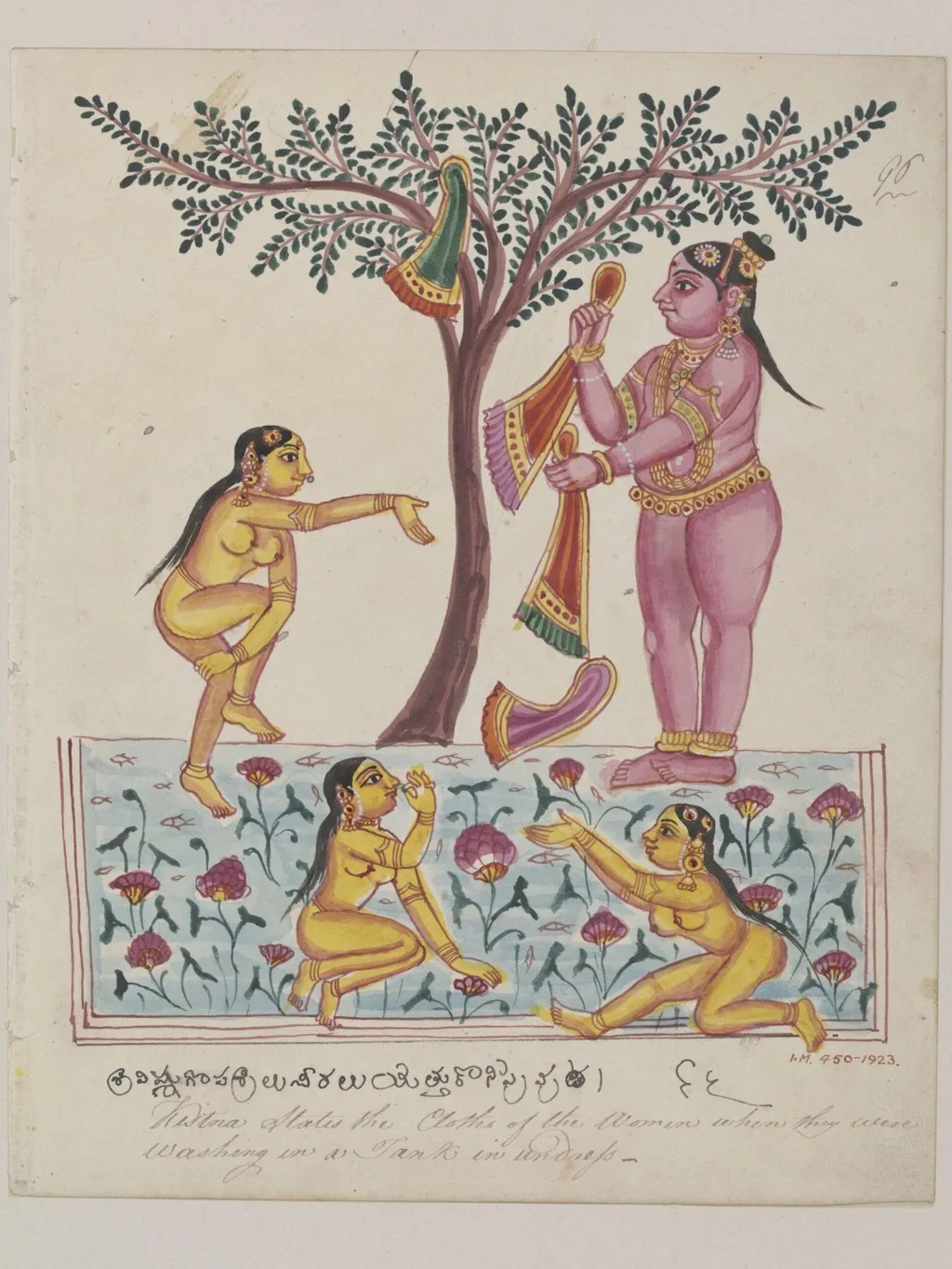
Krishna steals the gopis' clothes is a paint painting by the Romanticist artist Unknown. It dates from 1825 and is held in the collection of the Victoria and Albert Museum. This painting, created in South India in 1825, illustrates a moment from Krishna’s youthful legends.
About this work
Overview
The scene centers on Krishna’s mischievous act of taking the garments of the gopis, a narrative rich in spiritual symbolism and emotional nuance.
This painting, created in South India in 1825, illustrates a moment from Krishna’s youthful legends. It belongs to a series of one hundred devotional images, each capturing a distinct divine episode. The scene centers on Krishna’s mischievous act of taking the garments of the gopis, a narrative rich in spiritual symbolism and emotional nuance. Rendered with vivid color and fluid lines, the composition conveys movement and intimate interaction between figures.
Subject & Meaning
Krishna, depicted in pink, holds a garment above his head while standing beside a tree where other clothes are suspended. Three gopis kneel below, reaching toward the clothes with gestures of modesty and urgency. The act is not merely playful but symbolizes divine detachment: by removing their garments, Krishna strips away worldly attachments, inviting surrender to spiritual truth. The scene reflects a deeper theme of devotion through vulnerability.
Technique & Style
The artist employs bold, saturated hues—deep blues, vivid pinks, and greens—to define space and emotion. Brushwork is expressive, with fluid contours that animate the figures’ postures and drapery. The background, adorned with stylized flowers, contrasts with the figures’ dynamic forms. While not strictly chiaroscuro, the lighting emphasizes volume and focus, directing attention to the central exchange between Krishna and the gopis.
History & Provenance
The painting is one of a hundred devotional works produced in South India during 1825, likely for private or temple use. These images were part of a broader regional tradition of illustrating Krishna’s life, often commissioned by patrons devoted to Vaishnavism. The series reflects the enduring popularity of Krishna’s stories in South Indian religious culture during the early colonial period.
Context
In South Indian devotional practice, Krishna’s childhood exploits were widely celebrated as metaphors for divine love and human surrender. The gopis’ vulnerability in this scene was interpreted not as humiliation but as an act of complete trust. Such imagery was common in regional painting traditions, where narrative clarity and emotional resonance outweighed naturalistic detail.
Legacy
This work contributes to a sustained visual language of Krishna’s leelas, influencing later devotional art in South India. Though not widely exhibited outside regional collections, its stylistic choices—color intensity, rhythmic composition, and symbolic gesture—remain characteristic of early 19th-century South Indian miniature painting traditions.
Artist & collection

 Domestic Scene
 Giacomo and Cardinal Marco, investing Andrea, Abbot of San Zeno, with his Benefice
 The Nymph of Fontainebleau
 Portrait of a Woman
 Madonna and Child with Saints in the Enclosed Garden
 Venus and Minerva
 Family Group of Four on Sofa
 Wall painting from Room H of the Villa of P. Fannius Synistor at Boscoreale
 Untitled
 A scene from the Ramayana.
 Vasant Ragini
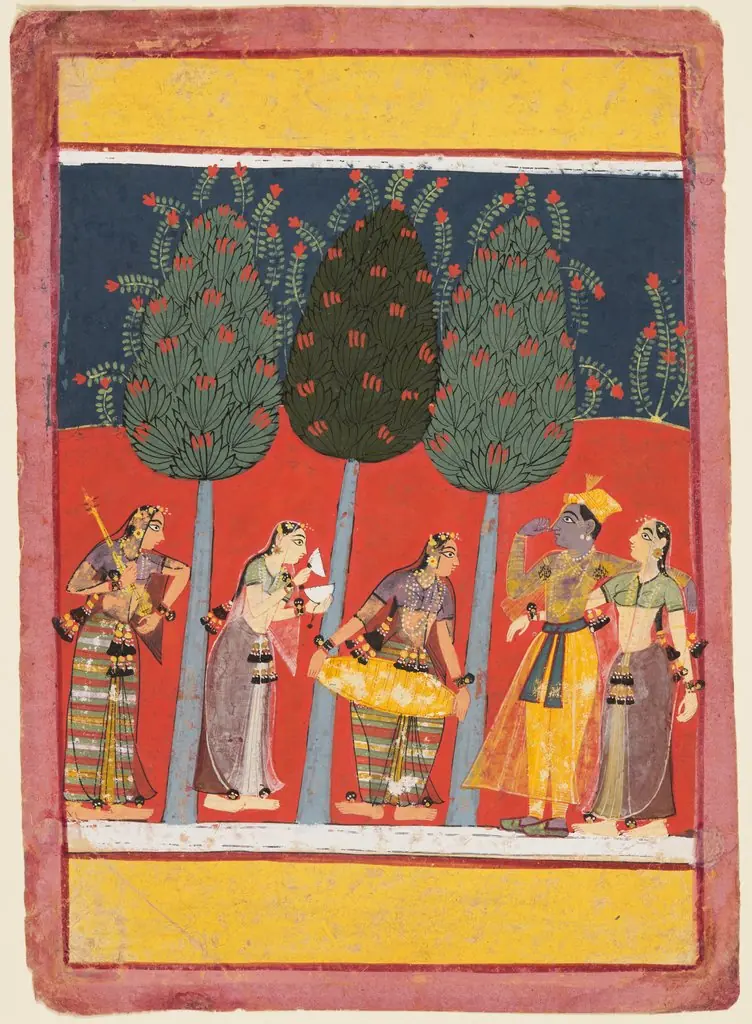 Women Play Music for Radha and Krishna: Chitrini Nayika, from a Rasikapriya
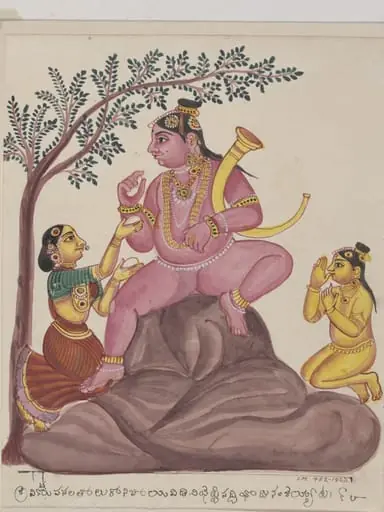 Krishna seated on a hill being fed by Yasoda
 Women Play Music for Radha and Krishna: Chitrini Nayika, from a Rasikapriya
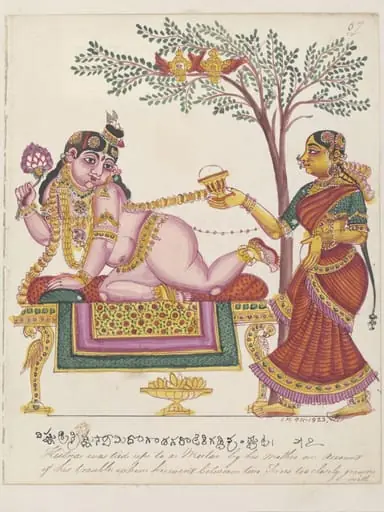 Krishna with Yasoda.
 Yasoda protecting Krishna from the playful approaches of a gazelle