Artwork
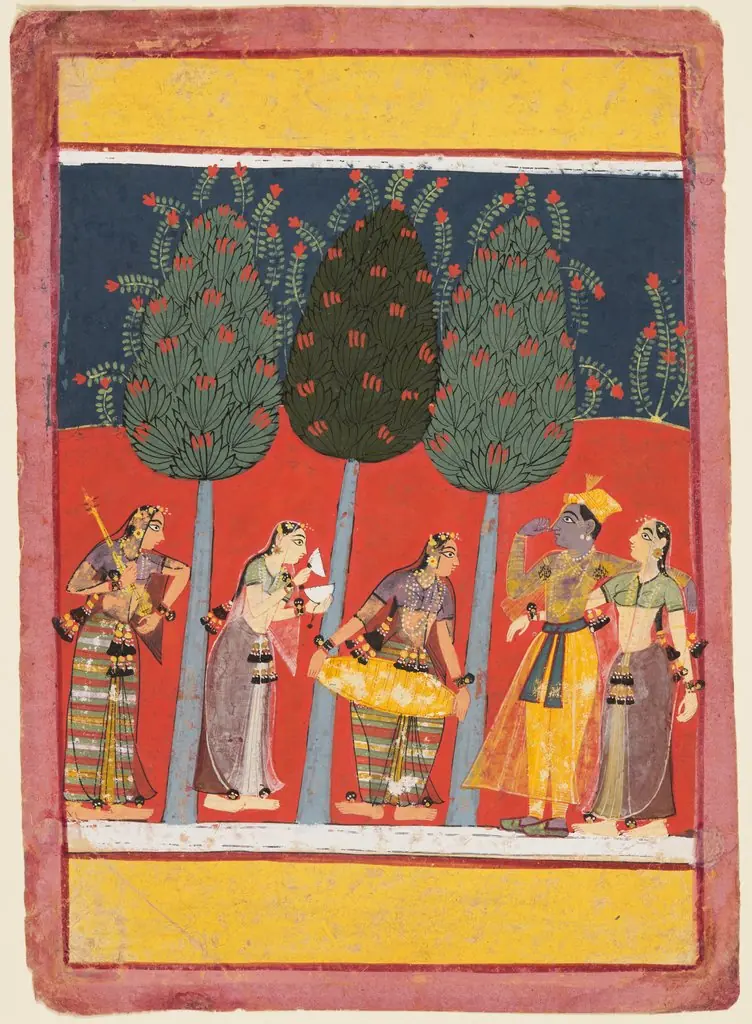
Women Play Music for Radha and Krishna: Chitrini Nayika, from a Rasikapriya
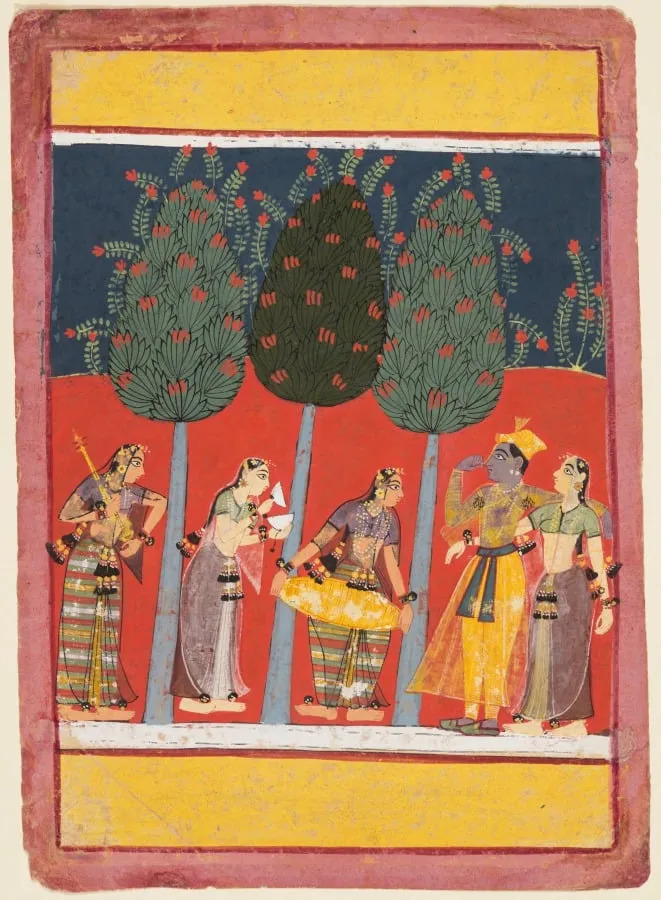
Women Play Music for Radha and Krishna: Chitrini Nayika, from a Rasikapriya is an unspecified painting by the Baroque artist Unknown. It dates from 1650 and is held in the collection of the Cleveland Museum of Art. The painting depicts the divine lovers Radha and Krishna seated beneath a tree in a forest setting, surrounded by three female musicians.
About this work
Overview
The painting depicts the divine lovers Radha and Krishna seated beneath a tree in a forest setting, surrounded by three female musicians. One woman plucks a stringed instrument, another strikes cymbals, and the third beats a drum, creating a lively musical ensemble that entertains the deities as they share an intimate moment.
Subject & Meaning
The scene illustrates the devotional theme of love and devotion in Hindu tradition, where music serves as a conduit for spiritual communion. The close embrace of Radha and Krishna, coupled with the attentive performance, conveys the idea that artistic expression can unite hearts and elevate the soul, echoing the poetic sentiment of shared joy through melody.
Technique & Style
Rendered in vivid pigments, the figures are painted with a distinctive blue hue for the divine couple, a conventional iconographic choice. The composition balances the central pair with the three musicians, using delicate brushwork to suggest the texture of instruments and foliage, while the forest backdrop provides a serene, natural frame for the gathering.
History & Provenance
The work bears no artist’s signature, but a verse by the 16th‑century poet Keshavdas is inscribed on its reverse, linking the image to his treatise on aesthetic theory. The poem underscores the unifying power of music, offering insight into the painting’s intended purpose as a visual celebration of that principle.
Context
Originating from the Malwa region of central India, the piece reflects the cultural milieu of Madhya Pradesh, where devotional art often merged literary and visual traditions. The inclusion of a setar, cymbals, and drum highlights the period’s musical repertoire, while the portrayal of Radha and Krishna aligns with longstanding iconography in Hindu devotional painting.
Artist & collection

 Domestic Scene
 Giacomo and Cardinal Marco, investing Andrea, Abbot of San Zeno, with his Benefice
 The Nymph of Fontainebleau
 Portrait of a Woman
 Madonna and Child with Saints in the Enclosed Garden
 Venus and Minerva
 Family Group of Four on Sofa
 Wall painting from Room H of the Villa of P. Fannius Synistor at Boscoreale
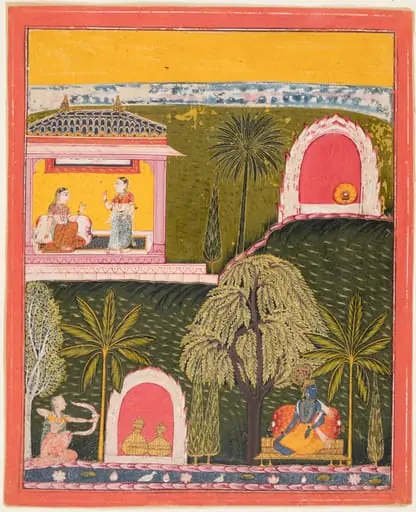 Rati, the Goddess of Erotic Love, Takes Aim at Krishna, from a Rasikapriya
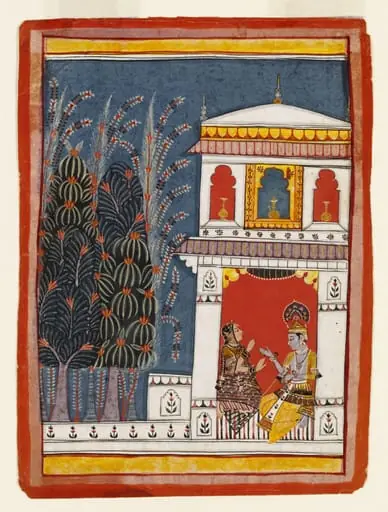 Bhairava raga
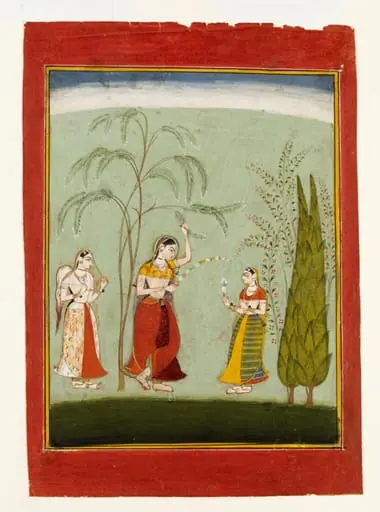 Untitled
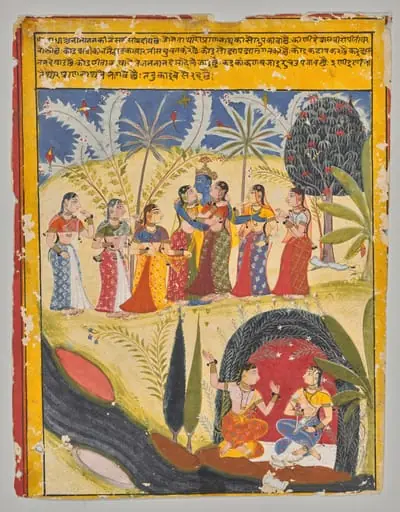 Krishna and Gopis
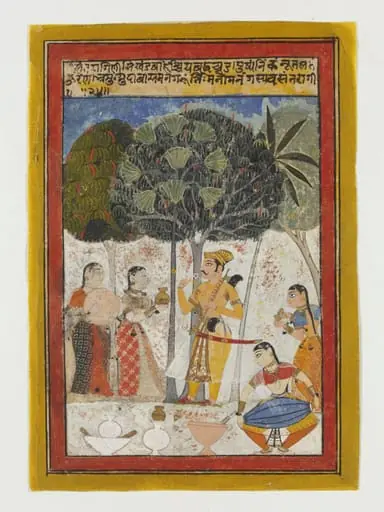 Vasant Ragini
 Untitled
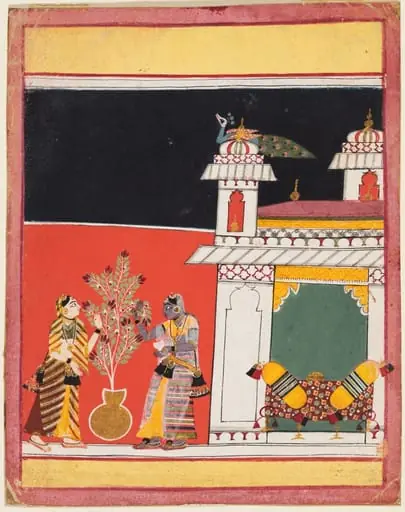 Two Women Pluck Flowers on a Terrace: Gunakali Ragini, from a Ragamala
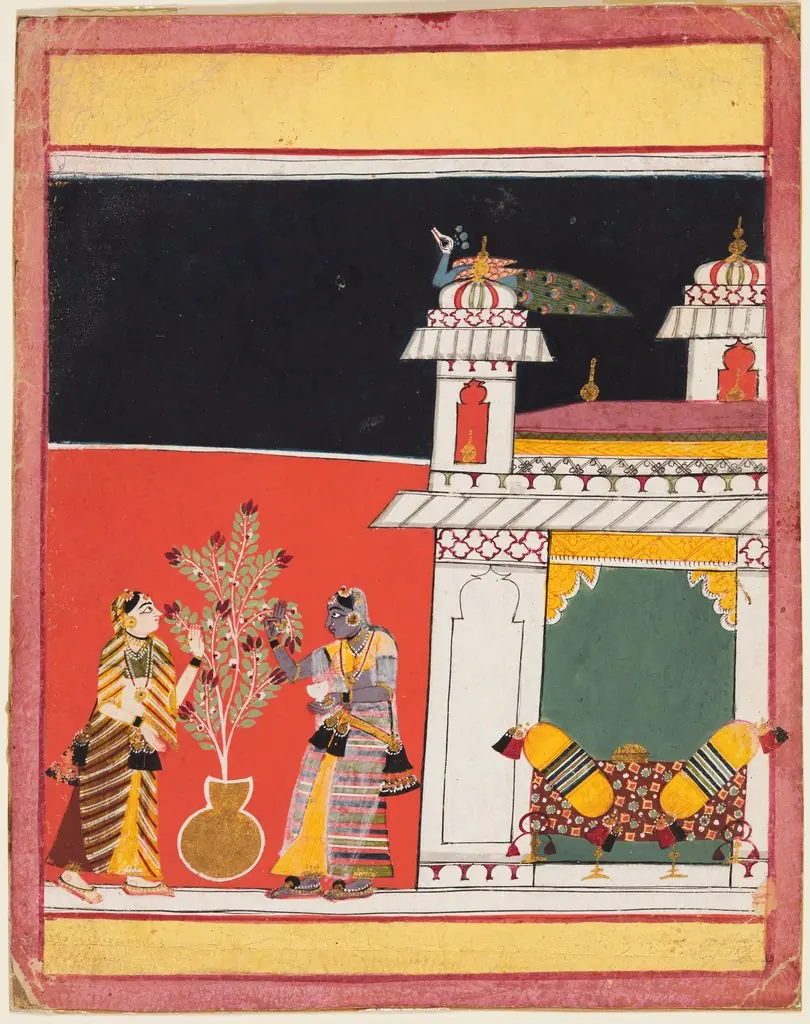 Two Women Pluck Flowers on a Terrace: Gunakali Ragini, from a Ragamala
 Untitled
 Untitled
 Radha and Krishna
 Women Play Music for Radha and Krishna: Chitrini Nayika, from a Rasikapriya