Artwork
Krishna with Radha and Two Attendants (recto)
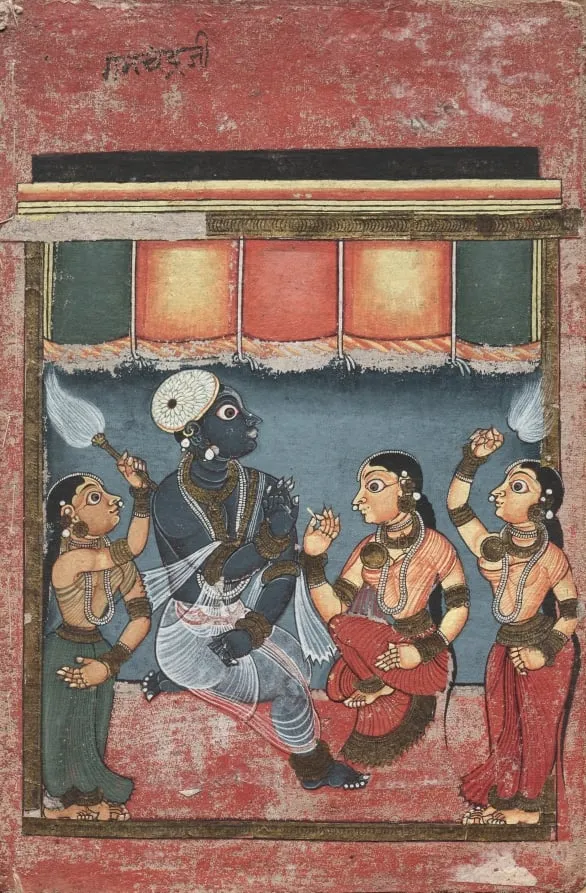
Krishna with Radha and Two Attendants (recto) is an unspecified painting by the Baroque artist Unknown. It dates from 1704 and is held in the collection of the Cleveland Museum of Art. This painting depicts Krishna, identified by his blue skin and regal adornments, seated among three female attendants.
About this work
Overview
The figures are arranged in a formal, intimate grouping against a vivid blue field, with a red floor anchoring the composition.
This painting depicts Krishna, identified by his blue skin and regal adornments, seated among three female attendants. The figures are arranged in a formal, intimate grouping against a vivid blue field, with a red floor anchoring the composition. Ornate borders frame the scene, emphasizing its ceremonial character. The work belongs to a tradition of Indian miniature painting, not European Baroque, despite superficial similarities in detail.
Subject & Meaning
Krishna, a central deity in Hindu devotion, is shown in a moment of divine leisure, attended by Radha and two other women. The attendants, holding flywhisks, signify service and reverence. The scene reflects bhakti ideals—personal devotion expressed through intimate, loving interaction between the divine and his devotees. Radha’s presence underscores the spiritual and emotional depth of their bond.
Technique & Style
Executed in fine brushwork typical of Rajasthani or Pahari miniatures, the painting uses mineral pigments on paper. Delicate lines define jewelry and fabric patterns, while flat planes of color create harmony. The lack of perspective and stylized forms prioritize symbolic presence over naturalism. The blue background enhances the figures’ luminosity, a common device to suggest sacred space.
History & Provenance
The work likely originated in a royal atelier in Rajasthan or the Punjab hills during the 17th or 18th century, commissioned for devotional or courtly use. Such paintings were often bound in illustrated manuscripts or kept as portable devotional objects. Its survival in good condition suggests careful preservation, possibly within a temple or noble family collection.
Context
This painting emerges from a flourishing tradition of Hindu devotional art, where stories of Krishna’s life were visually narrated to inspire piety. Unlike European Baroque, which sought emotional intensity through chiaroscuro and movement, Indian miniatures conveyed spiritual serenity through stillness, color, and symbolic detail. The style reflects regional aesthetics shaped by courtly patronage and religious texts.
Legacy
Works like this contributed to the enduring visual language of Krishna worship across North India. They influenced later artistic representations in both religious and secular contexts, preserving iconographic conventions that remain recognizable today. While largely overlooked in Western art histories, they hold significant cultural weight in South Asian heritage.
Artist & collection

 Domestic Scene
 Giacomo and Cardinal Marco, investing Andrea, Abbot of San Zeno, with his Benefice
 The Nymph of Fontainebleau
 Portrait of a Woman
 Madonna and Child with Saints in the Enclosed Garden
 Venus and Minerva
 Family Group of Four on Sofa
 Wall painting from Room H of the Villa of P. Fannius Synistor at Boscoreale
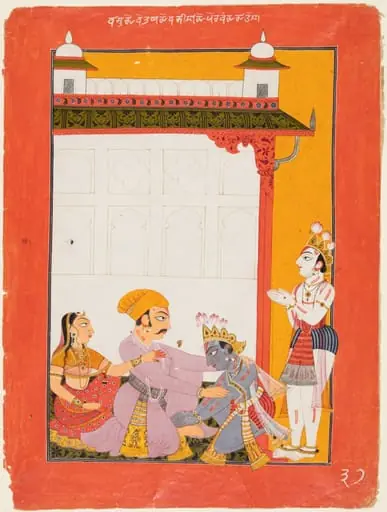 Krishna and Balarama touching the feet of Vasudeva and Devaki, from the “Vertical” Bhagavata Purana
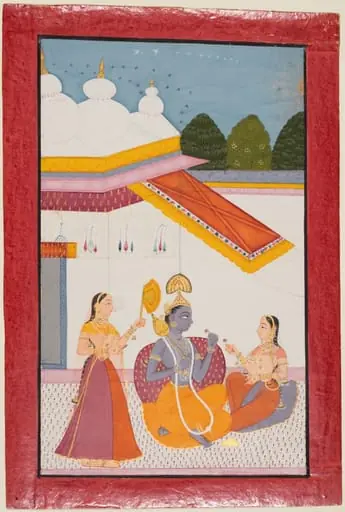 Krishna Under a Canopy
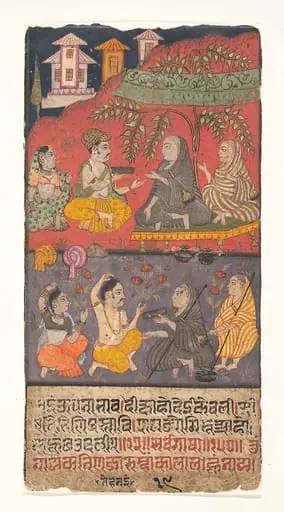 Untitled
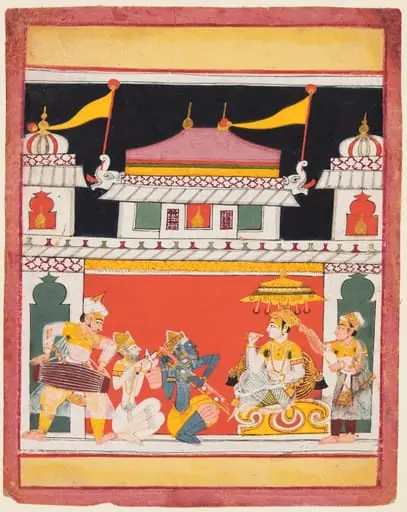 Three Musicians Perform Before a King: Shri Raga, from a Ragamala
 Untitled
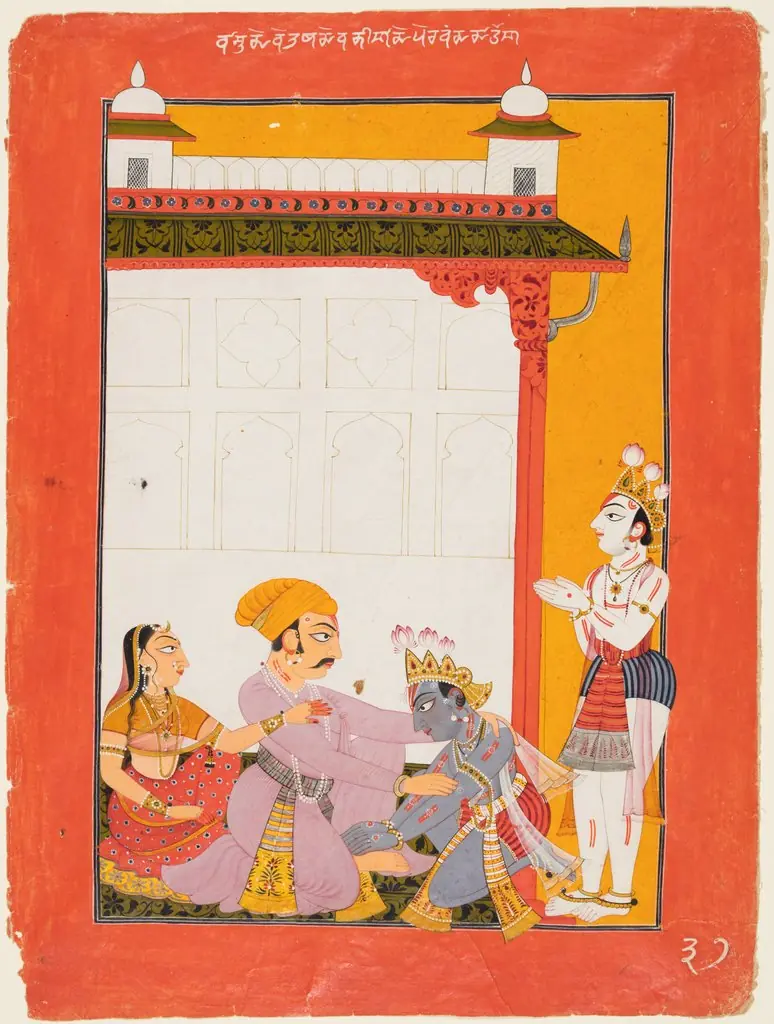 Krishna and Balarama Touching the Feet of Vasudeva and Devaki
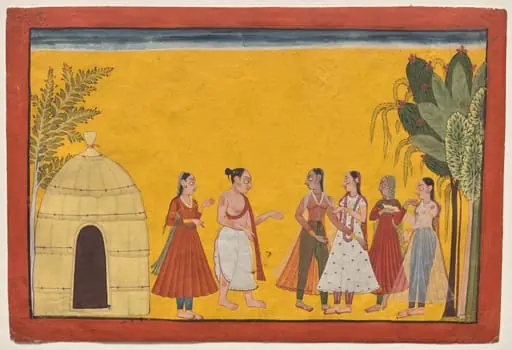 Rishyashringa addresses the courtesans, from the "Shangri" Ramayana