Artwork
Lakeside Retreat
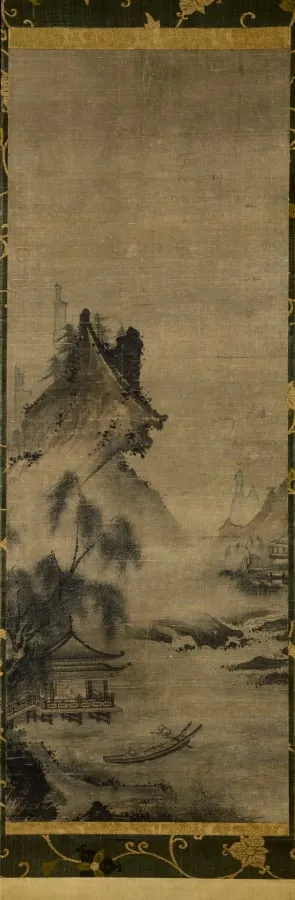
Lakeside Retreat is an unspecified painting by the Renaissance artist Unknown. It dates from 1500 and is held in the collection of the Cleveland Museum of Art.
About this work
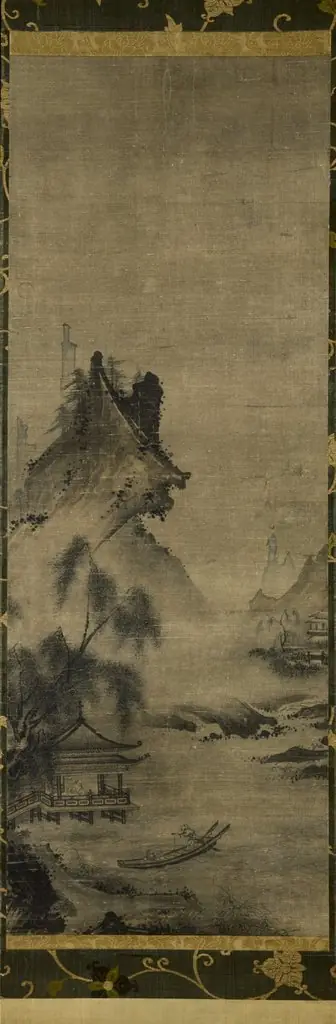
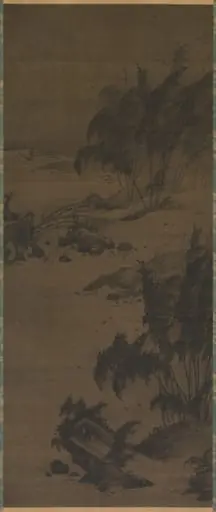
You see a tall scroll of ink on paper: a lake, misty mountains, and a tiny hut tucked in the trees.
You see a tall scroll of ink on paper: a lake, misty mountains, and a tiny hut tucked in the trees.
This painting comes from Japan’s Muromachi period, but it wasn’t made in Kyoto. It was done in the Kanto region, where artists imagined faraway places with big, bold ink strokes. The mist isn’t just weather—it’s a trick to make the mountains feel even taller.
If you like this quiet scene, look up Japan, Muromachi period (1392–1573) for more ink landscapes.
Overview
Lakeside Retreat is a Muromachi period (1392–1573) Japanese ink painting on a large hanging scroll, originating from the Kanto region rather than Kyoto. The work depicts a serene landscape with a lake, mist-shrouded mountains, and a small, secluded hut.
Subject & Meaning
The painting presents an imagined foreign scenery, characteristic of Kanto region ink paintings. The composition uses mist to create depth, exaggerating the scale of the mountains while incorporating natural elements like bamboo, fences, and a grass-roofed hut, evoking a sense of classical, rustic tranquility.
Technique & Style
Executed with assertive tonal ink washes, dotting strokes, and clusters, the style reflects influences from 15th-century Korean suibokuga (ink paintings), distinguished from classical Chinese painting traditions. The brushwork and composition are tailored to the narrow, vertical format of the traditional hanging scroll.
History & Provenance
Attributed to the Muromachi period, the artist may have been a Korean monk-painter residing in a Kyoto Zen temple, given the prevalence of such artists in 15th-century Japan. The piece's origins in the Kanto region highlight the diverse practice of ink painting outside Kyoto.
Context
Lakeside Retreat situates itself within the broader context of Japanese ink painting's interaction with Korean suibokuga, popular among clerics in 15th-century Kyoto and Kamakura. This exchange influenced the development of landscape painting in Japan during this period.
Legacy
As a representative of Kanto region's ink painting tradition, Lakeside Retreat contributes to the understanding of regional variations in Japanese art during the Muromachi period, showcasing the blending of Japanese, Korean, and possibly Chinese aesthetic elements.
Artist & collection

 Domestic Scene
 Giacomo and Cardinal Marco, investing Andrea, Abbot of San Zeno, with his Benefice
 The Nymph of Fontainebleau
 Portrait of a Woman
 Madonna and Child with Saints in the Enclosed Garden
 Venus and Minerva
 Family Group of Four on Sofa
 Wall painting from Room H of the Villa of P. Fannius Synistor at Boscoreale
 明 鍾禮 觀瀑圖 軸|Li Bai gazing at the waterfall on Mount Lu
 Lakeside Retreat
 Lonely Temple and Towering Cliff
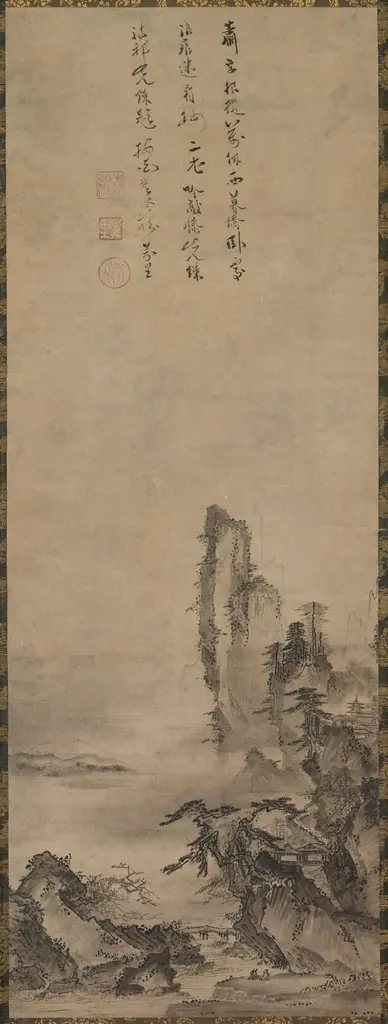 Lonely Temple and Towering Cliff
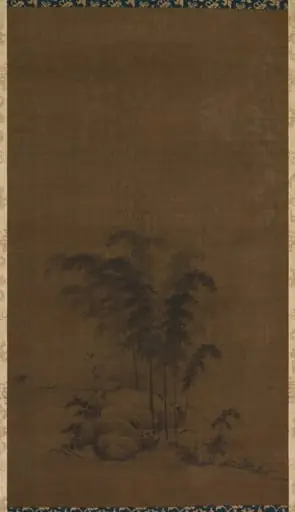 Bamboo Landscape
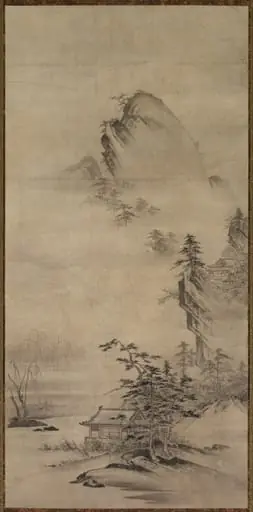 Landscape with a Pavilion
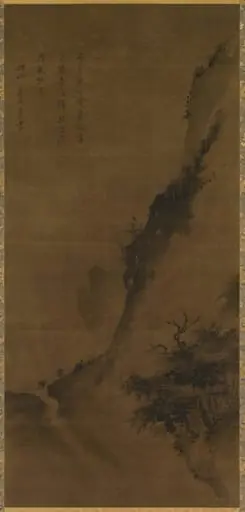 Landscape with Woodcutters Returning Home
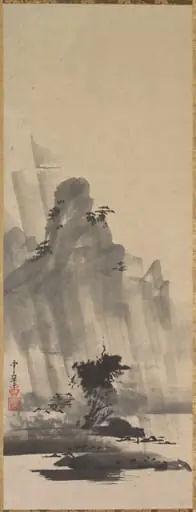 Mountain and River in Storm
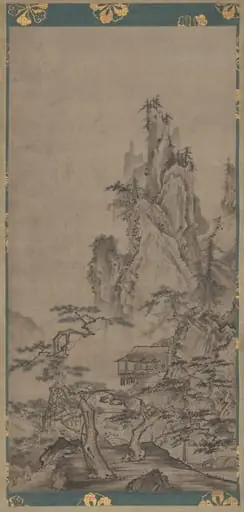 Scholar's Visit
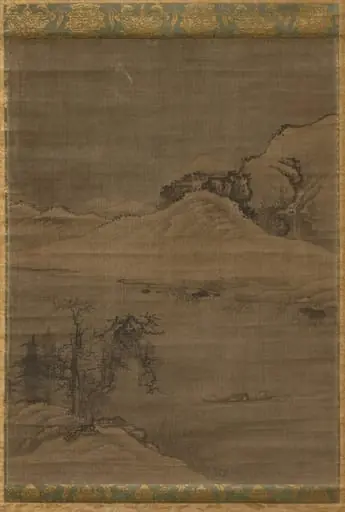 Landscape with Fishermen
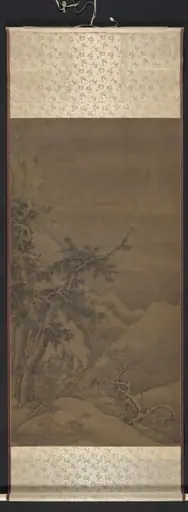 Birds in a Grove in a Mountainous Winter Landscape
 Bamboo in Wind