Artwork
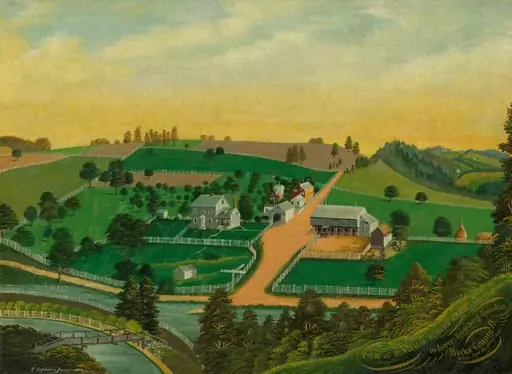
Landscape, Joliet, Illinois
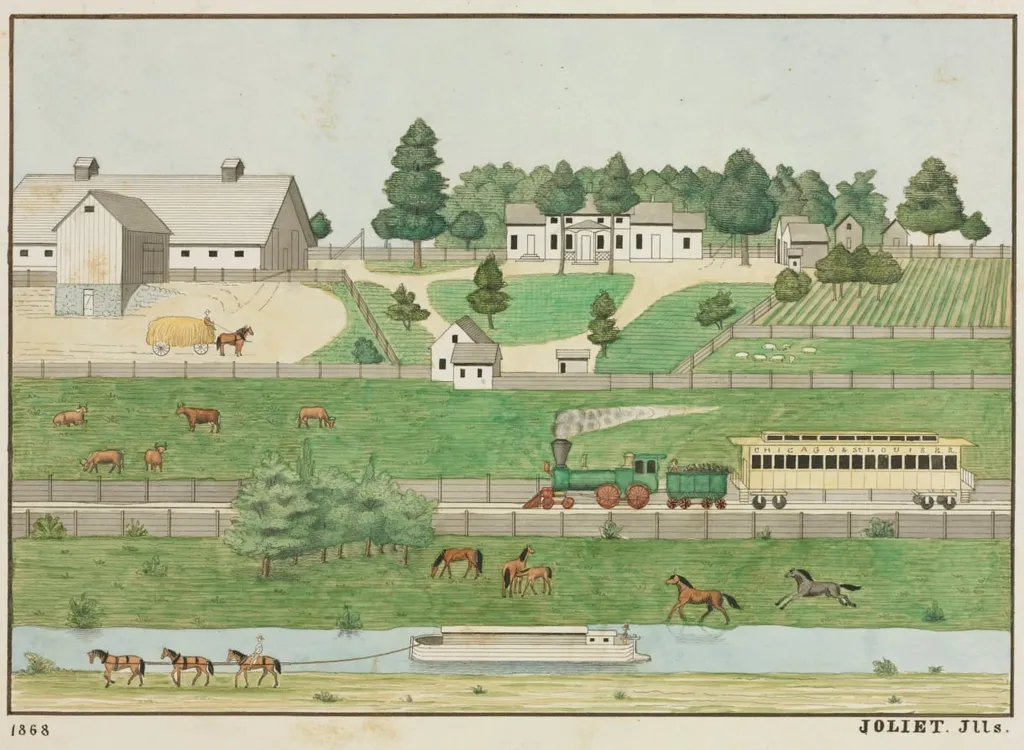
Landscape, Joliet, Illinois is a drawing by the Impressionist artist Unknown. It dates from 1868 and is held in the collection of the Cleveland Museum of Art.
About this work
Overview
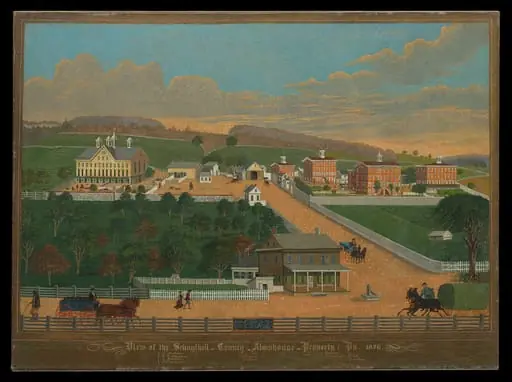
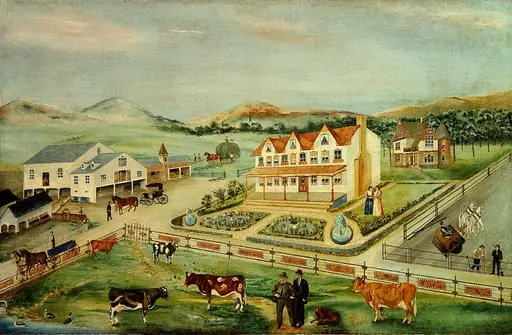
A river winds through the lower portion, carrying a small boat, while rolling hills and a pale sky frame the composition.
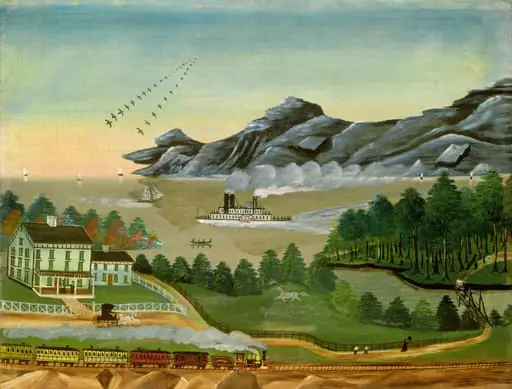
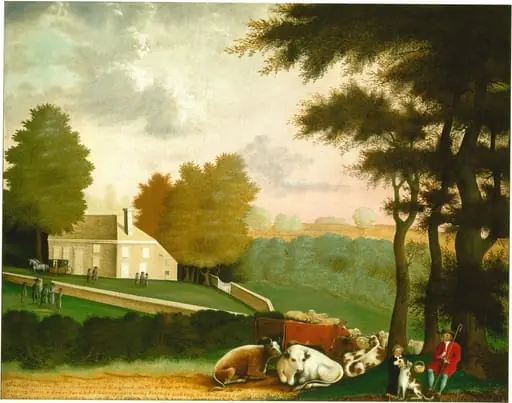
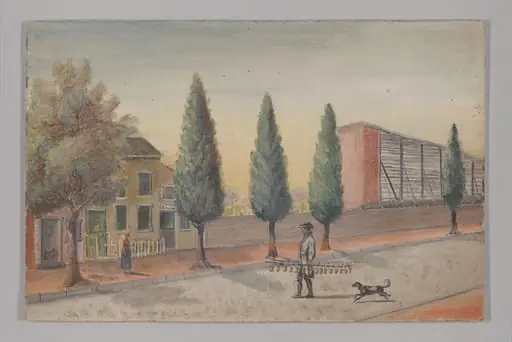
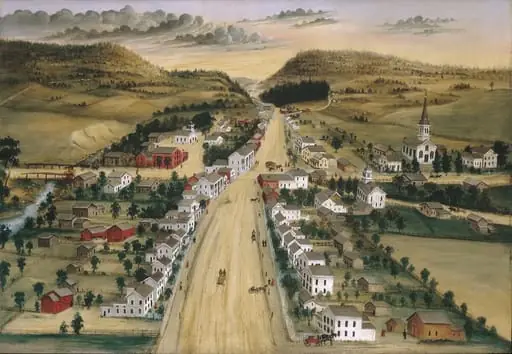
This drawing captures a quiet rural scene near Joliet, Illinois, featuring a white farmhouse and barn nestled among trees, with grazing livestock and a train moving along distant tracks. A river winds through the lower portion, carrying a small boat, while rolling hills and a pale sky frame the composition. A horse being led by a rope introduces subtle motion, balancing the stillness of the landscape.
Subject & Meaning
The scene presents ordinary rural life without idealization: agricultural buildings, working animals, and industrial transport coexist in the same frame. The train and boat suggest connectivity between isolated farmland and broader networks, while the calm demeanor of the figures and animals implies harmony between human activity and the natural environment.
Technique & Style
The work employs loose, suggestive lines and muted tonal variations to define forms rather than detailed rendering. Light washes and soft shading create atmospheric depth, with careful placement of elements guiding the eye from foreground to horizon. The handling of light and space aligns with Impressionist concerns for transient effects, though the medium remains a drawing rather than paint.
History & Provenance
The drawing was made during the artist’s time in Illinois, likely in the late 19th or early 20th century, as part of a series documenting Midwestern landscapes. It remained in private hands until acquired by a regional museum in the 1970s, where it is now preserved as part of a collection focused on American regional art.
Context
Produced during a period of rapid industrial expansion, the scene reflects a tension between agrarian traditions and emerging rail infrastructure. Unlike urban-focused Impressionists, this artist turned to the Midwest’s quieter corners, portraying a landscape where mechanization and rural life coexisted without overt conflict.
Legacy
The work contributes to a lesser-known strand of American Impressionism centered on the Midwest, offering a counterpoint to coastal subjects. Its quiet observation of everyday rural life has influenced later regionalist artists interested in documenting the American landscape beyond its celebrated landmarks.
Artist & collection

 Domestic Scene
 Giacomo and Cardinal Marco, investing Andrea, Abbot of San Zeno, with his Benefice
 The Nymph of Fontainebleau
 Portrait of a Woman
 Madonna and Child with Saints in the Enclosed Garden
 Venus and Minerva
 Family Group of Four on Sofa
 Wall painting from Room H of the Villa of P. Fannius Synistor at Boscoreale