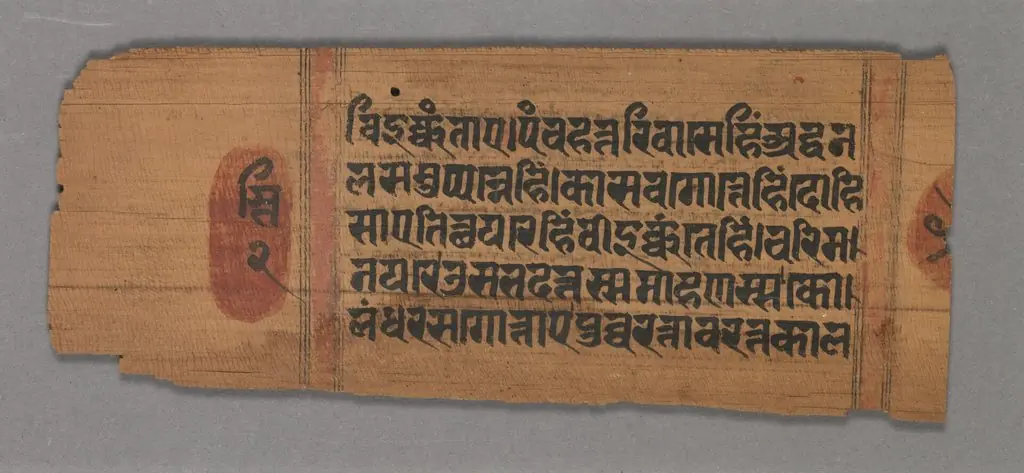
Artwork
Leaf from a Jain Manuscript: page from a Great Poem about Twos (Dvyashraya Mahakavya) of Hemachandra, with commentary by Abhayatilaka: Monk in the Gift-giving Gesture before a Layman (verso)

Leaf from a Jain Manuscript: page from a Great Poem about Twos (Dvyashraya Mahakavya) of Hemachandra, with commentary by Abhayatilaka: Monk in the Gift-giving Gesture before a Layman (verso) is an unspecified painting. It dates from 1290 and is held in the collection of the Cleveland Museum of Art. This object is a single leaf taken from a Jain manuscript that illustrates a scene in which a monk offers a gift to a layperson.
About this work
Overview
This object is a single leaf taken from a Jain manuscript that illustrates a scene in which a monk offers a gift to a layperson. The figures are rendered in a bright yellow against a solid red background, and the composition is accompanied by a formal cursive commentary written in an unidentified medium.
Subject & Meaning
The image portrays a monastic figure extending his right hand in a gesture of giving, while the layman seated opposite folds his hands together, suggesting receptivity and reverence. The interaction reflects Jain ideals of generosity and the reciprocal relationship between ascetics and the lay community.
Technique & Style
Executed with mineral pigments on paper, the illustration employs flat areas of color and minimal shading, characteristic of medieval Jain manuscript illumination. The use of a vivid red field and contrasting yellow figures creates a clear visual hierarchy, while the accompanying script follows a formal, flowing cursive hand typical of scholarly commentaries.
History & Provenance
The leaf originates from the Dvyashraya Mahakavya, a great poem composed by the 12th‑century Jain scholar Hemachandra, with commentary attributed to Abhayatilaka. It entered the collection of the Cleveland Museum of Art through acquisition in the late 20th century, where it is conserved as part of the museum’s South Asian manuscript holdings.
Context
Jain manuscripts of this period often combined literary texts with illustrative scenes that served didactic purposes, reinforcing moral teachings. The gift‑giving motif aligns with the broader Indian artistic tradition of depicting devotional exchanges, while the specific iconography reflects Jain monastic codes of conduct and the patron‑client relationship within the community.
Artist & collection

 Leaf from a Jain Manuscript: page from a Great Poem about Twos (Dvyashraya Mahakavya) of Hemachandra, with commentary by Abhayatilaka: Text (recto)
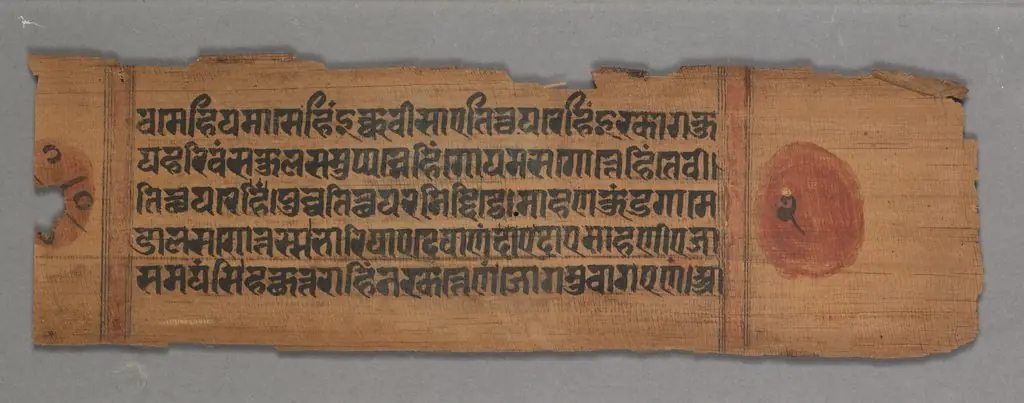 Leaf from a Jain Manuscript: Kalpa-sutra: A Monk Preaching (recto)
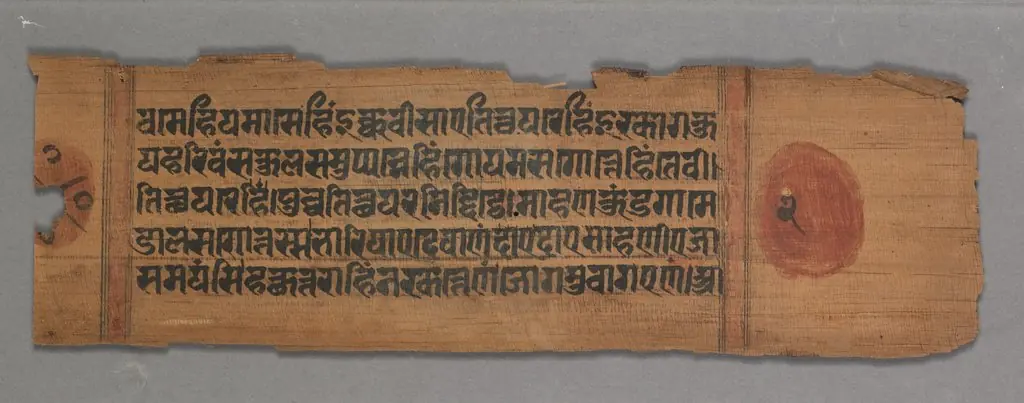 Leaf from a Jain Manuscript: Kalpa-sutra: A Monk Preaching (recto); Leaf from a Jain Manuscript: Kalpa-sutra: text (verso)
 Leaf from a Jain Manuscript: Kalpa-sutra: Text (verso)
 Leaf from a Jain Manuscript: Kalpa-sutra (recto)
 Leaf from a Jain Manuscript: Kalpa-sutra