Artwork
Mahakala
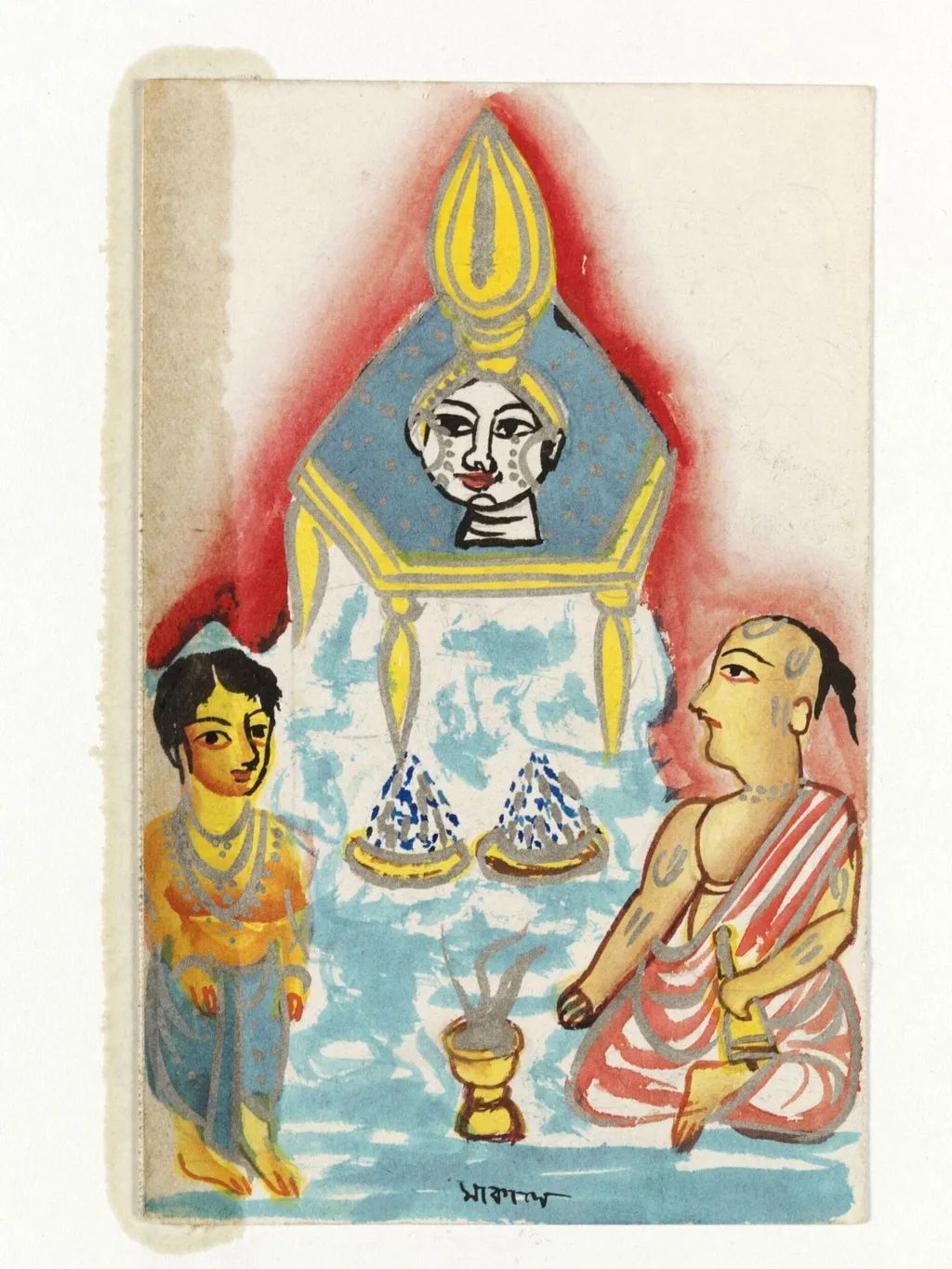
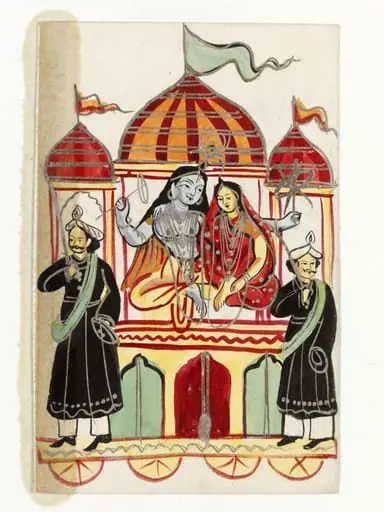
Mahakala is a paint painting by the Impressionist artist Unknown. It dates from 1890 and is held in the collection of the Victoria and Albert Museum. This painting, executed in watercolor and metallic pigment on cardboard, dates to 1890 and originates from an unidentified artist.
About this work
Overview
The work employs bold outlines and flat, saturated hues, reflecting the stylistic conventions of 19th-century popular devotional art from Bengal.
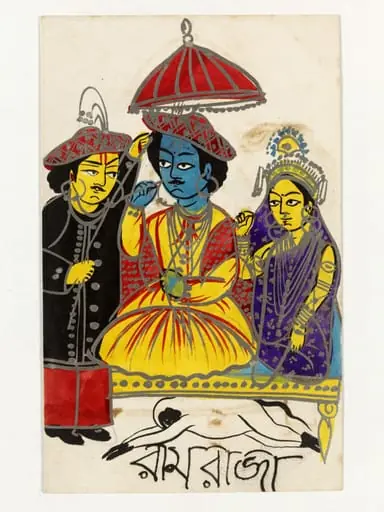
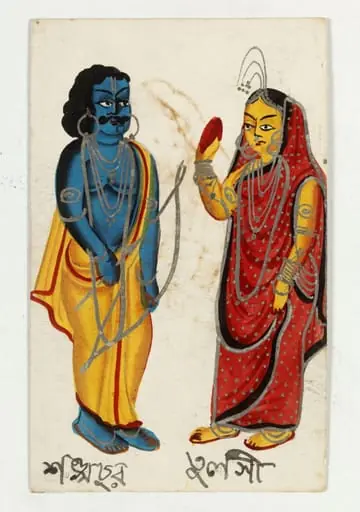
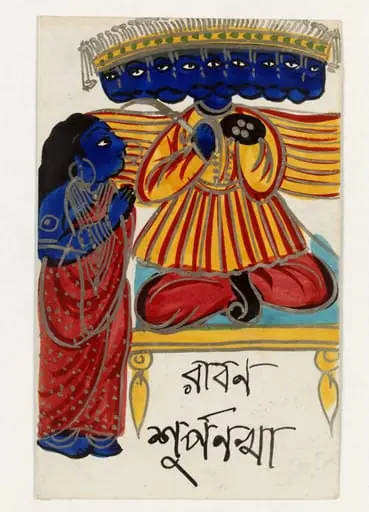
This painting, executed in watercolor and metallic pigment on cardboard, dates to 1890 and originates from an unidentified artist. Part of the Kalighat tradition, it presents a ritual scene centered on Mahakala, a wrathful manifestation of the Hindu deity Shiva. The work employs bold outlines and flat, saturated hues, reflecting the stylistic conventions of 19th-century popular devotional art from Bengal.
Subject & Meaning
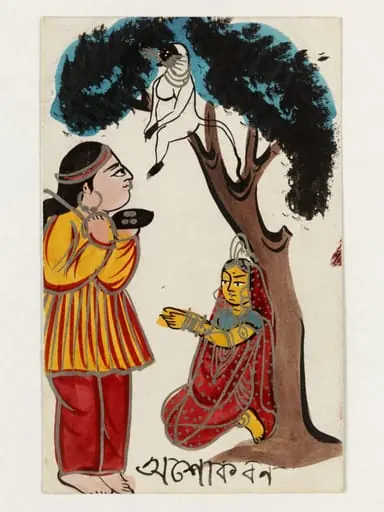
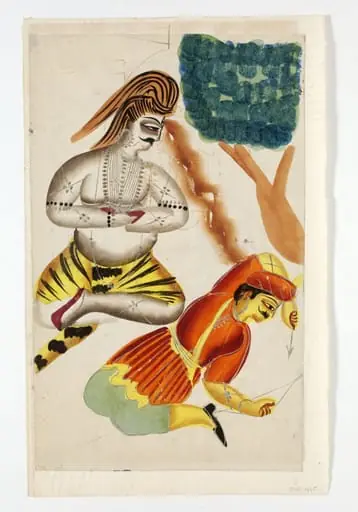
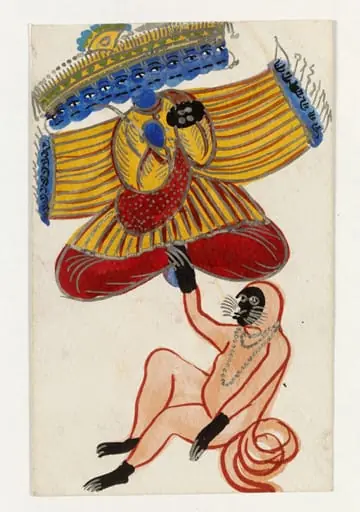
The composition depicts two priests engaged in veneration before Mahakala, whose visage appears within a golden temple arch. One figure, clad in yellow and orange, stands erect, while the other, dressed in red and white stripes, kneels with a hand resting on a ritual vessel. The imagery evokes protective rites, emphasizing devotion to a fierce yet benevolent aspect of the divine, integral to Tantric Buddhist and Hindu practices.
Technique & Style
Characteristic of Kalighat painting, the work features unmodulated color fields and emphatic contours, eschewing perspectival depth. Pigments are applied directly, with metallic accents enhancing sacred elements. The simplicity of form and vivid palette catered to a broad audience, merging folk art traditions with religious iconography in a manner both accessible and visually striking.
History & Provenance
Created in 1890, the painting entered public discourse through its inclusion in the 1971 *Tantra* exhibition at London’s Hayward Gallery, organized by Philip S. Rawson under the auspices of the Arts Council of Great Britain. Its origins remain unattributed, typical of Kalighat works produced for pilgrims and urban markets in colonial Calcutta.
Context
Kalighat paintings emerged in 19th-century Bengal as a response to urban demand, blending Hindu devotional themes with folk aesthetics. Often sold near the Kalighat temple in Calcutta, these works catered to pilgrims and middle-class patrons, serving as portable icons. The genre’s bold, narrative style reflected both religious fervor and the commercial pressures of a rapidly changing society.
Legacy
The painting exemplifies Kalighat art’s role in preserving and disseminating religious narratives during a period of cultural flux. Its inclusion in later exhibitions underscores the genre’s significance within South Asian art history. Institutions like the Victoria and Albert Museum hold comparable works, attesting to the tradition’s enduring influence on popular visual culture.
Artist & collection

 Domestic Scene
 Giacomo and Cardinal Marco, investing Andrea, Abbot of San Zeno, with his Benefice
 The Nymph of Fontainebleau
 Portrait of a Woman
 Madonna and Child with Saints in the Enclosed Garden
 Venus and Minerva
 Family Group of Four on Sofa
 Wall painting from Room H of the Villa of P. Fannius Synistor at Boscoreale