Artwork
Hanuman and Ravana
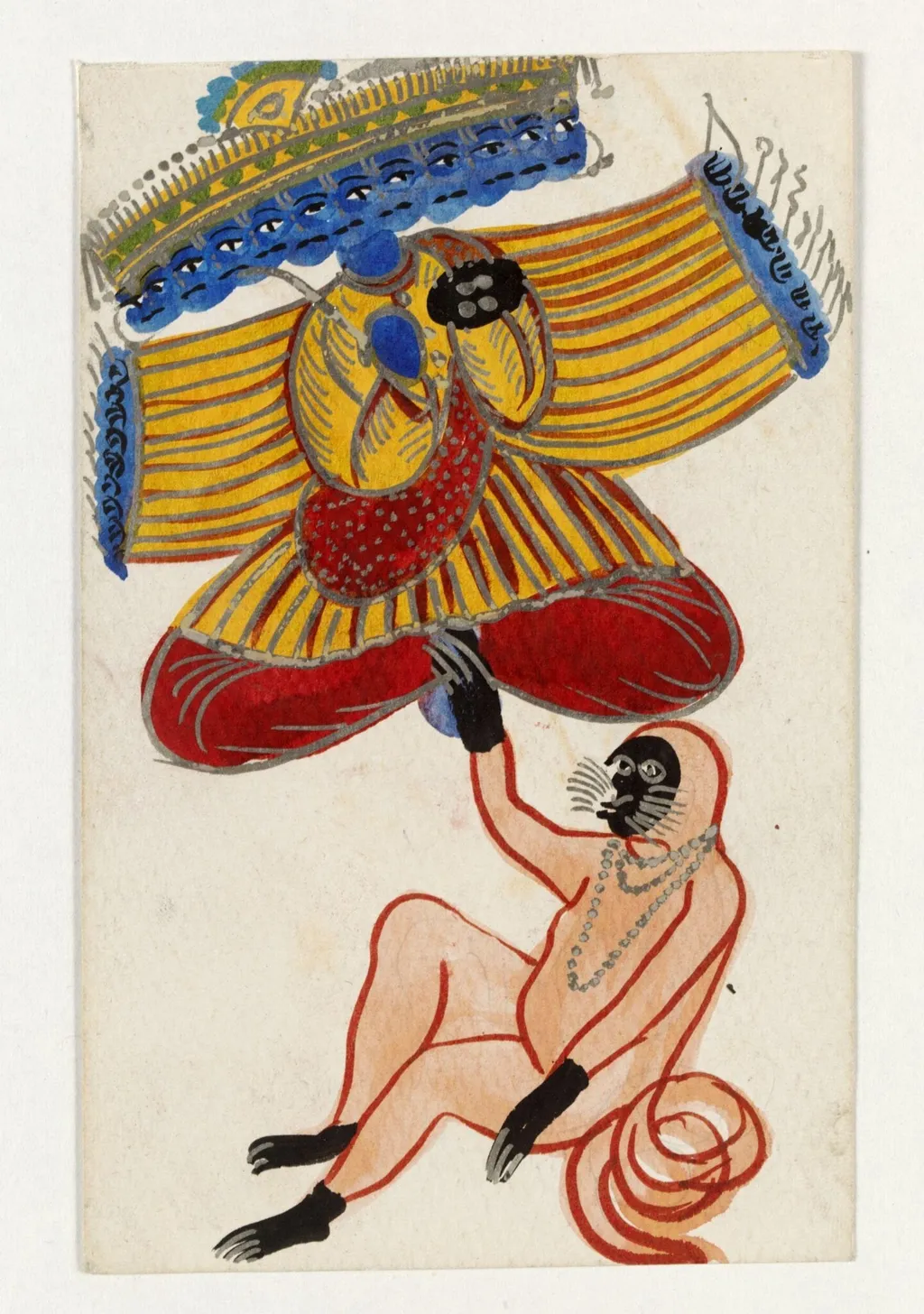
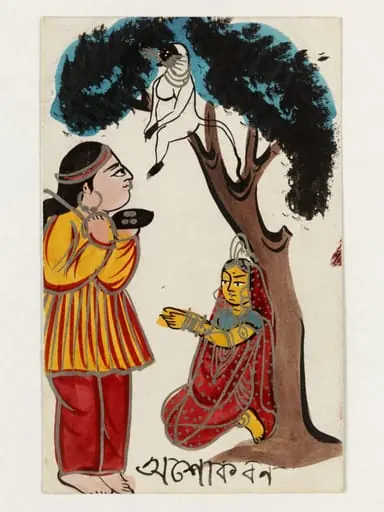
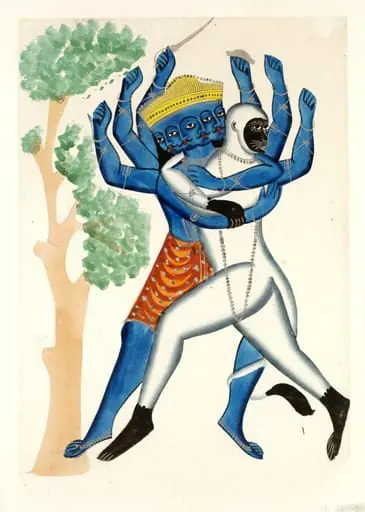
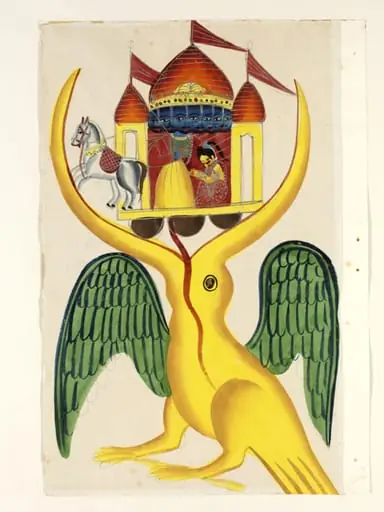
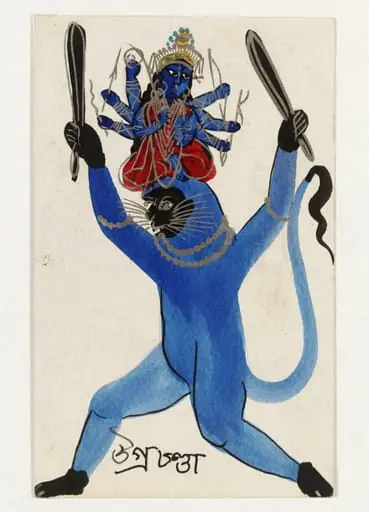
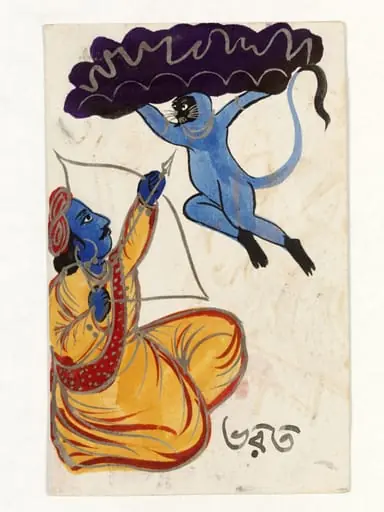
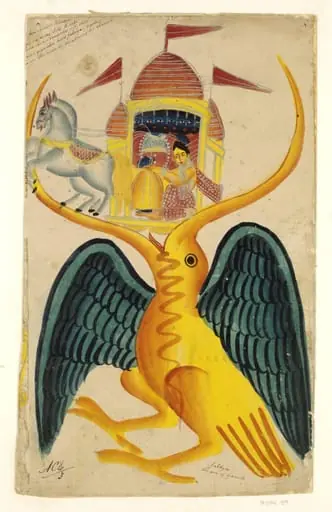
Hanuman and Ravana is a paint painting by the Impressionist artist Unknown. It dates from 1890 and is held in the collection of the Victoria and Albert Museum. This 19th‑century work portrays a scene from the Ramayana in which the monkey god Hanuman is seized by the demon king Ravana.
About this work
Overview
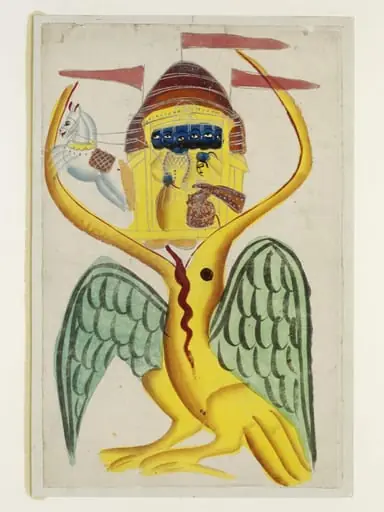
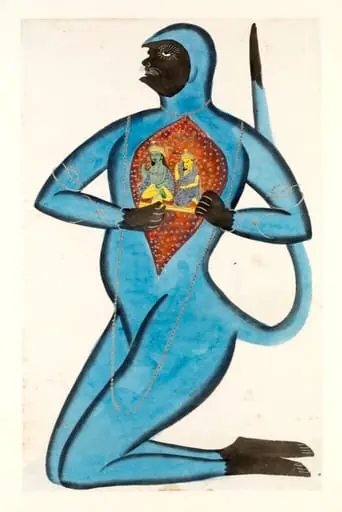
This 19th‑century work portrays a scene from the Ramayana in which the monkey god Hanuman is seized by the demon king Ravana. Executed in watercolor and tin‑alloy on paper, the composition is dominated by vivid, flat colors and simplified forms typical of the Kalighat school of Bengal.
Subject & Meaning
The image captures the moment of Hanuman’s capture, a pivotal episode that underscores the conflict between divine virtue and demonic power. By presenting Ravana as a towering, red‑skinned figure with a crown and horn‑like curls, the artist emphasizes his authority, while Hanuman’s dark, smaller form conveys vulnerability and impending heroism.
Technique & Style
Employing rapid brushstrokes and bold outlines, the painting reflects the Kalighat tradition’s emphasis on immediacy and visual clarity. Colors are applied in uniform, flat washes without gradation, creating a graphic effect that foregrounds the figures against a stylized background of wavy blue lines and miniature architectural motifs.
History & Provenance
Created circa 1890 in Calcutta, the piece belongs to a flourishing Bengali folk art movement that responded to urban life and colonial pressures. Works of this period were often produced for a popular market, documenting mythic narratives and everyday concerns for a broad audience.
Context
Kalighat paintings emerged from the bustling Kalighat temple precinct, where itinerant artists catered to pilgrims and locals. The genre merged traditional iconography with contemporary social commentary, using accessible visual language to convey stories like the Ramayana to a diverse, literate and illiterate public alike.
Artist & collection

 Domestic Scene
 Giacomo and Cardinal Marco, investing Andrea, Abbot of San Zeno, with his Benefice
 The Nymph of Fontainebleau
 Portrait of a Woman
 Madonna and Child with Saints in the Enclosed Garden
 Venus and Minerva
 Family Group of Four on Sofa
 Wall painting from Room H of the Villa of P. Fannius Synistor at Boscoreale