Artwork
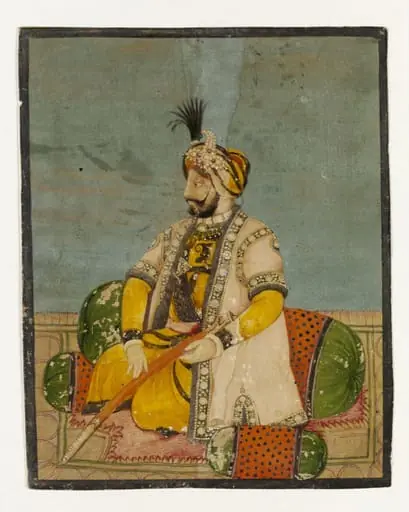
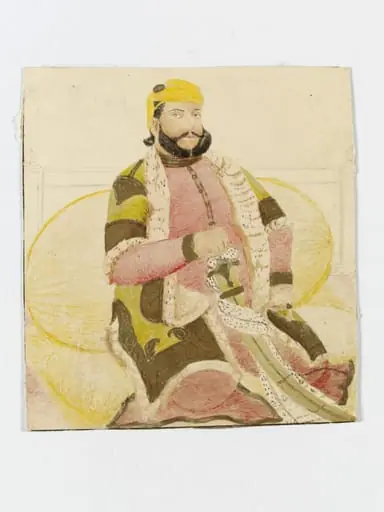
Maharaja Sheodan Singh
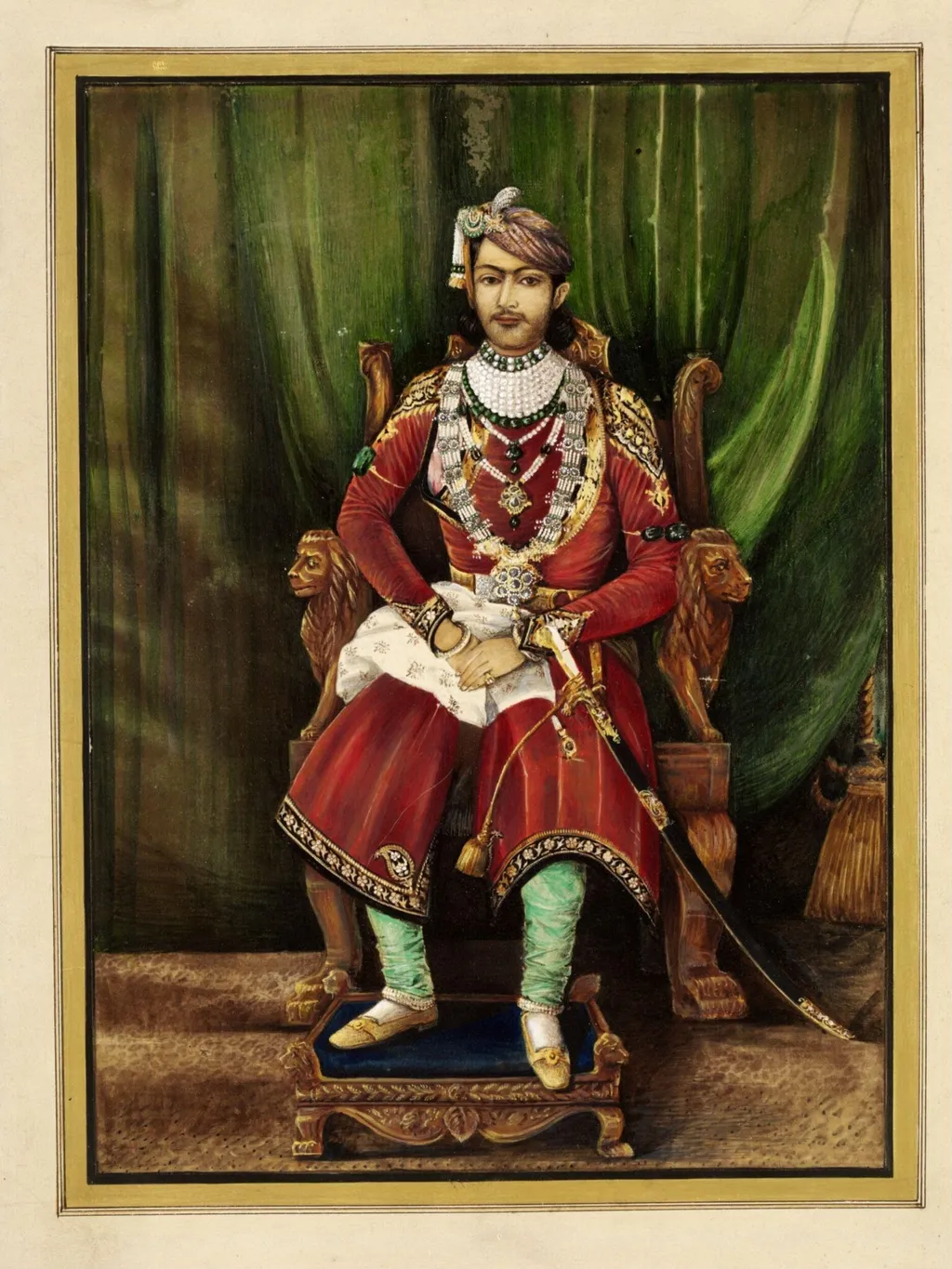
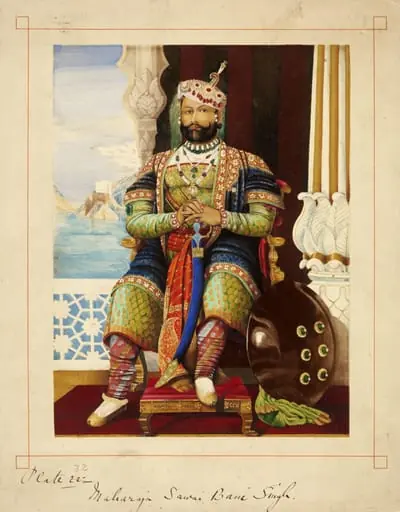
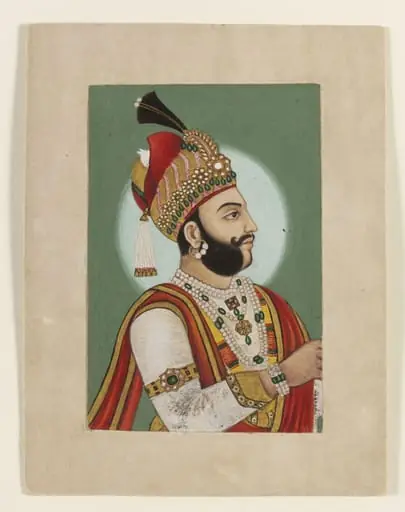
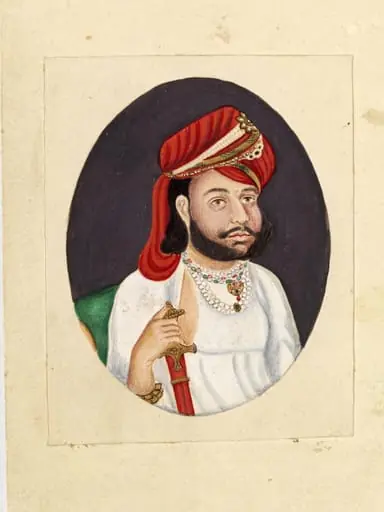
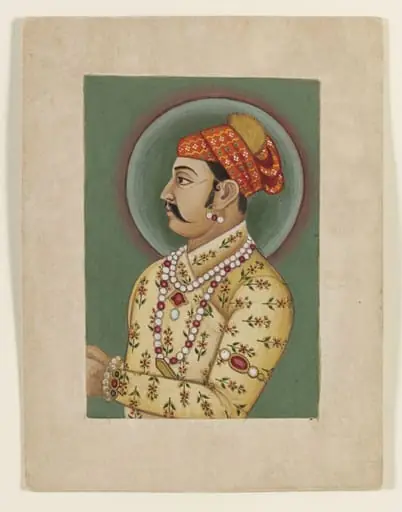
Maharaja Sheodan Singh is a paint painting by the Impressionist artist Unknown. It dates from 1890 and is held in the collection of the Victoria and Albert Museum.
About this work
Two lion statues stand on either side of him, and a servant peeks in from the right edge of the painting.
A man sits on a fancy chair, dressed in bright red robes with gold trim and green pants. He wears a turban, a beaded necklace, and holds a small object in his hands. Two lion statues stand on either side of him, and a servant peeks in from the right edge of the painting. The background is dark with a hint of green, like a curtain or forest.
The lion statues aren’t just decoration—they’re a classic symbol of power in many cultures. This painting was made around 1890, blending European styles with local traditions.
Next, check out the Victoria and Albert Museum to see more paintings like this.
Overview
This watercolor portrait on photographic paper depicts Maharaja Sheodan Singh of Alwar, created circa 1890. The image merges photographic realism with traditional Indian miniature painting techniques, enhanced by gold leaf and detailed brushwork. The composition presents the ruler in formal attire, seated before a dark, textured backdrop, with symbolic elements reinforcing his status. The hybrid medium reflects a period of artistic experimentation under colonial influence.
Subject & Meaning
Maharaja Sheodan Singh is portrayed seated with composure, holding a small object—possibly a ceremonial item or weapon—that signifies authority. Flanking him are stone lion statues, traditional emblems of royal power and protection in Indian iconography. A servant glimpsed at the edge underscores the hierarchical structure of court life. The image functions as both personal representation and political statement, asserting sovereignty through visual symbolism.
Technique & Style
The portrait combines a photographic base with hand-applied watercolor and gold overpainting, a technique emerging in late 19th-century North Indian courts. Details such as the intricate gold trim on the red robes and the delicate rendering of the turban reflect miniature painting traditions. The dark, muted background contrasts with the vivid clothing, drawing focus to the figure while evoking theatrical staging. The blend of Western realism and Indian ornamentation reveals a distinctive hybrid aesthetic.
History & Provenance
Commissioned during Sheodan Singh’s reign in Alwar, the painting likely served as a diplomatic or ceremonial gift. It was produced in a studio where local artists adapted new technologies to meet royal demands for modernized portraiture. The work entered institutional collections in the 20th century, with documented holdings at the Victoria and Albert Museum, where similar Indo-European hybrid works are preserved as cultural artifacts of the colonial era.
Context
In the late 1800s, Indian princely states navigated British colonial dominance by selectively adopting European technologies while preserving indigenous artistic forms. This portrait exemplifies that balance: photography offered lifelike representation, but the embellishment with gold and traditional motifs reaffirmed cultural identity. Such images were part of a broader trend among rulers asserting legitimacy through visual culture amid shifting political realities.
Legacy
The portrait stands as a testament to the adaptive creativity of Indian artists during a period of cultural transition. It influenced later generations who sought to reconcile tradition with modernity in visual representation. Today, it is studied as a key example of how local elites used art to negotiate identity, power, and continuity under colonial rule, preserving regional aesthetics within a globalizing framework.
Artist & collection

 Domestic Scene
 Giacomo and Cardinal Marco, investing Andrea, Abbot of San Zeno, with his Benefice
 The Nymph of Fontainebleau
 Portrait of a Woman
 Madonna and Child with Saints in the Enclosed Garden
 Venus and Minerva
 Family Group of Four on Sofa
 Wall painting from Room H of the Villa of P. Fannius Synistor at Boscoreale