Artwork
Maica Domnului cu Pruncul
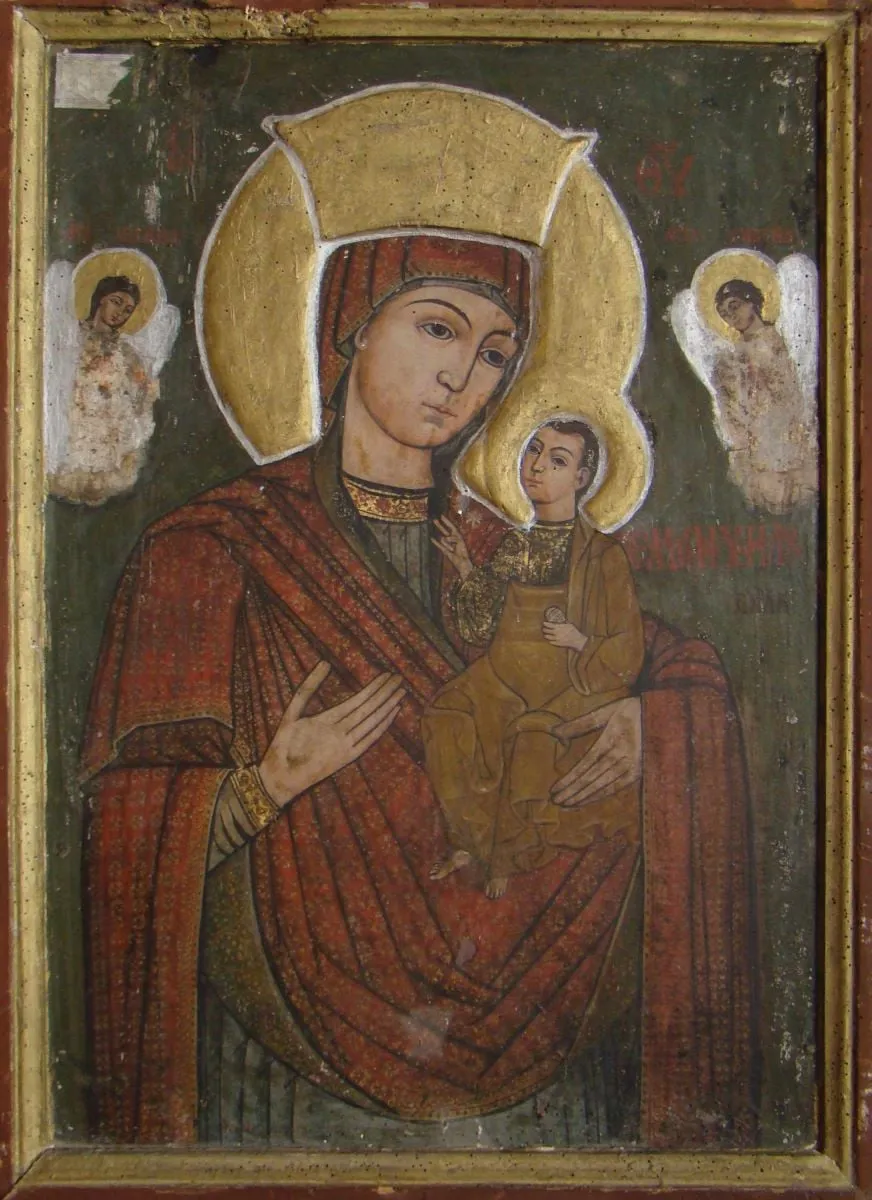
Maica Domnului cu Pruncul is an unspecified painting by the Baroque artist Unknown. It dates from 1737 and is held in the collection of the Alba Iulia Orthodox Archdiocese.
About this work
Overview
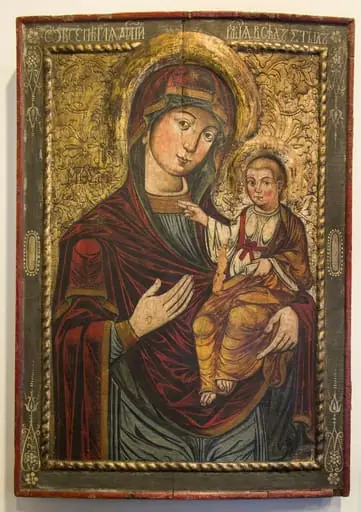
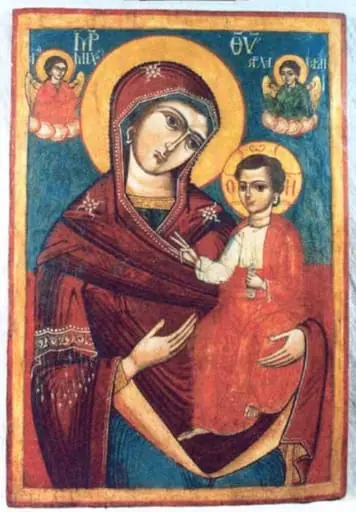
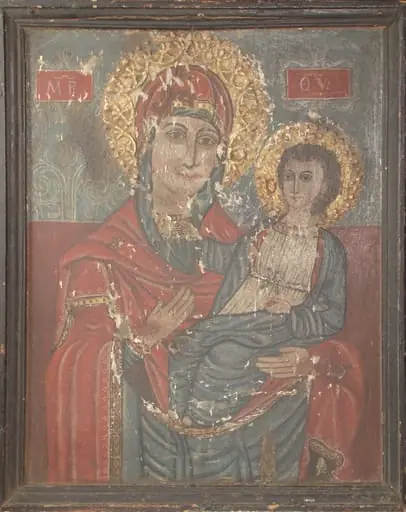
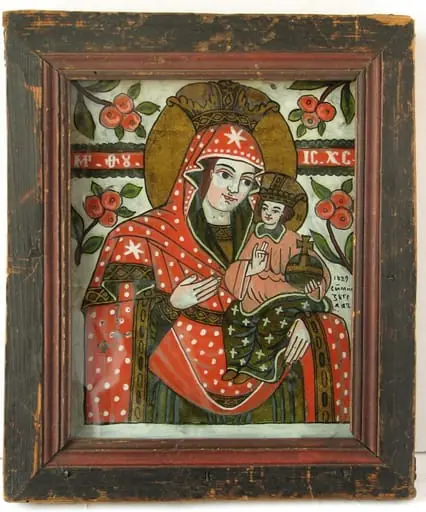
The work titled “Maica Domnului cu Pruncul” depicts a seated woman holding an infant, both surrounded by luminous golden halos. She is dressed in a red garment edged with gold and a dark veil, while the child wears a light brown tunic. Flanking the pair are two small winged figures that appear to hover in the space.
Subject & Meaning
The central figures represent the Virgin Mary and the infant Jesus, a common devotional theme in Eastern Christian iconography. The serene expression of the mother and the gentle gesture of her hands convey a sense of maternal tenderness and divine blessing, reinforced by the presence of the attendant angels.
Technique & Style
The painting employs a noticeable impasto technique, especially in the gold areas, where the pigment is applied in thick layers that catch the light. This tactile surface contrasts with smoother brushwork in the flesh tones, creating a visual hierarchy that emphasizes the sacred halos and ornamental details.
History & Provenance
The piece is catalogued as an image rather than a traditional canvas painting, suggesting it may have originated as a devotional panel or printed reproduction. Its exact date and origin are not recorded, but the stylistic elements align with Eastern Orthodox artistic conventions from the late medieval to early modern periods.
Context
In Eastern Christian art, the Virgin and Child motif serves both liturgical and instructional purposes, often placed in churches or private chapels. The inclusion of winged angels reflects the theological emphasis on intercession and the heavenly realm surrounding the holy figures.
Legacy
Works of this type continue to inform contemporary understandings of religious visual culture, illustrating how material techniques like impasto were used to convey spiritual radiance. The image remains a reference point for scholars studying iconographic continuity across centuries.
Artist & collection
 Domestic Scene
 Giacomo and Cardinal Marco, investing Andrea, Abbot of San Zeno, with his Benefice
 The Nymph of Fontainebleau
 Portrait of a Woman
 Madonna and Child with Saints in the Enclosed Garden
 Venus and Minerva
 Family Group of Four on Sofa
 Wall painting from Room H of the Villa of P. Fannius Synistor at Boscoreale