Artwork
Maica Domnului cu Pruncul Iisus Hristos în brațe
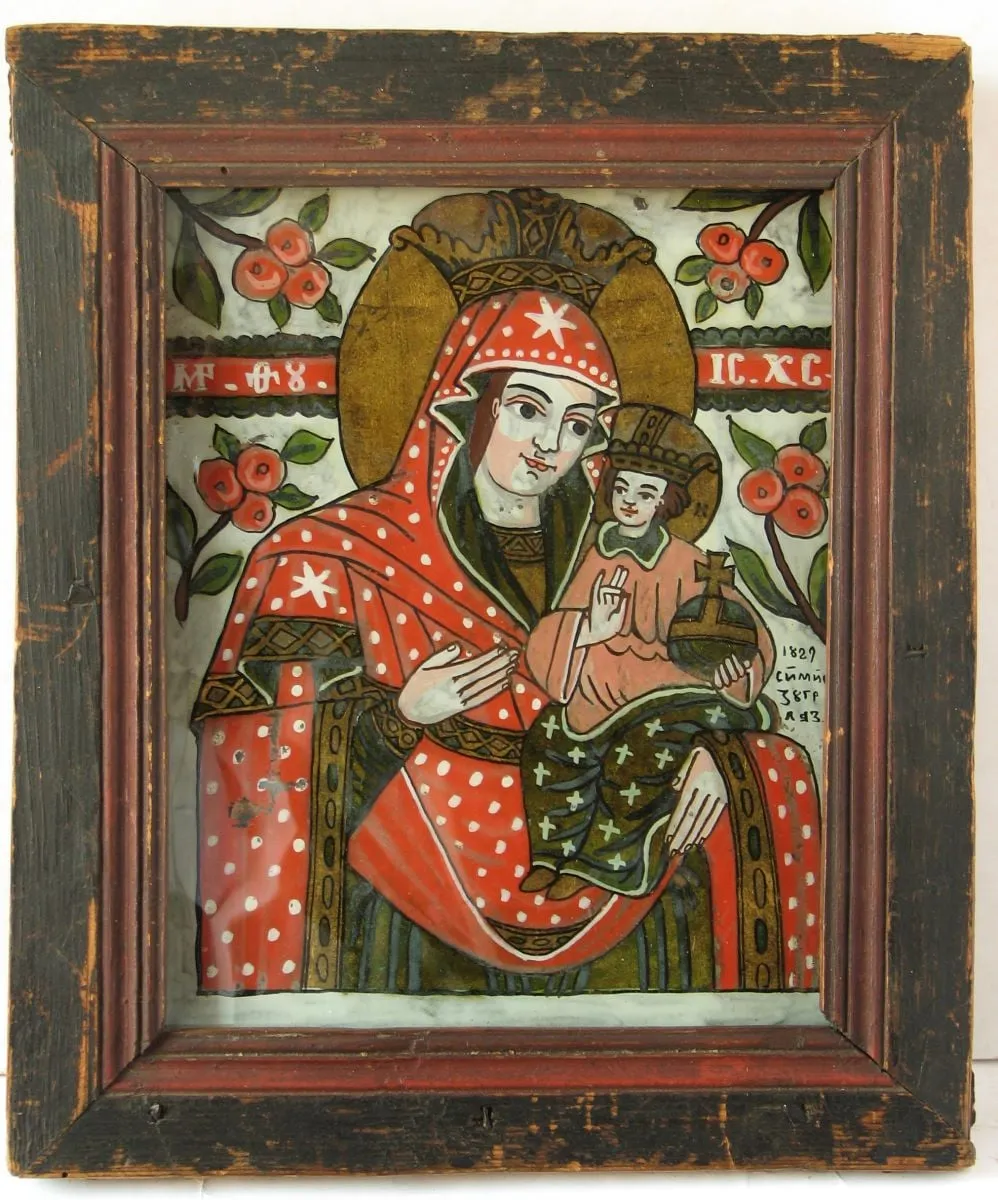
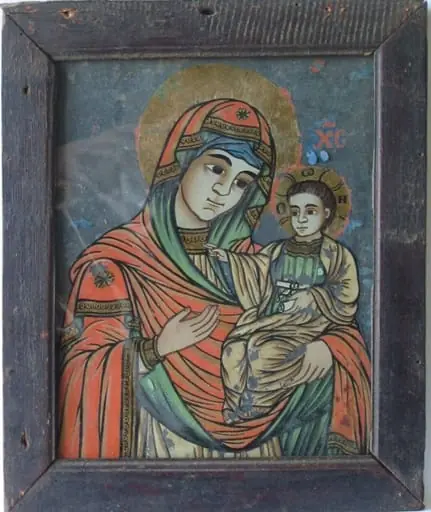
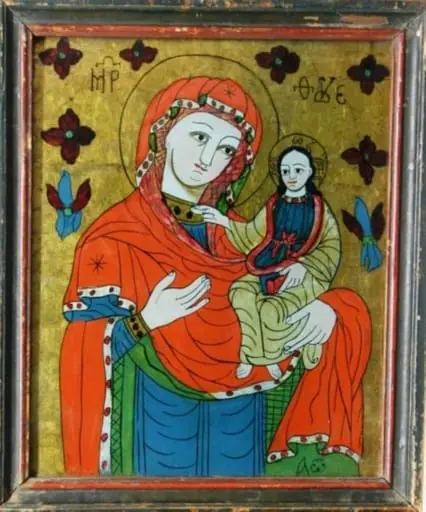
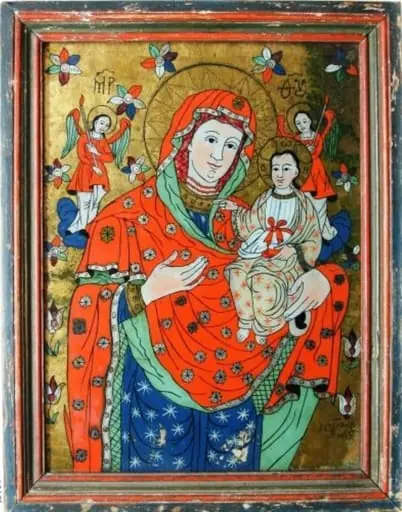
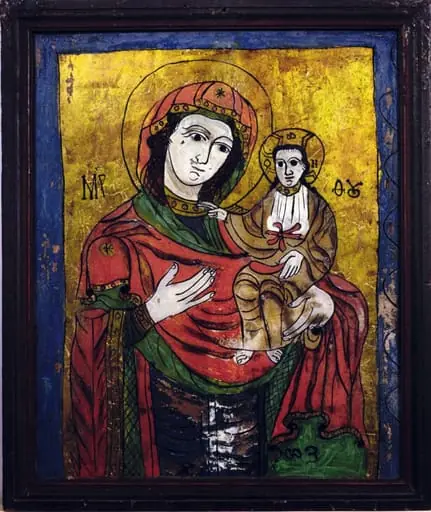
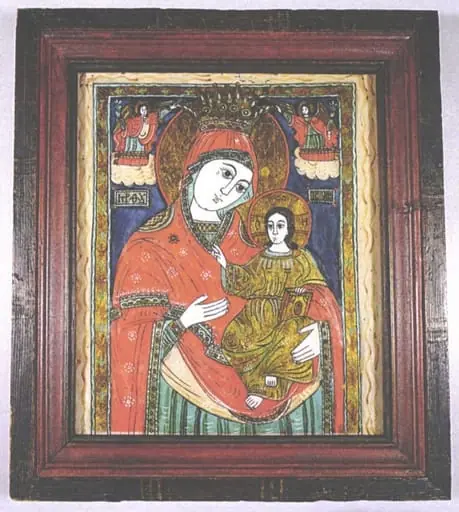
Maica Domnului cu Pruncul Iisus Hristos în brațe is a drawing by Unknown. It dates from 1850 and is held in the collection of the ASTRA National Museum Complex. This devotional panel depicts the Virgin Mary holding the infant Christ, rendered in a traditional Byzantine style.
About this work
Overview
The background features stylized flora and a faded gold border inscribed with early script, suggesting liturgical or scriptural text.
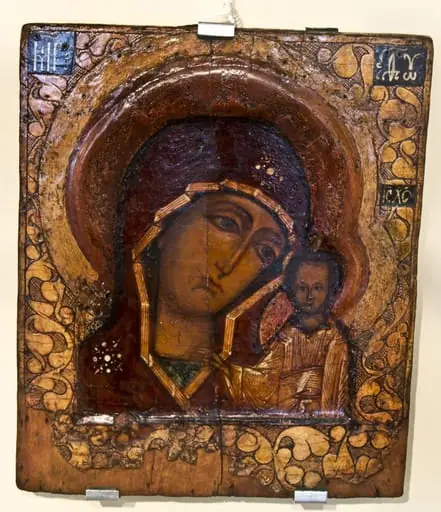
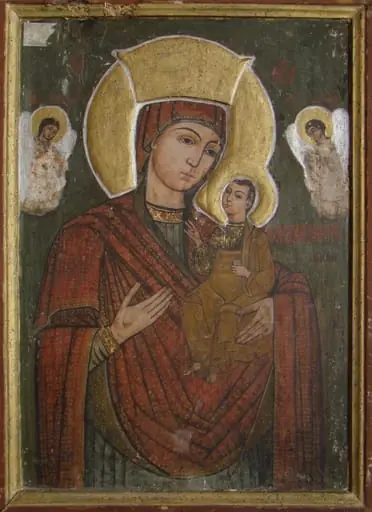
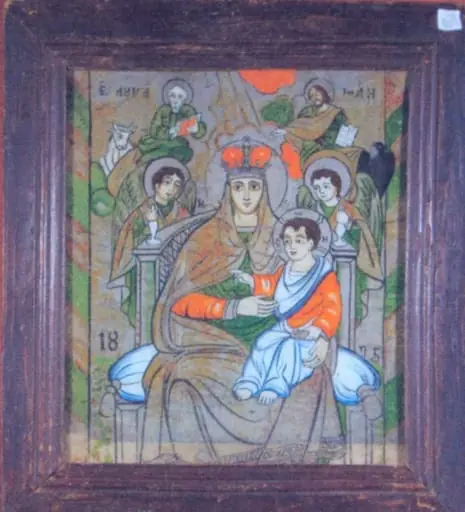
This devotional panel depicts the Virgin Mary holding the infant Christ, rendered in a traditional Byzantine style. Both figures are crowned with golden halos, signaling their sacred status. The composition is centered and symmetrical, emphasizing solemnity over movement. The background features stylized flora and a faded gold border inscribed with early script, suggesting liturgical or scriptural text. The wooden frame, aged and worn, reinforces the object’s long history of veneration.
Subject & Meaning
The Virgin Mary, as Theotokos or God-bearer, is shown holding Christ, who clasps a small cross—foreshadowing his future sacrifice. The red garments symbolize both divine authority and earthly humanity, while the white dots on her robe may denote purity or celestial texture. The halos and ornate border reinforce the sacred nature of the scene, intended for private or communal prayer. The imagery aligns with Eastern Orthodox iconography, where figures serve as windows to the divine rather than naturalistic portraits.
Technique & Style
The painting employs stippling—fine dots of pigment—to model texture and depth, particularly on the Virgin’s robe and the background foliage. This method, common in medieval icons, avoids blending, preserving clarity and spiritual intensity. Colors are flat yet luminous, with gold leaf used selectively for halos and borders. The script in the border is rendered in an early ecclesiastical hand, likely Greek or Slavonic, adding liturgical resonance. The style prioritizes symbolic clarity over spatial realism.
History & Provenance
The work likely originated in a Byzantine or post-Byzantine workshop, possibly in the Balkans or Anatolia, between the 13th and 16th centuries. Its worn wooden frame and faded gold suggest centuries of handling in a domestic or monastic setting. The preservation of the panel, despite age and use, indicates its continued religious significance. No documented ownership history survives, but its form and technique align with icons produced for private devotion in Orthodox Christian communities.
Context
This image belongs to a widespread tradition of Marian icons in Eastern Christianity, where such panels were used in home altars and church chapels. The use of red for Mary’s robe and the inclusion of Christ holding a cross reflect theological themes of incarnation and redemption. The decorative border with script may contain phrases from liturgy or scripture, common in icons meant to educate the faithful. Such works were not merely art but instruments of prayer and spiritual focus.
Legacy
Though unsigned and undated, the icon exemplifies enduring Byzantine conventions that persisted across centuries and regions. Its use of stippling and symbolic color influenced later Orthodox iconographers and even Western devotional art during periods of cultural exchange. Today, it stands as a quiet testament to the continuity of religious imagery, where form and meaning remained stable even as political and linguistic landscapes shifted.
Artist & collection

 Domestic Scene
 Giacomo and Cardinal Marco, investing Andrea, Abbot of San Zeno, with his Benefice
 The Nymph of Fontainebleau
 Portrait of a Woman
 Madonna and Child with Saints in the Enclosed Garden
 Venus and Minerva
 Family Group of Four on Sofa
 Wall painting from Room H of the Villa of P. Fannius Synistor at Boscoreale