Artwork
Maize and Cockscombs
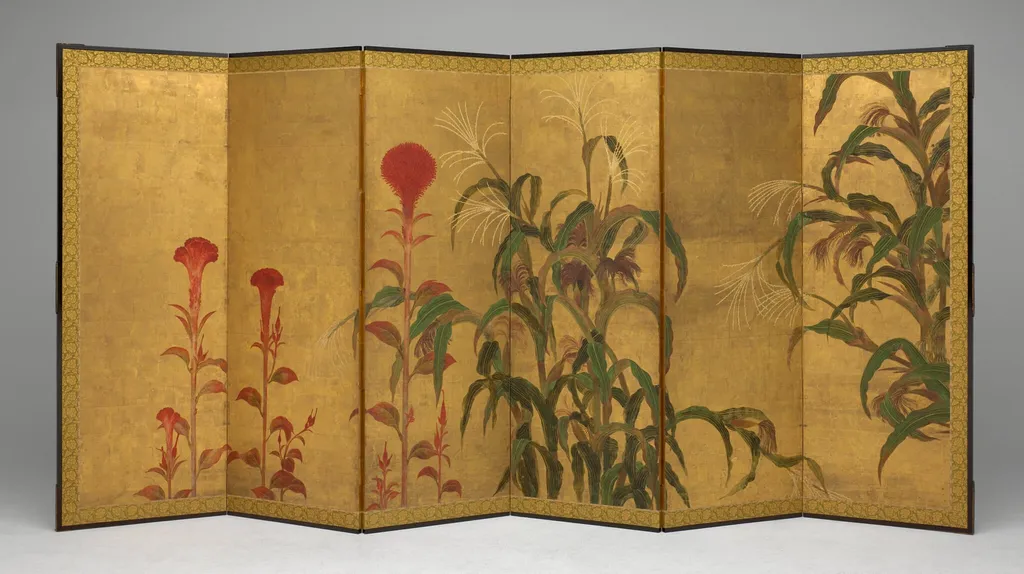
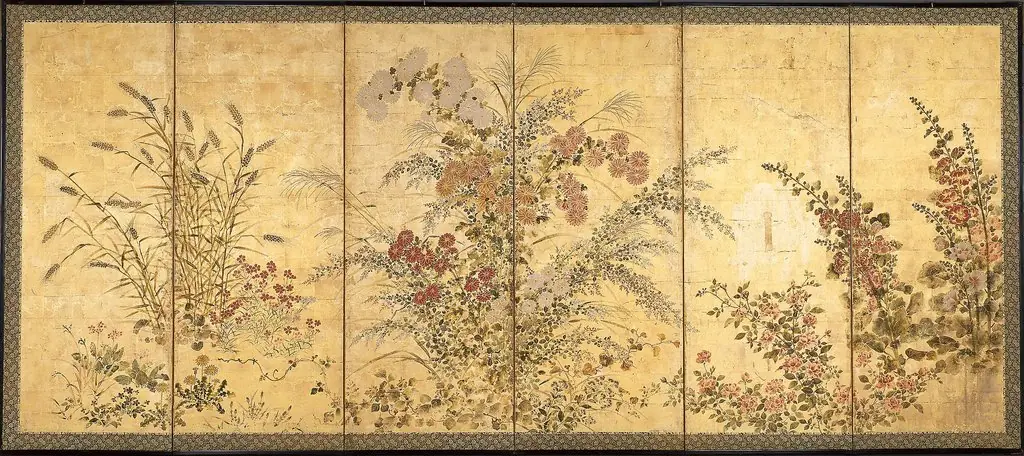
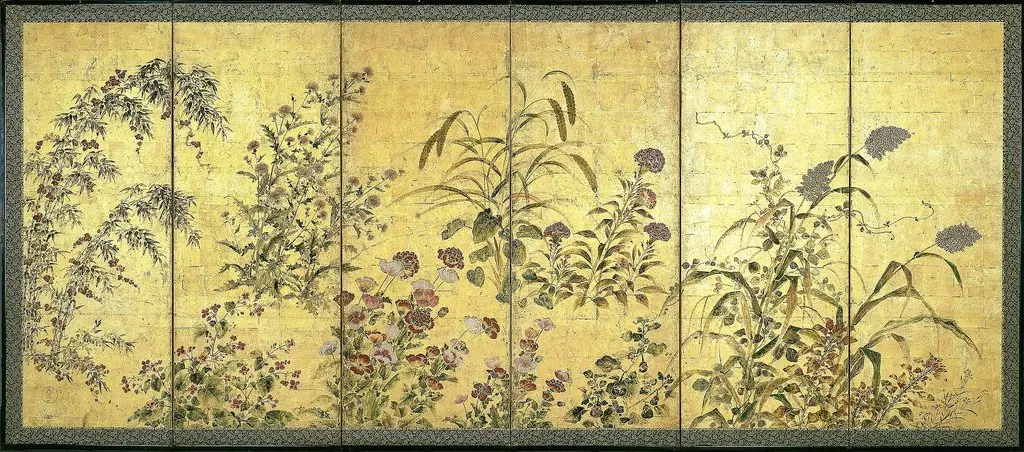
Maize and Cockscombs is an ink painting by the Baroque artist Unknown. It dates from 1650 and is held in the collection of the Art Institute of Chicago.
About this work
Overview
This six-panel screen, created in early 17th-century Japan, features maize and cockscombs rendered in ink, color, and gold leaf on paper.
This six-panel screen, created in early 17th-century Japan, features maize and cockscombs rendered in ink, color, and gold leaf on paper. Originally one half of a matching pair, it was commissioned for a merchant’s residence during the Edo period. The shimmering gold background enhances the luminosity of the painted flora, designed to catch candlelight and transform interior space. Its scale and detail reflect both aesthetic ambition and the cultural confidence of a newly stabilized society.
Subject & Meaning
The screen depicts maize, introduced to Japan via foreign trade, alongside native cockscombs, their forms rendered with precise botanical clarity. The juxtaposition of exotic and familiar plants signals an openness to new influences, reflecting the Edo period’s expanding worldview. The plants’ exaggerated size and dense composition suggest abundance and vitality, aligning with merchant-class ideals of prosperity and cultivated taste rather than aristocratic tradition.
Technique & Style
Artists employed refined techniques inherited from court painting traditions, including delicate ink outlines and layered pigments, while embracing bold, flattened forms and lavish gold leaf. The composition fills the entire surface without spatial depth, creating an immersive, almost tactile presence. The gold ground functions not merely as decoration but as an active element, amplifying light and unifying the vibrant flora into a cohesive, radiant field.
History & Provenance
Created around the turn of the 17th century, the screen likely adorned the reception room of a wealthy merchant family in a growing urban center. As the Tokugawa shogunate consolidated power, merchants gained economic influence and commissioned art to assert status. This screen’s survival as a single panel suggests it was separated from its pair, possibly through inheritance or sale, yet retains its original materials and intent.
Context
The Edo period saw the rise of a merchant class that challenged traditional hierarchies through patronage. Artistic production shifted from aristocratic courts to urban centers, where subjects like foreign crops and lush flora became symbols of worldly engagement. This screen exemplifies how decorative arts absorbed scientific curiosity and global exchange, transforming private interiors into spaces of cultural expression.
Legacy
The screen stands as a testament to the Edo period’s fusion of tradition and innovation in decorative art. Its blend of botanical precision, symbolic abundance, and material luxury influenced later screen painting and continues to inform modern understandings of Japanese visual culture. Surviving examples like this one reveal how private patronage reshaped artistic priorities beyond the imperial and samurai elite.
Artist & collection

 Domestic Scene
 Giacomo and Cardinal Marco, investing Andrea, Abbot of San Zeno, with his Benefice
 The Nymph of Fontainebleau
 Portrait of a Woman
 Madonna and Child with Saints in the Enclosed Garden
 Venus and Minerva
 Family Group of Four on Sofa
 Wall painting from Room H of the Villa of P. Fannius Synistor at Boscoreale