Artwork
Flowers and Trees of the Four Seasons (left screen)
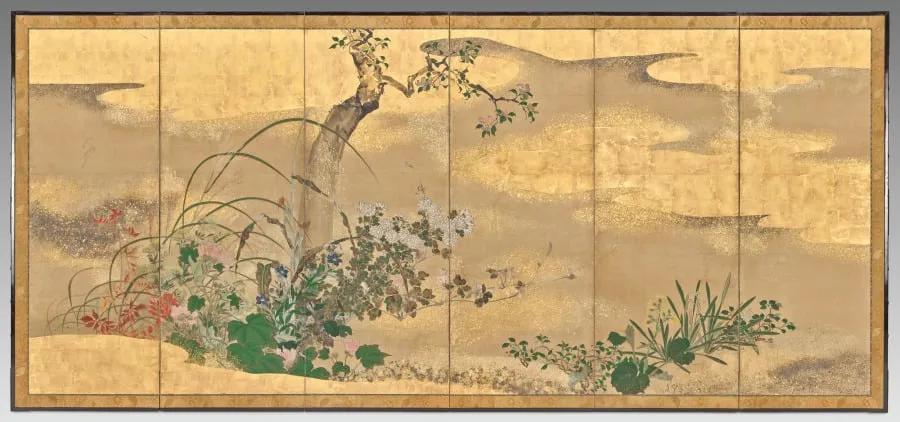
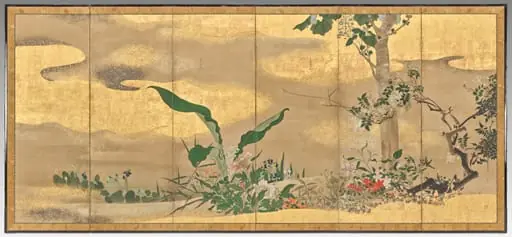
Flowers and Trees of the Four Seasons (left screen) is an unspecified painting by the Baroque artist Watanabe Shikō. It dates from 1704 and is held in the collection of the Cleveland Museum of Art.
About this work
You see a tall folding screen covered in cherry, pine, and bamboo branches, each flower or needle painted with careful strokes.
You see a tall folding screen covered in cherry, pine, and bamboo branches, each flower or needle painted with careful strokes.
Shikō painted these plants so precisely that scholars think he studied real specimens. Yet he also added gold and silver dust to the leaves, making the screen shimmer in candlelight. The mix of science and sparkle was new in Kyoto at the time.
To see how other artists in Kyoto used gold leaf, look up the subject *japan, edo period (1615–1868)*.
Overview
This tall folding screen, titled *Flowers and Trees of the Four Seasons*, presents a series of meticulously rendered cherry, pine, and bamboo branches. Each element is delineated with precise ink lines, while the foliage is accented with gold and silver dust that catches ambient light, creating a subtle shimmer across the surface.
Subject & Meaning
The composition showcases seasonal flora—cherry blossoms for spring, pine for winter, bamboo for summer—arranged to evoke the passage of time. By juxtaposing these botanical motifs, the work reflects a traditional Japanese appreciation of nature’s cyclical rhythms, inviting contemplation of the changing environment.
Technique & Style
The artist employed a blend of scientific observation and decorative embellishment. Fine brushwork captures the texture of leaves and flowers with botanical accuracy, suggesting direct study of live specimens. Over this realistic foundation, metallic powders are applied to the foliage, producing a luminous effect that was uncommon in Kyoto’s early Edo period.
History & Provenance
Created by Watanabe Shikō, whose interest in realistic plant illustration was encouraged by his patron Konoe Iehiro, the screen exemplifies the artist’s innovative synthesis of accuracy and ornamentation. The piece circulated among Kyoto’s artistic circles, influencing contemporaries who began to incorporate similar metallic treatments in their own works.
Artist & collection
Artist
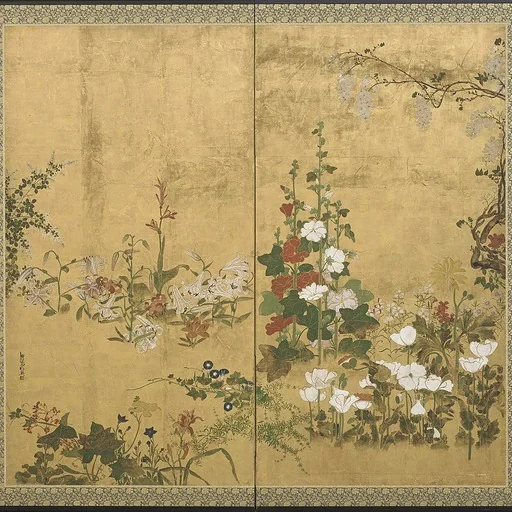
Watanabe Shikō or Motooki (渡辺 始興; 1683 - 5 September 1755) was a Japanese painter of the Rinpa school. Also known by his common name Kyūma, his other art names included Shōken (松軒) and Soshin (素信).

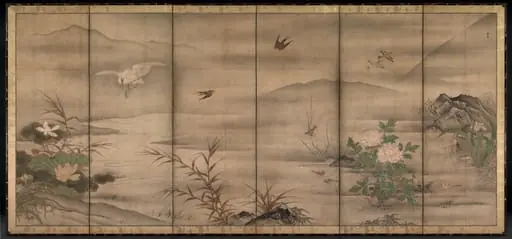 Birds and Flowers in a Landscape of the Four Seasons
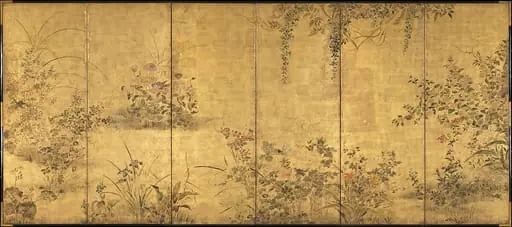 四季花野菜図屏風|Flowering Plants and Vegetables of the Four Seasons
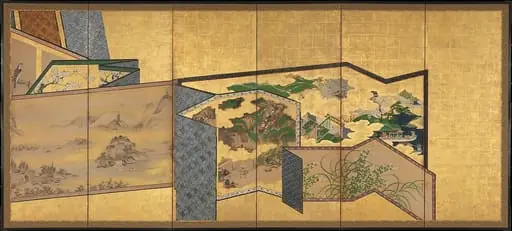 屏風尽図屏風|Screens within Screens
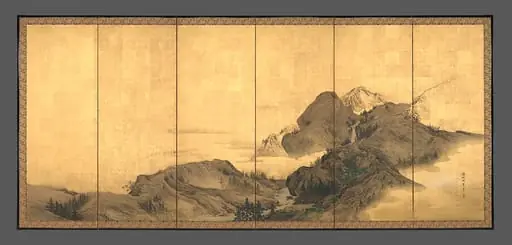 森周峰筆 楼閣山水図屏風|Landscape with Pavilion
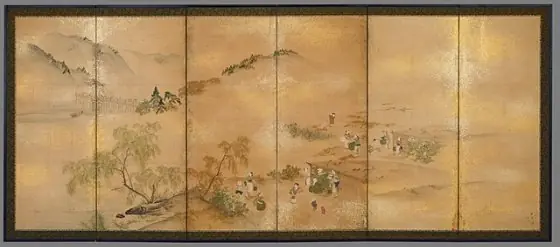 Tea Picking at Uji; Tea Party at Yoshida
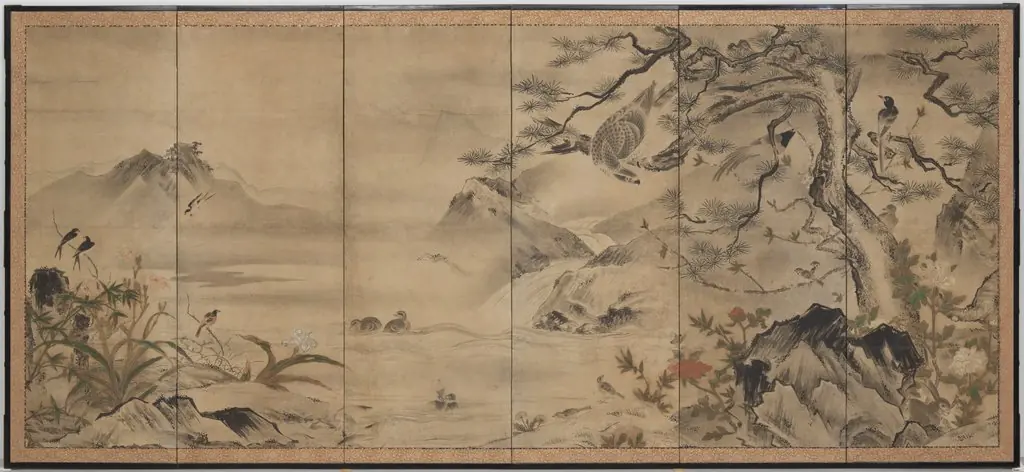 Flowers and Birds
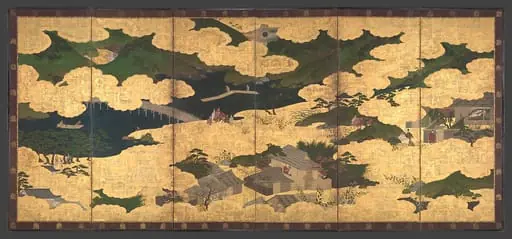 平家物語図屏風 「小督」 「大原御幸」|"Kogō" and "The Imperial Procession to Ōhara", from The Tale of the Heike (Heike monogatari)
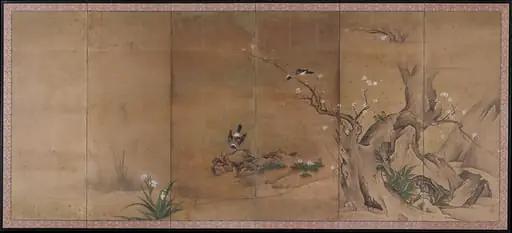 狩野山卜筆四季花鳥図屏風|Birds and Flowers of the Four Seasons
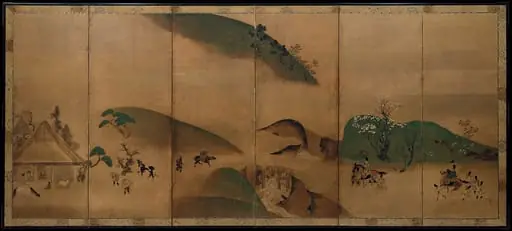 俵屋宗達工房 大原御幸図屏風|Royal Visit to Ōhara, from The Tale of the Heike