Artwork
Mares and Foals
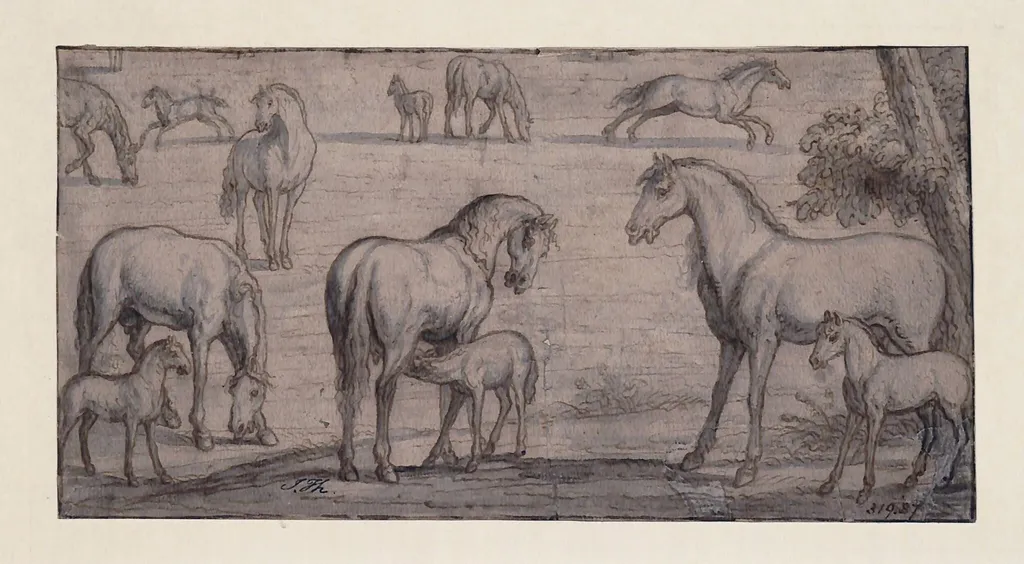
Mares and Foals is a watercolor work on paper by Unknown. It dates from 1850 and is held in the collection of the Victoria and Albert Museum.
About this work
Overview
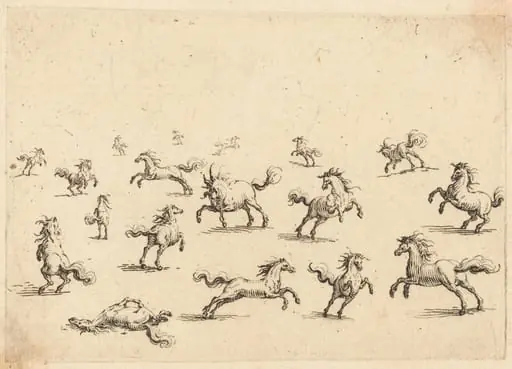
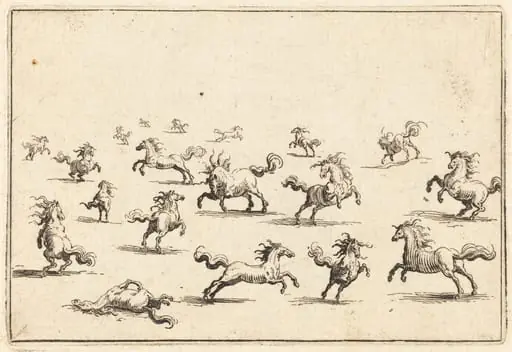
Above the main scene, a row of small sketches captures horses in motion, suggesting preparatory studies that inform the calmness of the central image.
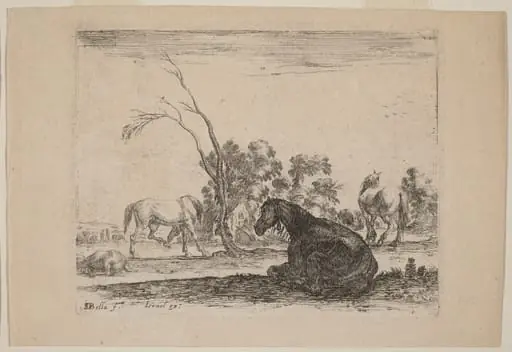
This watercolor depicts a group of mares and foals within a modest, fenced enclosure. The composition emphasizes stillness over movement, with animals arranged in quiet, natural postures—standing, resting, or nursing. Soft grays and whites dominate the palette, accented by subtle dark lines that define form without harsh contrast. Above the main scene, a row of small sketches captures horses in motion, suggesting preparatory studies that inform the calmness of the central image.
Subject & Meaning
The subject is the quiet intimacy between adult horses and their young. There is no drama or narrative tension—only the routine of grazing, nuzzling, and standing together. This focus on ordinary moments suggests an appreciation for the dignity of animal life in its unguarded state. The absence of human figures reinforces a sense of autonomy, as if the horses exist outside of human observation or intervention.
Technique & Style
The artist employs delicate watercolor washes to suggest volume and texture, relying on minimal detail to convey form. Shadows are rendered with faint, controlled lines rather than heavy pigment, creating a sense of depth through restraint. The top sketches, executed with looser strokes, reveal a practice of rapid observation. Together, the main image and studies demonstrate a method grounded in close looking and tonal subtlety over dramatic effect.
History & Provenance
The work’s origin and early ownership are undocumented. It appears to be a private study rather than a commissioned piece, likely created during a period when the artist was systematically observing equine behavior. Its modest scale and unframed presentation suggest it was intended for personal use or reference, not public display. No exhibition history or collector records are known to exist prior to its current location.
Context
In the broader tradition of animal studies, this work aligns with 19th-century practices of naturalistic observation, particularly among artists interested in anatomy and behavior. Unlike grand equestrian portraits, it avoids symbolism or heroism. Its quiet tone reflects a shift toward intimate, everyday subjects in art, paralleling developments in natural history illustration and the growing interest in animal psychology during the period.
Legacy
Though not widely exhibited or reproduced, the work contributes to a quieter lineage of animal studies that prioritize observation over spectacle. Its emphasis on stillness and tonal nuance influenced later artists seeking to depict animals with psychological realism rather than idealization. The sketches above the main image remain a testament to the value of preparatory work in developing a deeper understanding of form and movement.
Artist & collection

 Domestic Scene
 Giacomo and Cardinal Marco, investing Andrea, Abbot of San Zeno, with his Benefice
 The Nymph of Fontainebleau
 Portrait of a Woman
 Madonna and Child with Saints in the Enclosed Garden
 Venus and Minerva
 Family Group of Four on Sofa
 Wall painting from Room H of the Villa of P. Fannius Synistor at Boscoreale
![Studies of Horses [recto], by Jacques Callot](https://artifactworldgallery.com/img/jacques-callot--studies-of-horses-recto--e2af3b1e857eae0e-w320.webp)