Artwork
Masa Raiului
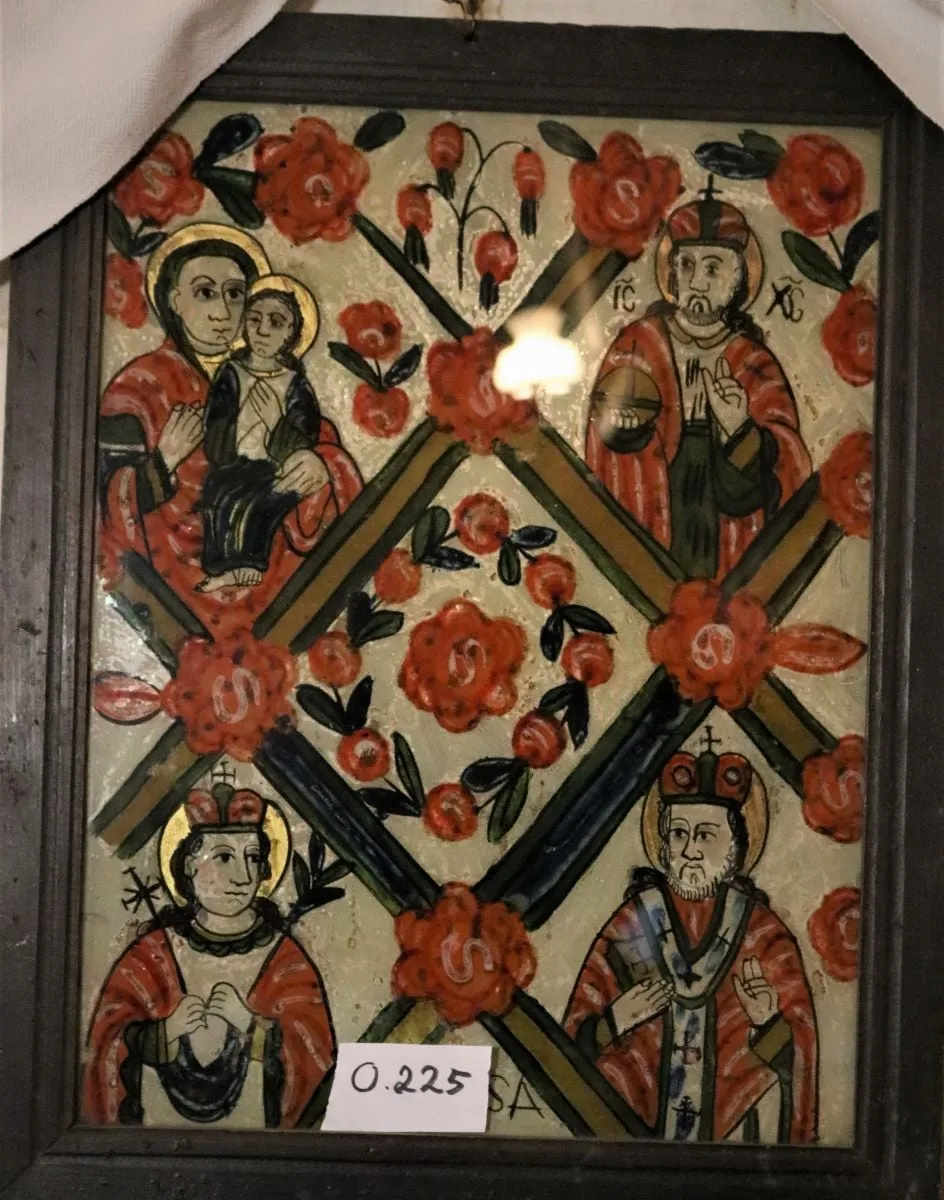
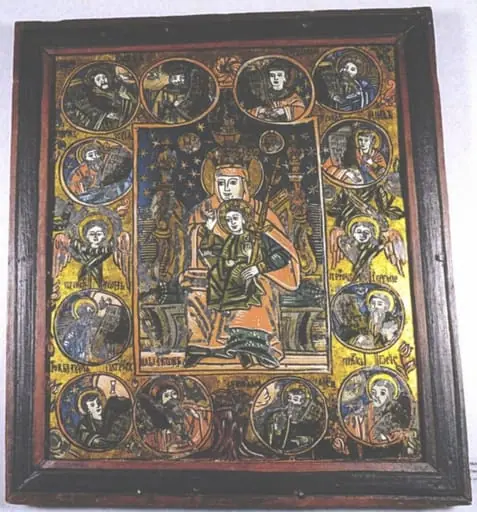
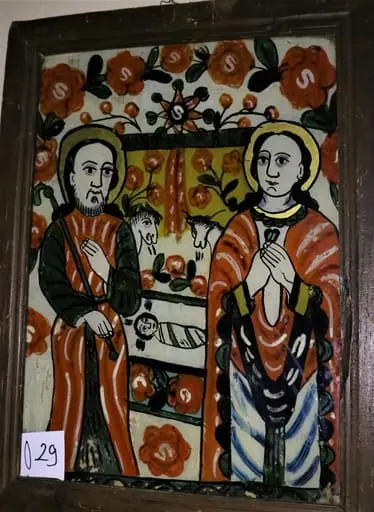
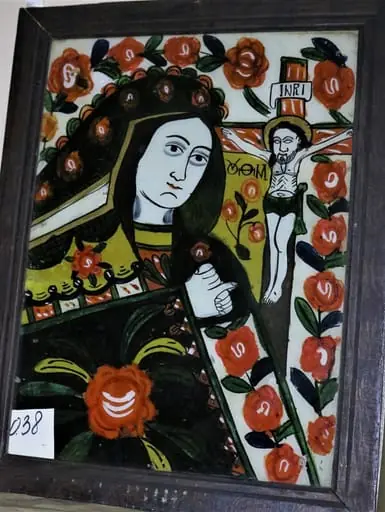
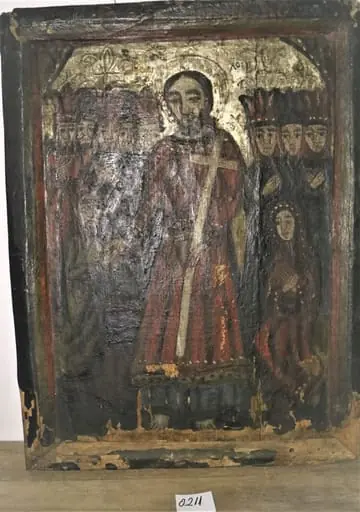
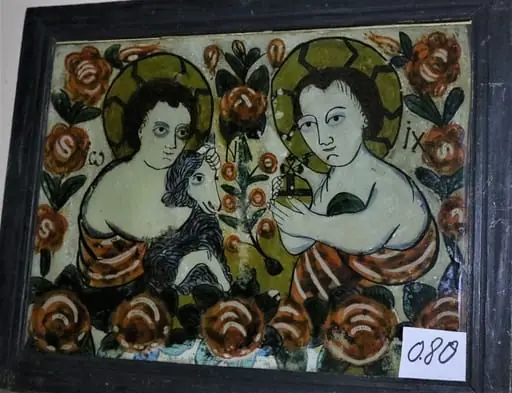
Masa Raiului is a drawing by Unknown. It dates from 1850 and is held in the collection of the Maramureș Ethnography and Folk Art County Museum. A small, framed drawing depicts four robed figures arranged in a square formation, each with hands clasped as if in prayer.
About this work
Overview
The composition lacks perspective and shading, reflecting an early, flat aesthetic common in devotional works from certain medieval or folk traditions.
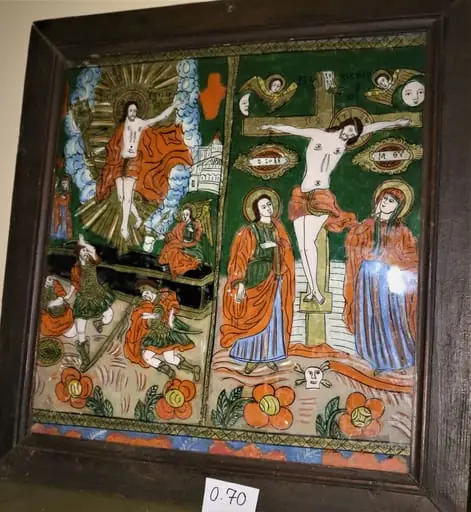
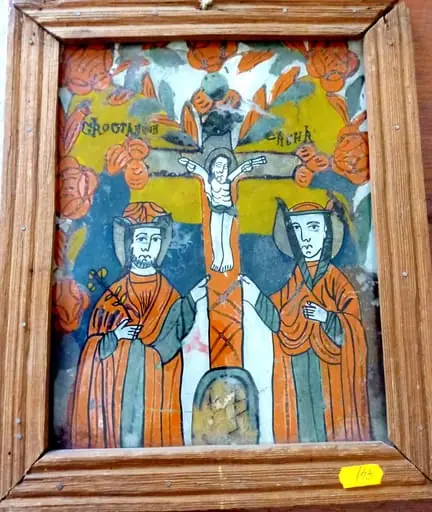
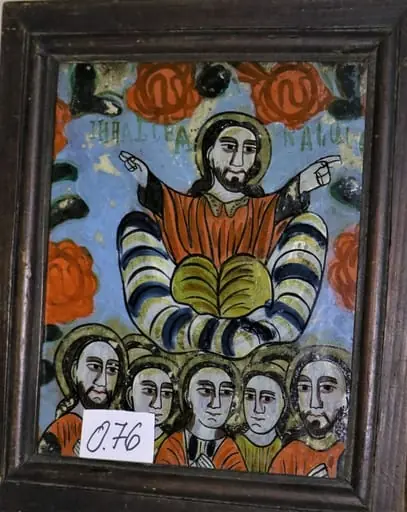
A small, framed drawing depicts four robed figures arranged in a square formation, each with hands clasped as if in prayer. Halos above their heads suggest sacred status. The background is densely filled with stylized red flowers and green foliage, though pigments have faded over time. The composition lacks perspective and shading, reflecting an early, flat aesthetic common in devotional works from certain medieval or folk traditions.
Subject & Meaning
The figures, likely saints or holy persons, are shown in unified prayer, emphasizing communal devotion. The presence of a child held by the upper-left figure may symbolize innocence, divine protection, or a specific hagiographic narrative. The floral background, though decorative, could reference paradise or the Garden of Eden, reinforcing the spiritual context. The absence of individual expression or narrative detail points to symbolic rather than storytelling intent.
Technique & Style
The drawing employs flat, unmodulated colors and minimal line work, avoiding chiaroscuro or spatial depth. Figures are rendered with simplified contours, and background elements are patterned rather than naturalistic. Cross-hatching may be used subtly to suggest texture in robes or foliage, but not for modeling form. The overall approach aligns with pre-Renaissance or regional folk art traditions that prioritize symbolic clarity over realism.
History & Provenance
The work’s exact origin and maker are undocumented. Its small scale and devotional subject suggest it was created for private worship, possibly in a monastic or domestic setting. The faded pigments and worn frame indicate prolonged exposure to light and handling over centuries. Its survival implies it was valued enough to be preserved, though its path from creation to current ownership remains unclear.
Context
This piece likely emerged from a cultural environment where religious imagery served as a focus for personal prayer, particularly in communities with limited access to large-scale church art. Similar compositions appear in Eastern European or Balkan folk iconography, where simplified figures and symbolic flora conveyed spiritual ideals. The absence of text or inscriptions suggests it was intended for visual contemplation rather than doctrinal instruction.
Legacy
Though not widely known or reproduced, the drawing contributes to a broader corpus of intimate devotional art that prioritized spiritual resonance over technical sophistication. Its preservation offers insight into how ordinary believers engaged with sacred imagery outside institutional settings. It stands as a quiet testament to the enduring role of simple, repetitive forms in religious practice across centuries.
Artist & collection
Museum
Maramureș Ethnography and Folk Art County Museum
Continue through works from the same source collection.
 Domestic Scene
 Giacomo and Cardinal Marco, investing Andrea, Abbot of San Zeno, with his Benefice
 The Nymph of Fontainebleau
 Portrait of a Woman
 Madonna and Child with Saints in the Enclosed Garden
 Venus and Minerva
 Family Group of Four on Sofa
 Wall painting from Room H of the Villa of P. Fannius Synistor at Boscoreale