Artwork
Nașterea
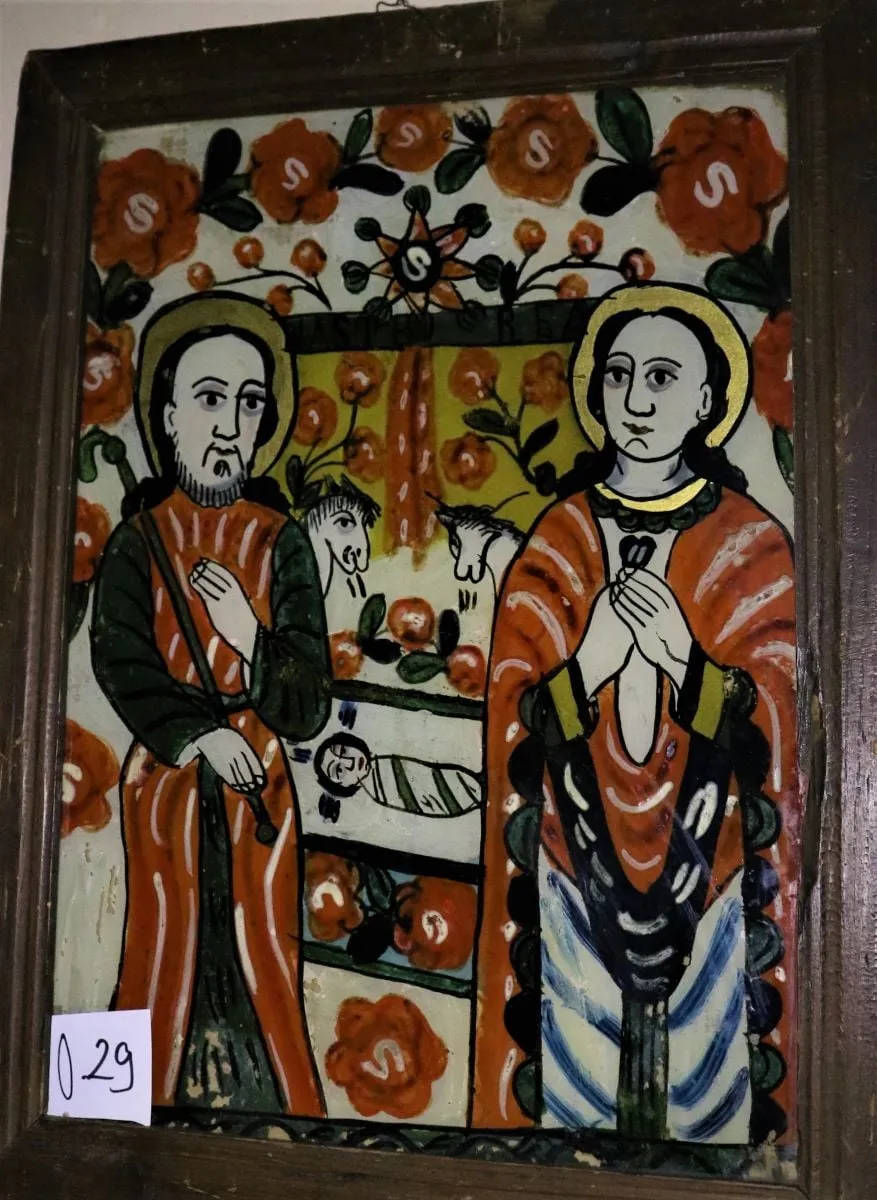
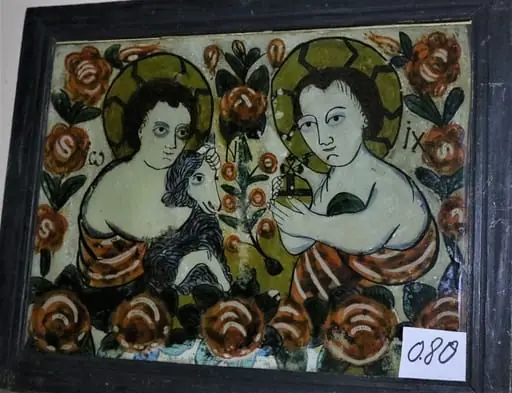
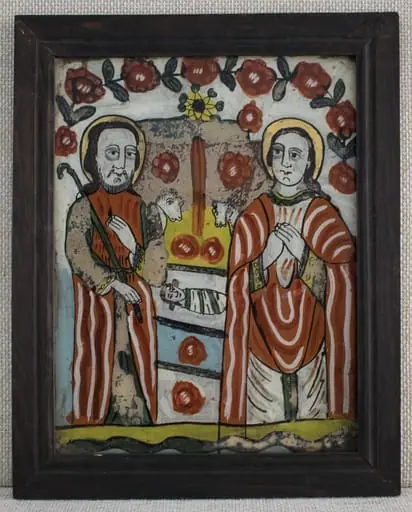
Nașterea is a drawing by Unknown. It dates from 1850 and is held in the collection of the Maramureș Ethnography and Folk Art County Museum. This image depicts two figures standing side by side, each marked by a halo and dressed in plain, brightly colored robes.
About this work
Overview
The background features stylized flora and small animals, suggesting a sacred or symbolic setting rather than a naturalistic one.
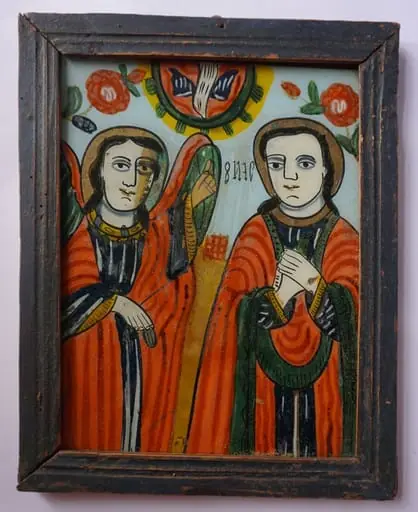
This image depicts two figures standing side by side, each marked by a halo and dressed in plain, brightly colored robes. The composition is symmetrical and static, with no attempt to create spatial depth. The background features stylized flora and small animals, suggesting a sacred or symbolic setting rather than a naturalistic one. The overall aesthetic emphasizes flatness and clarity over realism.
Subject & Meaning
The two figures, identified by their halos, likely represent sacred or divine beings. Their calm demeanor and clasped hands convey stillness and reverence. The presence of flowers, vines, and animals may symbolize harmony between the spiritual and natural worlds. The simplicity of their attire and the absence of narrative detail suggest a focus on symbolic presence rather than storytelling.
Technique & Style
The painting employs bold, unmodulated colors with no shading or perspective to suggest volume. Forms are outlined clearly, and details are minimized, resulting in a flattened, decorative effect. The use of contrasting hues—dark greenish-brown against bright orange and blue—enhances visual distinction without adding complexity. This approach aligns with traditions that prioritize symbolic clarity over naturalistic representation.
History & Provenance
The work is associated with the collection of the Museum of Ethnography, suggesting it originates from a cultural context where religious or ceremonial imagery was rendered in a conventionalized style. Its production likely stems from a community that valued ritual symbolism over individual artistic expression. Exact origin and date remain unspecified, but its aesthetic aligns with regional devotional art traditions.
Context
This image reflects a broader tradition in which sacred figures are depicted with standardized iconography—halos, simple garments, and serene gestures—to convey spiritual authority. The inclusion of natural elements may reflect animist or syncretic beliefs, blending religious symbolism with environmental motifs. Such works were often used in domestic or communal ritual settings rather than formal temples.
Legacy
The painting’s enduring presence in ethnographic collections highlights its value as an example of non-Western devotional art. Its stylistic choices—flatness, symbolic color, and absence of perspective—continue to inform scholarly understanding of how spiritual identity is visually encoded in diverse cultural contexts. It remains a reference point for studies of ritual imagery beyond European artistic norms.
Artist & collection
Museum
Maramureș Ethnography and Folk Art County Museum
Continue through works from the same source collection.
 Domestic Scene
 Giacomo and Cardinal Marco, investing Andrea, Abbot of San Zeno, with his Benefice
 The Nymph of Fontainebleau
 Portrait of a Woman
 Madonna and Child with Saints in the Enclosed Garden
 Venus and Minerva
 Family Group of Four on Sofa
 Wall painting from Room H of the Villa of P. Fannius Synistor at Boscoreale