Artwork
Master of the Legend of Saint Catherine. Triptych Central panel, detail: Annunciation
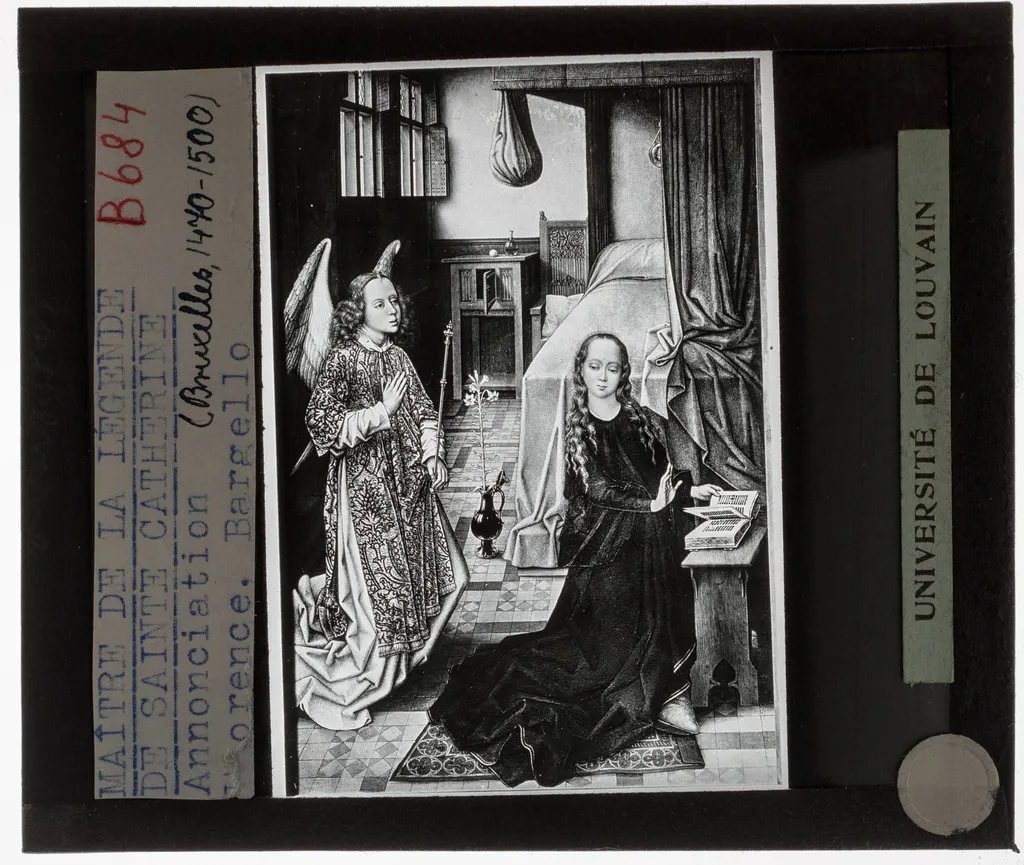
Master of the Legend of Saint Catherine. Triptych Central panel, detail: Annunciation is an unspecified painting by the Northern Renaissance artist Unknown. It dates from 1490 and is held in the collection of the Catholic University of Leuven. The central panel of a triptych attributed to the Master of the Legend of Saint Catherine depicts the biblical Annunciation.
About this work
The painting shows a scene from the Bible.
It's a detailed moment from the Annunciation.
The artist used oil on panel to create this work.
The painting is in the style of the Flemish Primitives, from around 1480-1500.
This style is known for its use of oil paint and detailed scenes.
The painting is now in a museum in Italy.
To learn more about this style, look into the technique of sfumato.
Overview
The central panel of a triptych attributed to the Master of the Legend of Saint Catherine depicts the biblical Annunciation. Executed in oil on wood around the late fifteenth century, the work exemplifies the meticulous realism characteristic of the Flemish Primitive tradition. It is presently displayed in the Museo Nazionale del Bargello in Florence, Italy.
Subject & Meaning
The composition captures the moment when the Archangel Gabriel announces to the Virgin Mary that she will bear the Son of God. The figures are rendered with careful attention to gesture and expression, emphasizing the theological significance of divine intervention and the humility of Mary’s acceptance.
Technique & Style
Rendered in oil on panel, the painting employs the layered glazing and fine detailing typical of Flemish Primitive art. The artist achieves subtle modeling of forms and a luminous surface through multiple translucent layers, a precursor to later techniques such as sfumato, while maintaining the crisp outlines and rich color palette of the period.
History & Provenance
Created between roughly 1480 and 1500, the work was originally part of a larger altarpiece. Its early ownership records are sparse, but it entered the collection of the Museo Nazionale del Bargello in Florence, where it has been conserved and displayed as part of the museum’s medieval holdings.
Context
The Annunciation was a popular subject in Northern Renaissance art, allowing painters to explore complex iconography and domestic interior settings. Within the Flemish tradition, such scenes often incorporated detailed textures, symbolic objects, and a sense of intimate space, reflecting contemporary devotional practices.
Artist & collection
 Domestic Scene
 Giacomo and Cardinal Marco, investing Andrea, Abbot of San Zeno, with his Benefice
 The Nymph of Fontainebleau
 Portrait of a Woman
 Madonna and Child with Saints in the Enclosed Garden
 Venus and Minerva
 Family Group of Four on Sofa
 Wall painting from Room H of the Villa of P. Fannius Synistor at Boscoreale
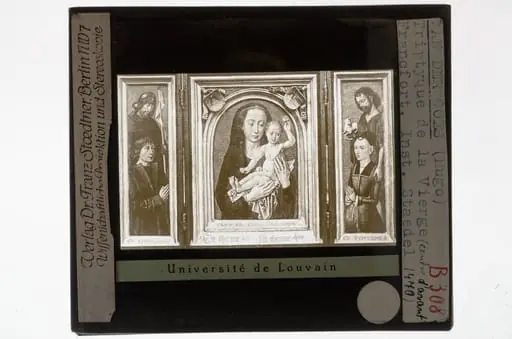 Hugo van der Goes. Triptych
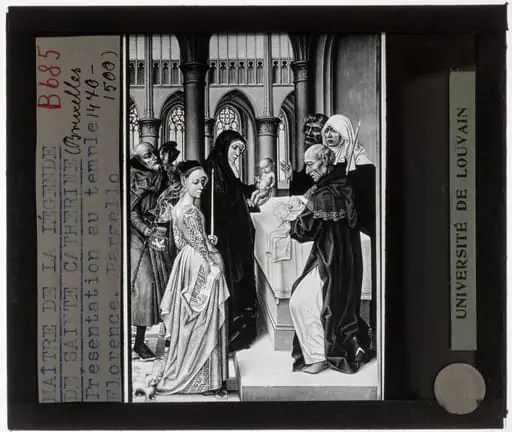 Meester van de Legende van Sint Catherina. Triptiek Maria-Lichtmis Presentatie in de tempel
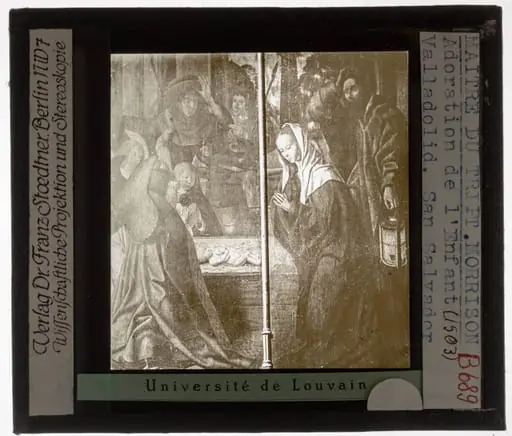 Master of the Morrison Triptych. Adoration of Christ
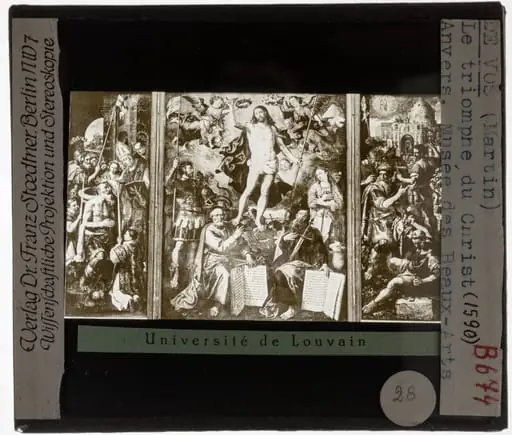 Maarten de Vos. Altaarstuk van de gilde van de oude voetboog
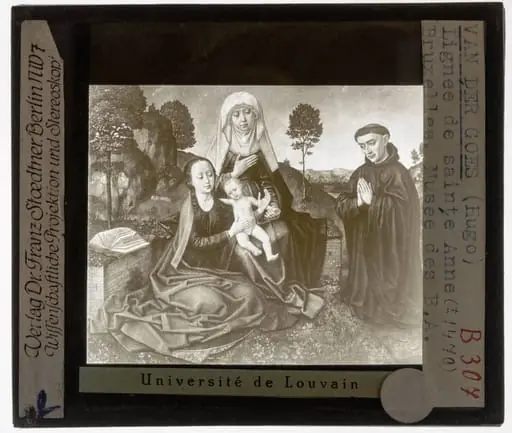 Hugo van der Goes. St Anne's with a Franciscan donor
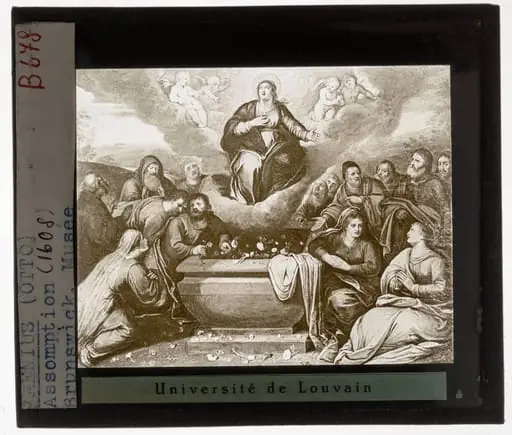 Otto van Veen. Ascension of Mary
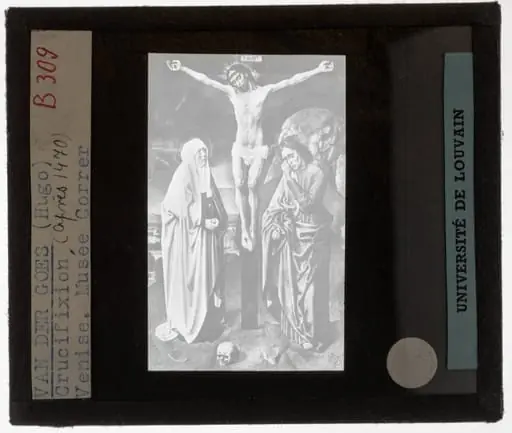 Hugo van der Goes. Kruisiging
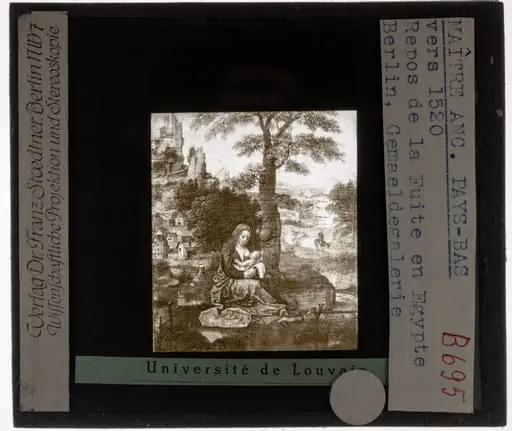 Anoniem (naar Joachim Patinir). Rust op de vlucht naar Egypte
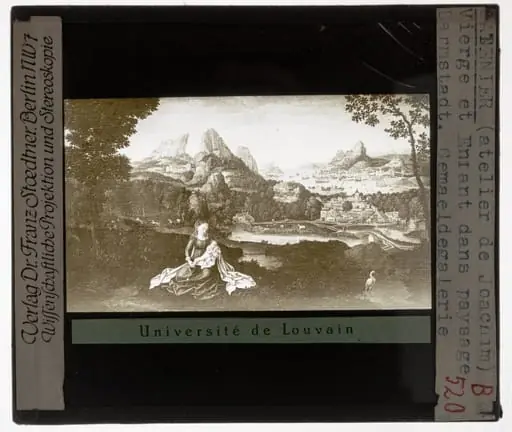 Joachim Patinir (studio). Rest on the flight into Egypt
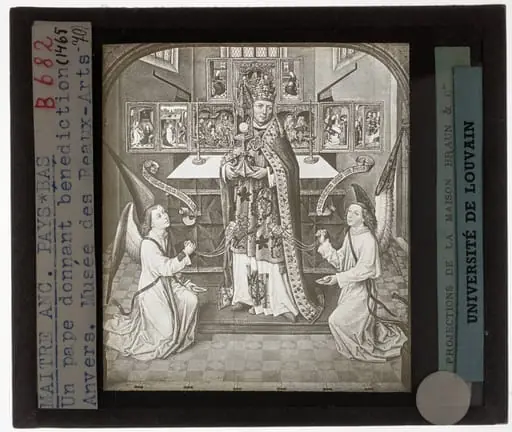 Anoniem. Aanbidding van het Sacrament