Artwork
Anoniem. Aanbidding van het Sacrament
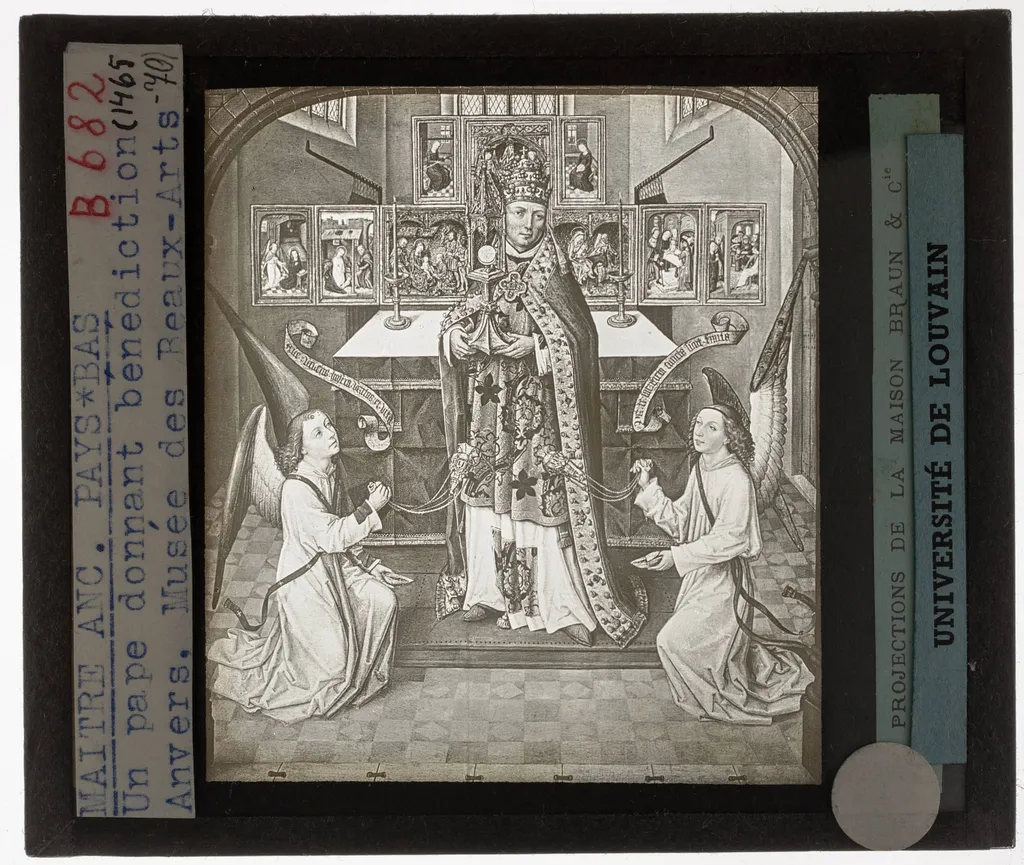
Anoniem. Aanbidding van het Sacrament is an unspecified painting by the Northern Renaissance artist Unknown. It dates from 1495 and is held in the collection of the Catholic University of Leuven. The work, titled “Aanbidding van het Sacrament,” depicts a devotional scene in which a congregation kneels before a richly gilded altar.
About this work
Tiny details show each person’s emotion—no two faces look the same.
A crowd kneels before a golden altar lit by flickering candles. The robes are deep reds and blues, the faces shadowed under hoods. One man in black holds a book, others raise hands in prayer.
This is Flemish art from around 1500. The gold leaf glows against dark backgrounds. Tiny details show each person’s emotion—no two faces look the same.
Look up the Museum of Ethnography to see more early religious art.
Overview
The work, titled “Aanbidding van het Sacrament,” depicts a devotional scene in which a congregation kneels before a richly gilded altar. Executed in oil on panel around the close of the fifteenth century, the painting belongs to the Flemish Primitive tradition. It is presently housed in the Royal Museum of Fine Arts in Antwerp, Belgium.
Subject & Meaning
The composition presents a group of worshippers gathered around a golden altar illuminated by candlelight. Cloaked in deep reds and blues, the figures bow in prayer, their faces partially concealed beneath hoods, emphasizing collective reverence rather than individual identity. A man in black holds a book, suggesting liturgical reading, while others raise their hands in supplication, underscoring the sacramental focus of the scene.
Technique & Style
Rendered in oil on a wooden panel, the painting employs the meticulous detail characteristic of Flemish Primitive art. Gold leaf applied to the altar creates a luminous contrast against the dark background, while the careful modeling of fabrics and subtle facial expressions reveal the artist’s skill in conveying texture and emotion within a compact visual field.
History & Provenance
Created between 1491 and 1500, the anonymous work entered the collection of the Royal Museum of Fine Arts, Antwerp, where it remains on display. Its attribution to the Flemish Primitive school is based on stylistic analysis, and the painting has been documented in the museum’s catalogues since the early twentieth century, reflecting its recognized place within the region’s religious art tradition.
Artist & collection
 Domestic Scene
 Giacomo and Cardinal Marco, investing Andrea, Abbot of San Zeno, with his Benefice
 The Nymph of Fontainebleau
 Portrait of a Woman
 Madonna and Child with Saints in the Enclosed Garden
 Venus and Minerva
 Family Group of Four on Sofa
 Wall painting from Room H of the Villa of P. Fannius Synistor at Boscoreale
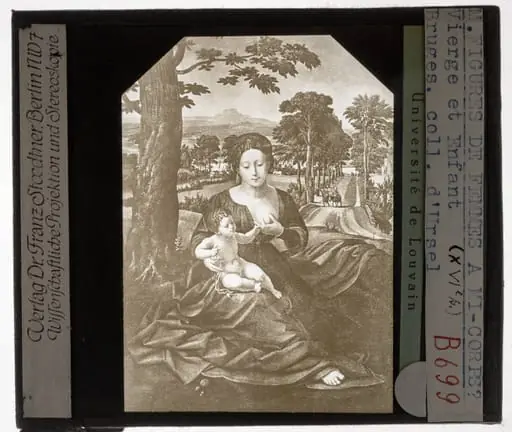 Anoniem. Madonna met kind
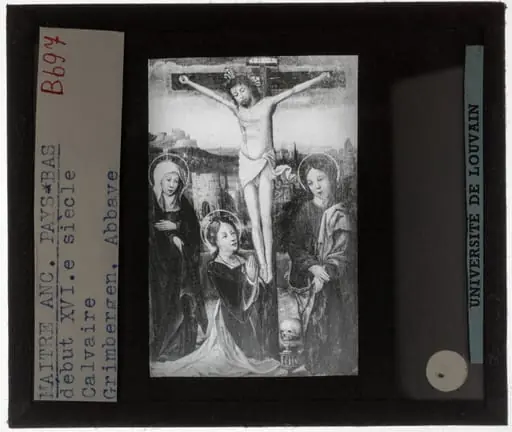 Anonymous. Calvary
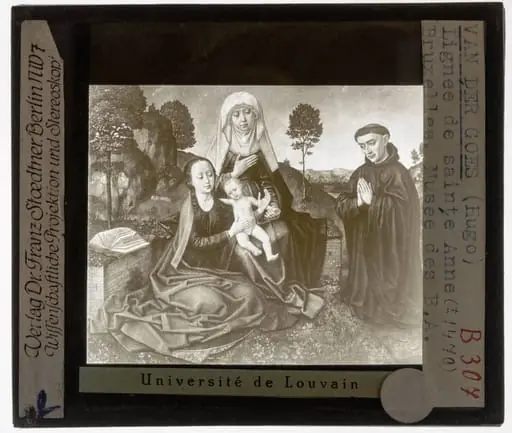 Hugo van der Goes. St Anne's with a Franciscan donor
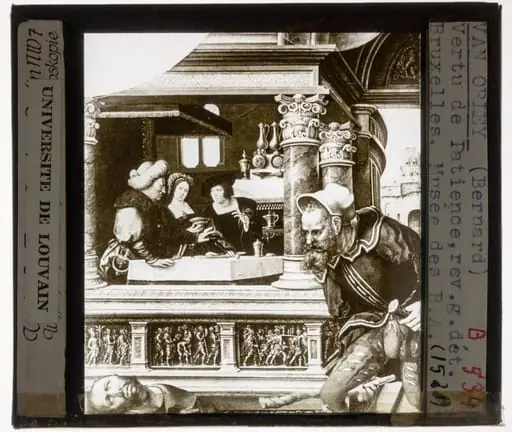 Bernard van Orley. Triptiek met de deugd van het Geduld Paneel links, achterzijde: De arme Lazarus aan de deur van de slechte rijke, detail bovenaan
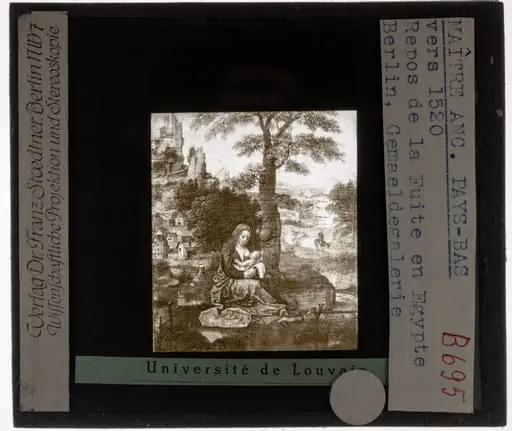 Anoniem (naar Joachim Patinir). Rust op de vlucht naar Egypte
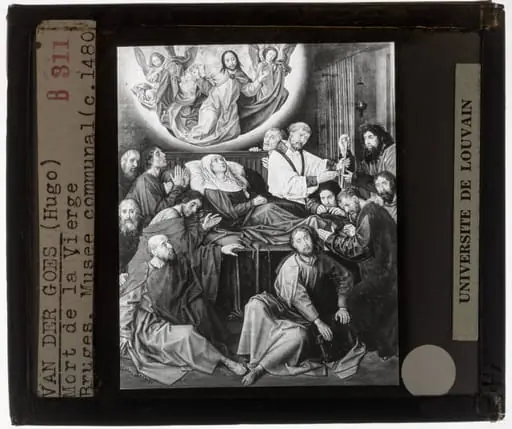 Hugo van der Goes. Death of Mary
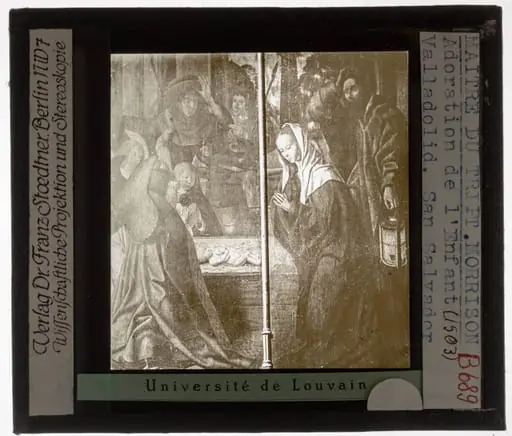 Master of the Morrison Triptych. Adoration of Christ
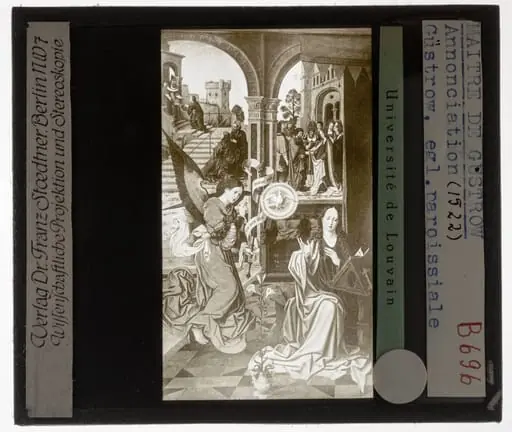 Bernard van Orley. Passieretabel Annunciatie
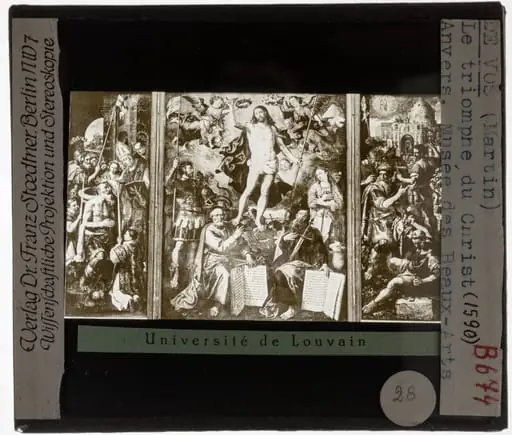 Maarten de Vos. Altaarstuk van de gilde van de oude voetboog
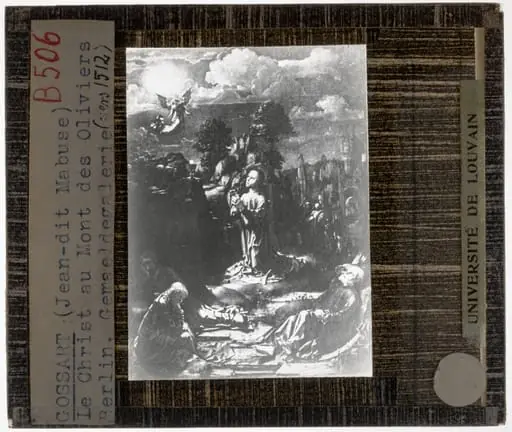 Jan Gossaert. Christus op de olijfberg
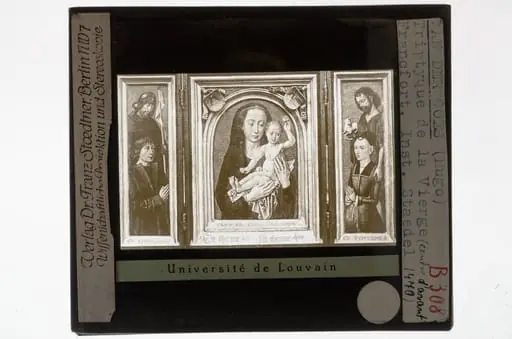 Hugo van der Goes. Triptych