Artwork
Mica Deisis
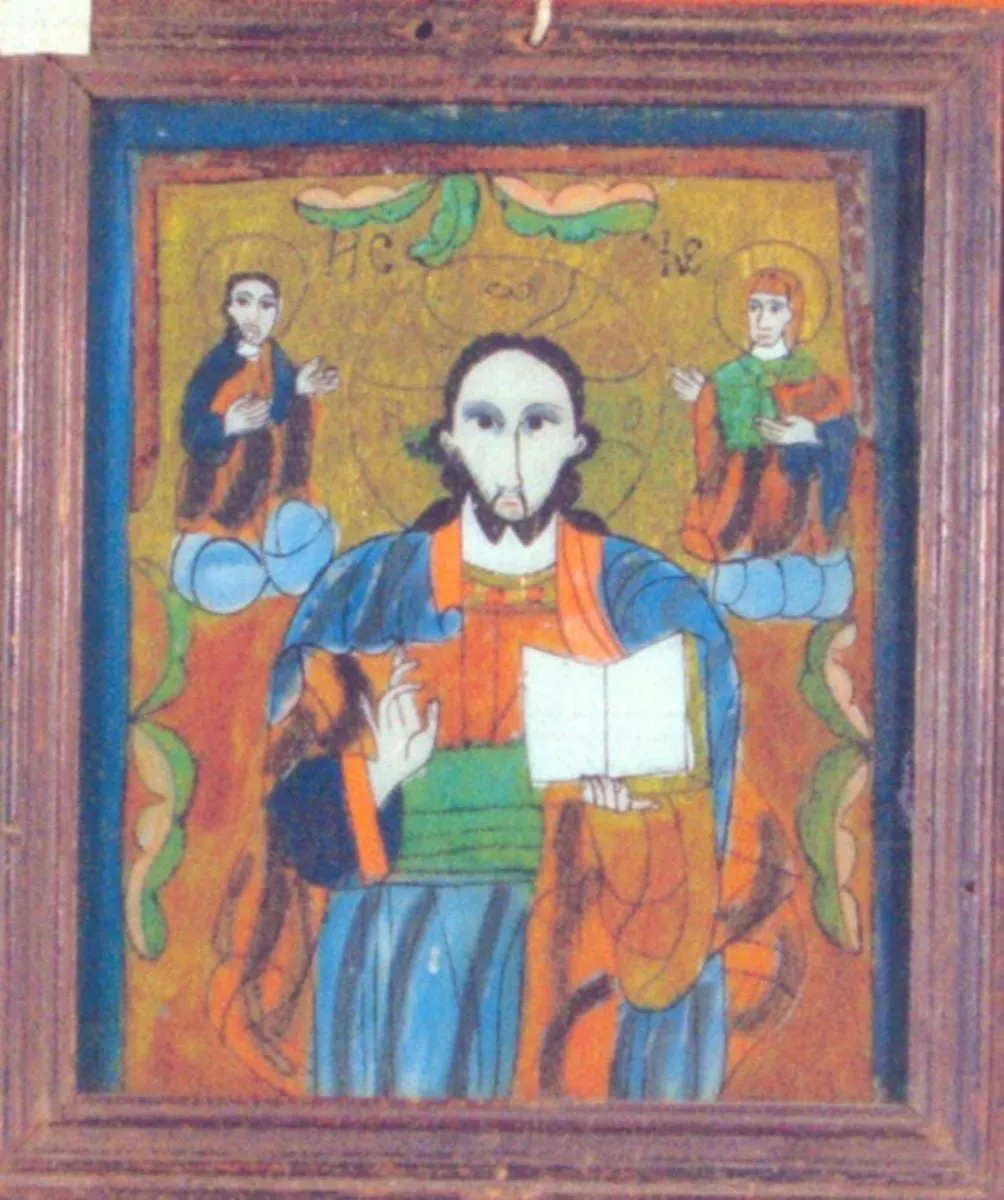
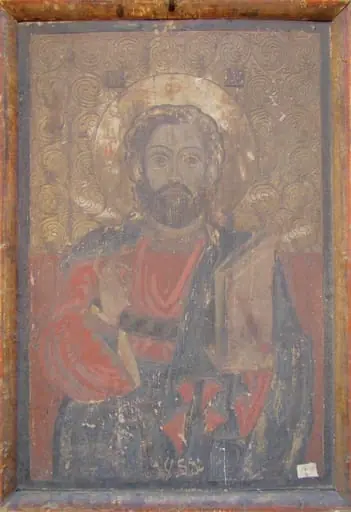
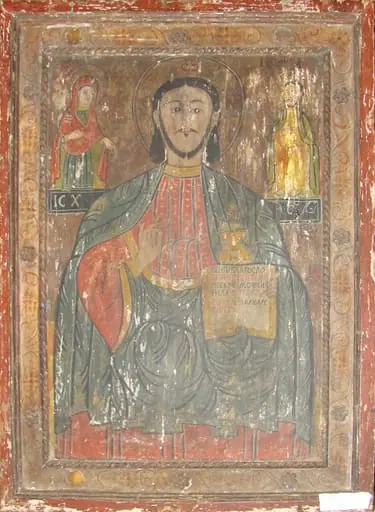
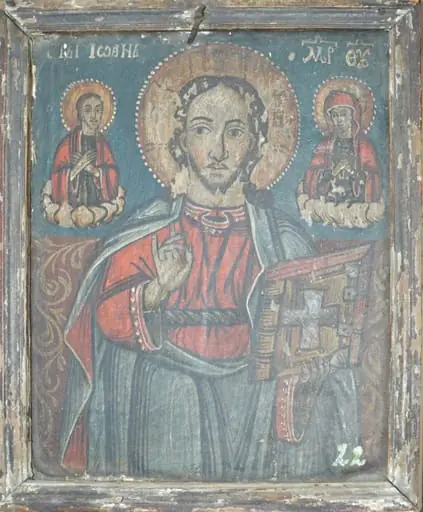
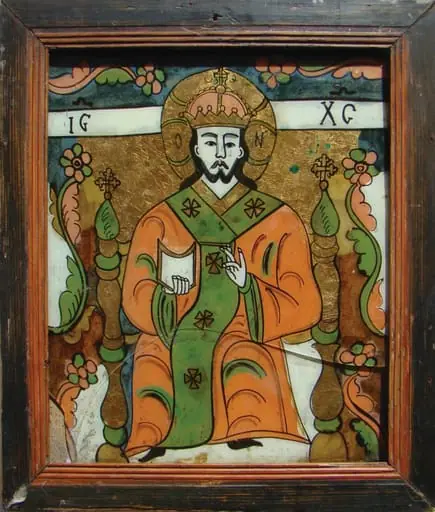
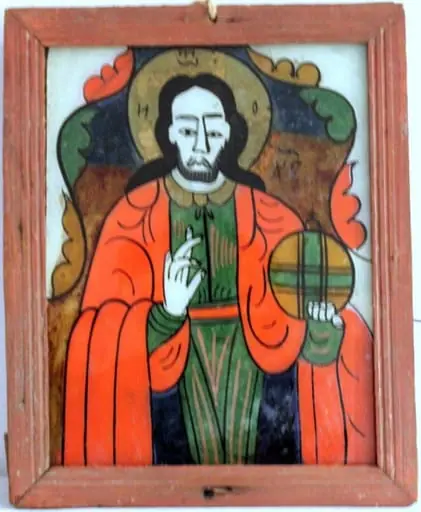
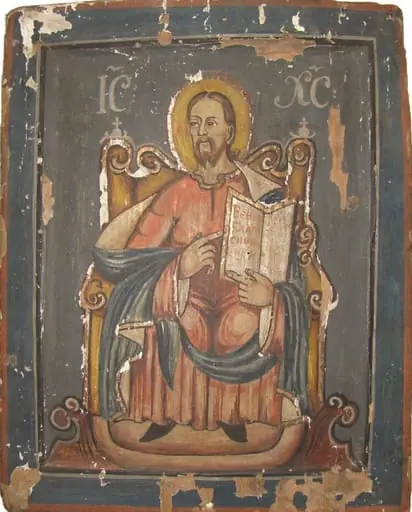
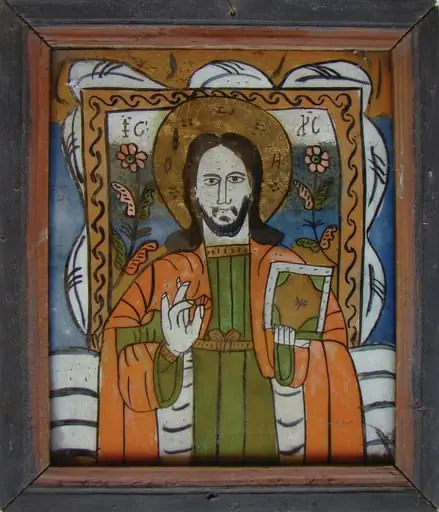
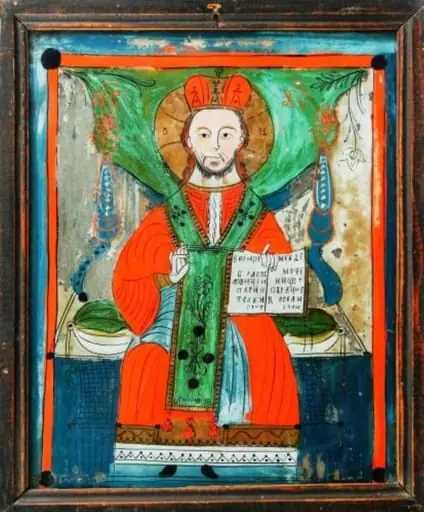
Mica Deisis is a drawing by Unknown. It dates from 1850 and is held in the collection of the Romanian Academy in Bucharest. This devotional panel depicts a central Christ figure flanked by two saints, arranged in a traditional deisis composition.
About this work
Overview
The background, dominated by gold-yellow with subtle green and orange highlights, enhances the sacred atmosphere without competing with the figures.
This devotional panel depicts a central Christ figure flanked by two saints, arranged in a traditional deisis composition. The figures are rendered with fine linear detail and restrained coloration, suggesting a Byzantine or post-Byzantine artistic tradition. The background, dominated by gold-yellow with subtle green and orange highlights, enhances the sacred atmosphere without competing with the figures.
Subject & Meaning
The central figure, likely Christ Pantocrator, holds a closed book symbolizing divine wisdom and raises his hands in blessing. Flanking him are two saints, identifiable by their halos, who serve as intercessors. The arrangement reflects a common liturgical theme in Eastern Christian iconography, where the divine is mediated through holy figures, inviting prayer and contemplation.
Technique & Style
The painting employs meticulous brushwork to define folds in the robes and facial features, with careful attention to pattern and texture. Colors are muted—ochres, deep blues, and olive greens—creating a somber, reverent tone. The use of gold in the background and halos follows traditional iconographic conventions, emphasizing spiritual presence over naturalism.
History & Provenance
The work is held in the collection of the Museum of Ethnography, suggesting it was collected as part of a broader effort to document religious material culture. Its origins are likely from a region influenced by Byzantine art, possibly the Balkans or Anatolia, though its exact date and maker remain undocumented in available records.
Context
This image belongs to a tradition of portable devotional panels used in private worship or liturgical settings. Such works were common in Orthodox Christian communities between the 13th and 17th centuries, often produced in monastic workshops. The composition and palette align with regional styles that preserved Byzantine aesthetics longer than Western Europe did.
Legacy
Though unsigned and undated, the painting contributes to the understanding of how Byzantine iconographic models persisted in peripheral regions. Its preservation in an ethnographic museum highlights its role not only as religious art but as a cultural artifact, reflecting the continuity of spiritual practices through material form.
Artist & collection
 Domestic Scene
 Giacomo and Cardinal Marco, investing Andrea, Abbot of San Zeno, with his Benefice
 The Nymph of Fontainebleau
 Portrait of a Woman
 Madonna and Child with Saints in the Enclosed Garden
 Venus and Minerva
 Family Group of Four on Sofa
 Wall painting from Room H of the Villa of P. Fannius Synistor at Boscoreale