Artwork
Iisus Hristos mare Învățător
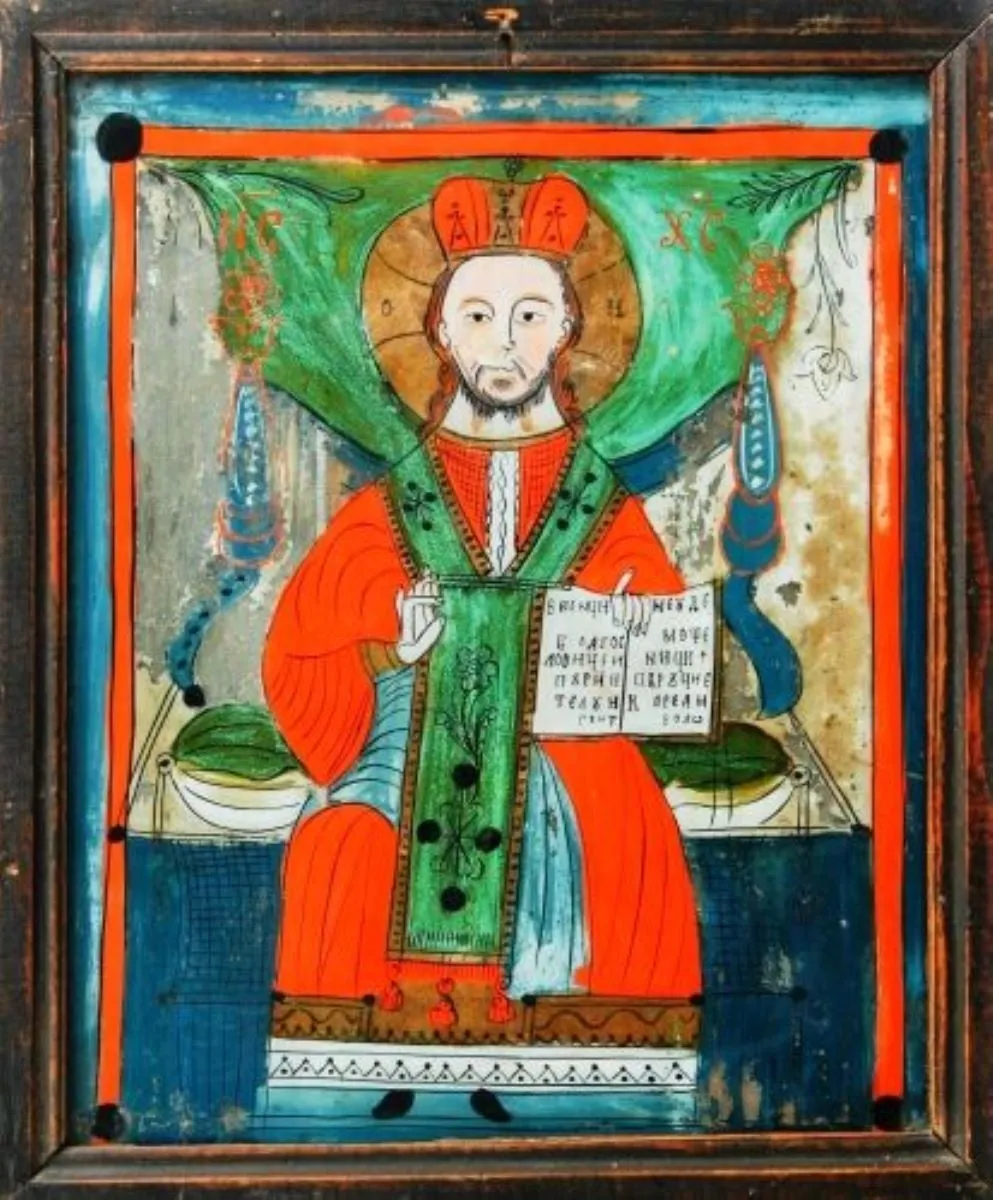
Iisus Hristos mare Învățător is a drawing by Unknown. It dates from 1850 and is held in the collection of the Romanian Peasant Museum.
About this work
Overview
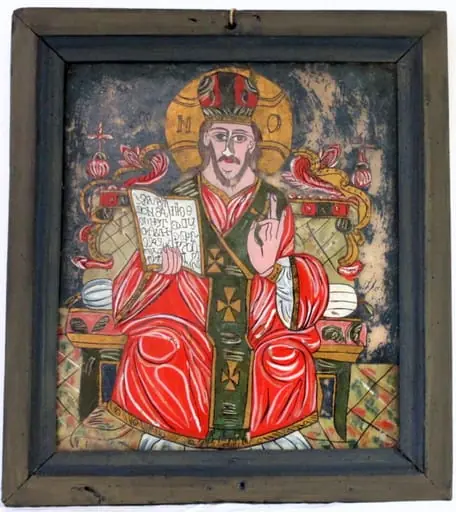
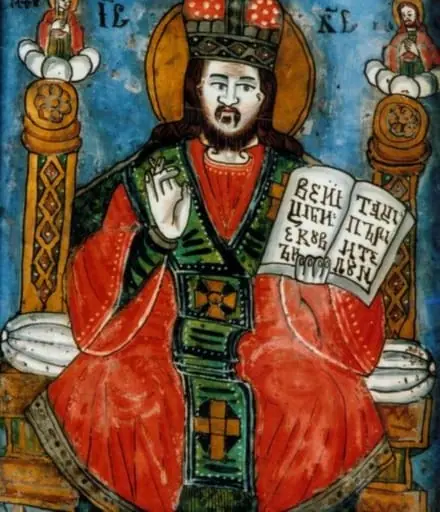
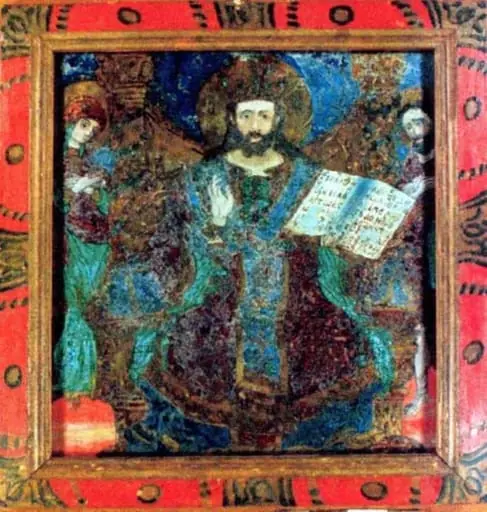
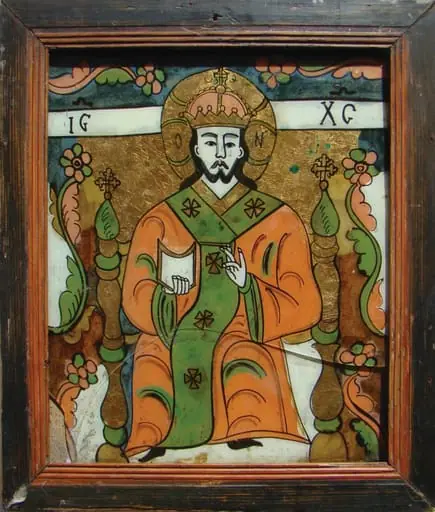
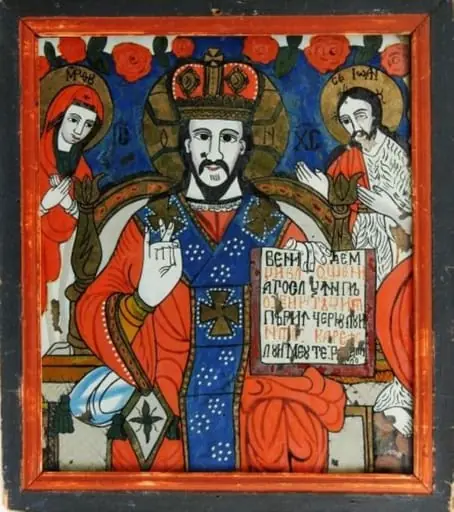
This painted image depicts a bearded male figure with a golden halo, dressed in a red robe and green undergarment, holding a white tablet inscribed with script.
This painted image depicts a bearded male figure with a golden halo, dressed in a red robe and green undergarment, holding a white tablet inscribed with script. The background features a mosaic-like blend of blue, orange, and green hues. The composition follows traditional iconographic conventions, suggesting a sacred subject. The work is held in the collection of the Museum of Ethnography, where it is categorized as a religious image.
Subject & Meaning
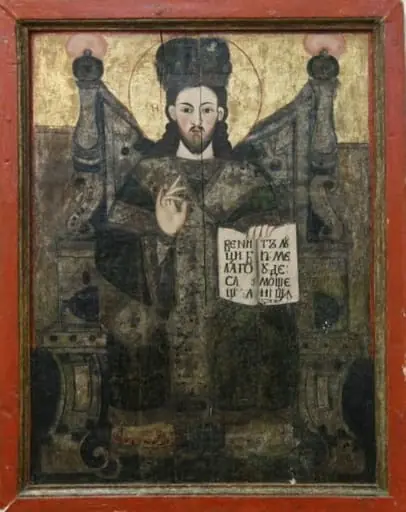
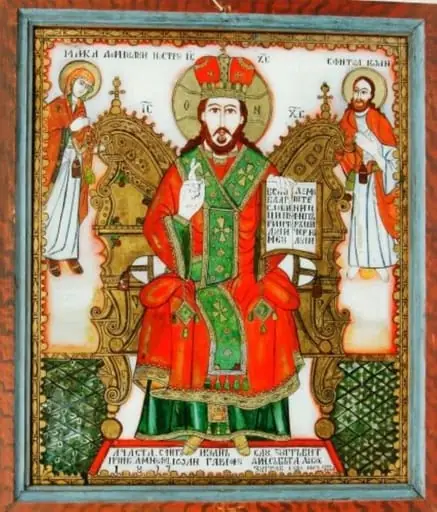
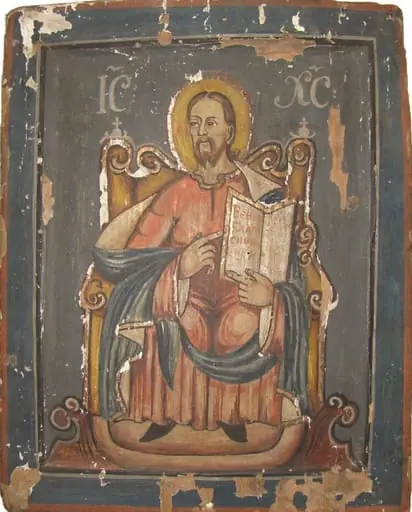
The figure is likely Christ as Teacher, identified by the halo and the inscribed tablet, common symbols in Eastern Christian iconography. The tablet may bear a biblical phrase, possibly in Greek or Church Slavonic, reinforcing his role as divine instructor. The color choices—red for divinity, green for eternal life—align with theological symbolism used in Orthodox traditions to convey spiritual authority and resurrection.
Technique & Style
The painting employs flat, stylized forms typical of ecclesiastical art, with minimal shading and defined outlines. Colors are applied in opaque layers, creating a luminous effect without naturalistic depth. The halo is rendered as a flat gold disc, and the garment folds are simplified into geometric patterns. These features reflect a devotional rather than representational approach, prioritizing spiritual presence over physical realism.
History & Provenance
The painting's origin is not precisely documented, but its style and materials suggest it was produced in the 18th or 19th century, possibly in a region influenced by Romanian or Moldavian Orthodox traditions. It entered the Museum of Ethnography’s collection as part of a broader effort to preserve religious artifacts from rural communities, where such icons were used in domestic worship.
Context
In Eastern Orthodox practice, icons like this served as focal points for prayer and teaching, especially in areas with limited access to clergy or scripture. The depiction of Christ as Teacher was common in household altars, reinforcing doctrinal instruction through visual means. The use of vernacular iconography, rather than imported models, indicates local artistic adaptation within a broader religious framework.
Legacy
This image remains part of a living tradition of religious art preserved in ethnographic collections. While no longer used in active worship, it contributes to scholarly understanding of how faith was visually communicated in pre-modern communities. Its preservation highlights the cultural value placed on devotional objects beyond their liturgical function.
Artist & collection

 Domestic Scene
 Giacomo and Cardinal Marco, investing Andrea, Abbot of San Zeno, with his Benefice
 The Nymph of Fontainebleau
 Portrait of a Woman
 Madonna and Child with Saints in the Enclosed Garden
 Venus and Minerva
 Family Group of Four on Sofa
 Wall painting from Room H of the Villa of P. Fannius Synistor at Boscoreale