Artwork
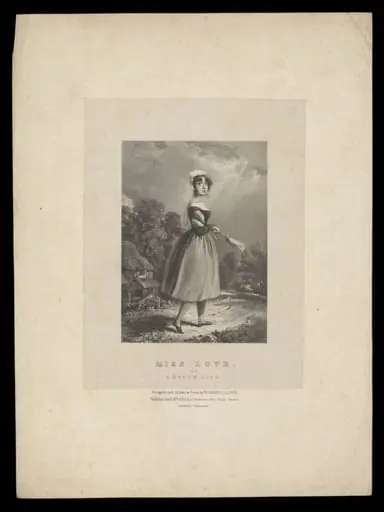
Miss Love as a Broom Girl
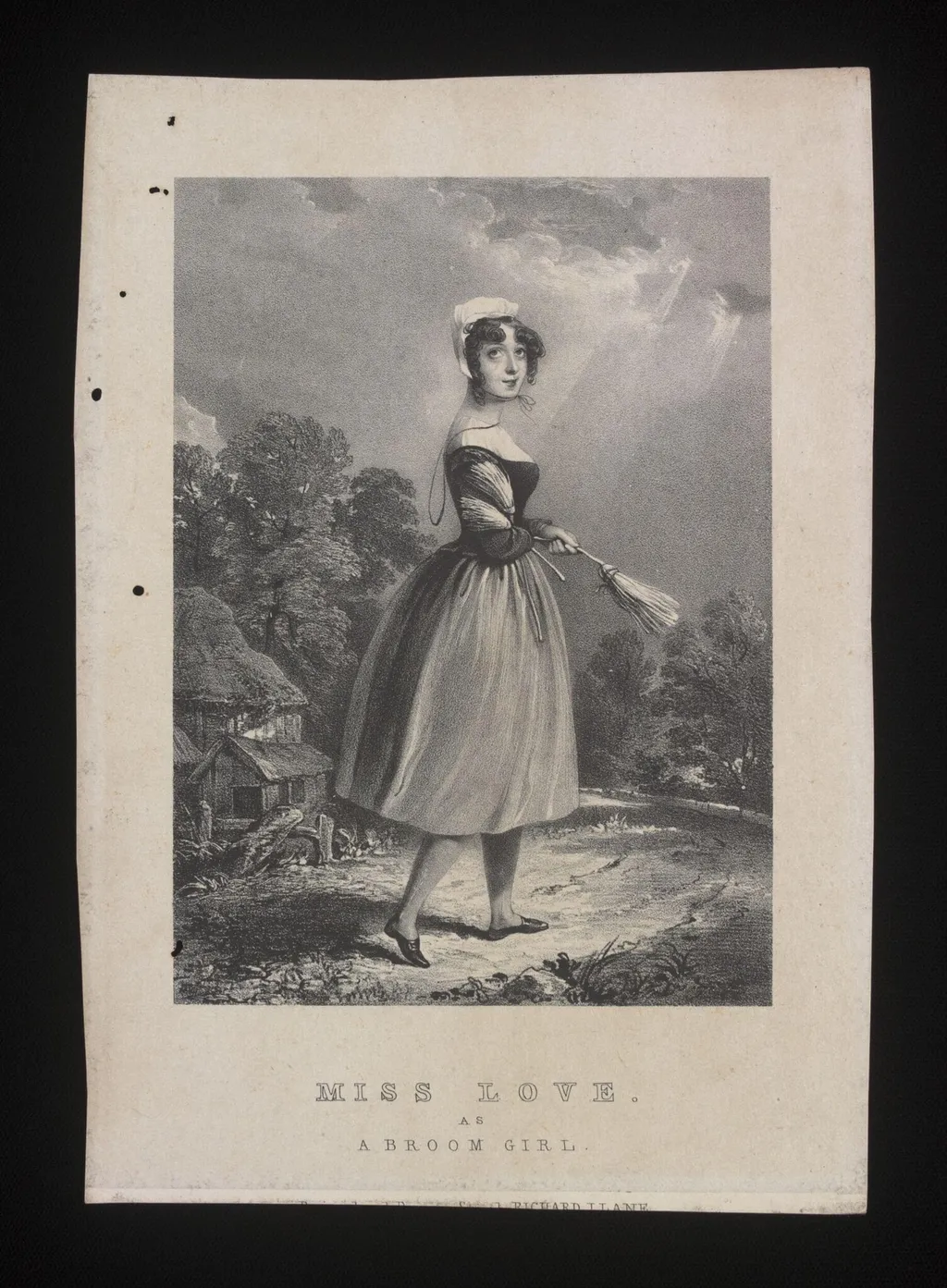
Miss Love as a Broom Girl is a print by Unknown. It dates from 1850 and is held in the collection of the Victoria and Albert Museum. This print portrays Emma Sarah Love in the role of a broom girl, a figure associated with domestic labor.
About this work
Overview
This print portrays Emma Sarah Love in the role of a broom girl, a figure associated with domestic labor. Created in the early 1800s, it belongs to the Harry Beard Collection and reflects a popular genre of the period that idealized humble occupations. The image was not a portrait in the traditional sense but a staged character study, common in illustrated prints of the time.
Subject & Meaning
Emma Sarah Love, a real individual, is depicted not in her social station but as a servant engaged in menial work. This inversion of identity was a deliberate artistic choice, often used to evoke sentiment or moral reflection. The broom girl motif subtly commented on class distinctions, presenting dignity in labor while reinforcing societal hierarchies through theatrical representation.
Technique & Style
The print employs fine line engraving typical of early 19th-century illustrated publications. Details in the clothing and posture are rendered with precision, emphasizing simplicity and restraint. The composition is frontal and static, focusing attention on the figure and her tool, minimizing background elements to heighten the symbolic weight of the role she embodies.
History & Provenance
The print entered the Harry Beard Collection, a significant assemblage of theatrical and domestic imagery from the 1800s. Beard, a collector of ephemeral prints, preserved such works as cultural artifacts rather than fine art. Its survival reflects the popularity of character studies in middle-class households, where images of domestic life were both entertainment and moral instruction.
Context
In early 19th-century Britain, depictions of servants and laborers were widespread in prints, often romanticized to appeal to urban audiences. These images served as both social commentary and escapism, allowing viewers to observe class roles from a distance. The broom girl, in particular, symbolized purity through simplicity, a trope repeated across literature and visual culture.
Legacy
Though not widely known today, such prints contributed to the visual language of class and labor in Victorian culture. They influenced later representations of domestic workers in illustration and theater. Collections like Beard’s preserved these works as records of how society imagined itself through the lens of service, offering insight into the era’s unspoken social codes.
Artist & collection

 Domestic Scene
 Giacomo and Cardinal Marco, investing Andrea, Abbot of San Zeno, with his Benefice
 The Nymph of Fontainebleau
 Portrait of a Woman
 Madonna and Child with Saints in the Enclosed Garden
 Venus and Minerva
 Family Group of Four on Sofa
 Wall painting from Room H of the Villa of P. Fannius Synistor at Boscoreale