Artwork
Miss Love in the character of Don Giovanni
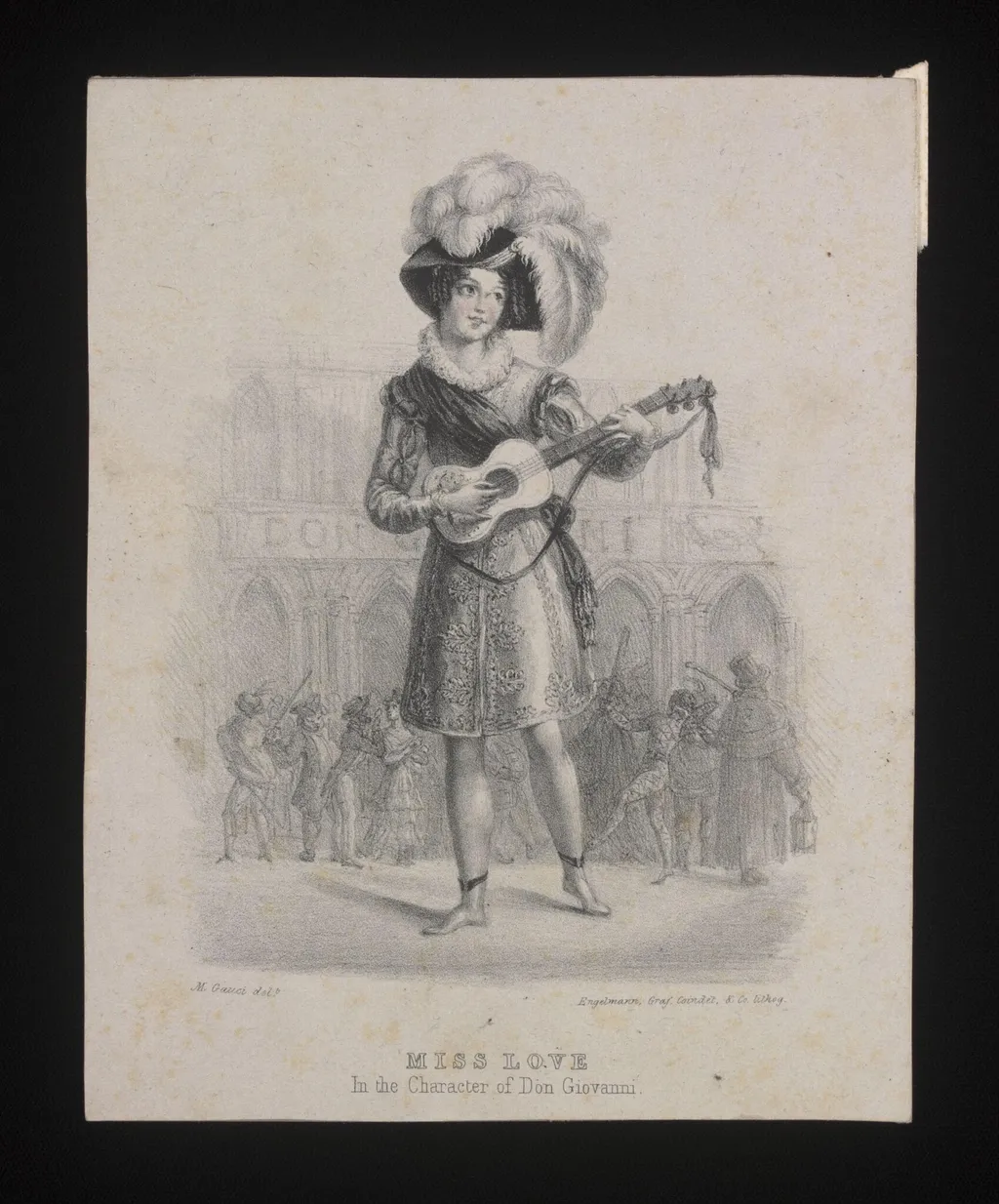
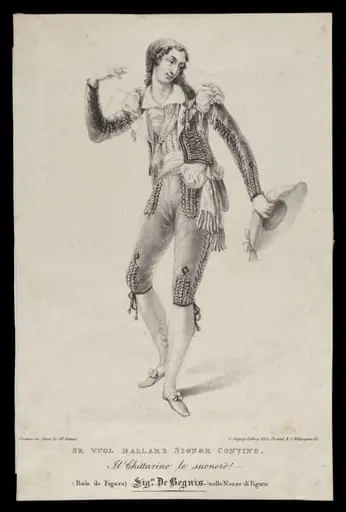
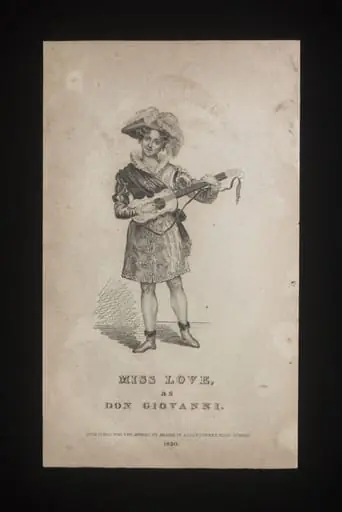
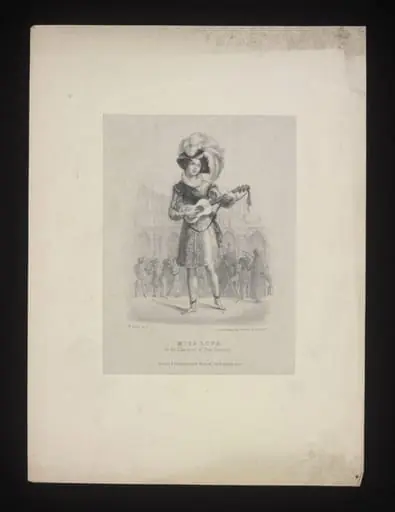
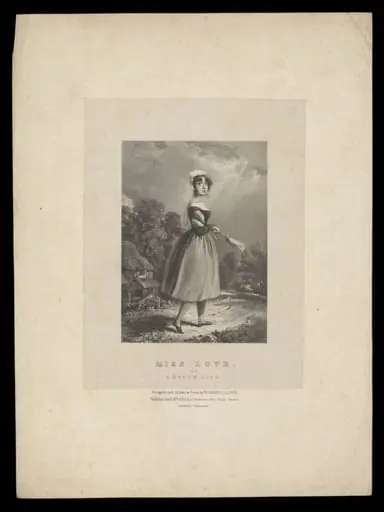
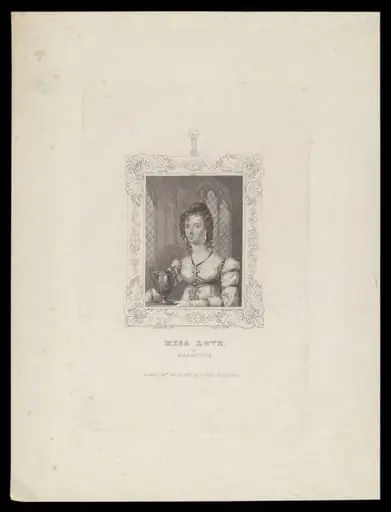
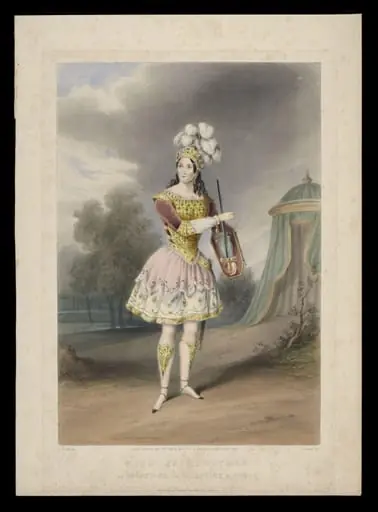
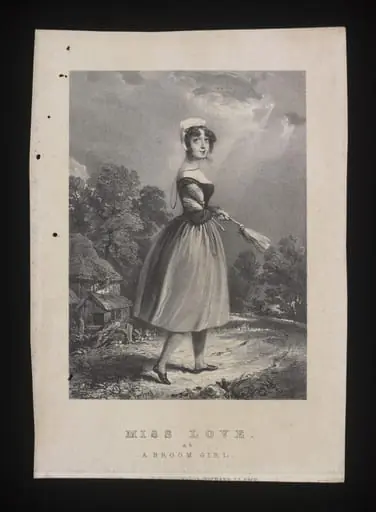
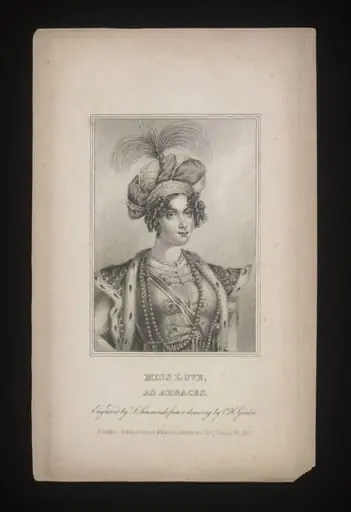
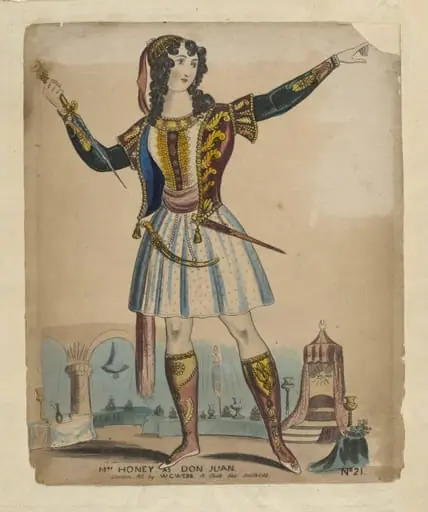
Miss Love in the character of Don Giovanni is a print by Maxim Gauci. It dates from 1850 and is held in the collection of the Victoria and Albert Museum. This early 19th-century print portrays Emma Sarah Love, a British actress, in the role of Don Giovanni, the operatic seducer.
About this work
This print shows Miss Emma Sarah Love as Don Giovanni.
The image is from the early 19th century and is part of the Harry Beard Collection. It's interesting that the print was published during this time, and it features a lute, which was a popular instrument then.
You can learn more about similar prints and artworks at the Victoria and Albert Museum.
Overview
Created as a theatrical portrait, it was produced for public consumption during a period when stage performances were widely documented in print.
This early 19th-century print portrays Emma Sarah Love, a British actress, in the role of Don Giovanni, the operatic seducer. Created as a theatrical portrait, it was produced for public consumption during a period when stage performances were widely documented in print. The image belongs to the Harry Beard Collection, a significant archive of theatrical ephemera now held by the Victoria and Albert Museum.
Subject & Meaning
Emma Sarah Love’s portrayal of Don Giovanni challenges gender norms of the era by depicting a woman in a male lead role, a practice common in British theatre when male actors were unavailable or when novelty attracted audiences. The character’s notorious charisma and moral ambiguity are conveyed through posture and costume, not facial expression, emphasizing theatrical convention over psychological realism.
Technique & Style
The print employs line engraving, a precise method popular for theatrical portraits in the early 1800s. Details such as the lute, a symbol of courtly music and seduction, are rendered with fine, controlled strokes. The composition is formal and frontal, typical of promotional prints meant for collectors, prioritizing clarity and recognizability over atmospheric depth.
History & Provenance
The print was published in the first decades of the 19th century, likely to capitalize on the enduring popularity of Mozart’s opera and Love’s performance. It entered the Harry Beard Collection, assembled by a noted theatre enthusiast, and was later acquired by the Victoria and Albert Museum, where it contributes to the study of British theatrical culture and gender performance.
Context
During this period, cross-gender casting in opera and theatre was not uncommon, especially in provincial or touring companies. Prints like this served both as souvenirs and as cultural artifacts reflecting public fascination with performance. The inclusion of the lute aligns with period aesthetics and reinforces the character’s association with music and seduction in popular imagination.
Legacy
This print remains a tangible record of early 19th-century theatrical practices and the fluidity of gender roles on stage. It offers insight into how performance was commodified and preserved, contributing to broader scholarly understanding of how audiences engaged with opera and celebrity culture before the advent of photography.
Artist & collection

Artist
Maxim Gauci, born Massimo Gauci, was a Maltese lithographer and painter who was active in the United Kingdom in the 19th century. He was an early exponent of lithography for botanical illustration.