Artwork
Mohini
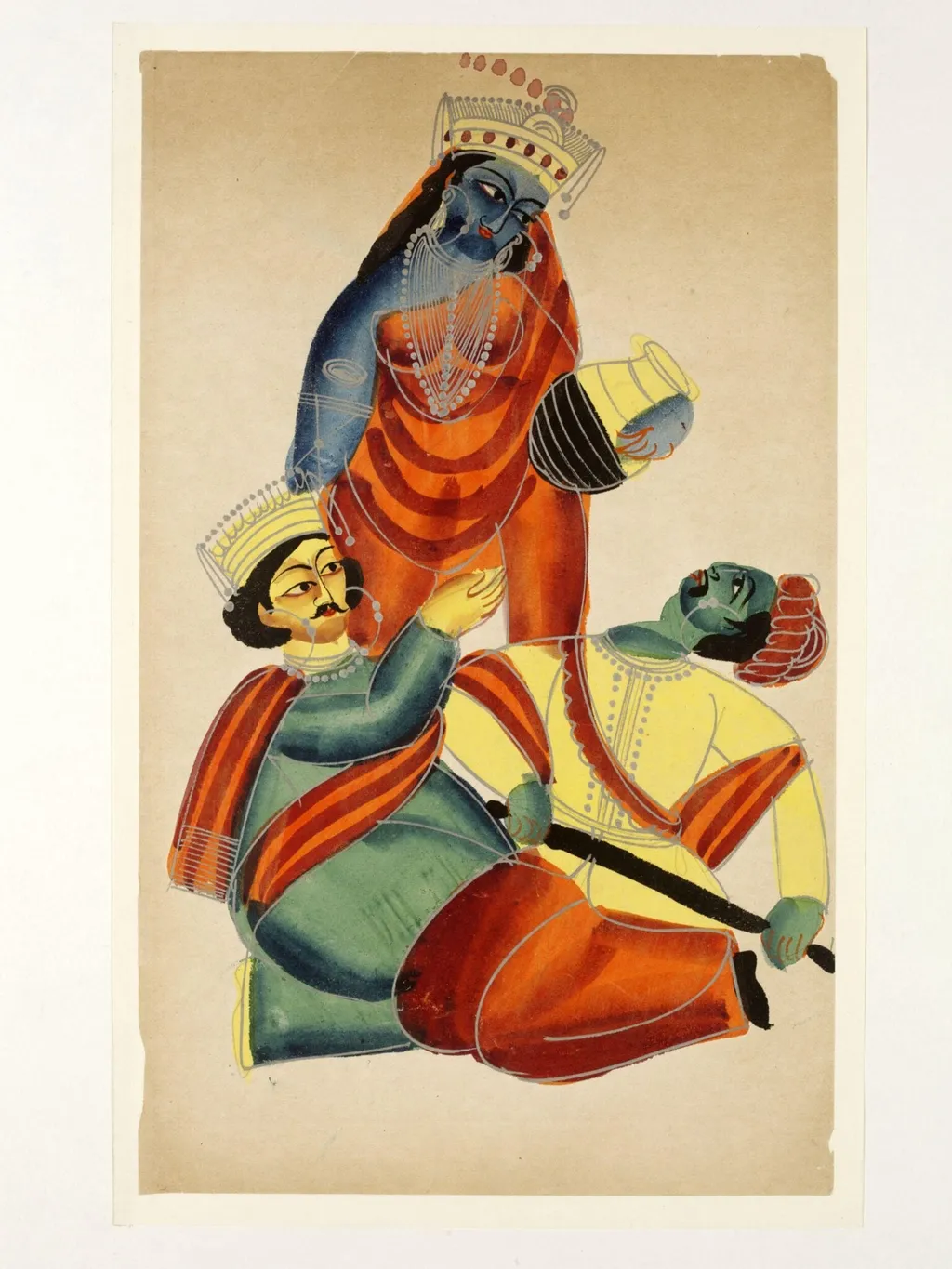
Mohini is a paint painting by the Impressionist artist Unknown. It dates from 1890 and is held in the collection of the Victoria and Albert Museum.
About this work
Overview
This watercolour and tin-alloy painting on paper, created around 1890 in Calcutta, portrays the Hindu goddess Mohini in the act of distributing nectar.
This watercolour and tin-alloy painting on paper, created around 1890 in Calcutta, portrays the Hindu goddess Mohini in the act of distributing nectar. Executed in the Kalighat style, it combines bold outlines with flat, vivid pigments. The work was donated to the collection in 1955 by M. N. Varvill and reflects the commercial art traditions emerging in urban Bengal under British colonial administration.
Subject & Meaning
Mohini, an enchanting avatar of Vishnu, is shown mediating between divine and demonic forces by offering the elixir of immortality. The scene draws from Puranic lore, where she deceives the asuras to ensure the devas receive the nectar. The composition isolates the moment of distribution, emphasizing her role as a cosmic trickster and guardian of cosmic order through illusion.
Technique & Style
The painting employs rapid, fluid brushwork and unmodulated colours typical of Kalighat art. Forms are simplified, with strong contours defining figures against a plain background. Tin-alloy leaf adds subtle metallic highlights, particularly on the pot and crown, while the palette relies on primary hues—blue, red, green, and yellow—to convey identity and hierarchy without shading or depth.
History & Provenance
Produced in late 19th-century Calcutta, the painting emerged from a thriving market for devotional and mythological imagery near the Kalighat temple. It was likely made for domestic or pilgrimage use, sold by itinerant artists. The work entered institutional collection in 1955 after being donated by M. N. Varvill, preserving its origin in a rapidly changing urban cultural landscape.
Context
During British rule, Kalighat paintings evolved from temple souvenirs to satirical and mythological works responding to colonial society. Artists adapted traditional iconography for a broader audience, blending religious narratives with contemporary social commentary. This piece exemplifies how indigenous art forms navigated modernization while retaining mythological roots.
Legacy
As one of many Kalighat works preserved in public collections, this painting contributes to the understanding of 19th-century Bengali visual culture. It illustrates how folk traditions sustained religious narratives amid urbanization and colonial influence, offering insight into the adaptability of indigenous art forms beyond elite academic canons.
Artist & collection

 Domestic Scene
 Giacomo and Cardinal Marco, investing Andrea, Abbot of San Zeno, with his Benefice
 The Nymph of Fontainebleau
 Portrait of a Woman
 Madonna and Child with Saints in the Enclosed Garden
 Venus and Minerva
 Family Group of Four on Sofa
 Wall painting from Room H of the Villa of P. Fannius Synistor at Boscoreale
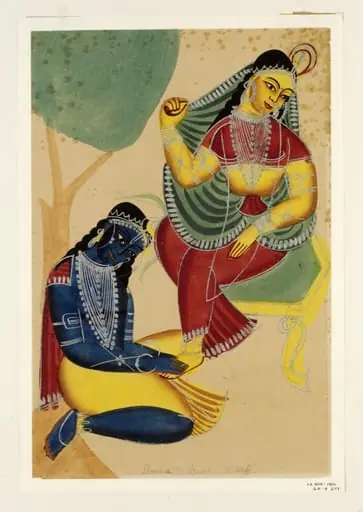 Krishna and Radha
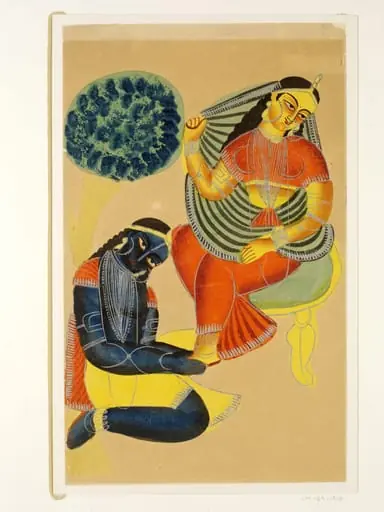 Krishna and Radha
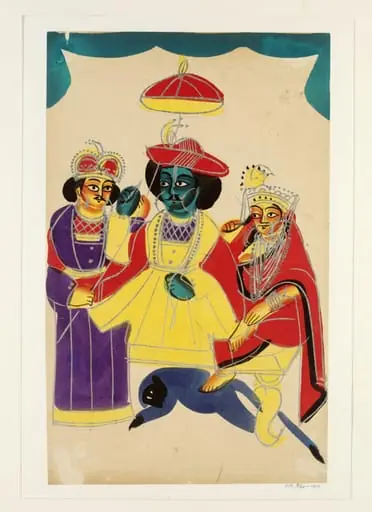 Rama, Sita, Lakshmana and Hanuman
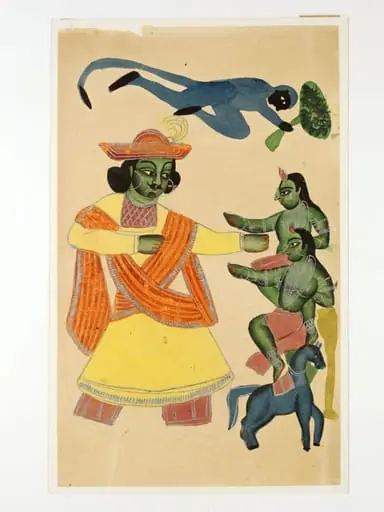 Rama, Kusha and Lava
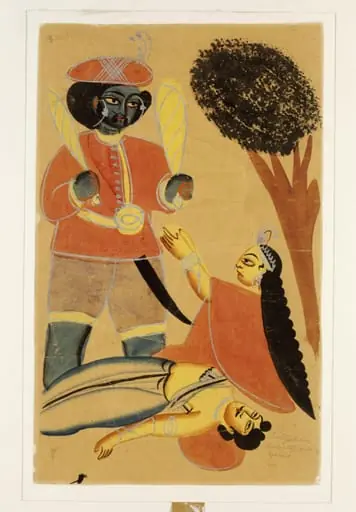 Savitri, Yama and Satravan
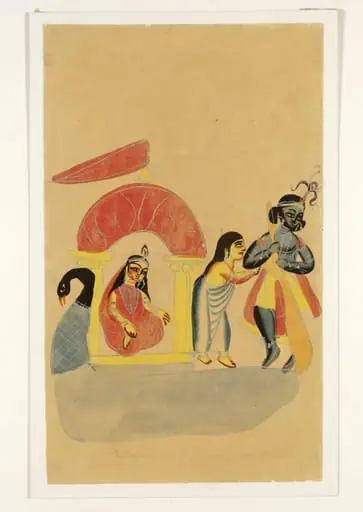 Untitled
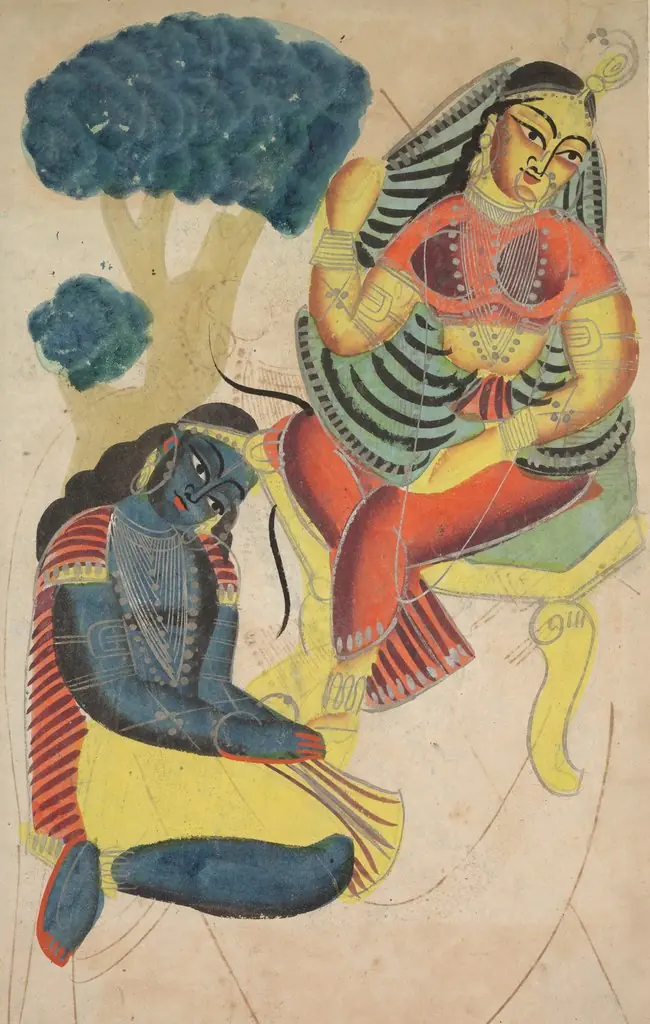 Krishna Stroking Radha's Feet (verso), from a Kalighat album
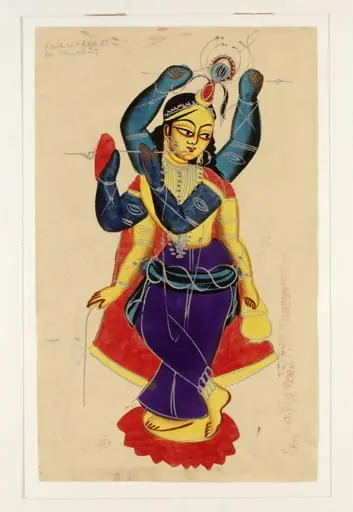 Chaitanya as Rama and Krishna
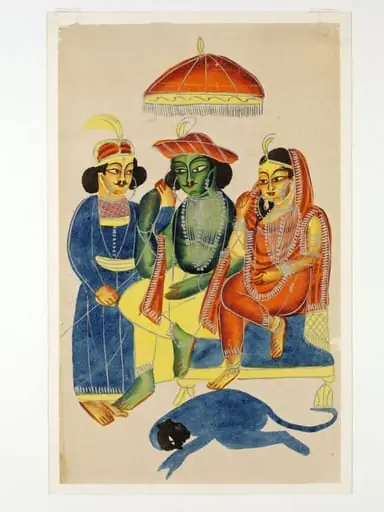 Hanuman, Rama, Sita and Lakshmana
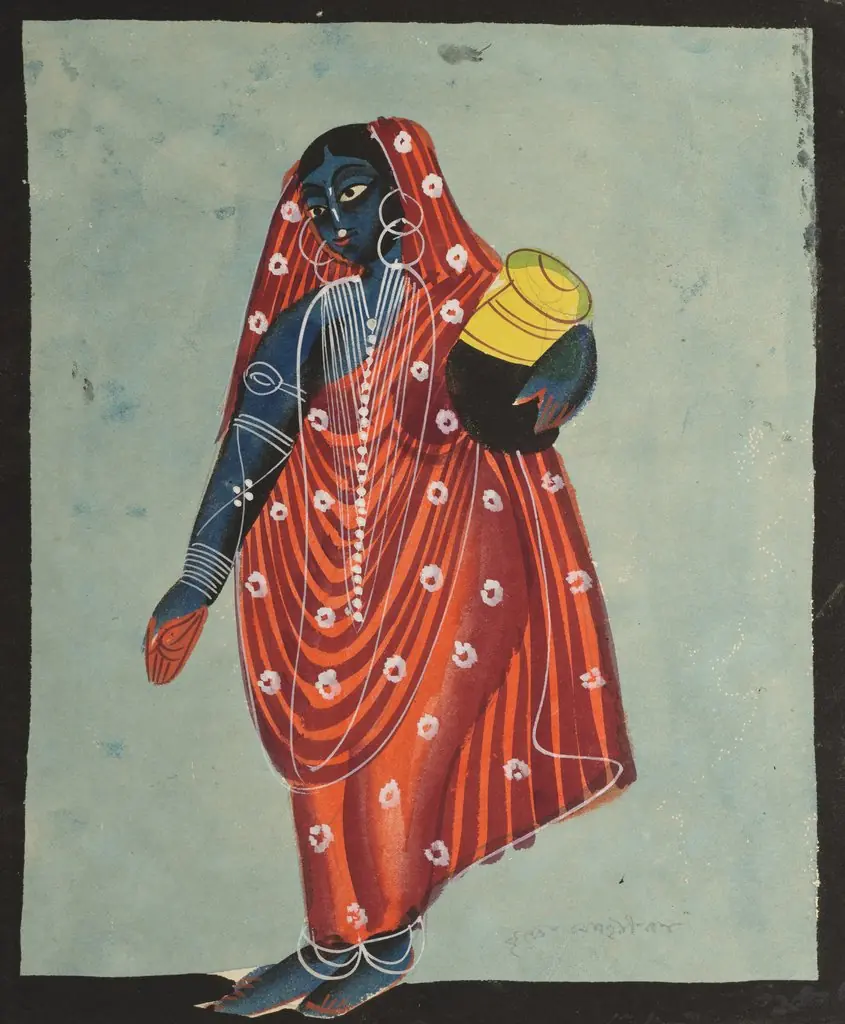 Vishnu in Female Form of Mohini Carrying Amrita for the Gods